The New-Phone Blues: A Reminder That Hackers Shouldn’t Settle

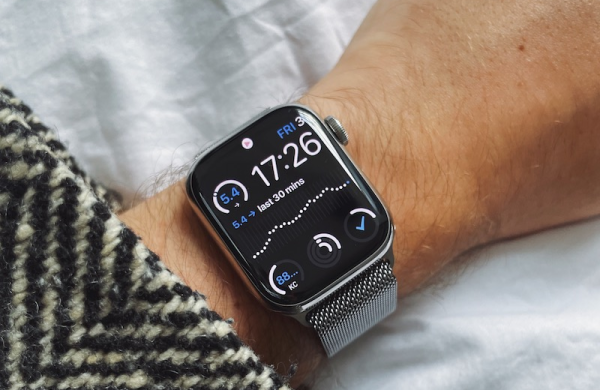
For all the convenience and indispensability of having access to the sum total of human knowledge in the palm of your hand, the actual process of acquiring and configuring a smartphone can be an incredibly frustrating experience. Standing in those endless queues at the cell phone store, jumping through the administrative hoops, and staring in sticker shock at a device that’s likely to end its life dunked in a toilet all contribute to the frustration.

But for my money, the real trouble starts once you get past all that stuff and start trying to set up the new phone just right. Sure, most phone manufacturers make it fairly easy to clone your old phone onto the new one, but there are always hiccups. And for something that gets as tightly integrated into the workflows of your daily life as cell phones do, that can be a real bummer. Especially when you find out that your shiny new phone can’t do something you absolutely depend on.

Continue reading “The New-Phone Blues: A Reminder That Hackers Shouldn’t Settle”

Remoticon 2021 // Vaibhav Chhabra And The M19 Collective Make One Million Faceshields

[Vaibhav Chhabra], the co-founder of Maker’s Asylum hackerspace in Mumbai, India, starts his Remoticon talk by telling a short story about how the hackerspace rose to its current status. Born out of frustration with a collapsed office ceiling, having gone through eight years of moving and reorganizations, it accumulated a loyal participant base – not unusual with hackerspaces that are managed well. This setting provided a perfect breeding ground for the M19 effort when COVID-19 reached India, mixing “what can we do” and “what should we do” inquiries into a perfect storm and starting the 49 day work session that swiftly outgrew the hackerspace, both physically and organizationally.

When the very first two weeks of the Infinite Two Week Quarantine Of 2020 were announced in India, a group of people decided to wait it out at the hackerspace instead of confining themselves to their homes. As various aspects of our society started crashing after the direct impact of COVID-19, news came through – that of a personal protective equipment shortage, especially important for frontline workers. Countries generally were not prepared when it came to PPE, and India was no different. Thus, folks in Maker’s Asylum stepped up, finding themselves in a perfect position to manufacture protective equipment when nobody else was prepared to help.

Continue reading “Remoticon 2021 // Vaibhav Chhabra And The M19 Collective Make One Million Faceshields”

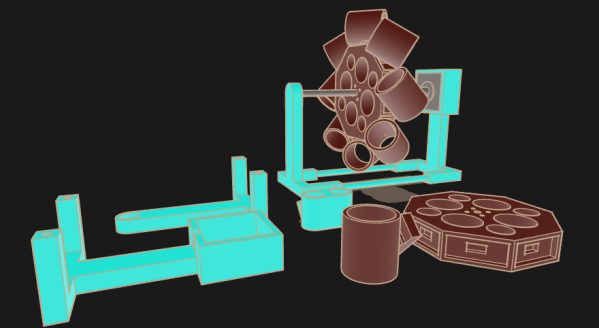
Mask DIY sanitization device on the left, mask used as an example on the right. The device is a Tupperware-like plastic container, on top, a small motor plus battery device with an alligator clip attached to the motor. Mask is inserted into the container through the opening on top, hooked to the motor, and the motor then spins the mask inside the container where hydrogen peroxide vapor is being misted.

Mask Sanitization That Anyone Can Build

We’ve seen a wide variety of mask sanitization solutions, and now, [spiritplumber] from [Robots Everywhere] brings us a frugal and ingenious design – one that you barely even need tools for. This project might look rough around the edges but looks were never a prerequisite, and as a hacker worth their salt will recognize – this is an answer to “how to design a mask disinfector that anyone can build”.

Local shortages of masks have been threatening communities here and there, doubly so if you need a specific kind of mask that might be out of stock. This design could apply to a whole lot of other things where sterilization is desired, too – improving upon concepts, after all, is our favourite pastime.

The design is simple – a battery-powered motor rotating a mask inside a vat of concentrated H2O2, turned into mist by a cheap ultrasonic misting gadget. As the “turntable” rotates a your PPE of choice, making sure that every crevice is graced with cleaning touch of peroxide, it also causes the H2O2 mist to circulate. Fulfilling most important requirements for a proper sanitization system that more complex devices have been struggling with, this approach has certainly earned its place under the sun.

[Robots Everywhere] have shared a small library of their DIY PPE resources with all of us, and that’s not all they work on – recently, we’ve seen their aeroponics project rejuvenating garlic.

Using hydrogen peroxide vapour for PPE sanitization is a well-tested approach by now, as we’ve seen it deployed back in 2020 on a larger scale as part of an FDA-approved design. And if you only have 3% peroxide at hand, might as well try concentrating it further!

Continue reading “Mask Sanitization That Anyone Can Build”

Bionic Implants Can Go Obsolete And Unsupported, Too

When a piece of hardware goes unsupported by a company, it can be frustrating. Bugs may no longer get fixed, or in the worst cases, perfectly good hardware can stop working entirely as software licences time out. Sadly, for a group reliant on retinal implants from company Second Sight, the company has since stopped producing and supporting the devices that give them a crude form of bionic sight.

The devices themselves consist of electrodes implanted into the retina, which can send signals to the nervous system which appear as spots of light to the user. A camera feed is used to capture images which are then translated into signals sent to the retinal electrodes. The results are low-resolution to say the least, and the vision supplied is crude, but it gives users that are blind a rudimentary sense that they never had before. It’s very much a visual equivalent to the cochlear implant technology.

The story is altogether too familiar; Second Sight Medical Products came out with a cutting-edge device, raised money and put it out into the world, only to go bankrupt down the road, leaving its users high and dry. Over 350 people have the implants fitted in one eye, while one Terry Byland is the sole person to have implants in both his left and right eyeballs. Performance of the device was mixed, with some users raving about the device while others questioned its utility.

Continue reading “Bionic Implants Can Go Obsolete And Unsupported, Too”

Surgically Implanted Bluetooth Devices Don’t Help Would-Be Exam Cheats

A pair of would-be exam cheats were caught red-handed at the Mahatma Gandhi Memorial Medical College in Indore, India, as they tried to use Bluetooth devices surgically implanted in their ears for a bit of unauthorised exam-time help.

It’s a news story that’s flashed around the world and like most readers we’re somewhat fascinated by the lengths to which they seem to have been prepared to go, but it’s left us with a few unanswered questions. The news reports all have no information about the devices used, and beyond the sensationalism of the story we’re left wondering what the practicalities might be.

Implanting anything is a risky and painful business, and while we’ve seen Bluetooth headphones and headsets of all shapes and sizes it’s hardly as though they’re readily available in a medically safe and sterile product. Either there’s a substantial rat to be smelled, or the device in question differs slightly from what the headlines would lead us to expect.

Continue reading “Surgically Implanted Bluetooth Devices Don’t Help Would-Be Exam Cheats”

3D Printing Livers

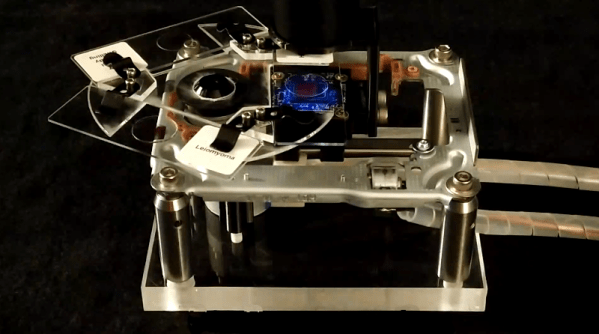
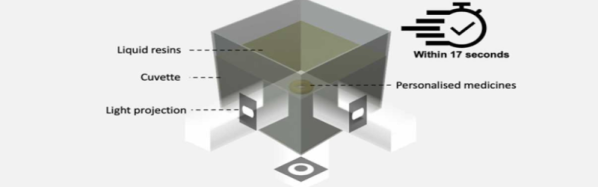
The University of Utrecht has a team that is successfully bioprinting “liver units” that are able to do some of the functions of a human liver and may open the door to new medical treatments. This isn’t simply printing a fake liver in a jar though, instead the technique uses optical tomography to rapidly create small structures of about 1 cc of volume in less than 20 seconds.

Apparently, one problem with printing hydrogels full of biological structures is that passing them through a nozzle tends to disturb the delicate structures.  This technique uses no nozzle or layers, which makes it useful in this situation.

Continue reading “3D Printing Livers”

Bionic Eyes Go Dark

If you were blind, having an artificial retinal implant would mean the difference between seeing a few hundred pixels in greyscale and seeing all black, all the time. Imagine that you emerged from this total darkness, enjoyed a few years of mobility and your newfound sense, and then everything goes dark again because the company making the devices abandoned them for financial reasons.

This is a harrowing tale of close-source technology, and how a medical device that relies on proprietary hard- and software essentially holds its users hostage to the financial well-being of the company that produces it. When that company is a brash startup, with plans of making money by eventually pivoting away from retinal implants to direct cortical stimulation — a technology that’s in it’s infancy at best right now — that’s a risky bet to take. But these were people with no other alternative, and the technology is, or was, amazing.

One blind man with an implant may or may not have brain cancer, but claims that he can’t receive an MRI because Second Sight won’t release details about his implant. Those bugs in your eyes? When the firm laid off its rehab therapists, patients were told they weren’t going to get any more software updates.

If we were CEO of SecondSight, we know what we would do with our closed-source software and hardware right now. The company is facing bankruptcy, has lost significant credibility in the medical devices industry, and is looking to pivot away from the Argus system anyway. They have little to lose, and a tremendous amount of goodwill to gain, by enabling people to fix their own eyes.

Thanks to [Adrian], [Ben], [MLewis], and a few other tipsters for getting this one in!