Playstation 3 Boomerang Controller

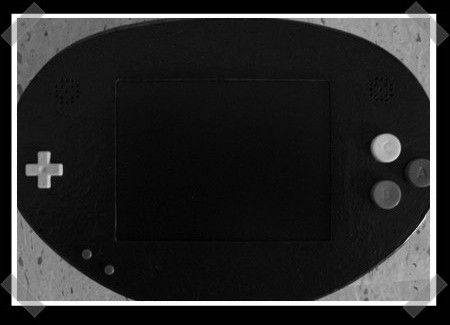
Reader [HotDog-Cart] is an active member of the benheck forums and recently completed this Playstation 3 boomerang controller. The boomerang was originally shown with the Playstation 3 prototype and was severely panned by the press. [Josh] started with a cheap 3rd party controller that was approximately boomerang shaped. He enlarged the controller body ~20% using bondo. The internals were replaced with gear from an official Sony controller. It was finished with a coat of black paint. It’s definitely a nice build and the new internals mean it probably feels as good as any factory controller.

PC Stands For “Patriotic Computer”

[vimeo http://vimeo.com/1709336%5D

On the seventh anniversary of the events of September 11, 2001, it’s important to reflect on patriotism, nationalism, and responsibility to your country and motherland. This USB memorial lets us think about our contributions to our great nation. Or it’s just a tribute to misguided nationalism and capitalism via insipid flag waving. Instructions are available at Instructables.

[via F.A.T.]

Interactive Globe Display


[ERASME] built this interactive globe interface for an exhibit on Inuit people and their land. The goal was to have a tactile input device to Google Earth data. The unit is composed of a half globe for location selection, a touch pad for layer selection, and a Wiimote for view changes.They had to develop their own driving application for Google Earth as none exists for Linux. The software, called KeyEvents takes inputs from all the devices and mimics keyboard and mouse control in Google Earth.

There is much more information on how they got the pieces to work together, as well as some videos in french showing the device working. One thing that stands out though is that they decided to use direct association on their Wiimote, thus stopping rogue Wiimotes from gaining control. Who would carry a Wiimote around just to hijack public displays? We would.

[thanks Leucos]

Modular Portable System


Reader [John Grayson], known for his multiconsole portable, has constructed a brand new portable. Not liking the controls or the tethered nature of retro TV games he decided to build a modular portable system. He built a custom system that uses cartridges created from TV game systems. The device has a 5.4″ screen and two Canon batteries for 4.5 hours of play.

Wifi Robot : A Hacked WRT54GL Rover

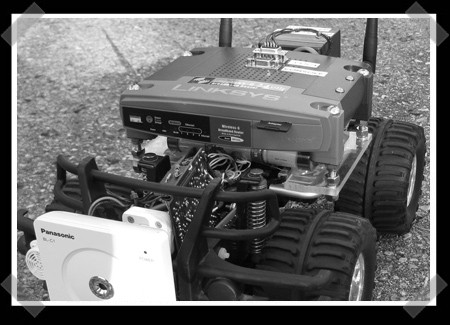
[Jon Bennett] sent us this link to his Wifi Robot. After playing with a Linksys WRT54GL router, he was inspired to build something that would utilize this embedded Linux system. Using a thrift store R/C truck, he built a wireless robot rover. This thing can be controlled over the internet, or by laptop with a range of about 500 meters.

The router has been modified to have 2 Serial ports and a 1GB SD Card. It connects to a micro controller, which could be an Arduino or AVR Butterfly. He has supplied information for both. The truck has been mostly gutted, leaving only the chassis and electronics. He had to beef up some of the truck electronics when they fried under the load. The entire unit is powered by a pair of 7.2 Volt 3800 mAh battery packs. The most important thing on the list though, is the horn. You can honk the horn while you are driving this thing around.

The site supplies tons of information including pictures of his build, videos of it in action, speed tests, schematics, software downloads, and resource links. Great job [Jon].

Coyote-1 Guitar Pedal Available Now


OpenStomp’s Coyote-1 is now available for $349. The guitar effects pedal lets users design and upload their own effects to the device. It has two stomp switches with LEDs, an LCD display, and four user assignable knobs. The back has 1/4″ in/out and one selectable 1/4″. It also features NTSC composite out, a headphone jack, mini-USB for uploading, and an RJ11 I2C bus for expansion. The processor is a Parallax Propeller Chip. While the OS on the pedal is open source, the hardware design and effect design software are not. You can check out the source and product manual on their forum. If you’re more interested in breadboarding hardware, you might like the Beavis Board we covered earlier.

[via Create Digital Music]