Linux-Fu: Making AWK A Bit Easier

awk is a kind of Swiss Army knife for text files. However, some of its limitations are often a bit annoying. I’ve used a simple set of functions to make awk a bit better, although I will warn you: it does require GNU extensions to awk. That is, you must use gawk and not other versions. Your system probably maps /usr/bin/awk to something and that something might be gawk. But it could also be mawk or some other flavor. If you use a Debian-based distro, update-alternatives is your friend here. But for the purposes of this post, I’m going to assume you are using gawk.

By the end of the post, you’ll see how to use my awk add-on functions to split up a line into fields even when there is no single character to separate all fields. In addition, you’ll be able to refer to the fields using names you decide. You won’t have to remember that $2 is the time field. You’ll say Fields_fields["time"] instead.

The Problem

awk does a lot of common work for you when you use it to process text files. It reads files a record at a time. Normally, a record is a single line. Then it splits the line on fields using whitespace, or some other choice of field separators. You can write code that manipulates the line or individual fields. This default behavior is great, especially since you can change the end of record character and the field separator. A surprising number of files fit this sort of format.

Until, of course, they don’t. If you have data coming from a data logging instrument or some database, it could be formatted in a variety of ways. Some fields might have structured data with a variety of separators. This isn’t a deal-breaker. Since you can get at the whole line, you can do almost anything you want, but the logic is harder and the whole point to using awk is to make things easier.

For example, suppose you had a file from a data recorder that had an eight-digit serial number, followed by a six-character tag, and then two floating point numbers separated by colons. The pattern might look like

^([0-9]{8})([a-zA-Z0-9]{6})([-+.0-9]+),([-+.0-9]+)$

This would be hard to handle with the conventional field splitting and you’d normally just write code to split everything apart.
Continue reading “Linux-Fu: Making AWK A Bit Easier”

PC Cases Are Still Stuck In The Dark Ages, But We Can Fix This

In the dawning of the IBM PC era, the computer case was a heavy, stout thing. These were industrial machines, built with beefy paddle power switches, and weighing as much as a ton of bricks. Painted in only the ugliest beige, they set the tone for PC design for the next couple of decades.

At the turn of the millennium, the winds of change swept through. The Apple iMac redefined the computer as a hip, cool device, and other manufacturers began to reconsider their product aesthetics. Around the same time, the casemodding scene took off in earnest, with adherents building ever wilder battle stations for internet clout and glory.

With all the development that has gone in the last 40 years of the PC platform, we’ve seen great change and improvement in almost every area. But in building a new rig this past month, this writer discovered there’s one element of the modern PC that’s still trapped in the past.

Continue reading “PC Cases Are Still Stuck In The Dark Ages, But We Can Fix This”

Teardown: BlackBerry Smart Card Reader

Years before Steve Jobs showed off the first iPhone, the BlackBerry was already the must-have accessory for mobile professionals. Back then, nobody was worried about watching movies or playing the latest games on their mobile devices, they just wanted a secure and fast way to send and receive email on the go. For that, the BlackBerry was king.

Fast forward to today, and the company is just a shell of what it once was. They don’t even bother making their own hardware anymore. Over the last several years they’ve opted to partner with a series of increasingly obscure manufacturers to produce a handful of lackluster Android phones so they still have something to sell to their dwindling userbase. Anyone excited about the new 5G BlackBerry being built by Texas start-up OnwardMobility? Did you even know it was in the works before now?

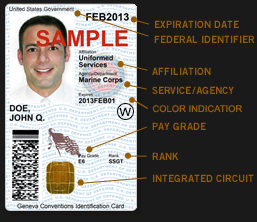
A DoD Common Access Card

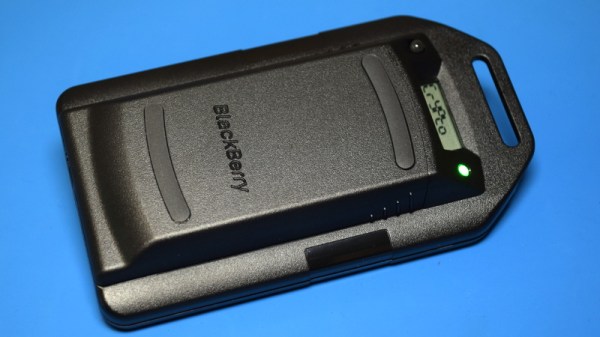
But this article isn’t about BlackBerry phones. It’s about something that’s evenĀ more irrelevant to consumers: the BlackBerry Smart Card Reader. Technically, this little device isn’t dependent on the phones of the same name, but it makes sense that Research In Motion (which eventually just renamed itself to BlackBerry Limited) would market the gadget under the brand of their most popular product. Though as you might expect, software was available to allow it to work with the BlackBerry phone that you almost certainly owned if you needed a dedicated smart card reader.

For those who might not be aware, a smart card in this context is a two-factor authentication token contained in an ID card. These are used extensively by organizations such as the Department of Defense, where they’re known as Common Access Cards, that require you to insert your ID card into a reader before you can log into a secure computer system. This sleek device was marketed as a portable reader that could connect to computers over USB or Bluetooth. Worn around your neck with the included lanyard, the battery-powered reader allowed the card itself to remain on the user’s body while still being readable by nearby devices.

Civilians will recognize the basic technology from modern “Chip and PIN” debit and credit cards, but we’ve never had to stick one of those into our laptop just to log in. To be sure, the BlackBerry Smart Card Reader was never intended for the average home computer user, it was sold to companies and organizations that had tight security requirements; which just so happened to be the same places that would likely already be using BlackBerry mobile devices.

Of course, times and technology change. These devices once cost $200 apiece and were purchased in vast quantities for distribution to trusted personnel, but are now all but worthless. Even in new and unopened condition, they can be had for as little as $10 USD on eBay. For that price, it’s certainly worth taking a peek inside. Perhaps the hacker community can even find new applications for these once cutting-edge devices.

Continue reading “Teardown: BlackBerry Smart Card Reader”

Twitter: It’s Not The Algorithm’s Fault. It’s Much Worse.

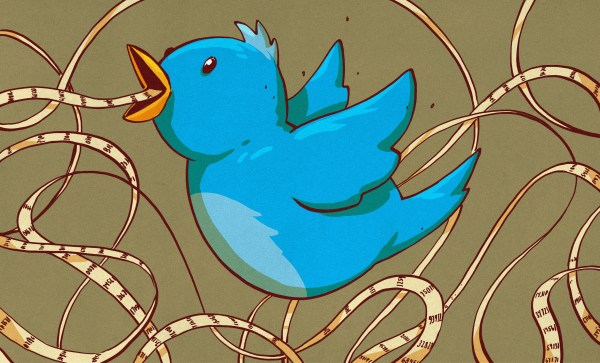
Maybe you heard about the anger surrounding Twitter’s automatic cropping of images. When users submit pictures that are too tall or too wide for the layout, Twitter automatically crops them to roughly a square. Instead of just picking, say, the largest square that’s closest to the center of the image, they use some “algorithm”, likely a neural network, trained to find people’s faces and make sure they’re cropped in.

The problem is that when a too-tall or too-wide image includes two or more people, and they’ve got different colored skin, the crop picks the lighter face. That’s really offensive, and something’s clearly wrong, but what?

A neural network is really just a mathematical equation, with the input variables being in these cases convolutions over the pixels in the image, and training them essentially consists in picking the values for all the coefficients. You do this by applying inputs, seeing how wrong the outputs are, and updating the coefficients to make the answer a little more right. Do this a bazillion times, with a big enough model and dataset, and you can make a machine recognize different breeds of cat.

What went wrong at Twitter? Right now it’s speculation, but my money says it lies with either the training dataset or the coefficient-update step. The problem of including people of all races in the training dataset is so blatantly obvious that we hope that’s not the problem; although getting a representative dataset is hard, it’s known to be hard, and they should be on top of that.

Which means that the issue might be coefficient fitting, and this is where math and culture collide. Imagine that your algorithm just misclassified a cat as an “airplane” or as a “lion”. You need to modify the coefficients so that they move the answer away from this result a bit, and more toward “cat”. Do you move them equally from “airplane” and “lion” or is “airplane” somehow more wrong? To capture this notion of different wrongnesses, you use a loss function that can numerically encapsulate just exactly what it is you want the network to learn, and then you take bigger or smaller steps in the right direction depending on how bad the result was.

Let that sink in for a second. You need a mathematical equation that summarizes what you want the network to learn. (But not how you want it to learn it. That’s the revolutionary quality of applied neural networks.)

Now imagine, as happened to Google, your algorithm fits “gorilla” to the image of a black person. That’s wrong, but it’s categorically differently wrong from simply fitting “airplane” to the same person. How do you write the loss function that incorporates some penalty for racially offensive results? Ideally, you would want them to never happen, so you could imagine trying to identify all possible insults and assigning those outcomes an infinitely large loss. Which is essentially what Google did — their “workaround” was to stop classifying “gorilla” entirely because the loss incurred by misclassifying a person as a gorilla was so large.

This is a fundamental problem with neural networks — they’re only as good as the data and the loss function. These days, the data has become less of a problem, but getting the loss right is a multi-level game, as these neural network trainwrecks demonstrate. And it’s not as easy as writing an equation that isn’t “racist”, whatever that would mean. The loss function is being asked to encapsulate human sensitivities, navigate around them and quantify them, and eventually weigh the slight risk of making a particularly offensive misclassification against not recognizing certain animals at all.

I’m not sure this problem is solvable, even with tremendously large datasets. (There are mathematical proofs that with infinitely large datasets the model will classify everything correctly, so you needn’t worry. But how close are we to infinity? Are asymptotic proofs relevant?)

Anyway, this problem is bigger than algorithms, or even their writers, being “racist”. It may be a fundamental problem of machine learning, and we’re definitely going to see further permutations of the Twitter fiasco in the future as machine classification is being increasingly asked to respect human dignity.

Autodesk Blinks, Keeps STEP File Export In Free Version Of Fusion 360

Good news, Fusion 360 fans — Autodesk just announced that they won’t be removing support for STEP file exports for personal use licensees of the popular CAD/CAM platform after all.

As we noted last week, Autodesk had announced major changes to the free-to-use license for Fusion 360. Most of the changes, like the elimination of simulations, rolling back of some CAM features, and removal of generative design tools didn’t amount to major workflow disruptions for many hobbyists who have embraced the platform. But the loss of certain export formats, most notably STEP files, was a bone of contention and the topic of heated discussion in the makerverse. Autodesk summed up the situation succinctly in their announcement, stating that the reversal was due to “unintended consequences for the hobbyist community.”

While this is great news, bear in mind that the other changes to the personal use license are still scheduled to go into effect on October 1, while the planned change to limit the number of active projects will go into effect in January 2021. So while Fusion 360 personal use licensees will still have STEP files, the loss of other export file formats like IGES and SAT are still planned.

Ask Hackaday: Is Windows XP Source Code Leak A Bad Thing?

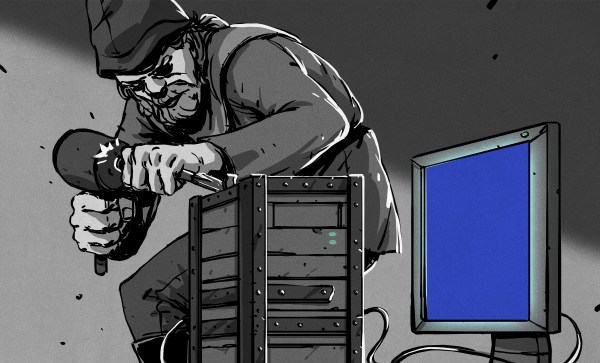
News comes overnight that the Windows XP source code has been leaked. The Verge says they have “verified the material as legitimate” and that the leak also includes Windows Server 2003 and some DOS and CE code as well. The thing is, it has now been more than six years since Microsoft dropped support for XP, does it really matter if the source code is made public?

The Poison Pill

As Erin Pinheiro pointed out in her excellent article on the Nintendo IP leak earlier this year (perhaps the best Joe Kim artwork of the year on that one, by the way), legitimate developers can’t really make use of leaked code since it opens them up to potential litigation. Microsoft has a formidable legal machine that would surely go after misuse of the code from a leak like this. Erin mentions in her article that just looking at the code is the danger zone for competitors.

Even if other software companies did look at the source code and implement their own improvements without crossing the legal line, how much is there still to gain? Surely companies with this kind of motivation would have reverse engineered the secret sauce of the long dead OS by now, right?

Spy vs. Spy

The next thing that comes to mind are the security implications. At the time of writing, statcount pegs Windows XP at a 0.82% market share which is still going to be a very large number of machines. Perhaps a better question to consider is what types of machines are still running it? I didn’t find any hard data to answer this question, however there are dedicated machines like MRIs that don’t have easy upgrade paths and still use the OS and there is an embedded version of XP that runs on point-of-sale, automated teller machines, set-top boxes, and other long-life hardware that are notorious for not being upgraded by their owners.

Continue reading “Ask Hackaday: Is Windows XP Source Code Leak A Bad Thing?”

This Week In Security: UTorrent Vulnerable, Crowd-Sourcing Your Fail2Ban, And Cryptographers At Casinos

The uTorrent client was recently updated to fix a null pointer dereference (CVE-2020-8437), discovered by [whtaguy]. Triggering the dereference simply crashes the client — so far an actual RCE hasn’t been found. Given the nature of the null pointer dereference, it’s possible this bug is limited to denial of service. That’s extremely good, because the flaw is extremely easy to target.

BitTorrent is a clever protocol. It’s still used to distribute large files, like Linux ISOs. The concept is simple: Split a large file into small chunks. Send the chunks to a client one at a time. As each chunk is received, the client sends a copy of that chunk to the next client. As a result of this peer-to-peer (p2p) arrangement, the bandwidth available to the server is greatly multiplied. As with all other p2p arrangements, the sticking point is how to make those connections between peers, particularly when most of the world’s desktops are behind NAT routers. In practice, for two peers to share data, at least one of them has to have a port opened or forwarded to the client. This is often accomplished through Universal Plug-n-Play (UPnP) or the NAT Port Mapping Protocol (NAT-PMP). The idea of both protocols are the same; a client on an internal device can request a temporary port forward without manual intervention. Whether it’s a good idea to allow automatic port forwards is another issue for another day. Continue reading “This Week In Security: UTorrent Vulnerable, Crowd-Sourcing Your Fail2Ban, And Cryptographers At Casinos”