Stairwell Lights Keep Toddler With Night-Blindness Safe

A devastating diagnosis for a young child is every parent’s worst nightmare. All too often there’s nothing that can be done, but occasionally there’s a window of opportunity to make things better for the child, even if we can’t offer a cure. In that case even a simple hack, like a rapid response stairwell light to help deal with night-blindness, can make a real difference.

[Becca] isn’t yet a year old, but she and her parents carry a heavy burden. She was born with Usher Syndrome, an extremely rare genetic disease that affects hearing and vision to different degrees. In [Becca]’s case, she was born profoundly deaf and will likely lose her sight by the time she’s 10 or so. Her dad [Jake] realized that the soon-to-be-toddler was at risk due to a dark stairwell and the night-blindness that accompanies Usher, so he came up with a simple tech solution to the problem.

He chose Philips Hue LED light strips to run up the stringer of the stairs controlled by a Raspberry Pi. Originally he planned to use IFTTT for the job but the latency resulted in the light not switching on fast enough. He ended up using a simple PIR motion sensor which the Pi monitors and then uses the Hue API to control the light. This will no doubt give him a platform for future capabilities to help [Becca].

We’ve covered a few builds where parents have hacked solutions for their kids, like this custom media center for the builder’s autistic son. We suspect [Jake] has a few more tricks up his sleeve to help [Becca], and we’re looking forward to seeing how she does.
Under The (Linux) Hood

We’ve often heard that you don’t need to know how an engine works to drive a car, but you can bet that professional race car drivers know. By analogy, you can build lots of systems with off-the-shelf boards like Raspberry Pis and program that using Python or some other high-level abstraction. The most competent hackers, though, know what’s going on inside that Pi and what Python is doing under the hood down to some low level.

If you’ve been using Linux “under the hood” often means understanding what happens inside the kernel–the heart of the Linux OS that manages and controls everything. It can be a bit daunting; the kernel is simple in concept, but has grown over the years and is now a big chunk of software to approach.

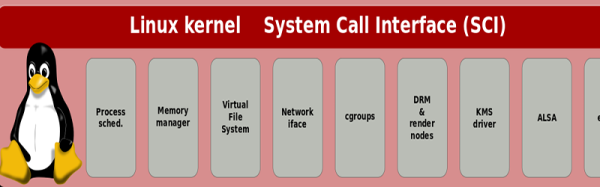
Your first embedded system project probably shouldn’t be a real time 3D gamma ray scanner. A blinking LED is a better start. If you are approaching the kernel, you need a similar entry level project. [Stephen Brennan] has just the project for you: add your own system call to a custom Linux kernel.

Continue reading “Under The (Linux) Hood”

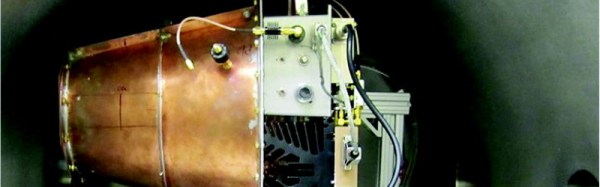
EM Drive Paper Published By Eagleworks Team

There are one or two perennial scientific stories that sound just too good to be true, but if they delivered on their promise would represent a huge breakthrough and instantly obsolete entire fields. One example is so-called “cold fusion”, the idea that nuclear fusion could be sustained with a net energy release at room temperature rather than super-high temperature akin to that of the sun. We all wish it could work, but so far it has obstinately refused. As a TV actor portraying a space engineer of the future once said, one “cannae change the Laws of Physics“.
Continue reading “EM Drive Paper Published By Eagleworks Team”

IPhone NVMe Chip Reversed With Custom Breakout Boards

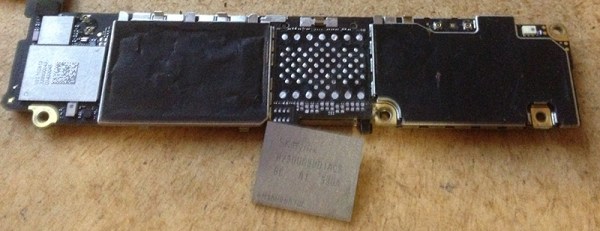
Ever so slowly, the main storage in our computers has been moving from spinning disks, to SSDs over SATA, to Flash drives connected to a PCI something or other. The latest technology is NVMe — Non-Volitile Memory Express — a horribly named technology that puts a memory controller right on the chip. Intel has a PCI-based NVMe drive out, Samsung recently released an M.2 NVMe drive, and the iPhone 6S and 6S Plus are built around this storage technology.

New chips demand a reverse engineering session, and that’s exactly what [Ramtin Amin] did (Internet Archive). He took a few of these chips out of an iPhone, created a board that will read them, and managed to analyze the firmware.

Any reverse engineering will begin with desoldering the chip. This is easy enough, with the real trick being getting it working again outside whatever system it was removed from. For this, [Ramtin] built his own PCIe card with a ZIF socket. This socket was custom-made, but the good news is you can buy one from ITEAD. Yes, it is expensive — that’s what you get with a custom-made ZIF socket.

With the chip extracted, a custom PCIe card, and a bit of work with the NVMe implementation for Linux, [Ramtin] had just about everything working. Eventually, he was able to dump the entire file system on the chip, allowing anyone to theoretically back up the data on their iPhone or MacBook Air. Of course, and especially for the iPhone, this data is encrypted. It’s not possible to clone an iPhone using this method, but it is a remarkably deep dive into the hardware that makes our storage tick.

Grace Hopper, Margaret Hamilton, Richard Garwin Named For Medal Of Freedom

Somewhat hidden among athletes, actors, and musicians, three giants of technology have been aptly named as 2016 Presidential Medal of Freedom recipients. Grace Hopper, Margaret Hamilton, and Richard Garwin all made significant contributions to the technology that envelops our lives and embody the quest for knowledge and life-long self learning that we’d like to see in everyone.

Commodore Grace M. Hopper, USN (covered).

Rear Admiral Grace Hopper’s legacy lies with the origins of computer science. She wrote the first compiler. In a time when computers were seen more as calculating machines than easily adaptable frameworks she looked to the future and made it happen. She continued to make huge contributions with lasting effect in developing COBOL, unit testing methods for programmers, and in education. We have long loved her explanation of a nanosecond (and why software engineers shouldn’t waste cycles) and was one of the first to program on the Harvard Mark I which can still be seen in the lobby of the school’s engineering building.

margaret_hamilton_1995As Director of Apollo Flight Computer Programming, Margaret Hamilton is the driving force behind the software of Apollo. When the program started, she was Director of Software Engineering at MIT Instrumentation Laboratory. Originally there wasn’t a plan or budget for software in the space program. Hamilton built the program and led the team who wrote the software and turned it into punch cards to be fed into the computer. We enjoyed reading about some of her adventures during the Apollo project, her drive to develop pristine code is palpable. Over the past year we’ve marveled at the rope memory of the Apollo Guidance Computer and delighted when a hardcopy of AGC software showed up at a party. Her legacy at having written the code for the first portable computer — one that happened to land on the moon and return home safely — is incredible.

richardgarwin1980Physicist Richard Garwin’s name is most associated with the first hydrogen bomb design. But another part of his work is more likely to have directly touched your life: his research into spin-echo magnetic resonance helped lead to the development of Magnetic Resonance Imaging. MRIs have of course become a fundamental tool in medicine. Garwin studied under Fermi during his doctoral work — you may remember Fermi from our look at the Fermiac analog computer last year.

Congratulations to these three recipients, their recognition is incredibly well deserved. We’d love to hear about some of your own technology heroes. Let us know on the tips line so that we may help celebrate their accomplishment and inspire the next generation of giants.

Image Credits:

Slow 3.5″ Raspberry Pi LCD Hacked To 40 MHz With ESP8266

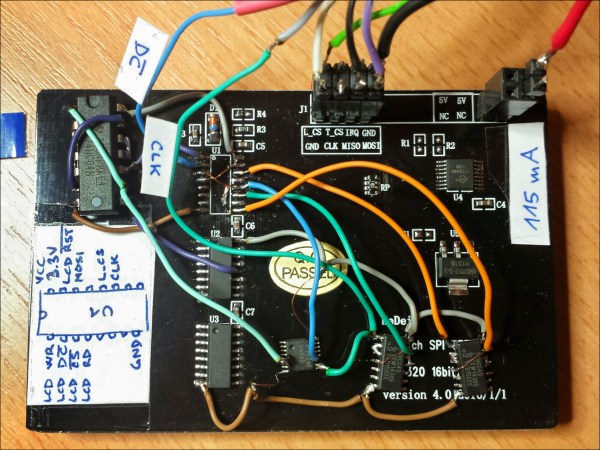
As microcontrollers become more and more common, we see more ways to get a lot of performance out of one chip. A great example of this was the ESP8266 which was originally seen as a cheap WiFi card but has since blossomed into its own dev platform thanks to the horsepower hidden within. To that end, [Martin] is trying to push the now-ubiquitous WiFi chip even further by rolling out his own LCD driver for it from scratch.

The display of choice is the KeDei LCD 3.5″ module which was originally intended for use with a Raspberry Pi. [Martin] points out that this display isn’t optimized for speed, but after everything is said and done he has its clock line running at 40 MHz. To get this kind of speeds from the LCD, he depopulates the first shift register and adds his own fast-propagation circuit to establish a more-traditional serial addressing mode. With use of a WLCD driver that [Martin] also wrote, it is now relatively easy to draw on the screen very quickly with an ESP module. Check it out in the video below.

If you’re looking for your own tiny, cheap, fast display, this is one cool way to do it but we would suggest spinning a carrier board for both the ESP and the added circuitry. We’re looking forward to future projects which puts devices like these inside of really tiny magic mirrors, or uses them in other places where a small graphical display would be handy.

Continue reading “Slow 3.5″ Raspberry Pi LCD Hacked To 40 MHz With ESP8266”

PoisonTap Makes Raspberry Pi Zero Exploit Locked Computers

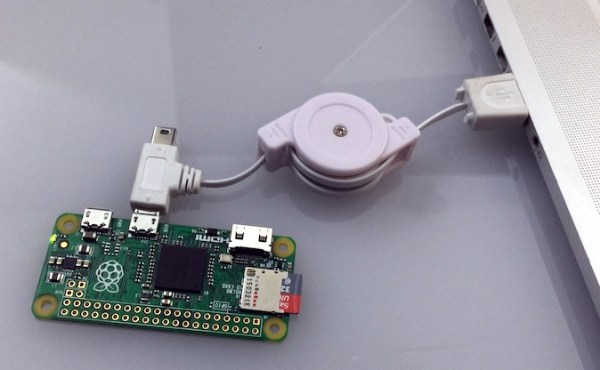
[Samy Kamkar], leet haxor extraordinaire, has taken a treasure trove of exploits and backdoors and turned it into a simple hardware device that hijacks all network traffic, enables remote access, and does it all while a machine is locked. It’s PoisonTap, and it’s based on the Raspberry Pi Zero for all that awesome tech blog cred we crave so much.

PoisonTap takes a Raspberry Pi Zero and configures it as a USB Gadget, emulating a network device. When this Pi-come-USB-to-Ethernet adapter is plugged into a computer (even a locked one), the computer sends out a DHCP request, and PoisonTap responds by telling the machine the entire IPv4 space is part of the Pi’s local network. All Internet traffic on the locked computer is then sent over PoisonTap, and if a browser is running on the locked computer, all requests are sent to this tiny exploit device.

With all network access going through PoisonTap, cookies are siphoned off, and the browser cache is poisoned with an exploit providing a WebSocket to the outside world. Even after PoisonTap is unplugged, an attacker can remotely send commands to the target computer and force the browser to execute JavaScript. From there, it’s all pretty much over.

Of course, any device designed to plug into a USB port and run a few exploits has a few limitations. PoisonTap only works if a browser is running. PoisonTap does not work on HTTPS cookies with the Secure cookie flag set. PoisonTap does not work if you have filled your USB ports with epoxy. There are a thousand limitations to PoisonTap, all of which probably don’t apply if you take PoisonTap into any office, plug it into a computer, and walk away. That is, after all, the point of this exploit.

As with all ub3r-1337 pen testing tools, we expect to see a version of PoisonTap for sale next August in the vendor area of DEF CON. Don’t buy it. A Raspberry Pi Zero costs $5, a USB OTG cable less than that, and all the code is available on Github. If you buy a device like PoisonTap, you are too technically illiterate to use it.

[Samy] has a demonstration of PoisonTap in the video below.

Continue reading “PoisonTap Makes Raspberry Pi Zero Exploit Locked Computers”