Hands-on The AND!XOR Unofficial DEF CON Badge

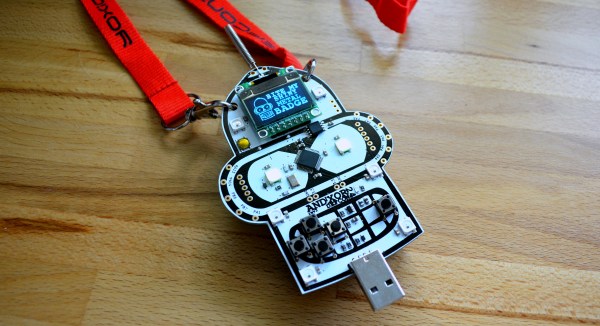
DEF CON 24 is still about two weeks away but we managed to get our hands on a hardware badge early. This is not the official hardware — there’s no way they’d let us leak that early. Although it may be unofficial in the sense that it won’t get you into the con, I’m declaring the AND!XOR badge to be officially awesome. I’ll walk you through it. There’s also a video below.

Over the past several years, building your own electronic badge has become an impromptu event. People who met at DEF CON and have been returning year after year spend the time in between coming up with great ideas and building as many badges as they can leading up to the event. This is how I met the trio who built this badge — AND!XORAndrew Riley, and Jorge Lacoste — last year they invited me up to their room where they were assembling the last of the Crypto Badges. Go check out my guide to 2015 Unofficial DEF CON badges for more on that story (and a video of the AM transmissions that badge was capable of).

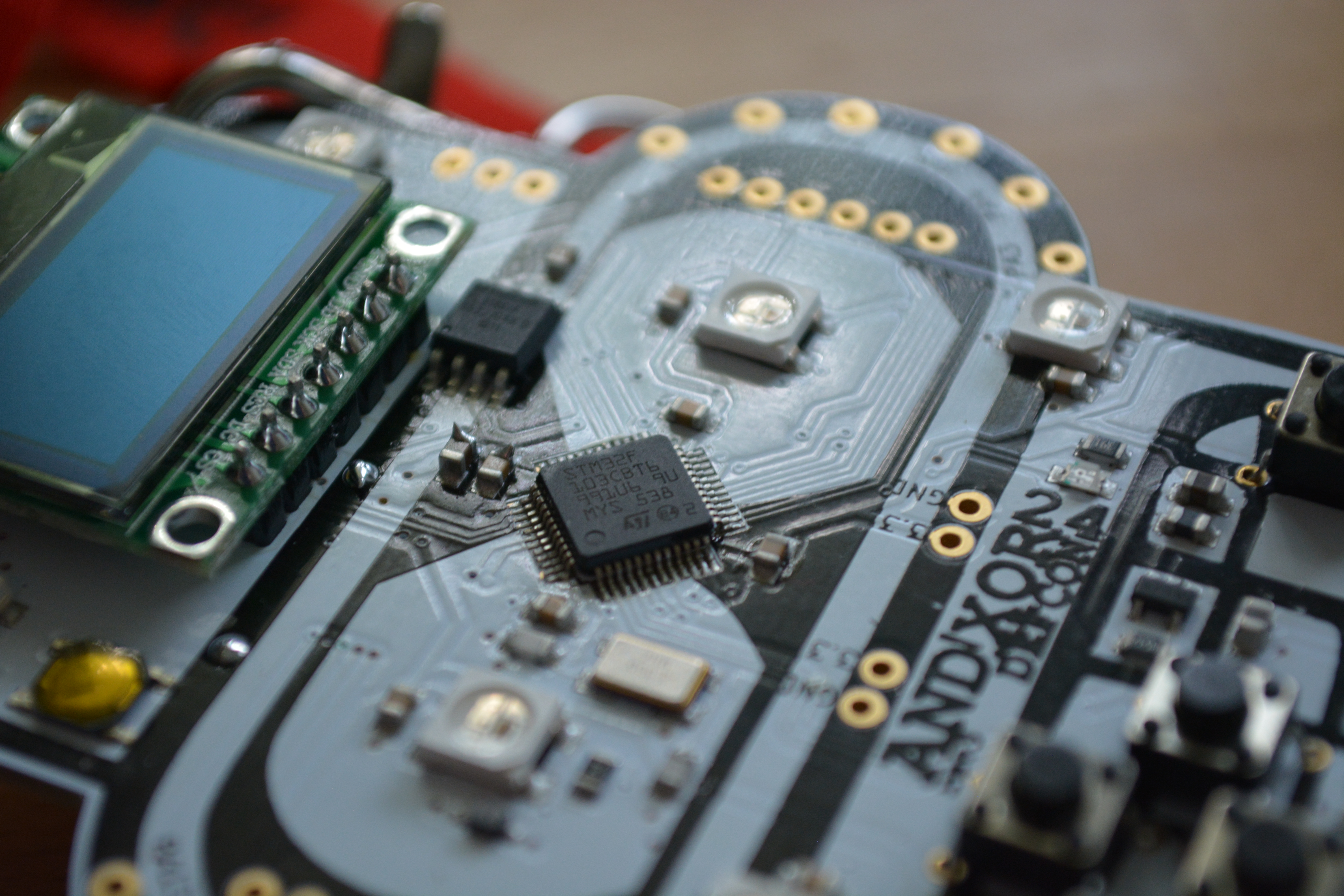
The outline is this year’s badge is of course Bender from Futurama. Both eyes are RGB LEDs, with another half dozen located at different points around his head. The microcontroller, an STM32F103 ARM Cortex-M0 Cortex-M3, sits in a diamond pattern between his eyes. Above the eyes you’ll find 16 Mbit of flash, a 128×64 OLED screen, and a reset button. The user inputs are five switches and the badge is powered by three AA batteries found on the flip side.
bender's-nose-closeup

That alone makes an interesting piece of hardware, but the RFM69W module makes all of the badges interactive. The spring coming off the top of Bender’s dome is a coil antenna for the 433 MHz communications. I only have the one badge on hand so I couldn’t delve too deeply what interactive tricks a large pool of badges will perform, but the menu hints at a structure in place for some very fun and interesting applications.

Continue reading “Hands-on The AND!XOR Unofficial DEF CON Badge”
What It’s Like To Quit Your Job And Start A Company – Then Fail

Some of our more dedicated readers may remember me as that promising and talented new writer who disappeared after only a couple of months last fall. Or, alternatively, that moronic new writer who had no idea what he was talking about. But, I’m just going to go ahead and assume it was the former in order to protect my ego. In either case, if you remember me at all, you may have wondered why I left. Was it cholera? Was I drafted into a top-secret CIA program? Did I join a circus as a fledgling trapeze artist?

No, it was none of that. That would be absurd. What would make you think I had any trapeze skills at all, much less circus-worthy ones? The truth is a lot more straightforward, but was also a lot scarier (and more exciting) for me — I started a business. The astute readers among you have probably already put the dots together and figured out that I failed. The title was a pretty strong hint, right? This isn’t a story of bootstraps-pulling success, or a heartwarming underdog tale. This is an opportunity for me to talk about the lessons I learned as I failed, and to give the entrepreneurs out there something to consider when they start their businesses. We’ll laugh together, we’ll cry together, and maybe we’ll even learn something together. Ready? Alright, let’s dive right into the heart of it, starting when I was seven years old…

Continue reading “What It’s Like To Quit Your Job And Start A Company – Then Fail”

VertiGo Robot Drives Up Walls

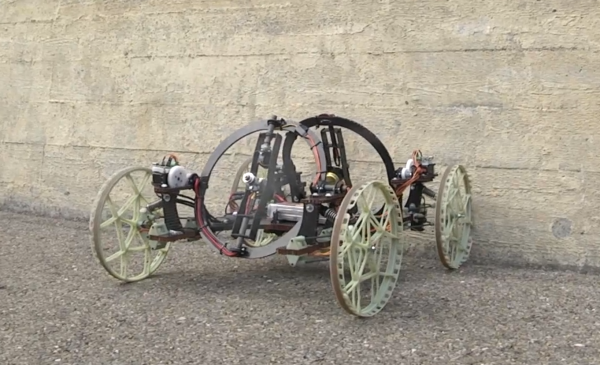
This collaboration between ETH and the Disney empire’s research arm is a ultra-light robot that can roll across horizontal surfaces and also transition and climb walls.

The robot has four wheels with one steerable set, but its secret sauce is the two propellers gimbaled on its back. Using these propellers it can move itself across the ground, but also, when approaching a wall, provide enough thrust to overcome the gravity vector.

Naturally, the lighter the robot, the less force will be needed to keep it on the wall. That’s why the frame is made from carbon fiber corrugated sandwich panels. The motors, batteries, and controllers are all also light and small.

We liked how the robot was, apparently, using its propellers to provide additional stability even while on the ground. There is a video after the break, and more information can also be found on the Disney Research webpage.

Continue reading “VertiGo Robot Drives Up Walls”

It’s Not A Bridge, And Not A Tunnel. Or, Maybe It’s Both?

The gist of the idea is to suspend an underwater tunnel from floating pontoons. By the time you finished reading that sentence, you probably already had a list of things in your head that seem to make this a terrible idea. After all, it does seem to combine the worst aspects of both underwater tunnels and bridges. But, the idea may actually be a good one, and it’s already being seriously considered in Norway.

Continue reading “It’s Not A Bridge, And Not A Tunnel. Or, Maybe It’s Both?”

Bunnie And Snowden Explore IPhone’s Hackability

[Bunnie Huang] and [Edward Snowden] have teamed up to publish a paper exploring the possibility of introspection on the iPhone.

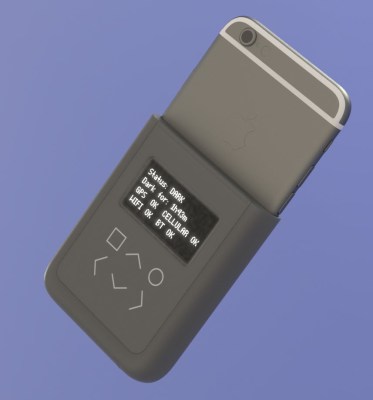
A rendering of the proposed introspection device attached to an iPhone6

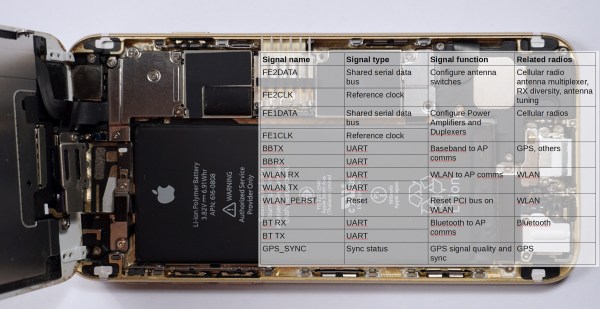
The idea is that phones are increasingly complex and potentially vulnerable to all kinds of digital surveillance. Even airplane mode is insufficient for knowing that your phone isn’t somehow transmitting information. The paper looks at the various radios on the iPhone, going so far as opening up the device and reading signals at each of the chips for cell, WiFi, Bluetooth, GPS, and NFC to determine whether the chip itself is doing anything, regardless of what the screen says. This introspection can then be used to be confident that the phone is not communicating when it shouldn’t be.

The paper goes on to propose a device that they will prototype in the coming year which uses an FPC that goes into the phone through the SIM card port. It would contain a battery, display, buttons, multiple SIM cards, and an FPGA to monitor the various buses and chips and report on activity.

Significant hacking of an iPhone will still be required, but the idea is to increase transparency and be certain that your device is only doing what you want it to.

The Onion Omega2: The Latest Router Dev Board

A few years ago, the best way to put a device or project online was by hacking a router. With an inconspicuous Linksys WRT54G held onto a project with baling wire, anything can connect to the Internet. A lot has changed in a few years, and now those routers are development boards themselves. The latest of these is the Onion Omega2, a follow-up crowdfunding campaign to the very popular original Omega. Now, this tiny dev board is faster, more capable, and now it’s giving the Raspberry Pi Zero a run for its money.

The original Onion Omega was released last year with specs you would expect from an Internet of Things development board designed upon a chip for a cheap router. The original Onion used an Atheros AR9331 SOC running at 400 MHZ, had 64MB of RAM and 16MB of storage – enough to run a lightweight Linux distro – and also included USB, 802.11b/g/n, and a handful of GPIOs and a single UART. The Omega2 is a vast improvement over the original Omega, featuring a CPU that is 45% faster. The upgraded version of the Omega sports twice as much RAM, twice as much storage, and a MicroSD slot. This enables some Linux distros with a little more oomph behind them, and of course the SD card allows for local storage.

The original Onion Omega was funded through a crowdfunding campaign, with a single Onion Omega and dock available for a pledge of $19. Taking a lesson from the C.H.I.P. and the Pi Zero, the team at Onion have slashed the price. The Omega2 is only five dollars. If you want more RAM, storage, and an SD card socket, that price goes up to $9 USD. That’s amazing, and just goes to show how far hardware designed to service the Internet of Things has come in just a few short years.

MicroPython On The ESP8266: Kicking The Tires

Scripting languages are for large computers, right? “Real” embedded device work is a hellish, never-ending cycle of code, compile, and re-flash. Well, I used to think so too, but with the proliferation of scripting and other interactive languages to microcontrollers over the last few years, the hurdle to interactive development on the small chips has gotten a lot lower.

On the ESP8266 platform, I’ve tried out NodeMCU’s Lua and ESP8266 BASIC. (For the last half-year, I’ve been using the awesome Mecrisp-Stellaris almost exclusively on the STM32F1xx and F4xx chips, but haven’t dipped into ESP8266 Forth yet.)

NodeMCU is great because it’s got everything you could want built in, and through cloud services it’s easy to get a tailored build made that maximizes free flash memory for your projects. I just don’t dig the asynchronous Lua thing (you might, try it!). ESP BASIC has a different set of libraries, and is missing MQTT for my purposes. Still it’s pretty slick, and worth a look.

So when the MicroPython folks announced that they were releasing the binary builds for the ESP, I thought it was time to give it a spin. I’ve used Python for nearly twelve years now, so it’s like a comfortable shoe for me. Would MicroPython be the same on the ESP8266? The short answer is yes and no.

Continue reading “MicroPython On The ESP8266: Kicking The Tires”