Different battery chemistries react differently to temperature. We’ve used lithium exclusively in high-altitude ballooning, for instance, because of their decent performance when cold. Lithium batteries generally don’t like high temperatures, on the other hand, but besides the risk of bursting into flames, we had no idea that heat could kill them. When the battery’s voltage is already low, though, it turns out it can.
[Josh]’s process required molding plastic with the battery inside, and this meant heating the batteries up. After the fact, he noticed an unreasonably high failure rate in the batteries, and decided to test them out. He put the batteries, each in a different initial charge, into a plastic bag and tortured them all with ice and fire. (OK, boiling water.)
When the batteries got hot, their voltage sagged a little bit, but they recovered afterwards. And while the voltage sagged a little bit more for the batteries with lower initial charge, that’s nothing compared to the complete failure of the battery that entered the hot water with under 1V on it — see they yellow line in the graphs.
There’s a million ways to kill a battery, and lithium batteries are known not to like being completely discharged, but it looks like the combination of deep discharge and heat is entirely deadly. Now you know.
The motor itself is ridiculously simple: it’s essentially a brushless DC motor with a unique winding pattern. A number of coils — anywhere from six to twenty-four — are wired together with alternating polarity. If one coil is a magnetized north, its two neighbors are magnetized south, and vice-versa. The rotor is a ring with permanent magnets, all arranged so that they have the same polarity. A capacitor is used for the power source, and a reed switch serves as a simplistic commutator, if that’s even the right term.
As the motor turns, a permanent magnet passes by the reed switch and it makes the circuit. All of the electromagnets, which are wound in series, fire and kick the rotor forwards. Then the reed switch opens and the rotor coasts on to the next position. When it gets there the reed switch closes and it gets a magnetic kick again.
The catch? Building the device so that it’s carefully balanced and running on really good (sapphire) bearings, entirely unloaded, and powered with high impedance coils, leads to a current consumption in the microamps. As with most motors, when you spin it by hand, it acts as a generator, giving you a simple way to charge up the capacitor that drives it. In his video [lasersaber] blows on the rotor through a straw to charge up the capacitor, and then lets it run back down. It should run for quite a while on just one spin-up.
The EZ Spin motor is absolutely, positively not perpetual motion or “over-unity” or any of that mumbo-jumbo. It is a cool, simple-to-build generator/motor project that’ll definitely impress your friends and challenge you to see how long you can get it running. Check out [lasersaber]’s website, this forum post, and a 3D model on Thingiverse if you want to make your own.
While some of you may have been to see the new Star Wars movie, you might be sad that everything happened a long time ago in a galaxy far away. But there’s a group of RC enthusiasts called [Flite Test] who are trying to bring at least a little bit of that fantasy into real life. They’ve created a truck-sized Star Destroyer that actually flies. It looks kind of terrifying, too.
While it’s not as big as a “real” Star Destroyer, it’s certainly one of the biggest we’ve ever seen in real life. Built out of foam, this monstrosity is 15 feet long and powered by two huge electric motors and a large lithium polymer battery. Of course they didn’t start out by building this huge flying spaceship; they created a smaller model as proof-of-concept and flew that one around for a while to make sure everything was shipshape. While it’s exciting to see the small model in flight, it’s another thing to see the 15-foot version swooping around.
We’re sad to report that the Star Destroyer did meet a similar fate as the one that Rey was scavenging at the beginning of the movie (spoilers: it crashed), we hope that the RC team rebuilds it so it’s space worthy again. Maybe they can even add a real-life ion drive or a few lasers to make it even more real.
A few hours from now, the ball will drop in Times Square. 2015 is over, and the good news is you can easily turn a handwritten ‘5’ into a ‘6’. Keep that in mind for the next few weeks. It’s time for a retrospective of everything that happened in 2015. That’s rather boring, though, and it’s usually better to put the most outrageous items in the lede. Therefore, it’s time for predictions of what will happen over the next 366 days. They are, in order:
2016 will be the year of the Linux desktop
Self-driving cars will be demonstrated
Graphene! Something to do with graphene!
Your company will receive a resume with ‘Bitcoin’ listed as a skill
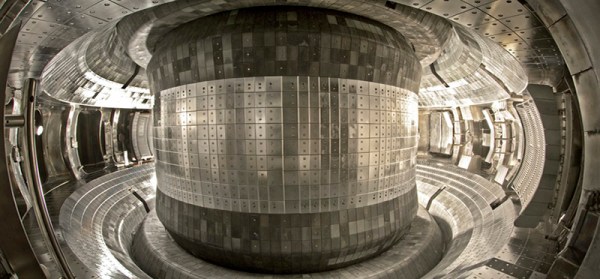
Fusion power is only nine years away
With that said, a lot happened this year. Tiny Linux single board computers became incredibly cheap, Radio Shack died, and Arduino went crazy.
[Daniel Lange] and [Felix Domke] gave a great talk about the Volkswagen emissions scandal at this year’s Chaos Communication Congress (32C3). [Lange] previously worked as Chief architect of process chain electronics for BMW, so he certainly knows the car industry, and [Domke] did a superb job reverse-engineering his own VW car. Combining these two in one talk definitely helps clear some of the smog around the VW affair.
[Lange]’s portion of the talk basically concerns the competitive and regulatory environments that could have influenced the decisions behind the folks at VW who made the wrong choices. [Lange] demonstrates how “cheating” Europe’s lax testing regime is fairly widespread, mostly because the tests don’t mimic real driving conditions. But we’re not sure who’s to blame here. If the tests better reflected reality, gaming the tests would be the same as improving emissions in the real world.
As interesting as the politics is, we’re here for the technical details, and the reverse-engineering portion of the talk begins around 40 minutes in but you’ll definitely want to hear [Lange]’s summary of the engine control unit (ECU) starting around the 38 minute mark.
[Domke] starts off with a recurring theme in our lives, and the 32C3 talks: when you want to reverse-engineer some hardware, you don’t just pull the ECU out of your own car — you go buy another one for cheap online! [Domke] then plugged the ECU up to a 12V power supply on his bench, hooked it up, presumably to JTAG, and found a bug in the firmware that enabled him to dump the entire 2MB of flash ROM into a disassembler. Respect! His discussion of how the ECU works is a must. (Did you know that the ECU reports a constant 780 RPM on the tacho when the engine’s idling, regardless of the actual engine speed? [Domke] has proof in the reverse-engineered code!)
The ECU basically takes in data from all of the car’s sensors, and based on a number of fixed data parameters that physically model the engine, decides on outputs for all of the car’s controls. Different car manufacturers don’t have to re-write the ECU code, but simply change the engine model. So [Domke] took off digging through the engine model’s data.
Long story short, the driving parameters that trigger an emissions reduction exactly match those that result from the EU’s standardized driving schedule that they use during testing — they’re gaming the emissions tests something fierce. You’ve really got to watch the presentation, though. It’s great, and we just scratched the surface.
North Korea is a surveillance state propped up by a totalitarian government infamous for human rights abuses and a huge military that serves the elite while the poor are left to fight over scraps. Coincidently, that’s exactly what North Korea says about the United States.
There is one significant difference between the two countries: North Korea has developed its own operating system for its citizens, called Red Star OS. It’s an operating system based on Linux, but that has a few interesting features that allow Glorious Leader to take care of his citizens. A deep teardown of what has gone into the development of Red Star OS hasn’t been available until now, with [Florian Grunow] and [Niklaus Schiess]’s talk at the Chaos Communication Congress this week.
Kim Jong-Un with an iMac
The first question anyone must ask when confronted with an operating system built by a country that doesn’t have much electricity is, “why?” This question can only be answered philosophically; the late Kim Jong-Il stressed the importance of North Korea developing “their own style” of programming, and not relying on western operating systems. Nearly everything in Red Star has been modified, with a custom browser called Naenara, a crypto tool, a clone of Open Office, a software manager, and a custom music composition tool. Red Star also had to have the look and feel of OS X; that is, after all, what Glorious Leader uses.
Red Star goes much deeper than custom browsers and a desktop theme. There are other, subtler components inside the OS. There is a program that verifies the integrity of the system by checking signatures of the custom files against a database. If a file has been tampered with, the system reboots. Since this tamper check runs on bootup, Red Star makes it nearly impossible to modify files for study. This is one of the big features designed into Red Star – system integrity is paramount.
There are other custom bits of software that hide files from the user even if they have root, and a ‘virus scanner’ that is anything but. This virus scanner checks documents for patterns that, when put through Google Translate, are strange, weird, and somewhat understandable. Phrases like, “punishment”, “hungry”, and “strike with fists” are detected in all documents, and depending on what the developers decide, these documents can be deleted on a whim.
While scanning a system for documents that contain non-approved speech is abhorrent enough, there’s another feature that would make any privacy advocate weep. Media files including DOCX, JPG, PNG, and AVI files are watermarked by every computer that opened the files. This allows anyone to track the origin of a file, with the obvious consequences to free speech that entails.
While most people in the US consider North Korea to be a technological backwater and oppressive regime, the features that make Red Star OS useful to the DPRK are impressive. The developers touched nearly everything in Red Star, and the features inside it are rather clever and make their style of surveillance very useful. They’re also doing this without any apparent backdoors or other spycraft; they’re putting all their surveillance out in the open for all to see, which is, perhaps, the best way to go about it.
Despite the title, there’s no religious content in this post. The Hell in question is the German inventor [Rudolph Hell]. Although he had an impressive career, what most people remember him for is the Hellschreiber–a device I often mention when I’m trying to illustrate engineering elegance. What’s a Hellschreiber? And why is it elegant?
The first question is easy to answer: the Hellschreiber is almost like a teletype machine. It sends printed messages over the radio, but it works differently than conventional teletype. That’s where the elegance comes into play. To understand how, though, you need a little background.