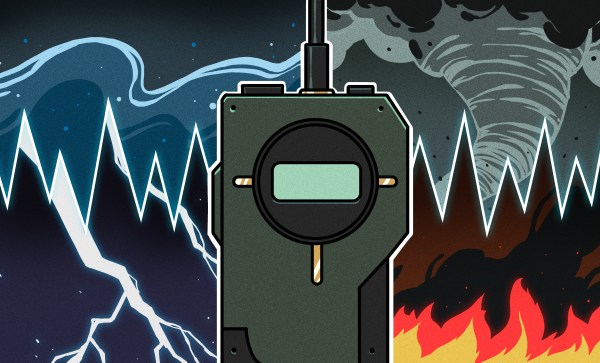
Last week, my city was hit by a tornado. That’s not surprising here in Oklahoma, and thankfully this event was an F0 or possibly even an EF0 — a really weak tornado. Only a couple roofs collapsed, though probably half the houses in town are going to need roof repairs, thanks to the combination of huge hail and high winds. While it wasn’t too bad, power did go down in a few places around town, and this led to an interesting series of events.
Chat messages were coming in like this: “That was a [power] flicker, yeah. Even took down my Internet.” Followed by “Whee, [fiber Internet] got knocked out and now Starlink has too many clouds in the way.” And after ten minutes of silence, we got a bit worried to see “Time to hide under a bed. … Is cell service back?” It is a bit spooky to think about trying to help neighbors and friends after a disaster, in the midst of the communication breakdown that often follows. If he had needed help, and had no working communications, how long would it have taken for us to go check on him?
Continue reading “Meshtastic For The Greater Good”