Turning Music Into A Light Show

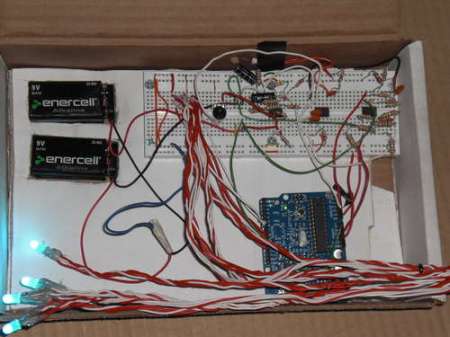
[nickinoki] Made a light show using some amplifiers and an arduino. First he created a microphone circuit based around a LM386 Audio Amplifier. After amplifying the output of the microphone a second time, he uses three bandpass filters to block all but a few desired frequencies from reaching the arduino.  By only letting a few frequencies through the arduino is able to determine if the song is louder at higher or lower frequencies.  Then using the three analogue inputs he created a scheme for generating the light show on an arduino. While he was unable to achieve the exact target frequencies with his bandpass filters they worked well enough to allow him to successfully generate the light show.

Tape Delay Made From Recycled Cassette Decks

Professional tape delay units are great fun, but often expensive. You’d think that with so many derelict cassette decks filling the world’s dumpsters someone must have figured out a way to make a cheap tape delay… not only in the interest of saving money (sometimes quality is worth paying for) but also in the interest of re-using otherwise wasted resources.

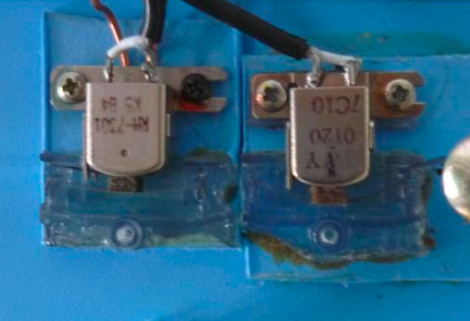
Forosdeelectronica forum user [Dano] has made just such a device from used cassette decks and miscellaneous parts (translated). First he investigated the operation of the playback, erase, and record mechanisms and broke out the tape heads. The playback head is on a plastic rail so that the delay time can be changed, while the record head is fixed. [Dano] encountered some difficulties in ensuring good quality for the recording and erasure, which is an important consideration when working with magnetic tape.

Continue reading “Tape Delay Made From Recycled Cassette Decks”

Cheap Audio Equipment Makes ATM Theft Easier

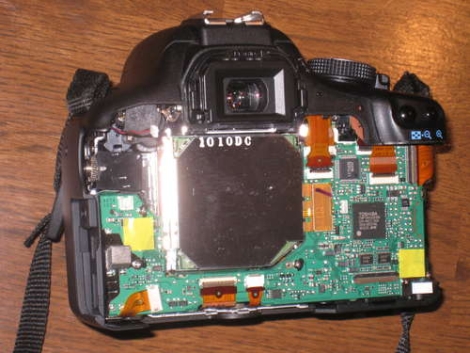
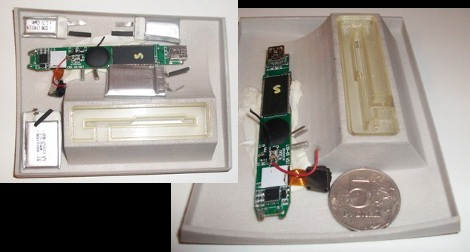
ATM information theft is nothing new. Neither is the use of skimmers to gain access to the data. But it’s a little surprising just how easy it has become to hack together the devices using audio equipment. The images above are samples of a skimmer for sale from an Eastern-European do-no-good. It is the magnetic stripe sniffer portion of the attack which captures card data as an audio recording. That is later turned into the binary code that was read from the card. We’re just speculating, but that looks an awful lot like the PCB from a pen recorder, something you can pick up for just a couple of bucks.

Of course this is used in conjunction with a camera to capture PIN data as the second part of the security protocol, but it really underscores the need for new ATM technology. Some skimmers don’t even require retrieval of the hardware, and you never know where the sketchy machines might pop up next.

[via Engadget and Slashdot]

Adventures In Consumer Electronics Control (CEC)

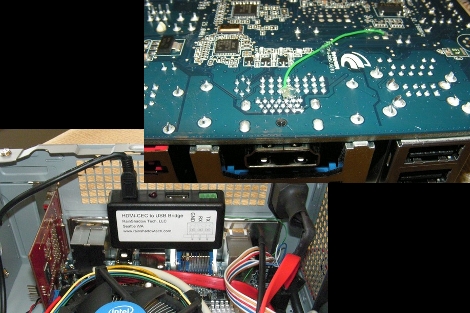
[Valkyrie-MT] was frustrated by the inability to control TrueHD audio volume from his computer. That’s because digital audio passes through the cable to the receiver where the volume adjustments are done. This meant that his RF computer remote was no good because the receiver uses an IR remote. He set out to find a way to get around this and ended up working with the Consumer Electronics Control (CEC) protocol.

The CEC protocol is a 1-wire serial bus built into the HDMI standard. The solution he settled up required one solder connection on the motherboard as well as the internal USB translator module seen above. That translator box, called the RainShadow, is a PIC 18F87J50 controlled board that translates incoming commands from the USB connection and sends them out as CEC hex codes. A bit of code writing and [Valkyrie-MT] is in business. You can see in the video after the break that it’s not just controlling audio, he can now control the entire entertainment center including turning on the TV and setting it to the appropriate input.

Continue reading “Adventures In Consumer Electronics Control (CEC)”

More Car Audio Input Hacking

[Dave] pulled the head unit out of his dashboard to add an iPod input. He took a much more invasive route than the other hack we saw a few days ago. He actually patched into the audio lines going from the Dolby reader head chip to the amplifier.

The first step was to trick the deck into thinking it had a cassette inserted. He scoped an enable pin on one of the chips to discover the timing and emulated that signal using a PIC microprocessor. From there he popped off the chip that reads the tape data, patching directly into the audio out traces. This presented some noise issues when charging the iPod but [Dave] fixed that with some decoupling capacitors.

Making Home Automation Modules Talk To Each Other


[Danny] has been working on an RNET to Sonos bridge. These are devices from two different manufacturers used to facility whole-house audio systems. Usually there’s a main controller with a large color screen and then several satellite controllers like the one above which have some of the features but at a lower cost. Normally you’re limited to using hardware from one line of devices in order to get them to talk to each other but [Danny’s] saying ‘no way’ to that restriction.

His latest post has some of the details on how he pulls this off. He used an RS232 serial connection with an Arduino to sniff out the data stream from the RNET base unit. Once he figured out the protocol he used the Arduino to parse all incoming commands, format them for the Sonos controller, and send it over the Ethernet cable to that device. He’s got everything tied together and working. Take a look at the proof in the clip after the break.

Continue reading “Making Home Automation Modules Talk To Each Other”

Audio Breakout Box For MacBook Pro

[Billy] wanted to use the audio connector on his MacBook Pro for input and output at the same time. He knew it could be done because Apple sells headphones with built-in microphones that work with the computer. He set out to build a breakout box so that he could connect the components of his choice to the single port. Using a scart-RCA adaptor box he scrapped the scart plug and wired the RCA jacks to the Apple headphone wires. He can now patch the pickup of his guitar to the mic connector, send it through the MacBook, and run the output back to his guitar amp.