Mad Eye For The WiFi

In the Harry Potter universe, Professor Moody was, perhaps unfairly, given the nickname Mad Eye for the prosthetic eye he wore. His eye remains a challenge for technically-minded cosplayers aiming to recreate the look and feel of this unique piece of headgear. [cyborgworkshop] had already mastered the basic eye, but wanted to take things further.

The original build relied on a sub-micro servo to move the eyeball. This was done at random as an attempt to simulate the eye’s behaviour in the books and films. However, wanting more, [cyborgworkshop] decided to make the eye more reactive to its surrounding environment. Using the Adafruit Huzzah, a breakout board for the ESP8266, code was whipped up to detect the number of WiFi access points in the area. The more access points, the more frequent and erratic the movement of the eye. Occasional slower periods of movement are coded in before the eye resumes its wild darting once more, depending on just how saturated the local WiFi environment is.

It’s a great twist on the project, and [cyborgworkshop] has provided more details on the initial build, too. If you think you’re having déja vu, check out this build using recycled parts.
ESP8266 Home Monitor Is Stylishly Simplistic

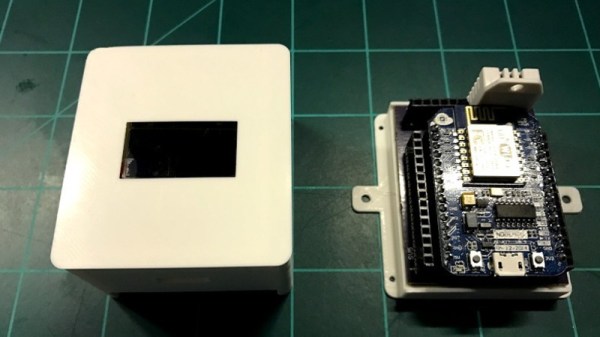
It’s often said that “Less is More”, and we think that the chic ESP8266 environmental monitor posted by Thingiverse user [bkpsu] definitely fits the bill. Dubbed “Kube”, the device is a 3D printed white cube with an OLED display in the center, which [bkpsu] says was designed specifically for the approval of his wife. Weirdly, she didn’t like the look of bare PCBs on the wall.

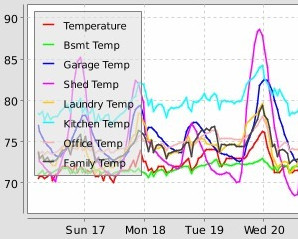
Multiple Kubes allow for whole-house monitoring.

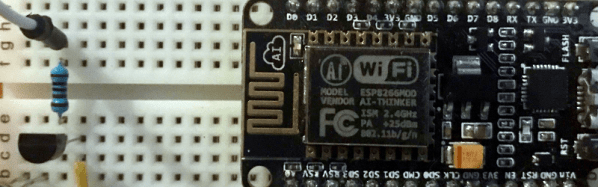
Inside, things are a little more complex. The Kube uses the NodeMCU development board, and a custom breakout that [bkpsu] designed to interface with the display and sensors. For temperature and humidity monitoring, the Kube is using the ever-popular DHT22, and [bkpsu] mentions that he has future plans for things like motion sensors and direct control of RGB LED strips. All the data collected by the Kube is piped into openHAB via MQTT.

On the very detailed Thingiverse page, [bkpsu] gives background information on his design goals for the project, tips for printing out a high-quality case, a parts list with Amazon links, and pinout information for getting it all wired up. The PCB is even available on OSH Park for those who want a Kube of their own.

Even with all the stick home monitoring and automation products on the market today, many hackers simply can’t bring themselves to buying a turn-key commercial product. But we think with the results hackers have been getting rolling their own solutions, they just might be on to something.

Weather Station Needs Almost No Batteries

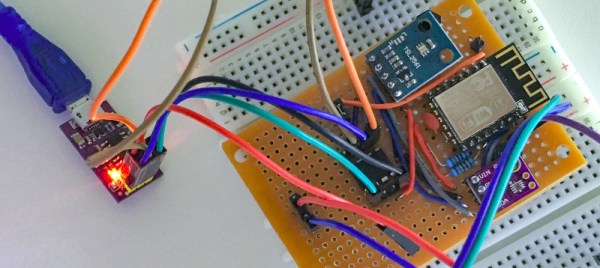
While the ESP8266 has made its way into virtually every situation where a low-cost WiFi solution is needed, it’s not known as being a low-power solution due to the amount of energy it takes to run WiFi. [Alex] took this design constraint as more of a challenge though, and with the help of an ATtiny microcontroller was able to develop a weather station using an ESP8266 that only needs new batteries every 2-4 years.

While the ESP8266 module consumes a bit of power, the ATtiny excels in low-power mode. To take advantage of this, [Alex] designed the weather station using the ATtiny to gather data every two minutes, store the data in a buffer, and upload all of it in bursts every hour using the ESP8266. This means that the power-hungry WiFi chip can stay off most of the time, drastically limiting the power demands of the station. [Alex] mostly details the setup of the ATtiny and the ESP8266 on his project page, so this could be applied anywhere that low power and network connectivity are required.

As for the weather reporting capabilities, the station is equipped to measure temperature, light, and humidity. Presumably more could be added but this might increase the power demands for the weather station as a whole. Still, changing batteries once a year instead of once every two years might be a worthwhile trade-off for anyone else attempting such an ambitious project. Other additions to the weather station that we’ve seen before might include a low-power display, too.

Alexa, Hack My TV

If you have an Alexa, one of the best things you can buy to go with it is a Harmony Hub remote. Sure, you get a universal remote to control all your home theater equipment, but you’ll hardly use it because the Alexa can virtually push the Harmony buttons for you. The negative word in this paragraph, though, is “buy.” The Harmony Hub isn’t inexpensive. Fortunately [Michael Higginis] has you covered. He has an ESP8266 universal remote that you can control with Alexa. You can see a video of setting the system up below.

On the one hand, the idea is fairly simple. An ESP8266 has plenty of horsepower to read and recreate IR codes. However, we were very impressed with the web portal used to configure the device and integrating it with Alexa is a neat trick.

Continue reading “Alexa, Hack My TV”

IoT With The Ethereum Blockchain

Anyone keeping up with financial news today is surely inundated with stories about Bitcoin and other cryptocurrencies. While most of the news is about the potentially inflated value of some of these coins, and how drastically they have changed in price in just a decade, there are other interesting things going on behind the scenes. For example, the currency Ethereum allows for a distributed programming platform of sorts to be implemented in the blockchain, which [GusGorman402] has taken advantage of in his latest project (YouTube link, embedded below).

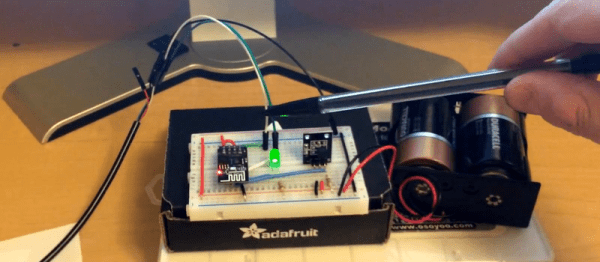
The device that he built is based on an ESP8266 which connects to a router running an instance of a Go Ethereum node. Essentially, he uses the Ethereum blockchain to control an LED connected to the ESP8266 using a feature of Ethereum called a smart contract. While this might be a misleading name, a smart contract is basically an autonomous program that can do virtually anything a programmer writes into it. While this is a roundabout way to write a “Hello World” program, it does demonstrate the power of the Ethereum platform when compared to other cryptocurrencies.

If you’re interested in currency trading, blockchains, cryptography, or the future of computing, be sure to check out the detailed video after the break. It’s a curious new tool, and it will be interesting to see how developers and hackers alike use it to accomplish things we’ve never thought of yet.

Continue reading “IoT With The Ethereum Blockchain”

Repair Job Fixes Compressor, Gets It Online

We’ll never cease to be amazed at the things people try to put on the Internet of Things. Some are no-brainers, like thermostats, security cameras, and garage door openers. Others, like washing machines and refrigerators, are a little on the iffy side, but you can still make a case for them. But an IoT air compressor? What’s the justification for such a thing?

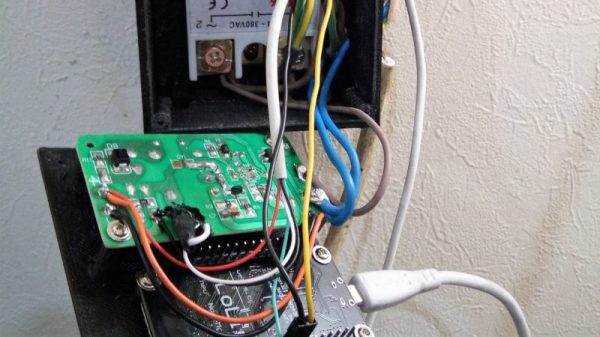
As it turns out, [Boris van Galvin] had a pretty decent reason for his compressor hacks, and it appears that the IoT aspect was one of those “why not?” things. Having suffered the second failure of his compressor’s mechanical pressure switch in a year, and unwilling to throw good money after the $120 that went into replacing the first contactor, [Boris] looked for a cheaper and more interesting way to control the compressor. An ESP8266 dev board made interfacing the analog pressure sensor a snap, and while he was at it, [Boris] added a web interface with a nice graphical air pressure gauge and some on-off controls. Now he can set the pressure using his phone and switch it off in the middle of the night without going outside. That’s an IoT win right there.

No air compressor? No worries — build your own from an old fridge. The non-IoT kind, preferably.

Fridge Alarm Speaks, And Saves Power & Food

One of the most power-hungry devices in our homes, besides the air conditioner or heater, is our refrigerator and freezer. It’s especially so if the door doesn’t close all the way or the magnetic seal doesn’t seat properly. [Javier] took to solving a recurring problem with his personal fridge by attaching an alarm to the door to make sure that it doesn’t consume any more power than it absolutely needs.

At its core the device is straightforward. A micro switch powers a small microcontroller only when the door is open. If the door is open for too long, the microcontroller swings into action. The device then powers up a small wireless card (which looks like a variant of the very well-documented ESP module), that communicates with his microwave of all things, which in turn alerts him with an audible, spoken alarm that the refrigerator hasn’t closed all the way. It’s all powered with a battery that will eventually need to be recharged.

While there are certainly easier ways to implement an alarm, the use of the spoken alarm is a nice touch for this project, and the power savings that can be realized are not insignificant. There’s also the added benefit that [Javier] can prevent his freezer from frosting over. If you’re in the mood for other great fridge hacks, there are other exciting, novel, and surely one-of-a-kind ways to trick out your refrigerator.

Continue reading “Fridge Alarm Speaks, And Saves Power & Food”