Accidental Satellite Hijacks Can Rebroadcast Cell Towers

A lot of us will use satellite communications without thinking much about the satellite itself. It’s tempting to imagine that up there in orbit is a communications hub and distribution node of breathtaking complexity and ingenuity, but it might come as a surprise to some people that most communications satellites are simple transponders. They listen on one frequency band, and shift what they hear to another upon which they rebroadcast it.

This simplicity is not without weakness, for example the phenomenon of satellite hijacking has a history stretching back decades. In the 1980s for example there were stories abroad of illicit trans-atlantic serial links nestling as unobtrusive single carriers among the broad swathe of a broadcast satellite TX carrier.

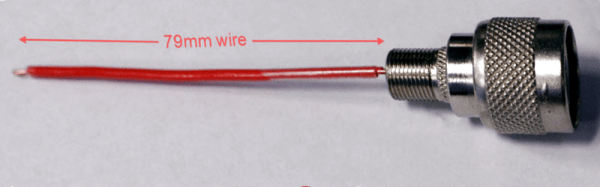
Just sometimes, this phenomenon happens unintentionally. Our attention was drawn to a piece by [Harald Welte] on the unintended rebroadcast of GSM base station traffic over a satellite transponder, and of particular interest is the presentation from a conference in 2012 that it links to. The engineers show how they identified their interference as GSM by its timing frames, and then how they narrowed down its source to Nigeria. This didn’t give them the uplink in question though, for that they had to make a downconverter from an LNB, the output of which they coupled to an aged Nokia mobile phone with a wire antenna placed into an RF connector. The Nokia was able to decode the cell tower identification data, allowing them to home in on the culprit.

There was no fault on the part of the GSM operator, instead an unterminated port on the uplink equipment was enough to pick up the GSM signal and introduce it into the transponder as a parasitic signal for the whole of Europe and Africa to hear. Meanwhile the tale of how the engineers identified it contains enough detective work and outright hardware hacking that we’re sure the Hackaday readership will find it of interest.

If satellite hacks interest you, how about reading our thread of posts on the recapture of ISEE-3, or maybe you’d like to listen for a lost satellite from the 1960s.

Thanks [Kia] for the tip.
Ham Radio Trips Circuit Breakers

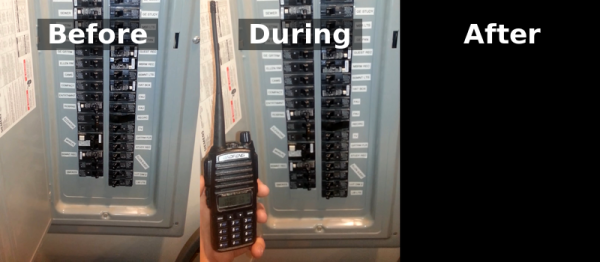
Arc-fault circuit breakers are a boon for household electrical safety. The garden-variety home electrical fire is usually started by the heat coming from a faulty wire arcing over. But as any radio enthusiast knows, sparks also give off broadband radio noise. Arc-fault circuit interrupters (AFCI) are special circuit breakers that listen for this noise in the power line and trip when they hear it. The problem is that they can be so sensitive that they cut out needlessly. Check out the amusing video below the break.

Our friend [Martin] moved into a new house, and discovered that he could flip the breakers by transmitting on the 20-meter band. “All the lights in the place went out and my rig switched over to battery. I thought it was strange as I was certainly drawing less than 20 A. I reset the breakers and keyed up again. I reset the breakers again and did a [expletive] Google search.” Continue reading “Ham Radio Trips Circuit Breakers”

Fail Of The Week: The Accidental FM Radio

[B Arnold] is hearing voices and needs help from the Hackaday community. But before any of you armchair psychiatrists run off to WebMD, rest assured that [B Arnold] suffers not from schizophrenia but rather has an RF coupling problem.

The project (which isn’t posted yet) is an attempt to turn a C.H.I.P into an Amazon Echo, for which [B Arnold] needed an audio amplifier. Turning to the junk bin, he unearthed an LM386, that venerable power amp chip that first appeared in the mid-70s. Dead simple and able to run off a 9-volt battery, the LM386 that has found its way into thousands of commercial products and countless hacks.

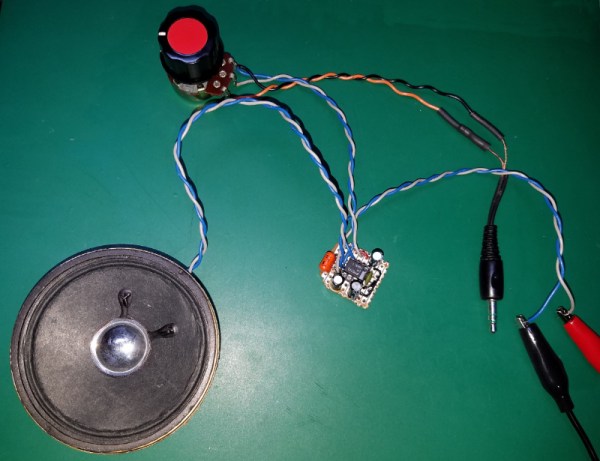
Shortly after applying power to the amp, [B Arnold] started hearing things – faint, far-off voices, scratchy but discernible. A bit of repositioning of wires and hands improved the signal enough for a station ID – an FM talk radio station on 97.1 MHz. [B Arnold] doesn’t mention the call sign, but it might have been KFTK out of St. Louis, Missouri; in any case, it would be helpful to know the range from the transmitter to the inadvertent receiver. Two low-fidelity audio clips are included below for your listening pleasure – you’ll want your headphones on, and Sample 2 is better than Sample 1 – as are photos of the offending circuit.

What do you think is going on here? We’ve heard of RF coupling of AM radio stations before, but how would FM signals be making it into this circuit and out of the speaker? Is there anything [B Arnold] did wrong to get this result? Sound off in the comments and let us know your horror stories of RF coupling.

Continue reading “Fail Of The Week: The Accidental FM Radio”

Navigation Thing: Four Days, Three Problems, And Fake Piezos

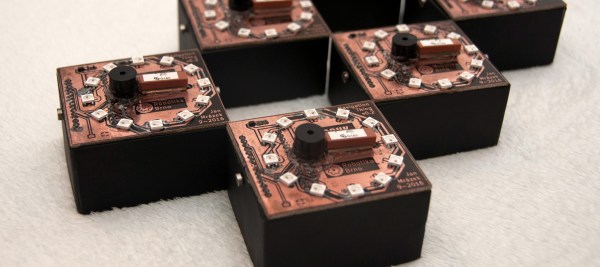
The Navigation Thing was designed and built by [Jan Mrázek] as part of a night game activity for high school students during week-long seminar. A night-time path through a forest had stations with simple tasks, and the Navigation Thing used GPS, digital compass, a beeper, and a ring of RGB LEDs to provide a bit of “Wow factor” while guiding a group of students from one station to the next. The devices had a clear design direction:

“I wanted to build a device which a participant would find, insert batteries, and follow the beeping to find the next stop. Imagine the strong feeling of straying in the middle of the night in an unknown terrain far away from civilization trusting only a beeping thing you found. That was the feeling I wanted to achieve.”

The Navigation Things (there are six in total) guide users to fixed waypoints with GPS, a digital compass, and a ring of WS2812 LEDs — but the primary means of feedback to the user is a beeping that gets faster as you approach the destination. [Jan] had only four days to make all six units, which was doable. But as most of us know, delivering on a tight deadline is often less about doing the work you know about, and more about effectively handling the unexpected obstacles that inevitably pop up in the process.

Continue reading “Navigation Thing: Four Days, Three Problems, And Fake Piezos”