Animated Jack-o’-Lantern Really Connects

Days past people used to just carve a scary face in a pumpkin, drop in a candle and call it a day, but for our kind of crowd that’s not going to cut it. [Alexis] stuffed this Jack o Lantern with a lot of brain power and even connected it up to the internet for community control.

At the core of the festive decoration is a spark core, which allows micro controlled special effects to be triggered via Twitter. RGB LED’s change colors, flicker and flash and even a spooky ghost pops out of the top. Along with all that, a sound sensor is added in so the lights can react to the ambient sound around the lantern.

If you get too close an ultrasonic sensor will trigger the ghoulish treat with lights and animation, but what about spooky sounds? That is also included thanks to a toy found at the local discount store, which had its guts removed and its trigger button replaced with a transistor.

Now sights and sounds can all be controlled remotely or in an active response mode to entertain all the little goblins visiting the house this Halloween. Join us after the break for a quick demo video and don’t forget to send in links to your own pumpkin-based hacks this week!

Continue reading “Animated Jack-o’-Lantern Really Connects”

Amazon Giving Out (Sort Of) Hackable Amazon Dash Button

We’ve seen some interesting hacks of the Amazon Dash buttons, a neat device where you press a button and it orders a product from Amazon for you. Now, [Amazon] themselves are getting into the hacking fun with the AWS IoT Button. This is a Dash button that Amazon is giving out at events to promote their new Amazon Web Services (AWS) Internet of Things (IoT) service.

As part of their efforts to take over the world, the AWS IoT service allows you to create button-based services like ordering pizza or starting Netflix, but without running your own server. Instead, Amazon handles all of the hard stuff behind the scenes on their Lambda engine, which receives the small bit of JSON that the button sends and runs a Lambda function that orders pizza, kicks off Netflix, then starts World War III. Amazon provides sample actions for things like launching the missiles sending a text message over Twilio and writing to a database. Amazon isn’t selling these buttons: they only seem to be available as swag at events. Make a loud enough noise in the comments section and maybe they’ll allocate some for the Hackaday community.

Continue reading “Amazon Giving Out (Sort Of) Hackable Amazon Dash Button”

Get Your Internet Out Of My Things

2014 was the year that the Internet of Things (IoT) reached the “Peak of Inflated Expectations” on the Gartner Hype Cycle. By 2015, it had only moved a tiny bit, towards the “Trough of Disillusionment”. We’re going to try to push it over the edge.

emerging-tech-hc.png;wa0131df2b233dcd17Depending on whom you ask, the IoT seems to mean that whatever the thing is, it’s got a tiny computer inside with an Internet connection and is sending or receiving data autonomously. Put a computer in your toaster and hook it up to the Internet! Your thermostat? Hook it up to the Internet!? Yoga mat? Internet! Mattress pad? To the Intertubes!

Snark aside, to get you through the phase of inflated expectations and on down into disillusionment, we’re going to use just one word: “security”. (Are you disillusioned yet? We’re personally bummed out anytime anyone says “security”. It’s a lot like saying “taxes” or “dentist’s appointment”, in that it means that we’re going to have to do something unpleasant but necessary. It’s a reality-laden buzzkill.)

Continue reading “Get Your Internet Out Of My Things”

Google OnHub Can Has Root

It’s always nice to get down to the root directory of a device, especially if the device in question is one that you own. It’s no huge surprise that a Google product allows access to the root directory but the OnHub requires locating the hidden “developer mode” switch which [Maximus64] has done. The Google engineers have been sneaky with this button, locating it at the bottom of a threaded screw hole. Has anyone seen this implemented on other hardware before?

There isn’t a blog post regarding this, however [Maximus64] shared a video on YouTube walking us through the steps to root and un-root Google’s OnHub, which is embedded after the break. He also states “wiki coming soon” in the description of the video, so we’ll keep eye on it for an update.

We covered the product announcement back in August and have heard a few reviews/opinions about the device but not enough to make an opinionated assumption. Rooting the device doesn’t seem to increase the OnHub’s number of LAN ports but we think it’s still worth the effort.

Continue reading “Google OnHub Can Has Root”

A White Hat Virus For The Internet Of Things

The Internet of Things is going gangbusters, despite no one knowing exactly what it will be used for. There’s more marketing money being thrown at IoT paraphernalia than a new soda from Pepsi. It’s a new technology, and with that comes a few problems: these devices are incredibly insecure, and you only need to look at a few CCTV camera streams available online for proof of that.

The obvious solution to vulnerable Internet of Things things would be to get people to change the login credentials on their devices, but that has proven to be too difficult for most of the population. A better solution, if questionable in its intentions, would be a virus that would close all those open ports on routers, killing Telnet, and reminding users to change their passwords. Symantec has found such a virus. It’s called Wifatch, and it bends the concept of malware into a force for good.

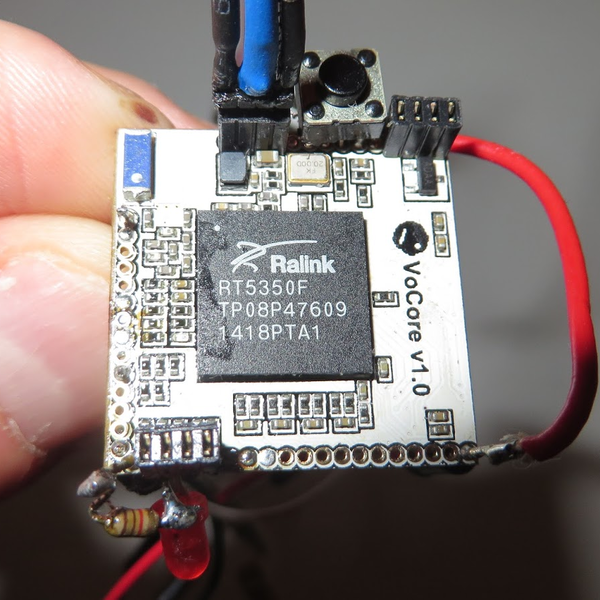
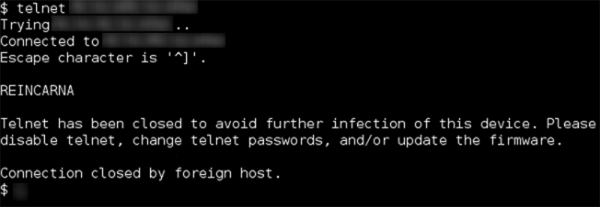
Wifatch is a bit of code that slips through the back door of routers and other IoT devices, closes off Telnet to prevent further infection, and leaves a message telling the owner to change the password and update the device firmware. Wifatch isn’t keeping any secrets, either: most of the code is written in unobfuscated Perl, and there are debug messages that enable easy analysis of the code. This is code that’s meant to be taken apart, and code that includes a comment directed at NSA and FBI agents:

To any NSA and FBI agents reading this: please consider whether defending
the US Constitution against all enemies, foreign or domestic, requires you
to follow Snowden's example.

Although the designer of Wifatch left all the code out in the open, and is arguably doing good, there is a possible dark side to this white hat virus. Wifatch connects to a peer-to-peer network that is used to distribute threat updates. With backdoors in the code, the author of Wifatch could conceivably turn the entire network of Wifatch-infected devices into a personal botnet.

While Wifatch is easily removed from a router with a simple restart, and re-infection can be prevented by changing the default passwords, this is an interesting case of virtual vigilantism. It may not be the best way to tell people they need to change the password on their router, but it’s hard to argue with results.

[Image source: header, thumb]

Nixie Tube Clock Isn’t Just A Clock

With everything that’s been happening in the news lately, [Jarek] decided it was finally time to finish up his latest project. The Internet of Things has been exploding with projects lately, and this clock that also alerts him of the weather is the latest addition. Plus it has the added bonus of using everybody’s favorite display: nixie tubes!

Of course, using high voltage for the nixies can be terror-inducing, but [Jarek] found a power supply on eBay that was able to power the tubes for not too much money. The controller is an HV5622 which can control up to 32 nixies while only using up three pins on a microcontroller which is pretty handy if you have a limited number of output pins.

The clock also has another device hidden behind all of the wires for the tubes: an ESP8266 to give it network connectivity. The clock connects to the Internet and searches for the nine-hour weather forecast. There are a few nixie lights behind the display which illuminate cutouts in the case to indicate a few different weather statuses. It’s a very polished project, and since it’s enclosed in a nice case it’s not likely to be mistaken for any movie props. Of course, other nixie projects don’t have the same comforting look.

Continue reading “Nixie Tube Clock Isn’t Just A Clock”

Traffic Light Tells You If The Internet Is Up

Some of us are not blessed with an always on, high availability internet connection. Sick of answering the constant “Is the internet up?” questions, go-to IT support dude [PatH] took matters into his own hands and developed an unmistakable traffic light display of internet status for his apparently low-reliability connection.

A toy traffic light from Amazon forms the core of the UI, and the lights are driven by a Raspberry Pi that pings a suite of 10 sites in round robin fashion. If a site is found to be unavailable, the Pi goes into “deep probe” mode to determine the extent of the outage, and lights up accordingly. If the light is green, the connection’s clean; if it lights up red, best go to bed. As a bonus, logs are kept of all deep probes, which may prove useful for diagnosing ISP issues.

A display like this could go a long way toward making sure you stay connected, and can reduce the workload for you as de facto IT support. Of course for a little more information about the connection speed with retro styling, you might want to throw a Dekatron at the job.