Follow Me: Making Servos Track Hand Motion With Leap

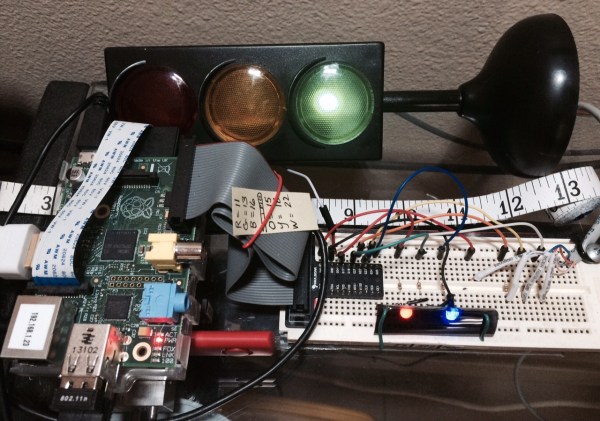
The Leap controller is one of those gadgets that is probably better for its cool factor rather than its practicality. The time of flight optical sensor reads gestures, but it is hardly a substitute for a mouse in many cases. It seems like the best uses for it we’ve seen are dedicated systems that need to know where your hands are. [Justin Platz] and [Kurt Clothier], for example, have an interesting demo that uses a Leap to control a Raspberry Pi. The Pi commands servo motors that move LED blocks to track your hand motion. Their code is available on GitHub.

Continue reading “Follow Me: Making Servos Track Hand Motion With Leap”

Google’s OnHub Goes Toe To Toe With Amazon Echo

Yesterday Google announced preorders for a new device called OnHub. Their marketing, and most of the coverage I’ve seen so far, touts OnHub as a better WiFi router than you are used to including improved signal, ease of setup, and a better system to get your friends onto your AP (using the ultrasonic communication technique we’ve also seen on the Amazon Dash buttons). Why would Google care about this? I don’t think they do, at least not enough to develop and manufacture a $199.99 cylindrical monolith. Nope, this is all about the Internet of Things, as much as it pains me to use the term.
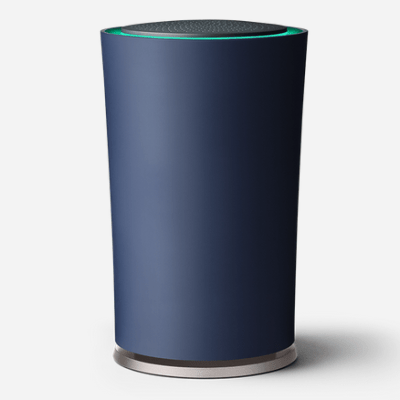
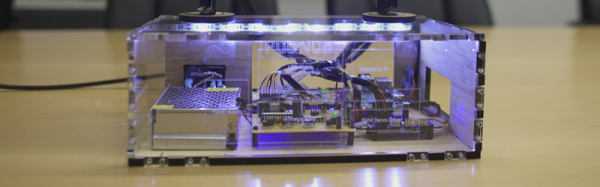
google-onhub-iot-router-thumbOnHub boasts an array of “smart antennas” connected to its various radios. It has the 2.4 and 5 Gigahertz WiFi bands in all the flavors you would expect. The specs also show an AUX Wireless for 802.11 whose purpose is not entirely clear to me but may be the network congestion sensing built into the system (leave a comment if you think otherwise). Rounding out the communications array is support for ZigBee and Bluetooth 4.0.

I have long looked at Google’s acquisition of Nest and assumed that at some point Nest would become the Router for your Internet of Things, collecting data from your exercise equipment and bathroom scale which would then be sold to your health insurance provider so they may adjust your rates. I know, that’s a juicy piece of Orwellian hyperbole but it gets the point across rather quickly. The OnHub is a much more eloquent attempt at the same thing. Some people were turned off by the Nest because it “watches” you to learn your heating preferences. The same issue has arisen with the Amazon Echo which is “always listening”.

Google has foregone those built-in futuristic features and chosen a device to which almost  everyone has already grown accustom: the WiFi router. They promise better WiFi and I’m sure it will deliver. What’s the average age of a home WiFi AP at this point anyway? Any new hardware would be an improvement. Oh, and when you start buying those smart bulbs, fridges, bathroom scales, egg trays, and whatever else it’ll work for them as well.

As far as hacking and home automation, it’s hard to beat the voice-activated commands we’ve seen with Echo lately, like forcing it to control Nest or operate your Roku. Who wants to bet that we’ll see a Google-Now based IoT standalone device quickly following the shipment of OnHub?

Continue reading “Google’s OnHub Goes Toe To Toe With Amazon Echo”

Seven Segment Countdown Timer

Cute Countdown Timer Reminds You Of Impending Doom

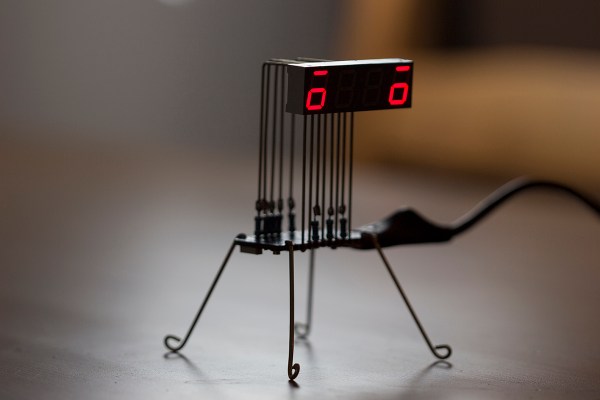
As things get busy, whether it be an upcoming product launch, a pregnancy, or even the release of your favorite game (or movie!) sometimes it’s nice to have a little countdown timer. Not an app on your phone, but a tangible, physical timer to set on your desk. Which is why SevenSeg is such a cute idea.

[Mohit] wanted to design something that was simple, but aesthetically pleasing — he’d seen free-form electronic projects before and wanted to give it a shot. What he came up with is pretty elegant! A seven segment display is connected via 1/32″ brass rods to the controller, a Particle Photon — which is kind of like a Teensy with WiFi for the internet of things. After putting a few resistors in line with the display, and a bit of frustrating bending of wire later, and SevenSeg was complete.

Continue reading “Cute Countdown Timer Reminds You Of Impending Doom”

Another IoT Platform In The (Blue)Mix

Many major companies (Intel, Oracle, Atmel, and IBM, for example) are competing to be the standard interconnect fabric for the Internet of Things. As a developer, it is hard to cut through the marketing hype and decide which platform is the best for you and your application. Luckily, there’s a plethora of projects on the web that showcase these frameworks. These project sites are an easy way to evaluate the strengths and weaknesses of IoT frameworks in practical applications without having to develop prototypes yourself.

[diyhacking], for example, posted a demo of using IBM’s Bluemix along with a Raspberry Pi, to do some simple home automation tasks. The project hardware is modest, using a PIR motion sensor and a relay to control an AC load. However, that’s good because it lets you focus on the Bluemix tools. The example client and server software is less than 200 lines of Python.

Bluemix looks like it has good integration with the Raspberry Pi and features a simulator so you can work without real hardware for development. Bluemix does offer a free plan (with limits), but the fee options may be a turn off to some IoT hackers.

Continue reading “Another IoT Platform In The (Blue)Mix”

The Internet Of Soldering Irons

The Internet of Things needs — well — things. Do you really need your paper shredder hooked up to the Internet? Maybe. But [Vegard Paulsen] put something on the network that every hacker can relate to: his soldering iron.

In typical hacker fashion, fixing a broken digital display on the soldering station turned into a development project that allows [Vegard] to monitor the temperature of his soldering iron on his phone. He found a handy source of power on the station’s PC board and connected a NodeMCU WiFi device (that uses the ubiquitous ESP8266 and an onboard Lua interpreter).

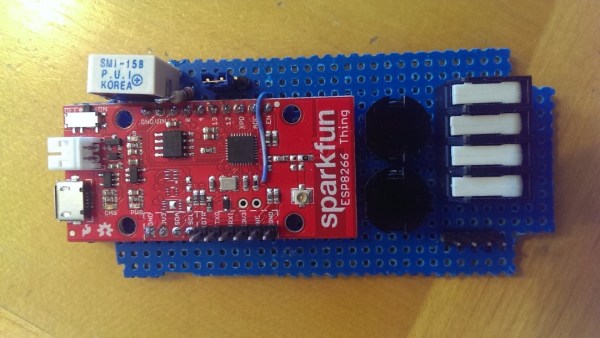
internet-of-soldering-irons-meterThe data pushes out to the Thingspeak server which handles pushing data out to the bigger network, and data representation (like the cool Google gauge in the picture). The best part: [Vegard] gets a phone notification when he accidentally leaves his soldering iron on. How perfect is that?

One unique challenge he faced was soldering the power wires to the soldering station. This could be a problem because the iron tip is grounded so making the joint while the iron was energized would probably blow a fuse (or worse). Luckily, [Vegard] thought ahead and devised a plan that apparently worked.

We’ve seen other examples of how easy NodeMCU and Thingspeak work to put the mundane on the Internet. It seems particularly appropriate to hack a soldering iron, though.

Bread Online

Bread Online Is A Bread Maker For The Internet Of Things

An engineering student at the University of Western Macedonia has just added another appliance to the ever-growing list of Internet enabled things. [Panagiotis] decided to modify an off-the-shelf bread maker to enable remote control via the Internet.

[Panagiotis] had to remove pretty much all of the original control circuitry for this device. The original controller was replaced with an Arduino Uno R3 and an Ethernet shield. The temperature sensor also needed to be replaced, since [Panagiotis] could not find any official documentation describing the specifications of the original. Luckily, the heating element and mixer motor were able to be re-used.

A few holes were drilled into the case to make room for the Ethernet connector as well as a USB connector. Two relays were used to allow the Arduino to switch the heating element and mixer motor on and off. The front panel of the bread maker came with a simple LCD screen and a few control buttons. Rather than let those go to waste, they were also wired into the Arduino.

The Arduino bread maker can be controlled via a web site that runs on a separate server. The website is coded with PHP and runs on Apache. It has a simple interface that allows the user to specify several settings including how much bread is being cooked as well as the desired darkness of the bread. The user can then schedule the bread maker to start. Bread Online also comes with an “offline” mode so that it can be used locally without the need for a computer or web browser. Be sure to check out the video demonstration below. Continue reading “Bread Online Is A Bread Maker For The Internet Of Things”

DNS Tunneling With An ESP8266

There’s a big problem with the Internet of Things. Everything’s just fine if your Things are happy to sit around your living room all day, where the WiFi gets four bars. But what does your poor Thing do when it wants to go out and get a coffee and it runs into a for-pay hotspot?

[Yakamo]’s solution is for your Thing to do the same thing you would: tunnel your data through DNS requests. It’s by no means a new idea, but the combination of DNS tunneling and IoT devices stands to be as great as peanut butter and chocolate.

DNS tunneling, in short, relies on you setting up your own DNS server with a dedicated subdomain and software that will handle generic data instead of information about IP addresses. You, or your Thing, send data encoded in “domain names” for it to look up, and the server passes data back to you in the response.

DNS tunneling is relatively slow because all data must be shoe-horned into “domain names” that can’t be too long. But it’s just right for your Thing to send its data reports back home while it’s out on its adventure.

Oh yeah. DNS tunneling may violate the terms and conditions of whatever hotspot is being accessed. Your Thing may want to consult its lawyer before trying this out in the world.