It’s no secret that fossil fuels are quickly becoming extinct. As technology charges ever forward, they are disappearing faster and faster. Many of our current dependencies on fossil fuels are associated with high-energy applications like transportation. Since it’s unlikely that global transportation will ever be in decline for any reason other than fuel shortage itself, it’s imperative that we find something that can replicate the high energy density of fossil fuels. Either that, or go back to the drawing board and change the entire scope of global transportation.
Energy, especially solar and wind, cannot be created all over the world. Traditionally, energy is created in situ and shipped to other places that need it. The proposed solutions for zero-carbon energy carriers—batteries and hydrogen—all have their weaknesses. Batteries are a fairly safe option, but their energy density is pretty poor. Hydrogen’s energy density is higher, but its flammability makes it dangerously volatile to store and transport.
Recently, a group of researchers at McGill University in Canada released a paper exploring the use of metal powders as our zero-carbon fuel of the future. Although metal powders could potentially be used as primary energy sources, the transitory solution they propose is to use them as secondary sources powered by wind and solar primaries.
Continue reading “Are Powdered Metal Fuels Just A Flash In The Pan?”

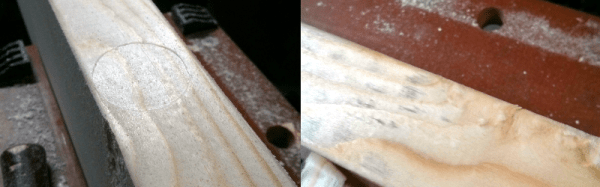
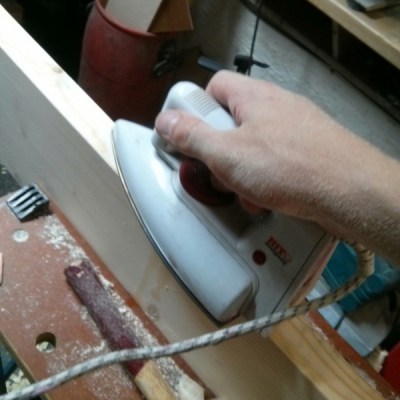 The Technique itself is dead simple and takes only a few minutes to perform. Simply apply a small amount of water, let it seep into the wood, and then bring a hot iron down onto the soaked wood to evaporate off the soaked water–instantly inflating the wood back into its original form!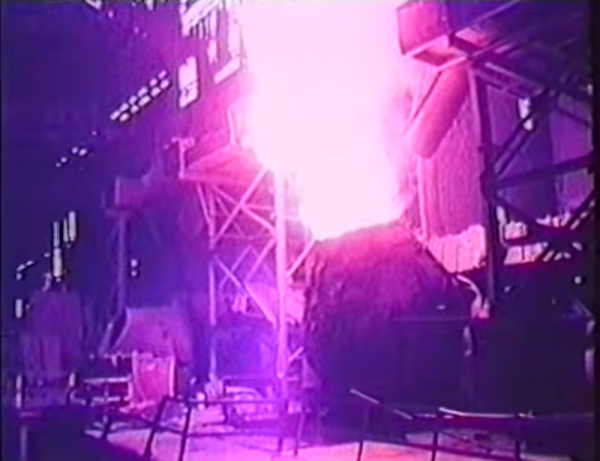
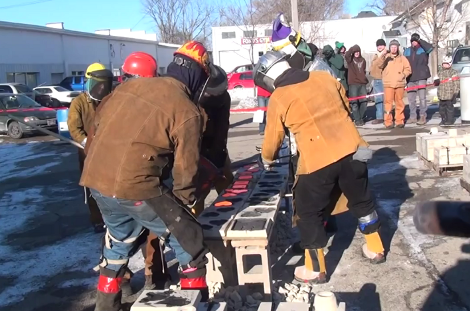
 More importantly, [Bessemer]’s process resulted in steel that was ten times stronger than that made with the crucible-steel method. Basically, oxygen is blown through molten iron to burn out the impurities. The silicon and manganese burn first, adding more heat on top of what the oxygen brings. As the temperature rises to 1600°C, the converter gently rocks back and forth. From its mouth come showers of sparks and a flame that burns with an “eye-searing intensity”. Once the blow stage is complete, the steel is poured into ingot molds. The average ingot weighs four tons, although the largest mold holds six tons. The ingots are kept warm until they are made into rail.