Making Cool Looking PCBs

pretty_pcb

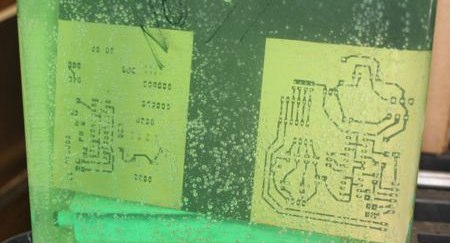
[Mike] has posted an instructable on making cool looking PCBs. He does it a little differently than we do. He uses soda cans for the stencils and combines the solder mas and silk screen steps. Also, a bit of extra cooking gives him this cool gradient of color. He has managed to get some really fine etching. It isn’t as fine as a laser etching, but this should be able to handle the smallest stuff you can throw at it. We’re a bit curious what exactly he’s building. There’s a color picture after the break to show you what we mean.

Continue reading “Making Cool Looking PCBs”

Bounty On Bus Pirate Features, Get A Free V2 PCB

bpv2

We’re putting a bounty on two high-priority Bus Pirate features. You can get a free PCB for the upcoming Bus Pirate V2 by writing a bit of code. Hack a Day has a varied and talented group of readers, and we know someone out there has the experience to make these changes with minimal difficulty.

  • The latest code integrates the PIC24F bootloader for easy updates without a programmer. We’d like to add a protocol snooper, but that requires interrupts. With the bootloader, however, interrupts are relocated and we’ve yet to fully grasp how that works. We’ll send a PCB and PIC 24F to the first person who modifies the code to demonstrate UART, SPI, or change notification interrupts with the boot loader. Microchip’s 24F bootloader app note is available here. Complete.
  • The current frequency measurement feature is a hack that uses a counter and a timer. Be the first to implement the input capture peripheral instead, and get a free PCB. See the function bpFreq(void) in base.c. Complete.

The latest Bus Pirate code and compiled firmware can be checked-out from Google Code SVN. Submit your code via the comments below or buspirate@hackaday.com.

UPDATE: Both issues were resolved. Thanks for your suggestions.

BatchPCB Now Even More à La Carte

boards

BatchPCB is a low-cost PCB manufacturing service run by retailer SparkFun in cooperation with Gold Phoenix. Using them, you can get your design prototyped for as little as $2.50 a sqin. We used the service in our “How-to: Prepare your Eagle designs for manufacture“. The service collects orders until they have enough to manufacture an entire panel. It may take time to get the boards back, but they’re high quality. BatchPCB just added a brand new feature: Now anyone can list their verfied design files on the ‘products‘ page for other hobbyists to order runs of. Yes, people could always upload free designs themselves, but this makes it much easier to order a board even if the designer has no plans of making a kit of it.

SparkFun Stencil And Solder Paste Class Notes

stencil

Hobby electronics manufacturer SparkFun has started offering various classes at their Boulder, CO facility. [Landon] has been attending as many as possible and posted about his experience during their Stencil and Solder Paste class. Solder paste is used when manufacturing boards with a reflow oven. He took quite a few pictures of the process and posted notes and audio. He says it’s definitely something you’d have to learn hands-on, but his numerous photos give you an idea of what’s involved. Below, you can watch a video of the paste clean-up pass and stencil removal.

Continue reading “SparkFun Stencil And Solder Paste Class Notes”

Generating G-code With Common Lisp

gcode

Ruin & Wesen are a two person shop creating specialized music gear. As part of their recent MIDI Command development, they got into case manufacturing. They purchased a mini CNC mill to cut the aluminum cases. Unhappy with the software options provide [Wesen] decided to write his own G-code generator. G-code is part of the numerical control used to command CNC machines. He implemented his interpreter using the language he’s most familiar with: Common Lisp (not surprising if you notice the website’s backend). The post covers the design philosophy used and some of the problems that came up. We look forward to future releases since the interpreter can generate milling code using processing.org sketches and cut PCBs directly from Eagle.

You may remember Ruin & Wesen from when they shared their Eagle layout videos.

[Thanks fbz]

Ferric Chloride Etching Chemistry

[ladyada] has republished an interesting snippet from the synthDIY mailing list. [David Dixon] discusses the actual chemistry behind ferric chloride based home circuit board etching. He concludes that ferric chloride is essentially a ‘one-shot’ oxidant. It can’t be regenerated and can be difficult to dispose of properly. The use of acidified copper chloride is a much better path and becomes more effective with each use, as long as you keep it aerated and top up the acidity from time to time. This etchant solution is actually the result of initially using hydrogen peroxide as an oxidant along with muriatic acid. You can see us using this solution in our etching how-to and while creating the board for our RGB lock. For more information on using hydrogen peroxide, check out [Adam Seychell]’s guide and this Instructable.

Aside: [ladyada] has added the receiver code to the Wattcher project page.

How-to: Prepare Your Eagle Designs For Manufacture

back

Cadsoft Eagle is a multi-platform freeware circuit layout program. Lots of open source hardware is designed in Eagle, and it’s become a hobbyist favorite. We use it for all of our hardware designs.

There are several ways to turn an Eagle design into an actual printed circuit board (PCB). We’ll show you how to save Eagle designs as industry-standard gerber files that are accepted by any PCB manufacturer. You can use the gerbers to order a single prototype, or a full panel.

Continue reading “How-to: Prepare Your Eagle Designs For Manufacture”