Free E-Book: Software Defined Radio For Engineers

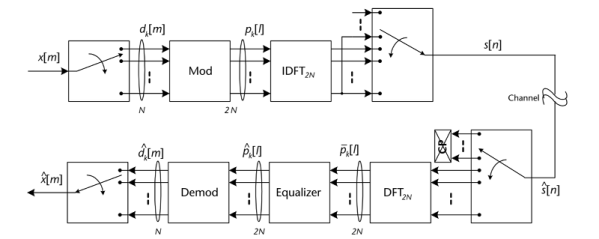
We really like when a vendor finds a great book on a topic — probably one they care about — and makes it available for free. Analog Devices does this regularly and one you should probably have a look at is Software Defined Radio for Engineers. The book goes for $100 or so on Amazon, and while a digital copy has pluses and minuses, it is hard to beat the $0 price.

The book by [Travis F. Collins], [Robin Getz], [Di Pu], and [Alexander M. Wyglinski] covers a range of topics in 11 chapters. There’s also a website with more information including video lectures and projects forthcoming that appear to use the Pluto SDR. We have a Pluto and have been meaning to write more about it including the hack to make it think it has a better RF chip inside. The hack may not result in meeting all the device specs, but it does work to increase the frequency range and bandwidth. However, the book isn’t tied to a specific piece of hardware.

Continue reading “Free E-Book: Software Defined Radio For Engineers”

Desktop Radio Telescope Images The WiFi Universe

It’s been a project filled with fits and starts, and it very nearly ended up as a “Fail of the Week” feature, but we’re happy to report that the [Thought Emporium]’s desktop WiFi radio telescope finally works. And it’s pretty darn cool.

If you’ve been following along with the build like we have, you’ll know that this stems from a previous, much larger radio telescope that [Justin] used to visualize the constellation of geosynchronous digital TV satellites. This time, he set his sights closer to home and built a system to visualize the 2.4-GHz WiFi band. A simple helical antenna rides on the stepper-driven azimuth-elevation scanner. A HackRF SDR and GNU Radio form the receiver, which just captures the received signal strength indicator (RSSI) value for each point as the antenna scans. The data is then massaged into colors representing the intensity of WiFi signals received and laid over an optical image of the scanned area. The first image clearly showed a couple of hotspots, including a previously unknown router. An outdoor scan revealed routers galore, although that took a little more wizardry to pull off.

The videos below recount the whole tale in detail; skip to part three for the payoff if you must, but at the cost of missing some valuable lessons and a few cool tips, like using flattened pieces of Schedule 40 pipe as a construction material. We hope to see more from the project soon, and wonder if this FPV racing drone tracker might offer some helpful hints for expansion.

Continue reading “Desktop Radio Telescope Images The WiFi Universe”

Classifying Crystals With An SDR Dongle

When it comes to radio frequency oscillators, crystal controlled is the way to go when you want frequency precision. But not every slab of quartz in a tiny silver case is created equal, so crystals need to be characterized before using them. That’s generally a job for an oscilloscope, but if you’re clever, an SDR dongle can make a dandy crystal checker too.

The back story on [OM0ET]’s little hack is interesting, and one we hope to follow up on. The Slovakian ham is building what looks to be a pretty sophisticated homebrew single-sideband transceiver for the HF bands. Needed for such a rig are good intermediate frequency (IF) filters, which require matched sets of crystals. He wanted a quick and easy way to go through his collection of crystals and get a precise reading of the resonant frequency, so he turned to his cheap little RTL-SDR dongle. Plugged into a PC with SDRSharp running, the dongle’s antenna input is connected to the output of a simple one-transistor crystal oscillator. No schematics are given, but a look at the layout in the video below suggests it’s just a Colpitts oscillator. With the crystal under test plugged in, the oscillator produces a huge spike on the SDRSharp spectrum analyzer display, and [OM0ET] can quickly determine the center frequency. We’d suggest an attenuator to change the clipped plateau into a sharper peak, but other than that it worked like a charm, and he even found a few dud crystals with it.

Fascinated by the electromechanics of quartz crystals? We are too, which is why [Jenny]’s crystal oscillator primer is a good first stop for the curious.

Continue reading “Classifying Crystals With An SDR Dongle”

Homebrew SDR Ham Radio In 9 Parts

It used to be homebrew ham gear meant something simple. A couple of active devices that could send CW. Maybe a receiver with a VFO. But only the most advanced builders could tackle a wide range SSB transceiver. Today, that goal is still not trivial, but it is way easier due to specialty ICs, ready access to high-speed digital signal processing, and advances in software-defined radio techniques. [Charlie Morris] decided to build an SSB rig that incorporated these technologies and he shared the whole process from design to operation in a series of nine videos. You can see the first one below.

The NE612 is a child of the popular NE602 chip, which contains a Gilbert-cell mixer, and an oscillator that makes building a receiver much easier than it has been in the past. The chips are set up as direct conversion receivers and feed a Teensy which does the digital signal processing on the recovered audio.

Continue reading “Homebrew SDR Ham Radio In 9 Parts”

A Classy SDR Chip, Decapped

If you are a regular searcher for exotic parts among the virtual pages of semiconductor supplies catalogs, you will have probably noticed that for a given function it is most often the part bearing the Analog Devices logo that is the most interesting. It may have more functionality, perhaps it will be of a higher specification, and it will certainly have a much higher price. [Zeptobars] has decapped and analyzed an AD chip that holds all three of those honors, the AD9361 SDR transceiver.

It’s placed under a slightly inflammatory title, “when microchips are more profitable than drugs“, but does make a good job of answering why a semiconductor device at the very cutting edge of what is possible at the time of release can be so expensive. The AD9361 is an all-in-one SDR transceiver with an astonishing bandwidth, and as such was a particularly special device when it reached the market in 2013. We see some particularly fine examples of on-chip inductors and PLL circuitry that must have consumed a significant design effort to preserve both bandwidth and noise characteristics. This is an item of physical beauty at a microscopic scale as well as one of technical achievement.

The financial analysis puts Analog Devices’s gross profit at about $103 of the $275 retail purchase price of an AD9361. The biggest slice at $105 goes to the distributor, and surprisingly the R&D and manufacturing costs are not as large as you might expect. How accurate these figures are is anybody’s guess, but they are derived from an R&D figure in the published financial report, so there is some credence to be given to them.

We’ve featured [Zeptobar’s] work before more than once. A look at fake Nordic Semi parts for example or a Soviet i8080 clone have received their treatment. Always a source to watch out for!

Dual SDR Receives Two Bands At Once

There was a time when experimenting with software defined radio (SDR) was exotic. But thanks to cheap USB-based hardware, this technology is now accessible to anyone. While it is fun to play with the little $20 USB sticks, you’ll eventually want to move up to something better and there are a lot of great options. One of these is SDRPlay, and they recently released a new piece of hardware — RSPduo — that incorporates dual tuners.

We’ve talked about using the SDRPlay before as an upgrade from the cheap dongles. The new device can tune either a single 10 MHz band over the range of 1 kHz to 2 GHz, or you can select two 2 MHz bands. This opens up a lot of applications where you need to pick up signals in different areas of the spectrum (e.g., monitoring both sides of a cross-band repeater).

Continue reading “Dual SDR Receives Two Bands At Once”

Hackaday Links Column Banner

Hackaday Links: May 20, 2018

One of the more interesting pieces of tech from Hollywood that never seems to become a reality is a location tracker. Remember the ‘movement tracker’ in Alien that found the cat in the locker? Yeah, like that. Something that reports the direction and distance to a target, kind of like a PKE Meter from Ghostbusters. I think there was something like this in Predator. On Indiegogo, there’s a device that tracks other devices. It’s called the Lynq, and it’s a small, handheld device that tells you the distance and bearing of other paired devices. Hand them out to your friends, and you’ll be able to find each other at Coachella. While the device and use case is interesting, we’re wondering how exactly this thing works. Our best guess is that each device has a GPS module inside, and communicates with other paired devices over the 900MHz band. It’s a bit pricey at $80 per unit (although you need at least two to be useful), but this is a really interesting project.

The SDRPlay SDR1 and SDR2 are — as you would guess — software defined radio receivers, that retail for $2-300. Problem: a few of these units were stolen from a warehouse, and are winding up on eBay. Solution: SDRPlay has decided to disable the specific receivers ‘via the serial number’. In a move just slightly reminiscent of FTDIgate, a manufacturer has decided to brick products that are stolen or infringe on IP. It’s a solution, but I wouldn’t want to be on the customer service team at SDRPlay.

A few years ago, [Oscar] created the PiDP-8/I, a computer kit that miniaturized the venerable PDP-8/I into a desktop form factor, complete with blinkenlights and clicky switches. It’s a full simulation of a PDP-8 running on a Raspberry Pi, and if you took the PiDP-8/I back to 1975, you could, indeed, connect it to other computers. But the PDP-8/I isn’t the most beautiful minicomputer ever created. That honor goes to the PDP-11/70, a beast of a machine wrapped in injection molded plastic and purple toggle switches. Now, after years of work, [Oscar] has miniaturized this beast of a machine. The PiDP-11/70 is a miniature remake of the PDP-11/70, runs a Raspberry Pi, and is everything you could ever want in a minimainframe. The price will be around $250 — expensive, but have you ever tried to find a PDP-11 front panel on eBay?

The Nvidia TX2 is a credit card-sized computer with a powerful ARM processor and a GPU. The TX2 is a module designed for ‘AI at the edge’, or something along those lines, meaning you can take a trained data set, load it onto an SD card, and the TX2 will do all the fancy image processing and OpenCV without a connection to the Internet. The obvious application for the TX2 is something like an ‘AI camera’, and now this is finally a product. The DNNCam is a 4k, 60FPS camera attached to a TX2 and stuffed into an IP67-rated enclosure. If you’re thinking of building anything like a security camera attached to a GPU, this is the all-in-one solution. It’s pricey, yes, but the TX2 module isn’t exactly cheap.