South Australia Vs. Too Much Home Solar

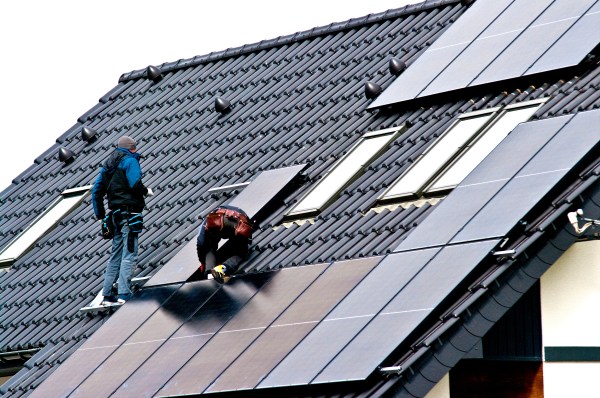
Once upon a time, the consensus was that renewable energy was too expensive and in too sparse supply to be a viable power source to run our proud, electrified societies on. Since then, prices of solar panels have tanked, becoming more efficient along the way, and homeowners have been installing them on their rooftops in droves.

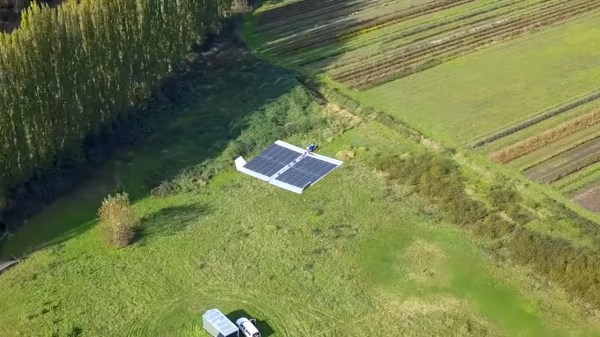
Where once it was thought we’d never have enough solar energy, in some cities, it’s becoming all too much. In South Australia, where solar output can be huge on a sunny day, electricity authorities are facing problems with grid stability, and are taking measures to limit solar output to the grid.

Isn’t More Usually Better?

The problem faced by South Australian utilities is one of how to properly control an electrical grid with many thousands of distributed power sources. Typically, in conventional modern power grids, voltage and frequency is controlled within set limits by carefully matching the supply from major power plants with the demand from users. Fast-response plants can be brought online to meet shortfalls, and switched off when demand drops, and everything hums along nicely.

Unfortunately, solar power isn’t so easy to throttle, and even less so when it’s coming from thousands of separate households each with their own rooftop install and an inverter to feed back into the grid. This has led to authorities contemplating measures such as charging homeowners to export energy to the grid in peak periods in an effort to slow the huge uptake of home solar systems. Export limits have also been proposed for suburbs with the highest concentration of home solar, as substations in certain residential areas struggle to cope under the huge inflows of energy. Continue reading “South Australia Vs. Too Much Home Solar”

BEAM-Powered, Ball-Flinging Beam Has Us Beaming

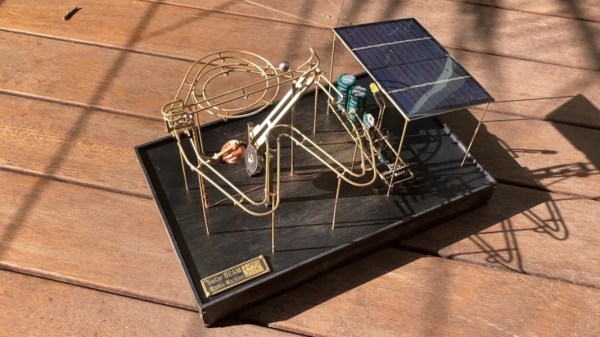
We have a soft spot for BEAM projects, because we love to see the Sun do fun things when aided by large capacitors. [NanoRobotGeek]’s marble machine is an extraordinary example — once sufficiently charged, the two 4700 μF capacitors dump power into a home-brew solenoid, which catapults the ball bearing into action toward the precipice of two tracks.

[NanoRobotGeek] started with the freely-available Suneater solar circuit. It’s a staple of BEAM robotics, slightly modified to fit the needs of this particular project. First up was verifying that the lever (or beam, if you will) principle would work at all, and [NanoRobotGeek] just built it up from there in admirable detail. The fact that it alternates between the swirly track and the zigzag track is entrancing.

There are several disciplines at play here, and we think it’s beautifully made all around, especially since this was [NanoRobotGeek]’s first foray into track bending. We love the way it flings the ball so crisply, and the track-changing lever is pretty darn satisfying, too. You can check it out in action in the video after the break.

Although this was [NanoRobotGeek]’s maiden marble track, it’s not their first circuit sculpture — check out this flapping, BEAM-powered dragonfly.

Continue reading “BEAM-Powered, Ball-Flinging Beam Has Us Beaming”

NASA’s Lucy Stretches Its Wings Ahead Of Trojan Trek

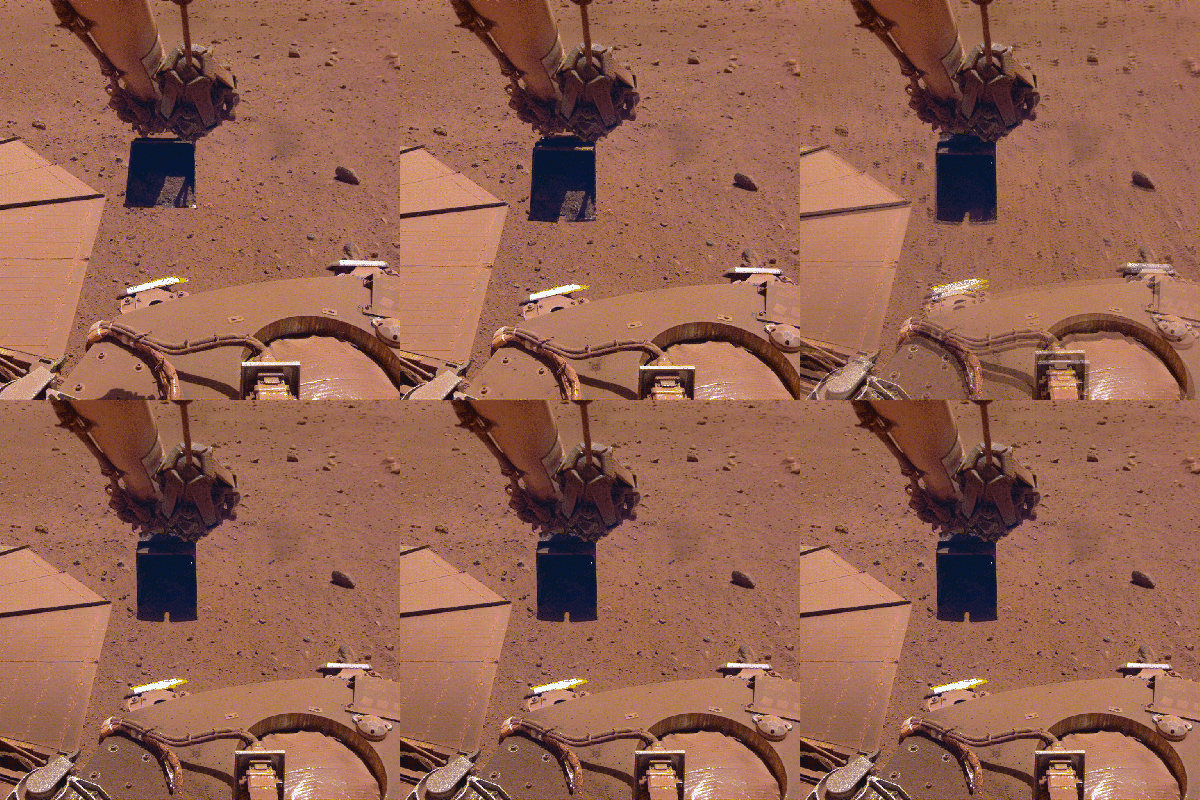
The good news about using solar power to explore space is there are no clouds to block your sunlight. Some dust and debris, yes, but nowhere near what we have to deal with on planets. The bad news is, as you wander further and further out in the solar system, your panels capture less and less of the sunlight you need for power. NASA’s Lucy spacecraft will be dependent on every square inch, so we’re happy to hear technicians have successfully tested its solar panel deployment in preparation for an October 2021 launch.

An animation of Trojan asteroids and inner planets in orbit around the Sun.
Trojan asteroids (in green) orbit the Sun ahead of and behind Jupiter.

Lucy’s 12-year mission is to examine one Main Belt asteroid and seven so-called Trojans, which are asteroids shepherded around the Sun in two clusters at Lagrange points just ahead and behind Jupiter in its orbit. The convoluted orbital path required for all those visits will sling the spacecraft farther from the sun than any solar-powered space mission has gone before. To make up for the subsequent loss of watts per area, the designers have done their best to maximize the area. Though the panels fold up to a package only 4 inches (10 centimeters) thick, they open up to an enormous diameter of almost 24 feet (7.3 meters); which is enough to provide the roughly 500 watts required at literally astronomical distances from their power source.

Near-Earth asteroids are exciting targets for exploration partly because of the hazards they pose to our planet. Trojan asteroids, thought to be primordial remnants of the same material that formed the outer planets, pose no such danger to us but may hold insights about the early formation of our solar system. We’re already eagerly anticipating the return of OSIRIS-REx’s sample, and Hayabusa2 continues its mission after so many firsts. An extended tour of these farther-off objects will keep us watching for years to come. Check out the video embedded below for Lucy’s mission overview.

Continue reading “NASA’s Lucy Stretches Its Wings Ahead Of Trojan Trek”

World Solar Challenge: How Far In A Solar Car?

Solar power is a great source of renewable energy, but has always had its limitations. At best, there’s only 1,000 Watts/m2 available at the Earth’s surface on a sunny day, and the limited efficiency of solar panels cuts this down further. It’s such a low amount that solar panels on passenger cars have been limited to menial tasks such as battery tending and running low-power ventilation fans.

However, where some might see an impossibility, others see opportunity. The World Solar Challenge is a competition that has aimed to show the true potential of solar powered transport. Now 30 years since its inception, what used to be impossible is in fact achieved by multiple teams in under one tenth of the original time. To keep competitors on their toes, the rules have been evolving over time, always pushing the boundaries of what’s possible simply with sunlight. This isn’t mainstream transportation; this is an engineering challenge. How far can you go in a solar car?

Continue reading “World Solar Challenge: How Far In A Solar Car?”

Four Years Later, Off-Grid Office Shed Still Rocks

About four years ago, [Russell Graves] created what was, to him, the ultimate work-from-home environment: an off-grid office shed. The shed might look a bit small, but it’s a considerably larger workspace than most people in an office are granted. Four years later, in the middle of a global pandemic, working from home has become much more common and [Russel] shares some thoughts on working from home and specifically reflects on how his off-grid, solar powered shed office (or “shoffice” as he likes to call it) has worked out. In short, after four years, it rocks hard and is everything he wanted and more.

Its well-insulated plywood walls let him mount monitor arms and just about anything else anywhere he wants, and the solar power system allows him to work all day (and into the night if he wants, which he doesn’t) except for a few spells in the winter where sunlight is just too scarce and a generator picks up the slack. Most importantly, it provides a solid work-life separation — something [Russell] is convinced is critical to basic wellness as a human being.

That’s not to say an off-grid solar shed is the perfect solution for everyone. Not everyone can work from home, but for those who can and who identify with at least some of the motivations [Russell] expressed when we covered how he originally created his office shed, he encourages giving it some serious thought.

The only thing he doesn’t categorically recommend is the off-grid, solar powered part. To be clear, [Russell] is perfectly happy with his setup and even delights in being off-grid, but admits that unless one has a particular interest in solar power, it makes more sense to simply plug a shed office into the grid like any other structure. Solar power might seem like a magic bullet, but four years of experience has taught him that it really does require a lot of work and maintenance. Determined to go solar? Maybe give the solar intensity sensor a look, and find out just how well your location is suited to solar before taking the plunge.

A Complete Raspberry Pi Power Monitoring System

As the world has become more environmentally conscious, we’ve seen an uptick in projects that monitor or control home energy use. At a minimum one of these setups involves a microcontroller and some kind of clamp-on current sensor, but if you’re looking for resources to take things a bit farther, this Raspberry Pi energy monitoring system created by [David00] would be a great place to start.

This project includes provides software and hardware to be used in conjunction with the Raspberry Pi to keep tabs on not just home energy consumption, but also production if your home has a solar array or other method of generating its own power. Data is pulled every 0.5 seconds from a MCP3008 ADC connected to up to five six current sensors to provide real-time utilization statistics, and visualized with Grafana so you can see all of the information at a glance.

While [David00] has already done the community a great service by releasing the hardware and software under an open source license, he’s also produced some absolutely phenomenal documentation for the project that’s really a valuable resource for anyone who wants to roll their own monitoring system. He’s even offering hardware kits for anyone who’s more interested in experimenting with the software side of things than building the PCB.

Home energy monitoring projects are certainly nothing new, but the incredible advances we’ve seen in the type of hardware and software available for DIY projects over the last decade has really pushed the state-of-the-art forward. With so many fantastic resources available now, the only thing standing between you and your own home energy monitoring dashboard is desire and a long weekend.

Solar Weather Station Listens For Lightning

Custom weather stations are a common enough project these days, especially based around the ESP8266. Wire a sensor up to the MCU, power it up with an old phone charger, and you’re half way there. But if you want something that’s going to operate remotely on the long term, you’ve got to put a little more thought into it.

Which is exactly what [BuckarewBanzai] did for his solar powered Raspberry Pi weather station. With an industrial NEMA-rated enclosure, a beefy 35 watt photovoltaic panel, and enough lead-acid battery capacity to keep the show going for days, this build is certainly more robust than most. Some might call it overkill, but we think anyone who’s ever deployed hardware outdoors for more than a few days knows you can never be too careful when Mother Nature is involved.

To keep the 18 Ah battery topped off, [BuckarewBanzai] is using a 10 amp Wanderer charge controller. It sounds as though he burned through a few lesser models before settling on this one; something to consider for your own off-grid projects. An LM2596 regulator is then used to provide a stable 5 V for the Raspberry Pi.

In addition to the BME280 environmental sensor that picks up on temperature, humidity, and pressure, there’s also a AS3935 lightning sensor onboard which [BuckarewBanzai] says can pick up strikes up to 40 kilometers away. All of this environmental data is collected and stored in a local SQLite database, and gets pushed offsite every five minutes with a REST API so it can be visualized with Grafana.

Critics in the audience will no doubt pick up on the solderless breadboard located in the center of the weather station, but [BuckarewBanzai] says he’s already on the case. He’s working on a custom PCB that will accept the various modular components. Not only should this make the station more reliable, but he says it will cut down on the “spaghetti” wiring. Though for the record, this is hardly the worst offender we’ve seen in that department.