Aireon Hitchhikes On Iridium To Track Airplanes

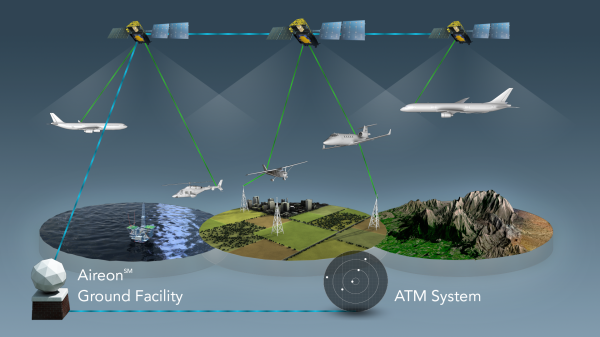
SpaceX just concluded 2017 by launching 10 Iridium NEXT satellites. A footnote on the launch was the “hosted payload” on board each of the satellites: a small box of equipment from Aireon. They will track every aircraft around the world in real-time, something that has been technically possible but nobody claimed they could do it economically until now.

Challenge one: avoid adding cost to aircraft. Instead of using expensive satcom or adding dedicated gear, Aireon listen to ADS-B equipment already installed as part of international air traffic control modernization. But since ADS-B was designed for aircraft-to-aircraft and aircraft-to-ground, Aireon had some challenges to overcome. Like the fact ADS-B antenna is commonly mounted on the belly of an aircraft blocking direct path to satellite.

Challenge two: hear ADS-B everywhere and do it for less. Today we can track aircraft when they are flying over land, but out in the middle of the ocean, there are no receivers in range except possibly other aircraft. Aireon needed a lot of low-orbit satellites to ensure you are in range no matter where you are. Piggybacking on Iridium gives them coverage at a fraction of the cost of building their own satellites.

Continue reading “Aireon Hitchhikes On Iridium To Track Airplanes”

Hackaday Links Column Banner

Hackaday Links: September 24, 2017

This is it. After twelve years we finally have a new Star Trek. Star Trek: Discovery (we’re using ST:DSC as the abbreviation) is airing right about when this post goes up. Next week, you’ll have to pay CBS $6USD a month to get your Star Trek fix, and today might be the last time a new episode of Star Trek is aired on broadcast TV ever. Enjoy it now, and hope the theme song doesn’t have lyrics. Also, hope The Orville is a tenth as good as a Galaxy Quest series could be.

What’s the best way to describe Delta Sigma PLLs? The Cat In The Hat (PDF, page 31). [Dr. Tune] found a Seuss reference in a TI app note. Personally, I’m a fan of hand-drawn cartoons, but we’ll take what we can get.

This weekend the Prusa I3 MK3 was announced. A good printer just got better. Now here’s the video.

The Raspberry Pi is a great media storage device, but it’s absolutely insufficient for audiophile tomfoolery. Here’s a neat Pi DAC/amp/DSP thingy. The VoltaStream turns the Raspberry Pi into a WiFi-connected pair of speakers with low-latency audio in and a TOSLINK connector.

SpaceX! There is serious consideration being given to starting an ‘Elon Musk column’ here on Hackaday. There will be SpaceX updates coming this week from the International Astronautical Congress in Adelaide. What will we find out? I don’t know bruh, but I just got back from Burning Man and I realized it was a whole lot like Mars and I was wondering Elon, like, have you ever been to Burning Man because it’s really dusty and a whole lot like Mars and there’s not much water… Please, organizers of the IAC, I implore you: give more idiots microphones. That was hilarious.

How was the World Maker Faire in New York this weekend? In one word, empty. Abnormally so. Maker Faire was not as crowded as last year, and you could actually move around. My agoraphobia didn’t kick in until the afterparties, and lines for the $5 bottles of water were short. Bay Area Faire attendance was down 16% from 2016-2017, and I would bet attendance for the NY Faire would be down a similar amount. Even a 10% decline in attendance would be noteworthy; the weather last year was cold and rainy and this year was beautiful. There are rumors, speculation, and people wondering how long Maker Faire will continue, but except for Intel pulling out of the maker market, no actual information. Millennials are killing the Maker Faire industry?

The SmallSat Launcher War

Over the last decade or so the definition of what a ‘small satellite’ is has ballooned beyond the original cubesat design specification to satellites of 50 or 100 kg. Today a ‘smallsat’ is defined far more around the cost, and sometimes the technologies used, than the size and shape of the box that goes into orbit.

There are now more than fifty companies working on launch vehicles dedicated to lifting these small satellites into orbit, and while nobody really expects all of those to survive the next few years, it’s going to be an interesting time in the launcher market. Because I have a sneaking suspicion that Jeff Bezos’ statement that “there’s not that much interesting about cubesats” may well turn out to be the twenty first century’s “nobody needs more than 640kb,” and it’s possible that everybody is wrong about how many of the launcher companies will survive in the long term.

Continue reading “The SmallSat Launcher War”

Take A Look At The Hyperloop Competition Entries

If you are a follower of futuristic high-speed transport systems you’ll have had your fill of high-speed trains, you’ll mourn the passing of Concorde and be looking forward to future supersonic passenger aircraft. Unless you have a small fortune to pay for a spaceplane tourist flight at an unspecified time in the future, life is going to feel a little slow.

There is one spark of light in this relative gloom though, in the form of Elon Musk’s Hyperloop. A partially evacuated tube in which vehicles, or “pods” can accelerate to very high speeds. SpaceX may not be pursuing it themselves, but they’ve made it available for others and to promote it they are running a competition in which they have invited teams to submit pod designs. And as a significant number of teams have made it through the first round and are prepared to compete outside SpaceX’s headquarters, Business Insider have a look at all the teams and their prototype pods. Continue reading “Take A Look At The Hyperloop Competition Entries”

Working For Elon Musk

One of my favorite types of science fiction character is found in the books of Ben Bova; a business mogul who through brilliance, hard work, and the force of personality drives mankind to a whole new level in areas such as commercializing space, colonizing the stars, battling governments, and thwarting competitors.

It is possible to name a few such characters in real life — influencing the electricity industry was George Westinghouse, automobiles was Henry Ford, and more recently Steve Jobs and Elon Musk. With Elon’s drive we may all finally be driving electric cars within 20 years and spreading out into space with his cheap rockets. Due to the latter he may be the closest yet to one of Bova’s characters.

So what’s it like to work for Elon Musk at Tesla or SpaceX? Most of us have read articles about him, and much that he’s written himself, as well as watched some of his many interviews and talks. But to get some idea of what it’s like to work for him I greatly enjoyed the insight from Ashlee Vance’s biography Elon Musk – Tesla, SpaceX, and the Quest for a Fantastic Future. To write it Vance had many interviews with Musk as well as those who work with him or have in the past. Through this we get a fascinating look at a contemporary mogul of engineering.

Continue reading “Working For Elon Musk”

After The Prize: SatNOGS Builds Satellites

When Hackaday announced winners of the 2014 Hackaday Prize, a bunch of hackers from Greece picked up the grand prize of $196,418 for their SatNOGS project – a global network of satellite ground stations for amateur Cubesats.

upsat-integration-test-1The design demonstrated an affordable ground station which can be built at low-cost and linked into a public network to leverage the benefits of satellites, even amateur ones. The social implications of this project were far-reaching. Beyond the SatNOGS network itself, this initiative was a template for building other connected device networks that make shared (and open) data a benefit for all. To further the cause, the SatNOGS team set up the Libre Space Foundation, a not-for-profit foundation with a mission to promote, advance and develop Libre (free and open source) technologies and knowledge for space.

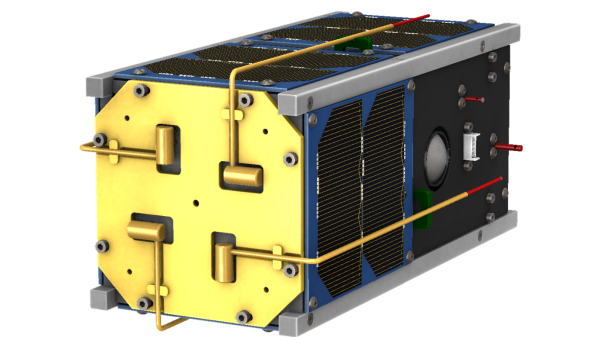
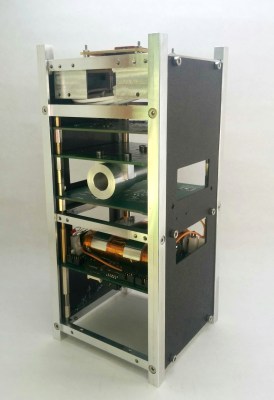
Now, the foundation, in collaboration with the University of Patras, is ready to launch UPSat – a 2U, Open Source Greek Cubesat format satellite as part of the QB50 international thermosphere research mission. The design aims to be maximally DIY, designing most subsystems from scratch. While expensive for the first prototype, they hope that documenting the open source hardware and software will help kickstart an ecosystem for space engineering and technologies. As of now, the satellite is fully built and undergoing testing and integration. In the middle of July, it will be delivered to Nanoracks to be carried on a SpaceX Dragon capsule and then launched from the International Space Station.

Continue reading “After The Prize: SatNOGS Builds Satellites”

It’s Time For Direct Metal 3D-Printing

It’s tough times for 3D-printing. Stratasys got burned on Makerbot, trustful backers got burned on the Peachy Printer meltdown, I burned my finger on a brand new hotend just yesterday, and that’s only the more recent events. In recent years more than a few startups embarked on the challenge of developing a piece of 3D printing technology that would make a difference. More colors, more materials, more reliable, bigger, faster, cheaper, easier to use. There was even a metal 3D printing startup, MatterFab, which pulled off a functional prototype of a low-cost metal-powder-laser-melting 3D printer, securing $13M in funding, and disappearing silently, poof.

This is just the children’s corner of the mall, and the grown-ups have really just begun pulling out their titanium credit cards. General Electric is on track to introduce 3D printed, FAA-approved fuel nozzles into its aircraft jet engines, Airbus is heading for 3D-printed, lightweight components and interior, and SpaceX has already sent rockets with 3D printed Main Oxidizer Valves (MOV) into orbit, aiming to make the SuperDraco the first fully 3D printed rocket engine. Direct metal 3D printing is transitioning from the experimental research phase to production, and it’s interesting to see how and why large industries, well, disrupt themselves.

Continue reading “It’s Time For Direct Metal 3D-Printing”