Meter Clock With Pleasing Design Considerations

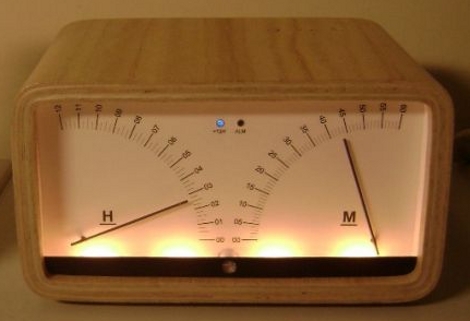
[AndyO] embraced his inner geek by building this meter clock. It exhibits a lot of features that you’d want to see in a home-built timepiece, include over-complexity, abundant features, and RGB LEDs. We’re fascinated by the design he put into this. For instance, the two indicator LEDs on the clock face are not poking through the surface, but use brass tubes as light pipes. Also, the three buttons on the top are almost indistinguishable, and have an RGB back light that places a halo around each. The case itself was built by first making a form, then laminating thin sheets of wood (a difficult task due to the tight curves). The needles themselves are not actually meters, like the clock the inspired the build, but are attached to servo motors. This all comes together into a fascinating build, and a great writeup.

[Thanks Graham]

Building A Wooden Vespa

Scooter fans should start sharpening their chisels if they want to undertake this project. This Vespa is the work of a master carpenter and a lot of time. Through the build log photos you can see that it all started with a frame made by bending and laminating wood layers together. Veneer adds the stylish stripe and a lot of carving and turning brings the curves associated with the classic scooters. Even the hand grips, brake handles, and saddle are made out of wood. There’s springs for some shock absorption but we’d bet you don’t want to ride this for too long, or park it outside. Now it just needs an electric motor retrofit.

[Thanks Blair]

Wood Burning House Heater

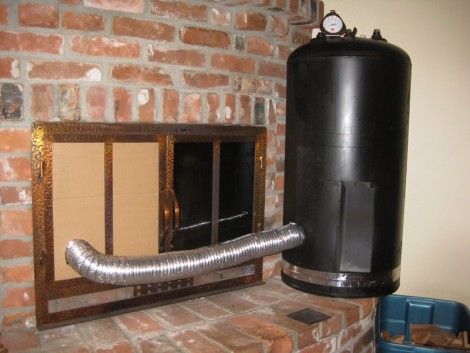
Dabbling in alternative heating technology, [Rob Steves] built a wood stove to dispose of his scrap wood while negating his home’s fire insurance at the same time. As the leftover bits from his wood projects started to stack up he wondered how he would dispose of them. Burning the bits for heat means he’s using every last bit of the lumber. The internal tank from an electric water heater was repurposed as a combustion chamber, with exhaust gases escaping through some high-temperature flexible tubing. The glass panes were removed from one of the fireplace doors to give the off-gases a place to go. The result is a rocket stove that burns very hot and does a great job of warming his house.

It’s not the safest way to heat a home, and there may be coding issues with your municipality. But this might go well in a remote location, like that cabin where you have to generate your own electricity.

[Thanks HybridBlue]

Wooden Quadcopter Body

brings back memories of balsa wood gliders

[Greasetattoo] shares the process of building his wooden quadcopter body that won 2nd place in the Minnesota state fair.  His plans were purchased as a kit back in 1999, but he never got around to actually building them. The original plans called for a foam board body, but he felt that a wooden piece of art would be much nicer. This build isn’t focusing on the electronics, they’re just a kit from Mikrokopter. Instead, it is a log of the entire process of making the beautiful wooden body. He really put some nice detail in there from the layered and nicely finished dome to the little oak sleeves for his motors. Great job [Greasetattoo].

Shovel…guitar?

We didn’t believe this hack at all when we saw it, or rather heard it. Surly a guitar made out of a shovel couldn’t sound decent. But the video (after the jump, skip to 2:40 for the jam) to our untrained ears sounded pretty rad. Could be the supremely well done wood work, proper use of tools, high tech pickups, or maybe Russian magic, we don’t know.

In fact, if you continue the video it doesn’t stop there. The creators also made a 2 string bass and a few other instruments from shovels. Do I smell a new shovel hero?

Related: Guitars made out of things that should not be guitars.

[Thanks Paul]

Continue reading “Shovel…guitar?”

Tube Preamp With A Dazzling Wood Case

It’s been a while since we’ve looked in on the world of vacuum tube audio equipment. [Bruce] just finished documenting a tube preamp he built. He actually made a couple of these with slightly different cases but they use the same circuit design. We found his discussion of common errors made when tying into ground quite interesting. It seems that many folks struggle with noise in their circuits because of ground loops. There’s some details about isolating the signal ground from a metal chassis, and also an admonition about not connecting the input or output jacks directly the chassis.
If you like this, don’t miss on of our favorite tube projects, [Bruce’s] Poddwatt.

Most Useless Machine Loses Carbon Footprint

[youtube=http://www.youtube.com/watch?v=lxyQ3PFbK9Y]

[Clayton Boyer] took the electricity out of the useless machine, making one that runs like a clock. To this point, we’ve always seen these useless machine use electric motors. [Clayton’s] clever design uses a wind-up spring and a series of wooden gears to bring the fun, making it a great companion for the binary adder you built. The video above shows the inner workings and the design plans are for sale. We’d love to print out the parts or perhaps just laser-cut them from wood like the legs of this spider bot.

[Thanks llwynog]