Hunting Submarines Via Gravity Is A Tough Errand

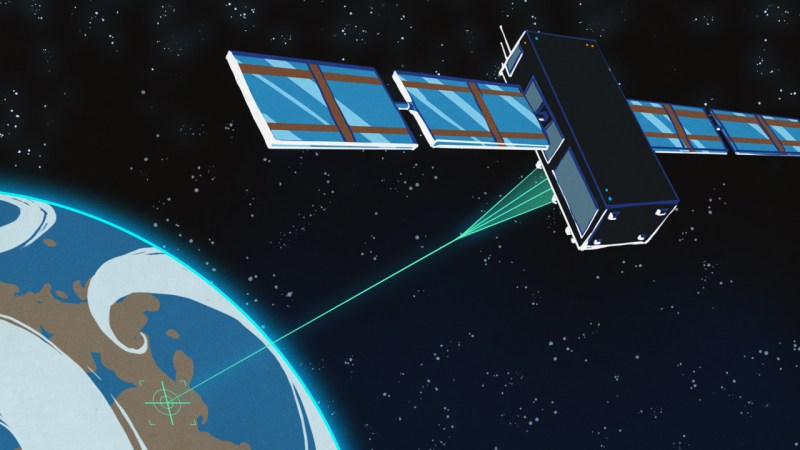
Among so many other technological advances, the Cold War saw the advent of the ballistic missile submarine. The concept was simple—pack enough nuclear warheads to destroy a small civilization into a compact metal tube, and then hide it underwater. The oceans would act as a cloak for your fleet of world-enders, and keep your enemies forever on their toes. A terrifying machine that could both start and end a war with the push of a button.

Most nation states are populated by humans with the will to live. Thus, there has been a great incentive to find ways to keep tabs on these sunken doombringers. Great efforts have gone into improving sonar and magnetic detection methods over the decades, which are the bread and butter of sub hunting to this day. However, military researchers have also explored the prospect of whether submarines could be detected via their effect on the gravitational field alone.

Continue reading “Hunting Submarines Via Gravity Is A Tough Errand”

Magnets Are Bad For Hardware Again

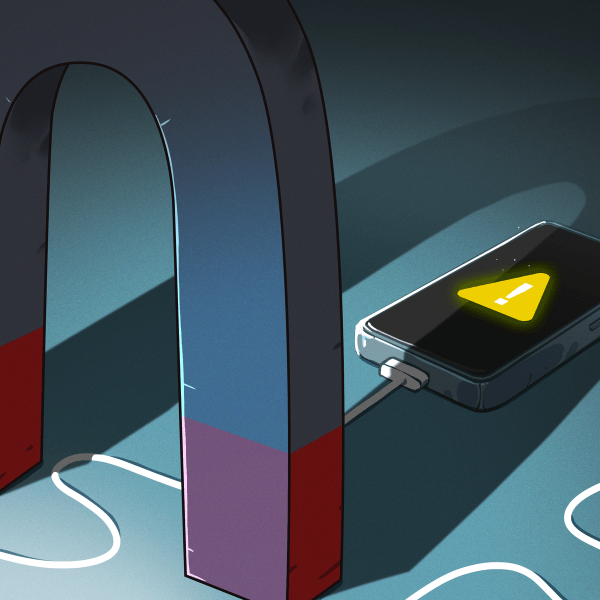
If you were around tech in the bad old days, magnets could be really bad news. They were fine on the fridge, no problem at all. Put one near a floppy disk, or a hard drive, or even a computer monitor, though, and you were in for some pain. You’d lose data, possibly permanently destroy a disk or drive, or you’d get ugly smeary rainbow effects all over your screen.

The solid state revolution has eliminated a lot of these problems. We all use SSDs, flash drives, and LCD monitors now, all of which care a lot less about flirting with magnets. However, the same can’t be said about all our modern hardware, for a magnet could cause your smartphone some major grief indeed.

Continue reading “Magnets Are Bad For Hardware Again”

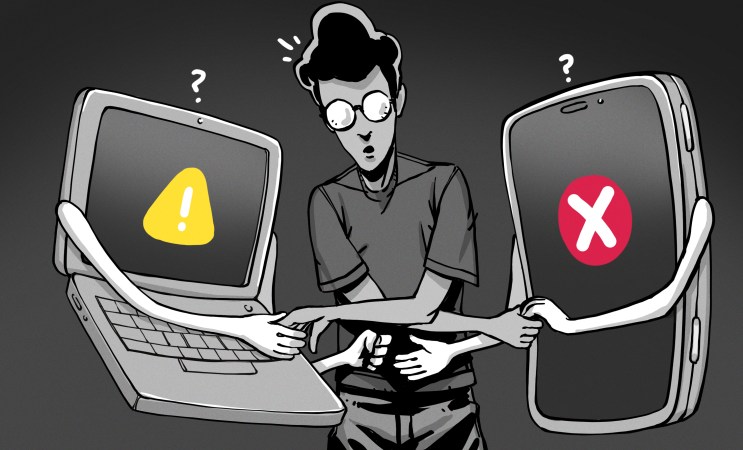
Between-Device Sharing Still Sucks

Once upon a time, computing was simple. You had files on a floppy disk. If you wanted to take them to a different computer, you ejected the disk from one machine and put it in another. It wasn’t fast, but it was easy and intuitive. Besides, you probably only had one computer of your own, anyway.

Life has since gotten a lot more complex. You’ve got a desktop, a laptop, a work laptop, your personal and business phones, and a smart watch to boot. You live amongst a swirling maelstrom of terabytes of data. Despite all the technical advances that got you here, it’s still a pain to get a file from one device to another, even when they’re sitting on the same desk. Why?!

Continue reading “Between-Device Sharing Still Sucks”

How Search Engines Enabled Finding Needles In A WWW-Sized Haystack

When the World Wide Web surged into existence during the 1990s, we were introduced to the problem of how to actually find something in this ever-ballooning construction zone that easily outpaced even the fastest post-WW2 urban sprawl. Although domain names provided a way to find servers using DNS rather than having to mash in IP addresses, you still somehow had to know the relevant URL.

A range of solutions were thought up over time, ranging from printed Yellow Pages type guides, to online curated lists of resources, as well as things like web rings where one website would link to a relevant similar website. This was the time when word-of-mouth was also very relevant, with people proudly announcing their own website on Geocities or other hosting service.

Search engines already existed long before the WWW became the hot new thing during the 1990s, but it was the WWW that would really push them to their limits. As anyone who used search engines for the WWW can attest, they had many issues. Often you’d end up using multiple search engines to find something, and despite fierce competition between web search engines to become the starting page for their browser, actually finding things on the WWW remained a tough problem.

Since a web search engine ‘just’ has to index the WWW and match a search query against the results, why was this such a hard problem that persisted until Google apparently cracked the code?

Continue reading “How Search Engines Enabled Finding Needles In A WWW-Sized Haystack”

The Vacuum Tube’s Last Stand(s)

When most people think about vacuum tubes, they picture big glass bottles glowing inside antique radios or early computers. History often treats tubes as a dead-end technology that was suddenly swept away by the transistor in the 1950s. But the reality is much more interesting. Vacuum tube technology did not simply stop evolving when the transistor appeared. In fact, some of the most sophisticated and technically impressive tube designs emerged after the transistor had already been invented.

During the final decades of mainstream tube development, manufacturers pushed the technology in remarkable directions. Tubes became smaller, faster, quieter, more rugged, and more specialized. Designers experimented with exotic geometries, ceramic construction, metal envelopes, ultra-high-frequency operation, and even hybrid tube-semiconductor systems. Devices such as acorn tubes, lighthouse tubes, compactrons, and nuvistors represented a last gasp of thermionic electronics.

Ironically, many of these innovations arrived just as solid-state electronics were becoming commercially practical. Vacuum tubes were improving rapidly right up until the market abandoned them.

The Pressure to Improve

By the 1930s and 1940s, vacuum tubes dominated electronics. Radios, radar systems, military communications, industrial controls, and the first digital computers all depended on them. But everyone was painfully aware of their problems.

Traditional tubes were fragile, generated heat, consumed significant power, and suffered from limitations at high frequencies. Internal lead lengths created parasitic inductance and capacitance. At radio frequencies and especially microwave frequencies, those unwanted effects made design difficult.

Continue reading “The Vacuum Tube’s Last Stand(s)”

There’s More To Global Positioning Than Just GPS

The Global Positioning System (GPS) was developed by the United States military in the 1970s, but it wasn’t long before civilians all over the planet started using it. By the early 2000s the technology was popping up in consumer devices such as mobile phones, and since then its become absolutely integral to our modern way of life.

But although support for GPS in our gadgets is nearly ubiquitous, it’s not the only option when it comes to figuring out where you are on the globe. As you might imagine, not everyone was thrilled with building their infrastructure around one of Uncle Sam’s pet projects, and so today there are several homegrown regional and global satellite navigation systems in operation.

As a follow-up to our recent dive into the ongoing GPS upgrades, let’s take a look at some of the other satellite positioning systems and who operates them.

Continue reading “There’s More To Global Positioning Than Just GPS”

How Giant Tanks Of Fluid Could Help Support The Power Grid

If you’ve been paying any attention to the renewable energy space, you’ll know that generation isn’t really the problem anymore. Solar panels are cheap, and wind turbines are everywhere. The problem is matching generation with demand—sometimes there’s too much wind and sun, and sometimes there’s not enough. Ideally, you could store that energy somewhere, and deploy it when you need it.

The answer everyone keeps reaching for is lithium-ion batteries, and they work just fine. However, there’s a competing technology that’s been quietly scaling up in the background—the vanadium flow battery. It has some unique advantages that could see it rise to prominence in the world of large-scale grid storage.

Continue reading “How Giant Tanks Of Fluid Could Help Support The Power Grid”