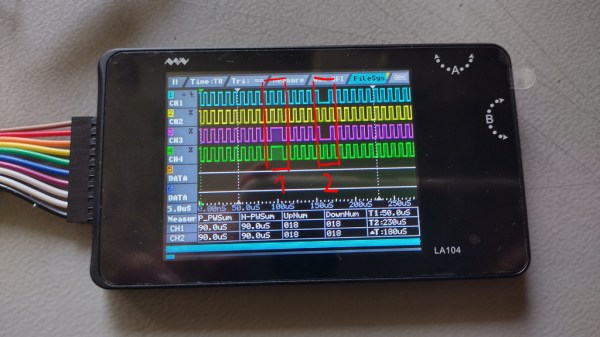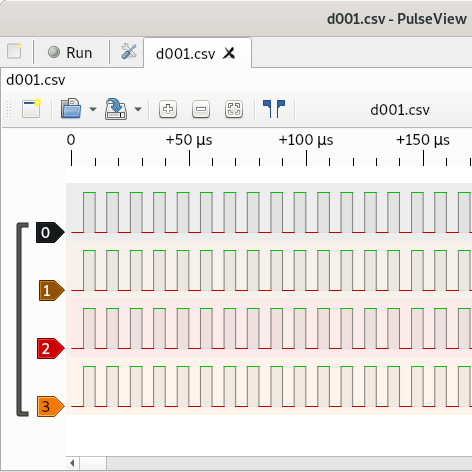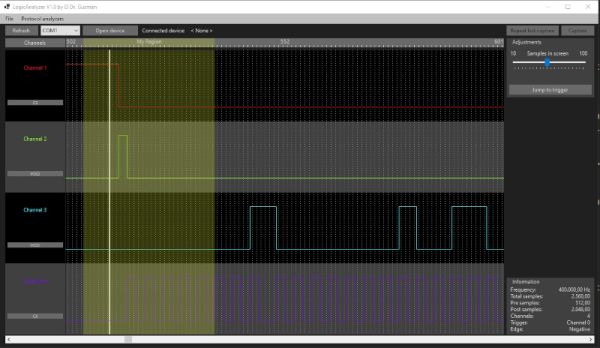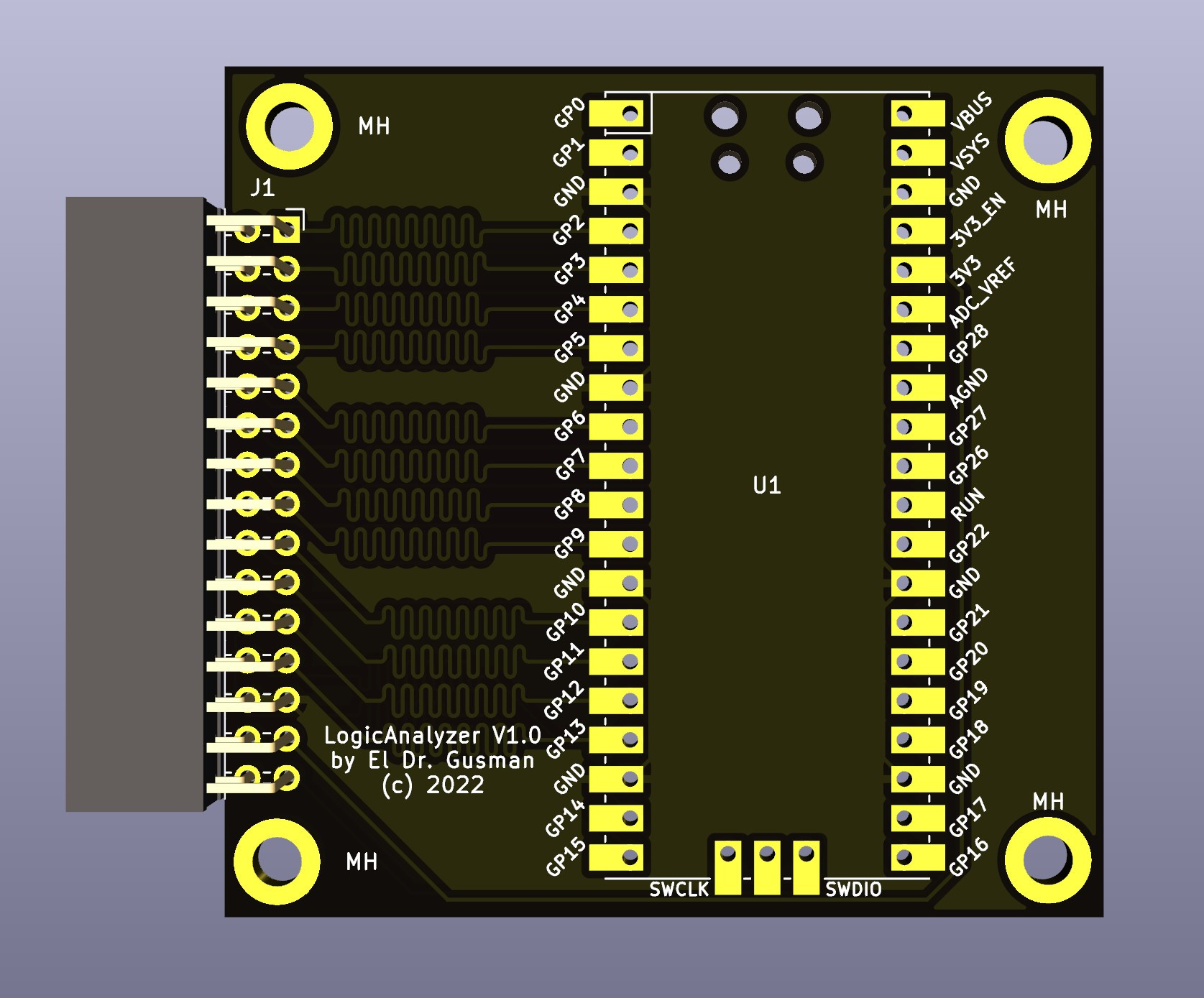
Four channel logic analyzer

posted Apr 17th 2010 12:30pm by
filed under: tool hacks

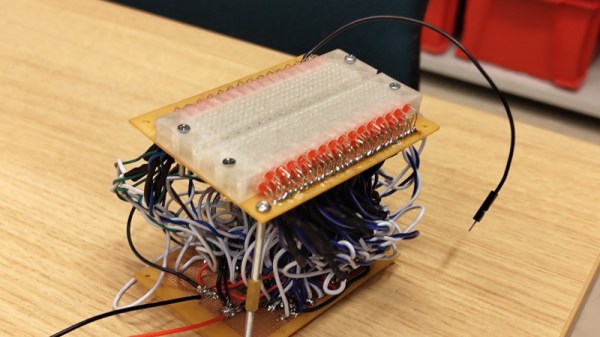
If you’ve got a graphic LCD lying around you can build this four-channel logic analyzer with a couple handfuls of cheap components. [Ronald de Bruijn's] design uses a PIC18F4580 to sample up to four logic inputs at a maximum resolution of 2 MHz. He’s included the PCB artwork so that you can etch your own board. Having a logic analyzer around can really make your life easier, allowing you to reverse engineer communication protocols and troubleshoot your own design problems.

[Thanks Juan]

Open source logic analyzer

posted Feb 28th 2010 4:28pm by
filed under: tool hacks

Hackaday alum [Ian Lesnet] has been working in cahoots with a dedicated team of developers to produce the OpenBench Logic Sniffer. This caseless logic analyzer can operate at 100MHz and sample 32 channels at once. Better yet, a digital oscilloscope add-on is in the works. The pre-order comes in at $45, that’s a lot of functionality for just a few greenbacks. We’ve embedded a demo video after the break that details installing and using this device under Ubuntu.

Read the rest of this entry »


Reverse engineering the Telly Terminator

posted Jan 6th 2010 2:00pm by
filed under: peripherals hacks

[Oliver] received the Telly Terminator as a gift and decided to take a closer look at it. This key fob has two buttons; one shines an LED like a flashlight and the other turns off televisions. Sound familiar? Yeah, it made [Oliver] think of the TV-B-Gone as well.

He cracked open the case to find just a few components. The brain behind the IR signals is a Helios H5A02HP. Only a few pins are used for outputs so he connected a logic analyzer and recorded the signals. His writeup covers the process quite well. He takes a known IR transmitter protocol and compares it to the capture from the logic analyzer. It turns out that the fob generates 46 different signals and with further analysis concludes that there’s a chance the code used here is from an older version of the TV-B-Gone source.

Digital tuner reverse engineering

posted Oct 27th 2009 10:00am by
filed under: classic hacks, home entertainment hacks

hvr-1600-i2c-sniffing

Hackaday alum [Ian Lesnet] tipped us off about some reverse engineering of the HVR-1600, an analog and digital television encoder/tuner. The project was spawned when [Devin] noticed his Hauppauge HVR-1600 didn’t tune channels in Linux quite as well as it did in Windows. He had a hunch this was due to improper initialization settings for either the tuner chip or the demodulator.

To fix this he used two test points on the board to tap into the I2C bus. Using a logic analyzer he captured the command traffic from the bus while running Linux, then while running Windows. By filtering the results with a bit of Perl, and comparing them by using diff, he tracks down and finds the variation in the commands being sent by the two drivers. After a bit of poking around in the Linux source and making the necessary changes, he improved the tuning ability of the Linux package.

[Devin's] work looks simple enough, and it is. The difficult part of this process is being smart enough to know what you’re looking for, and what you’ve got once you’ve found it.

Open source logic analyzer

posted Jul 23rd 2009 1:28pm by
filed under: tool hacks

[Jack Gasset] sends in the logic analyzer he’s been working on. The logic analyzer boasts an impressive array of features, it can sample 32 channels at 100MHz, 16 channels at 200MHz, SPI, UART, I2C and more. The analyzer’s maximum sample size is 4K for now, and it supports RLE to reduce the memory consumed. The analyzer connects to a java client on a standard PC via USB. The open source hardware based on a Xilinix FPGA can be purchased pre-assembled for $100 which makes it a direct competitor for the Salea logic analyzer we reviewed earlier this year.


Tools: Saleae Logic, logic analyzer

posted Mar 6th 2009 1:58pm by
filed under: reviews

cover1

A logic analyzer records bus communications between two chips. If you’ve ever had a problem getting two chips to talk, or wanted to reverse engineer a protocol, a logic analyzer is the tool you need to spy on the bus.

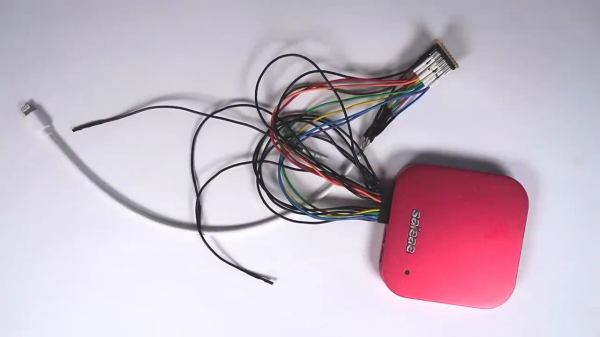
The Logic is a USB logic analyzer with eight channels and sampling rates up to 24MHz. Among hobby-level logic analyzers, the Logic has a good mix of features and decent sampling rates. We’ve been following Joe Garrison’s work on the Logic for a long time. If you’ve ever considered bringing a product to market, you can learn a lot from Joe’s blog that documents his development process.

When it debuted, the Logic was so popular that it was hard to buy one. It’s now widely available, and Saleae gave us one to try. Read our review below.

Read the rest of this entry »

How-to: USB remote control receiver

posted Oct 30th 2008 6:34pm by
filed under: home entertainment hacks, how-to, peripherals hacks

Now that we listen to MP3s, and watch XVIDs or x264s, a computer is the entertainment center in at least one room of most homes. Unless you have a special HTPC, though, you’re probably stuck using the keyboard to pause, change the volume, and fast-forward through annoying Mythbusters recaps. PC remote control receivers range from ancient serial port designs (who has one?) to USB devices not supported by popular software. In this how-to we design a USB infrared receiver that imitates a common protocol supported by software for Windows, Linux, and Mac. We’ve got a full guide to the protocol plus schematics and a parts list.

Read the rest of this entry »

Turn your Playstation 3 into Linux-based Lab Equipment

posted Sep 11th 2008 9:00pm by
filed under: home entertainment hacks, misc hacks

In a two-part series called “PS3 Fab-to-lab” on IBM’s awesome developerWorks website, [Lewin] explains how to use the Cell Broadband Engine in a PS3 to create an audio-bandwidth spectrum analyzer and function generator. The set up consists of Yellow Dog Linux, an NTSC television, and an external USB sound card to provide the inputs of the spectrum analyzer and the outputs of the function generator. The sound card driver is written to simply capture or send the info in question (audio range only) and the NTSC television as the graphical interface. This hack involves a lot of coding with hardly any example code provided. The article is more of a guide than anything. If anyone gets this working, let us know!

[via Digg]

[photo: Malcom Tredinnick]


Hack a Day serves up fresh hacks each day, every day from around the web as well as hacking related news.

Send us your hacks


Hacks

Resources