SheevaPlug PBX

[youtube=http://www.youtube.com/watch?v=RIcTWya7TQA&feature=player_embedded]

[Greg] has been working on a version of Debian/ FreePBX/ Asterisk for people to be able to drop onto a SheevaPlug. If you haven’t seen it, the SheevaPlug is a tiny computer housed in a wall plug. They made some waves when they were announced last year, and we’ve spoken of them several times. [Greg] is offering up the operating system in a pre configured format for SD cards so you can just download it and drop it in your SheevaPlug. Yeah, there’s a little bit of work to do before it will boot, which you can see in the video above.  Thanks for sending this in [Greg], keep up the good work.
Servo Hacked Linear Actuator

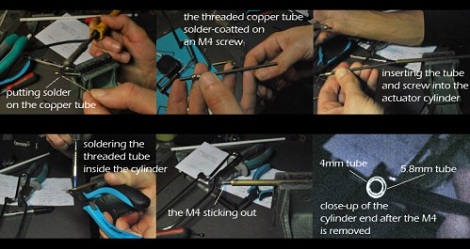
[AntonB] has modified a servo into a powerful linear actuator (think: changing rotational motion into linear motion). The process is simple enough, modify a servo for continuous rotation and then add the custom built actuating shaft. You do of course lose the precision of the servo, but a small price to pay to be able to lift ~20 pounds straight up. Inspiration for such a cheap solution came from his Planetary Surface Exploration Rover. Check out a video of both after the break.

[Thanks Eric]

Continue reading “Servo Hacked Linear Actuator”

Cell Phone Based Car Starter, Another Take

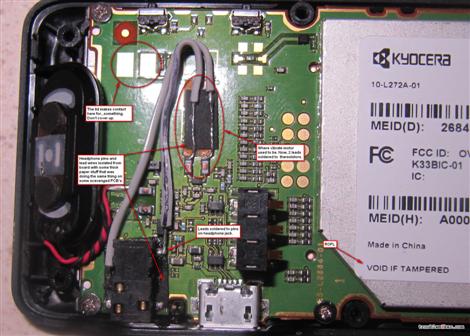
[Dave] Had been working on a cell phone activated remote start for his car for a while when we posted the GSM car starter. While both do carry out the same job, we feel that there is enough good information here to share. He’s gone a pretty simple way, by connecting the vibrator motor leads to a headphone jack. He’s using that signal to then activate the remote start by setting off an extra fob. Though it is amazingly simple, this version does have an advantage. As [Dave] points out, his cell phone has several features which could be utilized to automate some of his car starts. He can set alarms as well as recurring calendar events to get his car started without his interaction. Lets just hope he doesn’t forget and let his car run too long unattended, especially if it is in a garage attached to his house.

Polymorph In Practice

[youtube=http://www.youtube.com/watch?v=gxy22VfZq0E&feature=player_embedded]

[Leesam] tipped us off to this cool tutorial for shaping Polymorph. For those who haven’t, it is pretty cool stuff. It is a plastic that comes in little pellets. You can melt it down at relatively low temperatures and mold it to the shape you need. We’ve seen it used on several projects, most notably CrabFu’s swashbot3. Generally, we see it hand shaped, so it is fairly organic and imperfect. It can be used for more precise shapes though. This tutorial walks us through the easiest way to produce sheets of the stuff to be cut and bent into brackets as well as some helpful tips on getting the best results.

The Most Complicated, And Simplest Binary Clocks.

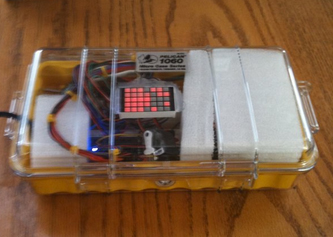
We were going to take a break from posting clocks. Really we were. This one came in the tip line today though, and we just couldn’t pass it up. [Alex] has built, what might be the most complicated clock we’ve seen. At least, it would appear that way initially. This Binary clock shows Hours, Minutes, Seconds, Days, and Months. He started with a picaxe, but eventually settled on an Mbed. Yes, he knows it is overkill, but it worked out pretty well.

As for the simplest, that came into our tip line as well. [Toby] sent this in, and agrees with us that it is hardly worthy of being called a hack. However, in light of the complicated one above, we didn’t see any harm in posting its opposite. Check it out after the break.

Continue reading “The Most Complicated, And Simplest Binary Clocks.”

The Pololu 3 Servo Hexapod

[youtube=http://www.youtube.com/watch?v=cqI-sDJTyuo&w=470]

Here’s a great tutorial on how to make a tiny hexapod walker. While this was written specifically for a kit that is sold by pololu, we like the simple layout. You could implement your own electronics if you prefer something else.  If you want to follow along with their components, you’ll end up with a fairly small and decently agile hexapod. Sure the legs aren’t articulated at every joint, but  the effect is workable. This is probably the first 3 servo walking hexapod we’ve encountered and we’ve seen a pretty decent amount of hexapods.

[Via HackedGadgets]

Wii Nunchuk Train Controls

While we’ve been told all of our lives Wiis and trains just don’t mix, they never said anything about Wii Nunchuks. One terribly abused joke later, [Ken] tipped us off about his Wii Nunchuk controlled train set.

By utilizing Digital Command Control (think pulse-width modulation) with an Arduino, he is able to have full control over the trains direction and speed. The other part of the equation is a Wii Nunchuk and adapter. The setup should be pretty self explanatory, but there is an Instructable for those that need more help.