wireless_nunchuck

Bluetooth-enabled Wii Nunchuck

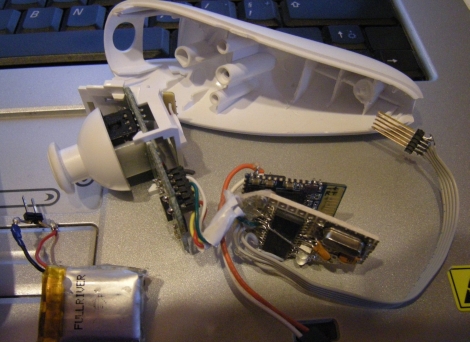
The wireless controller for the Nintendo Wii has been used in many a hack due to its simple to use Bluetooth interface. The nunchuck portion of the controller however, has always required a physical tether to the wireless controller, or an aftermarket wireless dongle. [Rousselmanu] is looking to change that with his Bluetooth-enabled wireless Wii nunchuck. He is able to retrieve a slew of data from the nunchuck, including information from all of the accelerometers, buttons, as well as the joystick. The data is read into a PIC MCU and relayed via serial to a Bluetooth module he purchased online.

The Bluetooth module looks fairly easy to interface in Linux, and [Rousselmanu] has a video showing off how well the nunchuck can be used to interact with 3D models. He admits that the controller is a bit ugly at the moment as all the components don’t quite fit so well, but future revisions will surely remedy that.

Keep reading to see a video of the nunchuck in action.

Continue reading “Bluetooth-enabled Wii Nunchuck”

Brain Car Interface

The AutoNOMOS labs project has found a new way to maneuver its vehicles, your brain. We have looked at a previous version that uses a mostly computerized van under remote control from an iPhone. This one however, named “Brain Driver”, places the operator in the driver’s seat with an EEG strapped to their head.

Going for a more sporty look, the current vehicle is a drive-by-wire Volkswagen Passat wagon filled to the brim with fun toys like LIDAR/ RADAR sensor technology, cameras, and a specialized GPS. The EEG interface is a commercially available Emotiv model, and after a few rounds of training on safe ground, the driver is placed in control of the car.

In one demonstration the car approaches a 4 way intersection, the driver only has to think left or right and the car (intelligently) navigates the turn after coming to a proper stop, and checking for obstacles. In the second demo car and driver are let loose on an unused airport to test responsiveness.

If you like brains, cars, robots, and spinning lasers join us after the break for a video.

[youtube=http://www.youtube.com/watch?v=iDV_62QoHjY&w=450] Continue reading “Brain Car Interface”

Simple Household Status System

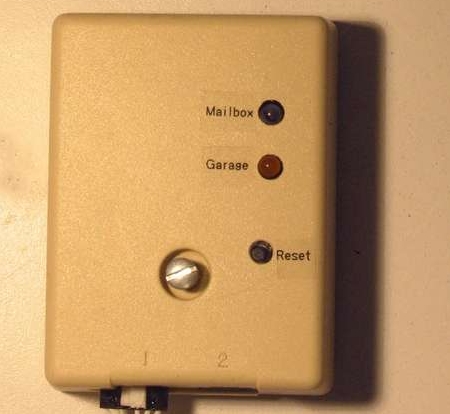
The-Household-Informer

[BrianH] decided that he no longer wanted to venture outside on cold or rainy days just to check if the mail had come, so he built himself a notification system that would alert him if the postman had stopped by. Additionally, he admits to being forgetful on occasion and wanted a way to monitor whether or not he forgot to close the garage door. His Instructable details how he accomplished both of these tasks with the household monitor he built around an ATmega168. His project uses a mailbox mounted photoresistor to determine when the mailbox has been opened, and a reed switch that is triggered when the garage door has been opened. If either of these things occur, a beep is emitted from his notifier, and the appropriate status LED is lit. Simply monitoring whether the garage door has been opened is not all that helpful, so he programmed his notifier to beep persistently at 10-minute intervals if the garage has been left open for more than an hour.

His hack is pretty useful, but he does mention that there is an inordinate amount of wiring that needs to be laid, citing his driveway repaving as a great opportunity to do so.

Molded Parts: Prusa Mendel In 30 Minutes

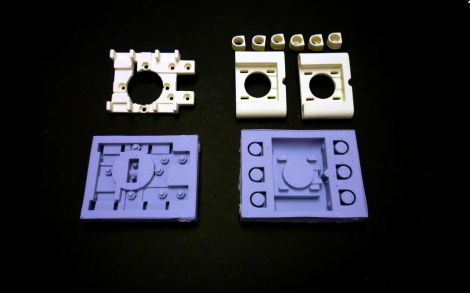
This set of white RepRap parts were created in molds, instead of being printed by another RepRap. [Mark A. Ganter] of the University of Washington admits that this breaks the idea of a 3D printer that is self-replicating. But the molds – which were created by tweaking Prusa Mendel parts to be mold friendly – have the ability to produce every plastic part necessary to build your own RepRap and they can do it much faster. Once the molds were completed [Mark] and his students were able to produce a full set of parts in just 30 minutes, cutting as much as 14 hours off of the time it would have taken to print the parts. Still not convinced? How about this: the molds can be created by a 3D printer or by using a high-resolution power printing method like they have here.

The process starts by printing master parts, then creating a silicone RTV mold from them. Once the molds are ready, [Mark’s] team pours polyurethane into them and waits for it to harden. They plan to share the STL files in less than a week so that you can make your own molds to use to build your RepRap army.

8-bit MIDI Synthesizer

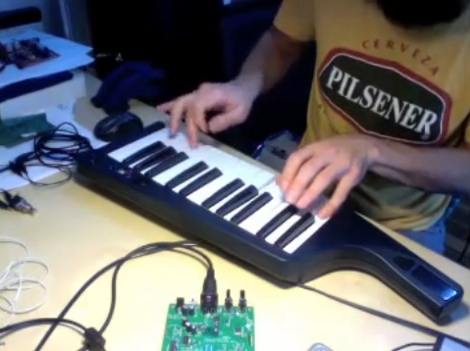
[Derek Enos’] toils are starting to yield results. He’s been working on an 8-bit synthesizer that is MIDI controlled which he calls the deMIDulator. As he demonstrates after the break, the device has sine and square wave functions that produce quite a pleasing sound. But it also offers the option to record your own samples which are then modified based on the MIDI commands coming in from your device of choice. In this case he’s using a Rock Band 3 keyboard (or keytar if you will) in a much more creative way than its originally intended purpose.

For now we’ll have to be content with the demo video and a list of features as there are no other details. But open sourcing the code and hardware information are on his to-do list. Continue reading “8-bit MIDI Synthesizer”

Cyborg Camera Mask

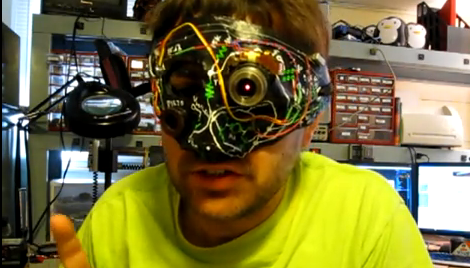
[Ryan] whipped up this robotic masquerade mask to wear to his wife’s art opening / masquerade party, and its pretty wild. The prominent feature of this mask is a scavenged lens assembly from a typical point n shoot style camera, which is still connected to its electronics so it can go through its off and self check functions. You cant see through it, but with moving parts and a red LED inside, it does create an awesome cyborg type appearance,

The movement of the lens assembly is triggered by a thermistor inside of the mask’s nose piece, warm air exhaled onto to it for a given period of time changes the resistance and is monitored by a micro controller, which seems to act like a toggle style switch.

While there is not a build log, parts list, or many details, the schematic is provided for you to look over if you want to try and make your own.

Continue reading “Cyborg Camera Mask”

NES Paul Game Controller

nes_paul_complete

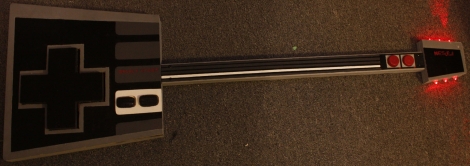
[NeoTechni] wrote in to share the new game peripheral she built, dubbed the NES Paul. The ultimate goal of the project was to build a NES-styled controller for an upcoming game she is working on, tentatively titled 8-bit Hero. The guitar is constructed primarily from wood, as well as some scrounged bits she had around the house. An Xbox 360 controller was dismantled and wired to provide input for the guitar’s buttons and D-Pad. Even the Xbox controller’s rumble packs were used in order to provide visual feedback of missed notes via LED tuning pegs on the guitar’s headstock.

The writeup is broken into several pieces as it was put together in a handful of Google Buzz posts, but it is still relatively easy to follow. We can’t wait to see how the project comes together once the game portion has been completed.