Tilt Five: A Fresh Take On Augmented Reality Tabletop Gaming

Tilt Five is an Augmented Reality (AR) system developed by Jeri Ellsworth and a group of other engineers that is aimed at tabletop gaming which is now up on Kickstarter. Though it appears to be a quite capable (and affordable at $299) system based on the Kickstarter campaign, the most remarkable thing about it is probably that it has its roots at Valve. Yes, the ones behind the Half Life games and the Steam games store.

Much of the history of the project has been covered by sites, such as this Verge article from 2013. Back then [Jeri Ellsworth] and [Rick Johnson] were working on project CastAR, which back then looked like a contraption glued onto the top of a pair of shades. When Valve chose to go with Virtual Reality instead of AR, project CastAR began its life outside of Valve, with Valve’s [Gabe] giving [Jeri] and [Rick] his blessing to do whatever they wanted with the project.
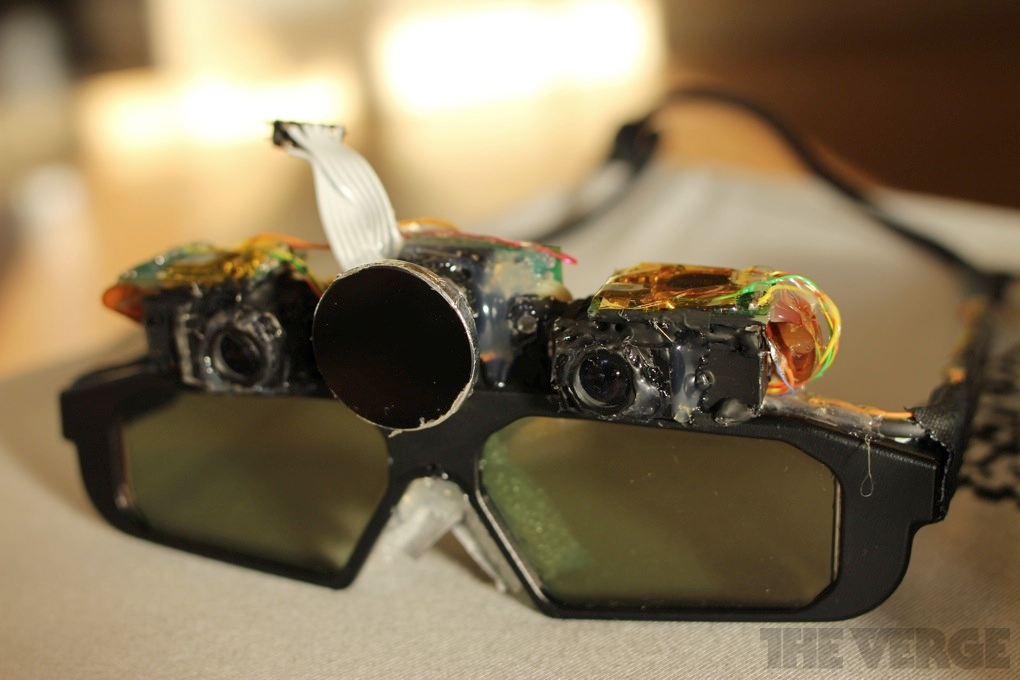
What the Tilt Five AR system looked like in its CastAR days. (credit: The Verge)

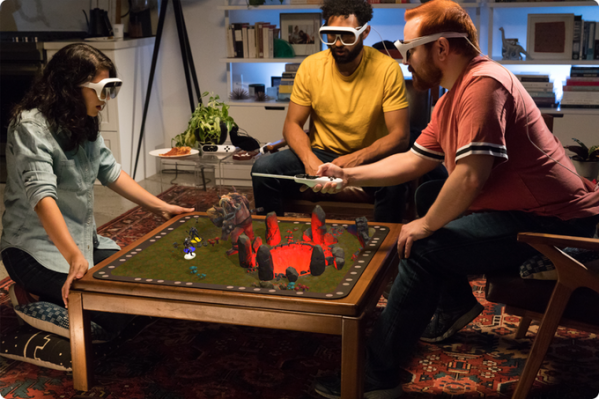
Six years later Tilt Five is the result of the work put in over those years. Looking more like a pair of protective glasses along with a wand controller that has an uncanny resemblance to a gas lighter for candles and BBQs, it promises a virtual world like one has never seen before. Courtesy of integrated HD projectors that are aimed at the retroreflective surface of the game board.

A big limitation of the system is also its primary marketing feature: by marketing it as for tabletop gaming, the fact that the system requires this game board as the projection surface means that the virtual world cannot exist outside the board, but for a tabetop game (like Dungeons and Dragons), that should hardly be an issue. As for the games themselves, they would run on an external system, with the signal piped into the AR system. Game support for the Tilt Five is still fairly limited, but more titles have been announced.

(Thanks, RandyKC)
Hacked Tape Player Makes For A Unique Instrument

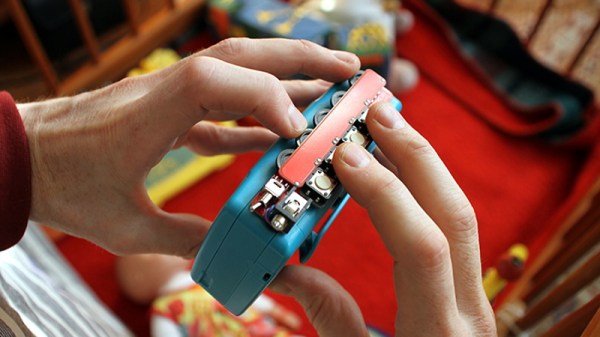
[Gijs Gieskes] is certainly no stranger to hacked cassette players, but his latest triumph may well be the most approachable project for anyone looking to explore the world of unorthodox tape unspooling. By attaching a fairly simple add-on PCB to a modern portable cassette player, the user is able to modify the playback speed of the tape at will. The skillful application of such temporal distortions leads to wonderfully abstract results.

The board that [Gijs] has come up with uses four potentiometers and matching push buttons to allow the user to set different playback speeds that they can engage with the push of the button. There’s also a fifth potentiometer to augment the “global” speed as well as an override switch. During playback, these controls can be used to arbitrarily tweak and augment the sound of samples contained on a the looping cassette.

If that’s a little hard to conceptualize, don’t worry. [Gijs] has provided some examples of how the the rapid adjustment of playback speed offered by this “Zachtkind” can add a fascinating level of complexity to sounds and melodies. The assembled player is available for purchase ready to go, but he also provides kits and a detailed installation guide for those who’d rather build it themselves.

Going all the way back to 2005, [Gijs] and his incredible creations have been a staple of Hackaday. From the Arduino video sampler to the array of oddly musical analog clocks, we never cease to be in awe of this exceptionally prolific hacker.

Tracking The Satellites That Keep Us On Track; Monitoring GPS, Galileo, BeiDou, And GLONASS

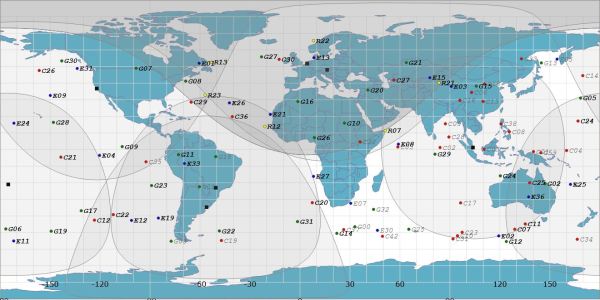
We may not always be aware of it, but the daily function of the technological world around us is extremely dependent on satellite navigations systems. It helps the DHL guy deliver those parts you were waiting for, and keeps the global financial and communication systems running with precision timing. So, when these systems have a bad day, they can spread misery across the globe. To keep an eye on these critical constellations, [Bert Hubert] and friends set up a global open source monitoring network that aims to track every satellite in the GPS, Galileo, BeiDou and GLONASS constellations.

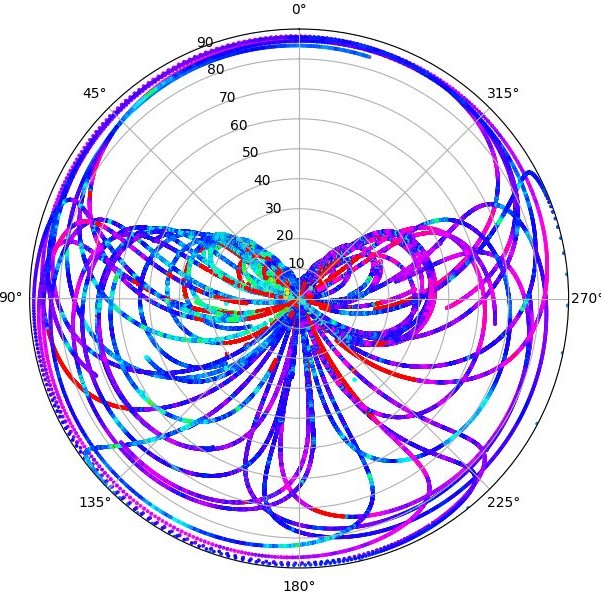
Local azimuth and local elevation of GPS, Galileo, and BeiDou satellites passing overhead [via @GalileoSats]
Off-the-shelf GNSS receivers are used to feed navigation messages to a machine running Linux/OSX/OpenBSD. The messages are processed to calculate the position (ephemeris), extract atomic clock timings and status codes of each satellite. Publicly available orbital data is then used to make an informed guess regarding the identity of the satellite in question.

All this data enables [Bert] to determine ephemeris discontinuities, time offsets, and atomic clock jumps. The project’s twitter feed, @GalileoSats, is very active with interesting updates. Go check it out! All the collected data is available for research purposes and the software is up on Github.

GPS hacks are never in short supply around here and another open source satellite network, SatNOGS has been featured a number of times on Hackaday after it won the 2014 Hackaday Prize.

Thanks for the tip [DarkSideDave]!

Smart Map Puts On A Show Thanks To Arduinos And DMX

Maps can be a great way to get a message across when the data you’re dealing with affects people on a country’s population scale. [jwolin] works for a non-profit organization, and wanted a way to help people visualize the extent of their operations and the causes they deal with. To do that, he created a nifty smart map wall display.

The display consists of a world map cut out of MDF, and affixed to a brick wall. There’s also two 4K Samsung monitors included as part of the system. The top monitor displays headings to contextualise the data, while the bottom screen displays related full motion video. A series of DMX-controlled lights then shine on the world map in various configurations to highlight the area of interest.

The system requires delicate coordination to operate cleanly and smoothly. There are three Windows 10 computers in the system, one for each monitor and another for the world map. An AutoHotkey script runs on the first computer, which selects a random video, and then sends out a command over serial to an Arduino Nano. This Arduino nano then communicates with two others, which make sure the second screen and DMX lighting rig then play the correct matching sequences, in time with the main video. Special care is taken to ensure that transitions are as smooth as possible, with no gaps in between each sequence. The entire installation is simple to update just by uploading additional content to a Dropbox folder, a crucial touch to future proof the project.

It’s an eye-catching system that helps educate visitors as to the mission of the organisation. We’ve seen other innovative world-map displays, like this clock that highlights night and day around the world. Video after the break.

Continue reading “Smart Map Puts On A Show Thanks To Arduinos And DMX”

Finally, A Rotary Cell Phone With Speed Dial

If you’re reading this, chances are good that you’re the family IT department. We do what we can to help them, but there’s just no changing the fact that smartphones are difficult to operate with aging eyes and hands. When [sideburn’s] dad started complaining, he took a different approach. Instead of helping his dad adapt, [sideburn] stuffed modern cell phone guts into a 1970s rotary phone — if all you want to use it for is phone calls, why not reach for a battle-tested handset?

[sideburn] figured out the most important part first, which is getting the thing to ring. The bells in those old phones are driven by a huge relay that requires a lot of voltage, so he boosted a 3.2V rechargeable to 34V. Then it was just a matter of getting the GSM module to play nice with the microcontroller, and programming a MOSFET to trigger the boost module that makes the beast jingle.

The worst thing about rotary phones is that they were never meant to be dialed in a hurry. But [sideburn] took care of that. Once Rotocell was up and working, he added an SMS interface that makes the phone a lot more useful. Dad can add contacts to Rotocell by texting the name and number to it from a modern phone. Once it’s in there, he can dial by name, speeding up the process a tiny bit.

The SMS interface can also report back the signal strength and battery level, and will send battery low alerts when it’s under 20%. You can see Rotocell in action after the break.

Got an old rotary or two lying about? If modernizing the internals to make calls doesn’t light up your circuits, try turning it into a voice-controlled assistant instead.

Continue reading “Finally, A Rotary Cell Phone With Speed Dial”

Copying High Security Keys With OpenSCAD And Light

The ability to duplicate keys with a 3D printer is certainly nothing new, but so far we’ve only seen the technique used against relatively low hanging fruit. It’s one thing to print a key that will open a $15 Kwikset deadbolt from the hardware store or a TSA-approved “lock” that’s little more than a toy, but a high-security key is another story. The geometry of these keys is far more complex, making them too challenging to duplicate on a consumer-level printer. Or at least, you’d think so.

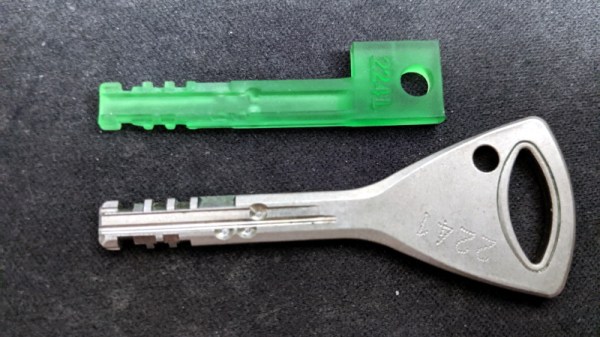
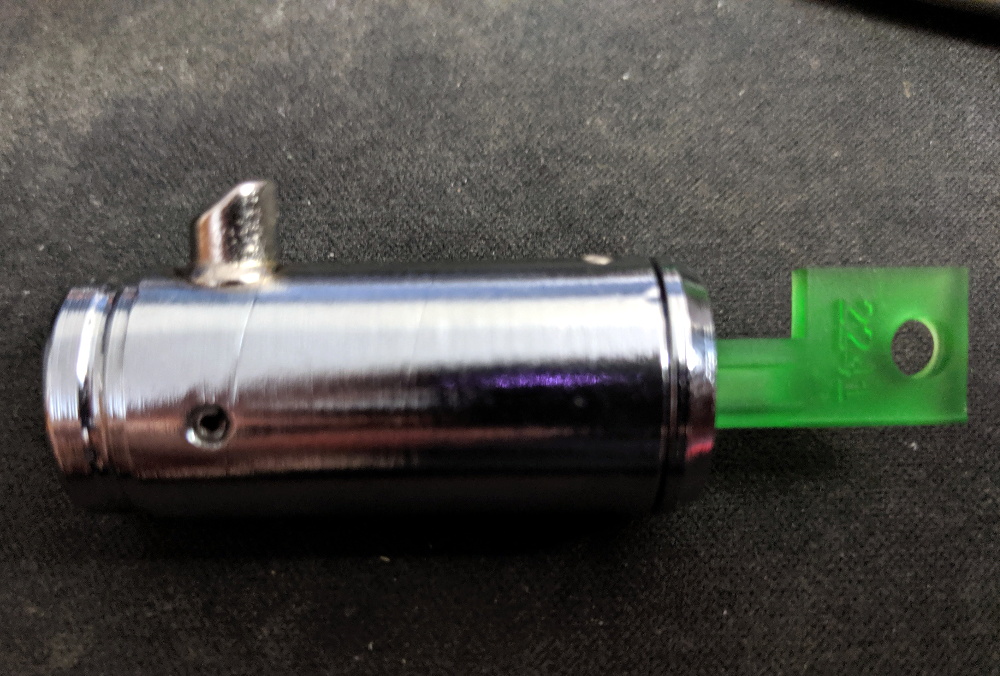
Inspired by previous printed keys, [Tiernan] wanted to see if the techniques could be refined for use against high security Abloy Protec locks, which are noted for their resistance to traditional physical attacks such as picking. The resulting STLs are, unsurprisingly, beyond the capabilities of your average desktop FDM printer. But with a sub-$300 USD Anycubic Photon DLP printer, it’s now possible to circumvent these highly regarded locks non-destructively.

Of course, these keys are far too intricate to duplicate from a single picture, so you’ll need to have the physical key in hand and decode it manually. [Tiernan] wisely leaves that step of the process out, so anyone looking to use this project will need to have a good working knowledge of the Abloy Protec system. Hopefully this keeps bad actors from doing anything too nefarious with this research.

Once you have the decoded values for the key you want to duplicate, you just need to provide them to the OpenSCAD library [Tiernan] has developed and print the resulting STL on your sufficiently high-resolution printer. Generally speaking, the parts produced by resin-based printing have a high tensile strength but are very brittle, so perhaps not the kind of thing you want to stick in your expensive Abloy lock. That said, there are some “Tough Resin” formulations available now which produce parts that are at least as strong as those made with thermoplastics. So while the printed keys might not be strong enough for daily use, they’ll certainly work in a pinch.

Fighting Household Air Pollution

When Kenyan engineer [Aloise] found out about the health risks of household air pollution, they knew there had to be a smart solution to combatting the problem while still providing a reasonable source of energy for families cooking without the luxury of cleaner fuels. Enter OpenHAP, a DIY household air pollution monitor that provides citizen scientists and researches the means to measure air particulates in developing countries.

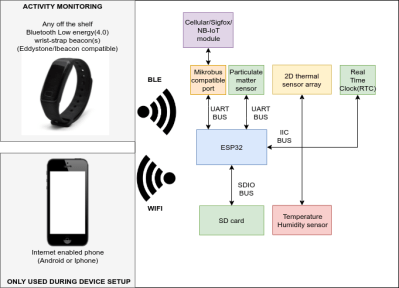
The device is based on an ESP32 communicating with a ZH03B Particulate matter sensor over UART; a DS3231SN real-time clock (RTC), temperature and humidity sensor, and MLX90640 2D thermal sensor array over I2C; and wirelessly sending the data received to a Bluetooth low energy wrist-strap beacon and an Internet enabled phone. The device also uses a TCA9534 GPIO expander to control the visual and auditory notifiers (buzzers and LEDs) and to interface to a SD card.

The project uses the libesphttpd project modified for the ESP32 for the webserver, which is used to stream data to a mobile handset or computer using the WiFi capabilities of the ESP32. The data includes real-time sensor information, system status, storage media status, visualizations of the thermal array sensor data (to ensure the camera is facing the source of heat), and tag information to test the limits of the Bluetooth tag with regards to distance.

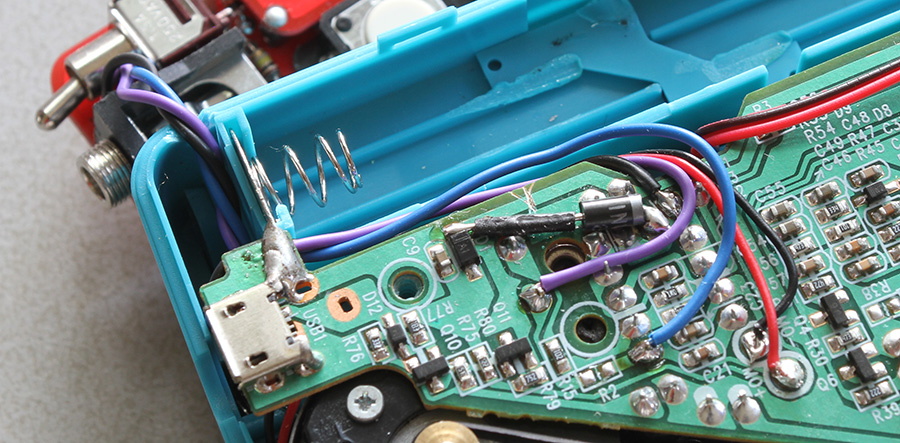
Power input is provided through a Micro-USB connector, protected with a TVS diode and a Schottky diode in series to prevent reverse power flow.

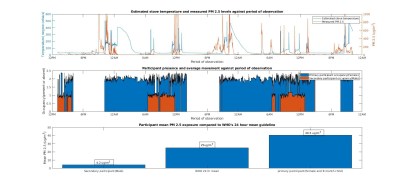
The project was tested in two real-life scenarios: one with a household in rural Kenya and another with an urban low-income family of four. In the first test, the family used a three stone open fire stove. A FLiR thermal camera captured the stove temperatures, while a standard camera was enough to capture the high levels of smoke inside the kitchen. The readings from OpenHAP were high enough to exceed the upper detection threshold for the particulate sensor, showing that the woman cooking in the house was receiving the equivalent of 8 cigarettes a day, about 8 x the WHO’s recommended particulate levels.

Within the second household, a typical energy mix of charcoal briquettes and kerosene was typically used for cooking, with kerosene used during the day and briquettes used at night. The results from measuring pollution levels using OpenHAP showed that the mother and child in the household regularly received around 1.5 x the recommended limit of pollutants, enough to lead to slow suffocation.



There’s already immense potential for this project to help researchers test out different energy sources for rural households, not to mention the advantage of having a portable low-energy pollution monitor for citizen scientists.

Continue reading “Fighting Household Air Pollution”