Making A Speaker With Resin, Magnets, And Wire

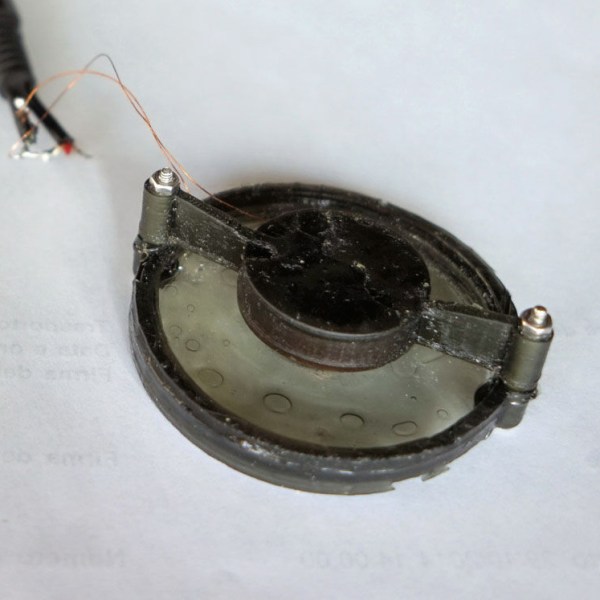
A speaker is just about the simplest electronic component possible, just barely more complex than resistors and wire. They’re also highly variable in their properties, either in size, shape, frequency response, and impedance. Obviously, building custom speakers would be of interest to a lot of people, but there aren’t many people out there doing it. [Madaeon] is one of those people. He created a speaker from scratch, using nothing but magnets, wire, and a bit of UV curing resin.

The frame of the speaker contains a magnet, and the coil of wire is carefully attached to the 0.1mm thin speaker cone with a bit of UV curing resin. All the parts are available on Thingiverse, but you will need a UV resin printer with a low layer height to print this thing out.

The speaker was built by [madaeon] as a demonstration of what the printer he built can do. It’s a fairly standard resin-based 3D printer built around a DLP projector. It’s also cheap, and unlike some other cheap resin-based 3D printers, there’s a reasonable likelihood his will ship within the next few months.
Fixing Faulty But Genuine Apple Power Adapters

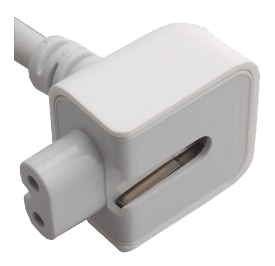
apple The standard power adapter for Apple laptops is a work of art. The Magsafe connector has saved more than one laptop owned by the Hackaday crew, and the power brick with interchangeable plugs for different countries is a work of genius. Being a miracle of modern manufacturing doesn’t mean Apple gets it right all the time; the UK adapter doesn’t use the ground plug, leading to the power supplies singing at 50 Hz when plugged in. [Gareth] had had enough of the poor design of his charger and decided to fix it.
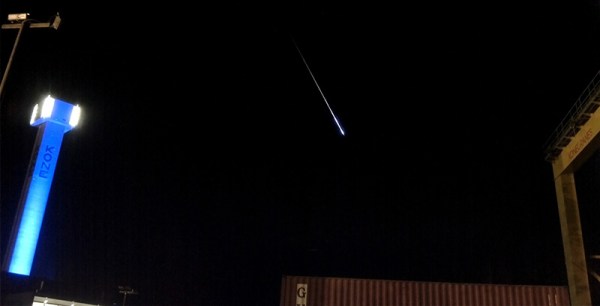
The Apple power adapter has two obvious connections, and another shiny metal disk meant for a connection to Earth. In most of the Apple charger ‘extension cords’, this earth connection is provided by the cord. In the smaller plug adapters – even ones where space is not an issue, like the UK plug – this connection is absent.

To fix this glaring oversight, [Gareth] shoved some aluminum foil where the earth terminal on the plug should go. A hole was drilled through the plug to connect this foil to the Earth socket terminal, and everything was covered up with kneadable epoxy.

No, aluminum foil probably won’t do its actual job of preventing horribleness in the event of an insulation failure or short. It will, however, silence the 50 cycle hum emanating from the power adapter, and that’s good enough for [Gareth].

Finding Meteors, Satellites, And Star Trails With A Raspberry Pi

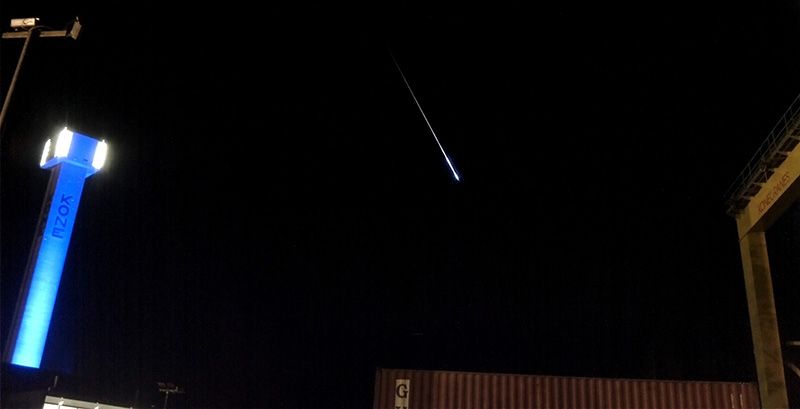
meteorite

The Raspberry Pi is an incredibly popular, cheap, and low power computer that also has a nifty camera add-on that is completely programmable. This opens up a log of possibilities for long-exposure photography, and [Jippo] has found the best use so far: long exposure astrophotography for capturing meteors, satellites, and star trails.

[Jippo] is using a stock Raspi and camera module with a little bit of custom software written by his friend [Jani Lappalainen] that grabs image data from the camera and saves it either as a time-lapse, or only when something significantly changes. This would include meteors and Iridium flares, as well as passing planes, reflections of satellites, and of course long-exposure star trails.

So far, [Jippo] has already captured enough images to amount to a great night of skywatching. There’s a great picture of a meteor, a few pictures of satellites reflecting the sun, and some great star trails. The software [Jippo] is using is available on his site along with a gallery of his highlight reel.

Gearshift Display For A Rally Car

[Andrea] was helping out a local rally racing team with their car and was asked to create a device that would display the current gear on a big, bright display. Of course, a device like this already exists, but the team didn’t want to invest the significant resources into a ready-made product. Instead, [Andrea] was tasked with creating one.

The device is basically a pot attached to the gear shifter, but in testing, [Andrea] ran into a problem; between reverse and 5th gear, the shifter would turn 360 degrees, meaning these gears were indistinguishable.

The solution to this problem was a calibration procedure for when the driver starts the car. By setting a jumper, the driver puts the car into all gears, sorting out the reading and storing the analog values in the microcontroller’s EEPROM.

The R2D2-‘O-Lantern Reddit Doesn’t Want You To See

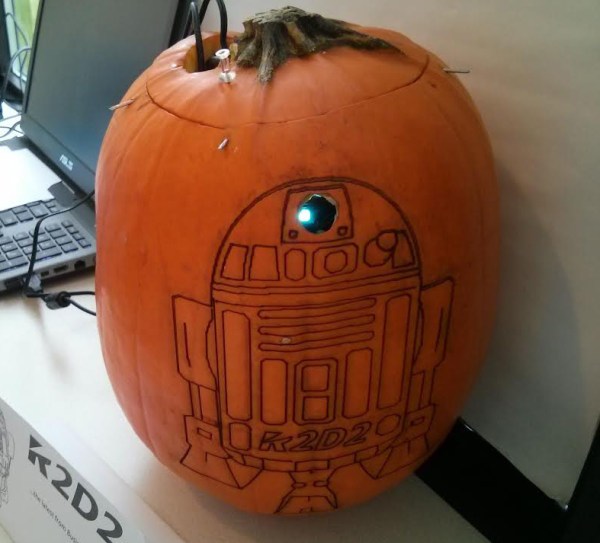
The people here at Hackaday aren’t dedicating their entire lives to moderating comments and sending press releases to the circular file; some of us actually have jobs and hobbies. [James Hobson] works at a projector company that was having a pumpkin carving contest today. He came up with the best possible use of a pumpkin projector – a R2D2-‘o-lantern that plays the message from [Leia] to [Obi-Wan Kenobi]. [James] submitted this to reddit, but one of the mods deleted it. We’re much cooler than a few mods and their little empire, so we’re putting it up here.

Instead of a knife, [James] used a rather interesting method for carving a pumpkin – a laser cutter. By maxing out the Z height of his laser cutter, he was able to cut a perfect R2D2 graphic on the surface of a pumpkin. No, [James] isn’t removing any of the pumpkin’s skin after the lasering is done, but the result still looks great when backlit.

Inside the pumpkin is a projector playing the famous distress message made from the captured Tantive IV. It’s not entirely accurate – [James] put the projector behind R2’s radar eye and not the holographic projectors, and to project [Leia] in mid-air he would need something like this, Still, it’s a great project we expect to see cloned a year or so from now.

Reverse Engineering The D-Link WPS Pin Algorithm

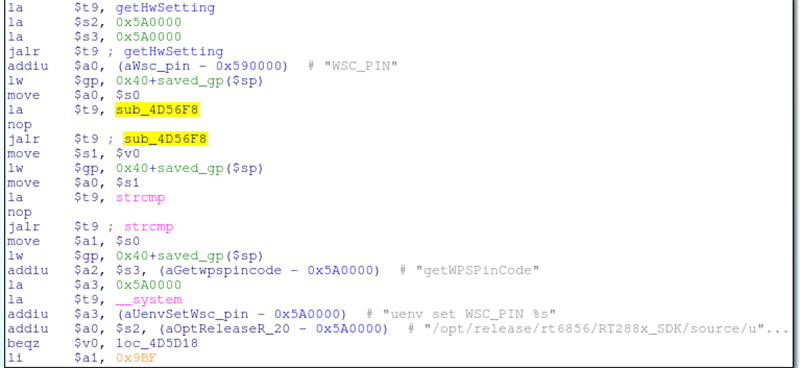
sub_4D56F8

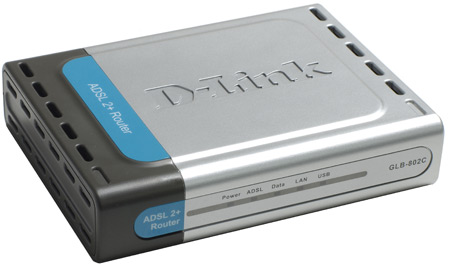
A router with WPS requires a PIN to allow other devices to connect, and this PIN should be unique to every router and not derived from other easily accessible data found on the router. When [Craig] took a look at the firmware of a D-Link DIR-810L 802.11ac router, he found exactly the opposite; the WPS PIN was easily decipherable because it was generated entirely from the router’s MAC address and could be reverse engineered by sniffing WiFi.

When [Craig] was taking a look at the disassembled firmware from his router, he noticed a bit of code that accessed the NVRAM used for storing device-specific information like a serial number. This bit of code wasn’t retrieving a WPS pin, but the WAN MAC address instead. Instead of being unique to each device and opaque to every other bit of data on the router, the WPS pin was simply generated (with a bit of math) from the MAC address. This means anyone upstream of the router can easily derive the WPS pin of the router, and essentially gives everyone the keys to the castle of this router.

A few years ago, it was discovered the WPS pin was extremely insecure anyway, able to be brute-forced in a matter of minutes. There are patches router manufacturers could apply to detect these brute force attacks, closing that vulnerability. [Craig]’s code, though, demonstrates that a very large number of D-Link routers effectively broadcast their WPS PIN to the world. To make things even worse, the BSSID found in every wireless frame is also derived from the WAN MAC address. [Craig] has literally broken WPS on a huge number of D-Link routers, thanks to a single engineer that decided to generate the WPS PIN from the MAC address.

[Craig] has an incomplete list of routers that are confirmed affected on his site, along with a list of confirmed unaffected routers.

A Better Anonabox With The Beaglebone Black

A few weeks ago, Anonabox, the ill-conceived router with custom firmware that would protect you from ‘hackers’ and ‘legitimate governments’ drew the ire of tech media. It was discovered that this was simply an off-the-shelf router with an installation of OpenWrt, and the single common thread in the controversy was that, ‘anyone can build that. This guy isn’t doing anything new.’

Finally, someone who didn’t have the terrible idea of grabbing another off the shelf router and putting it up on Kickstarter is doing just that. [Adam] didn’t like the shortcomings of the Anonabox and looked at the best practices of staying anonymous online. He created a Tor dongle in response to this with a Beaglebone Black.

Instead of using wireless like the Anonabox and dozens of other projects, [Andy] is using the Beaglebone as a dongle/Ethernet adapter with all data passed to the computer through the USB port. No, it doesn’t protect your entire network; only a single device and only when it’s plugged in.

The installation process is as simple as installing all the relevent software, uninstalling all the cruft, and configuring a browser. [Adam] was able to get 7Mb/sec down and 250kb/sec up through his Tor-ified Ethernet adapter while only using 40% of the BBB’s CPU.