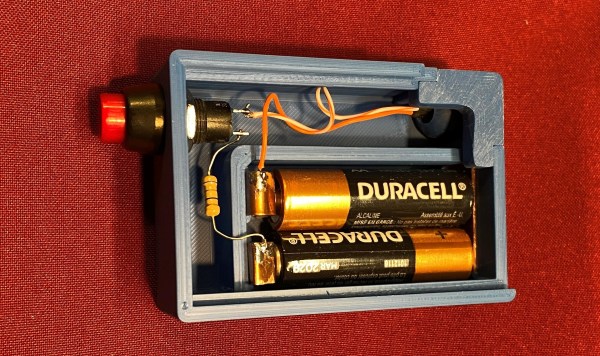
The best part is that the status can been seen on both sides of the door so you don’t forget to keep it updated. Or maybe it’s the super-low part count. There’s no BLE, LoRa, or Wi-Fi, just two sets of red and green LEDs, a three-way switch, and a power source. Well, and current-limiting resistors of course.
[Bob] already had all the components on hand, including the nifty enclosure, which is another great thing about this build. Like [Bob] says, you could house the control side of this circuit in just about anything you’ve got lying around.
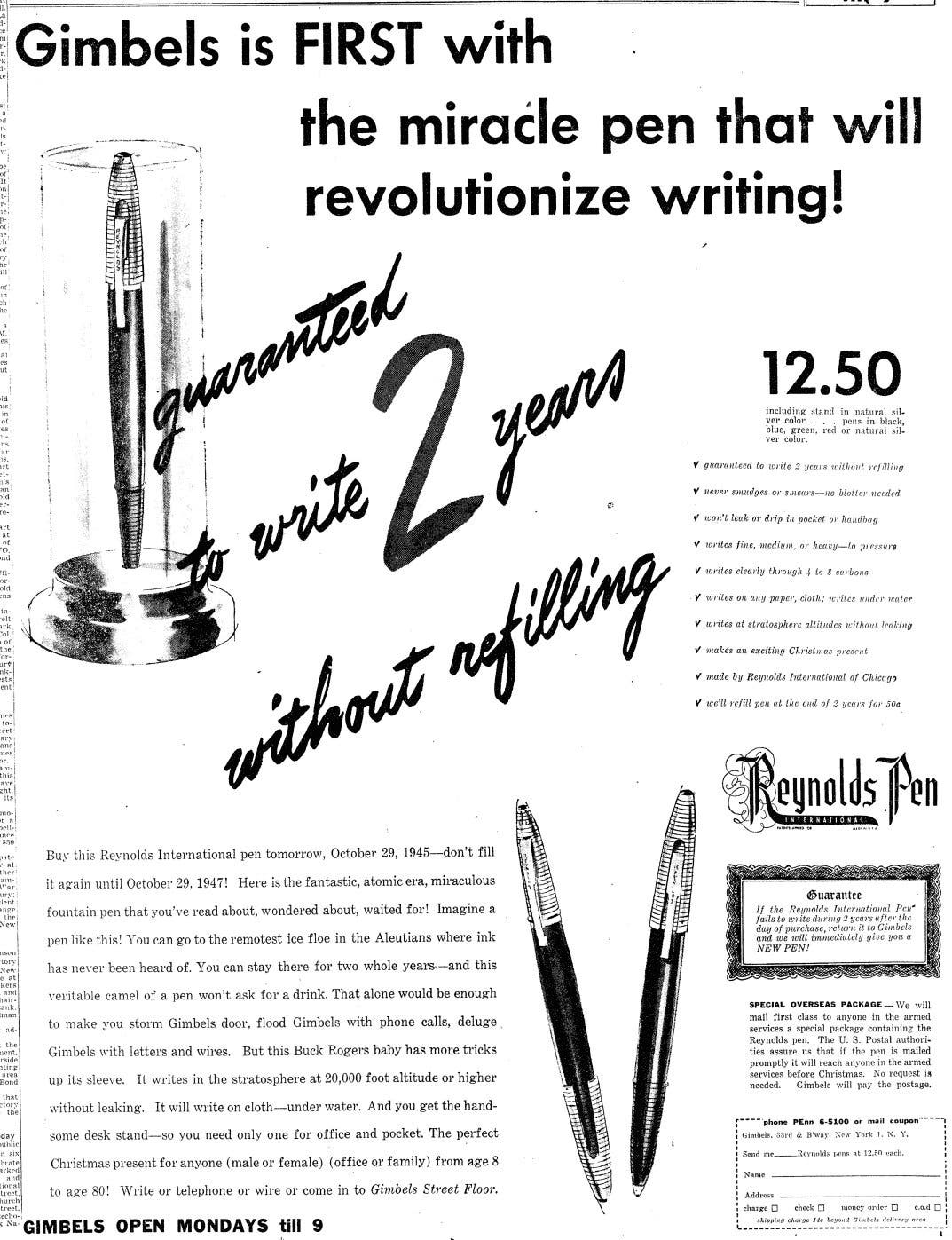
This new pen cost $12.50, which is about $180 today. For many people, the improved experience that the ballpoint promised over the fountain pen was well worth the price. You might laugh, but if you’ve ever used a fountain pen, you can understand the need for something more rugged and portable.
Ballpoint pens are everywhere these days, especially cheap ones. They’re so ubiquitous that we don’t have to carry one around or really think about them at all. Unless you’re into pens, you’ve probably never marveled at the sheer abundance of long-lasting, affordable, permanent writing instruments that are around today. Before the ballpoint, pens were a messy nuisance.
A Revolutionary Pen
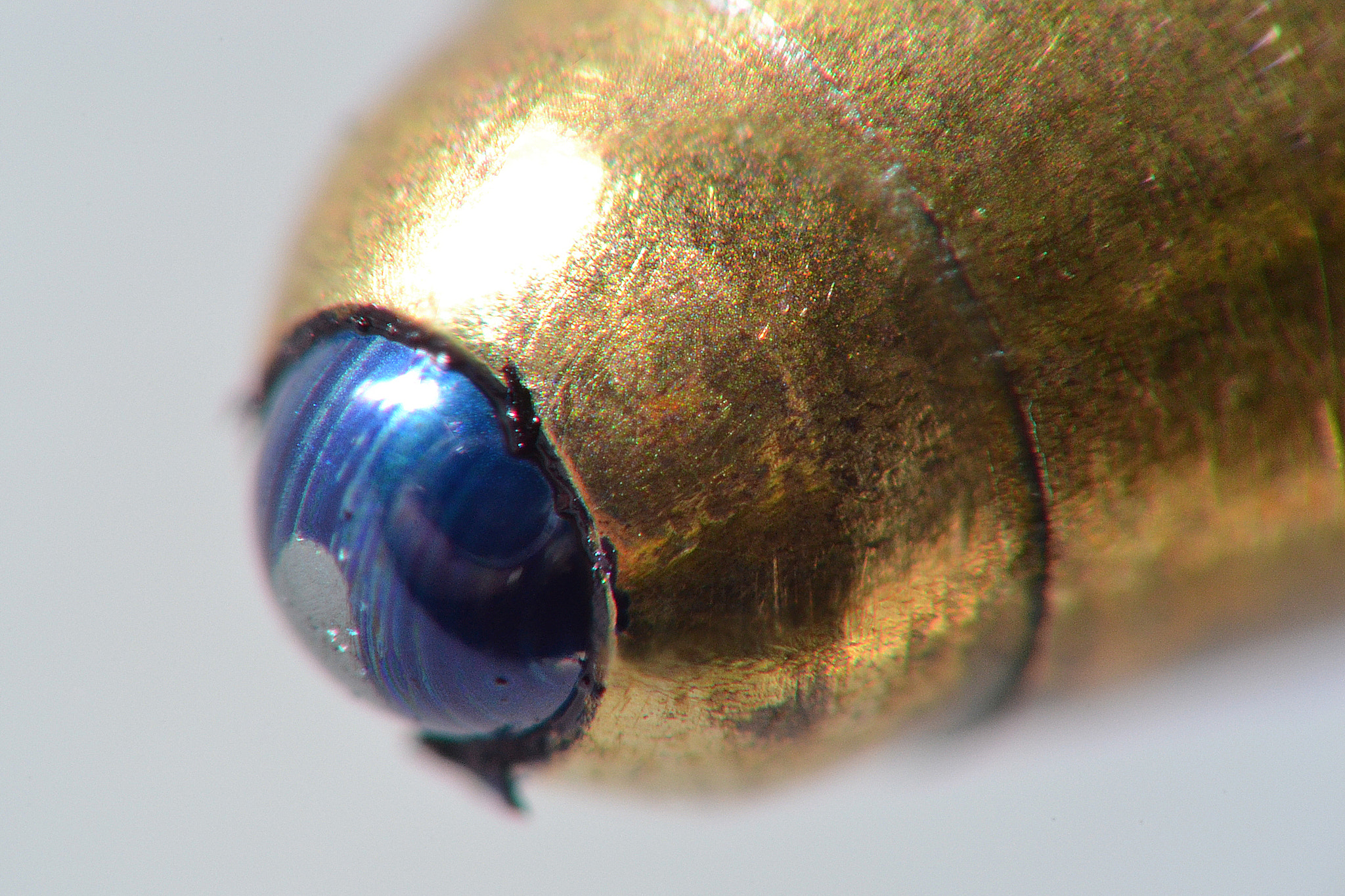
A ballpoint, up close and personal. Image via Wikipedia
Fountain pens use gravity and capillary action to evenly feed ink from a cartridge or reservoir down into the metal nib. The nib is split in two tines and allows ink to flow forth when pressed against paper. It’s not that fountain pens are that delicate. It’s just that they’re only about one step above dipping a nib or a feather directly into ink.
There’s no denying that fountain pens are classy, but you’re playing with fire if you put one in your pocket. They can be a bit messy on a good day, and the cheap ones are prone to leaking ink. No matter how nice of a fountain pen you have, it has to be refilled fairly frequently, either by drawing ink up from a bottle into the pen’s bladder or inserting a new cartridge. And you’re better off using it as often as possible, since a dormant fountain pen will get clogged with dried ink.
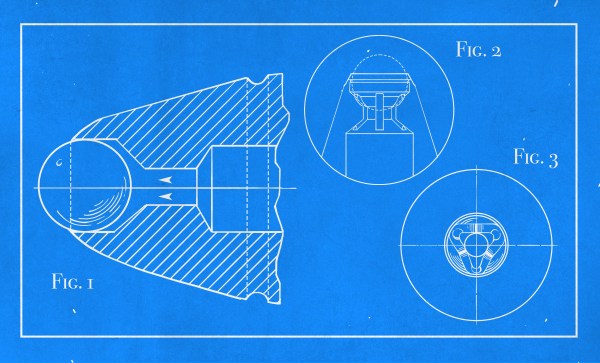
Early ballpoint pens were modeled after fountain pens, aesthetically speaking. They had metal bodies and refillable reservoirs that only needed a top-up every couple of years, compared to once a week or so for fountain pens. Instead of a nib, ballpoints have a tiny ball bearing made of steel, brass, or tungsten carbide. These pens rely on gravity to bathe the ball in ink, which allows it to glide around in the socket like a tiny roll-on deodorant.
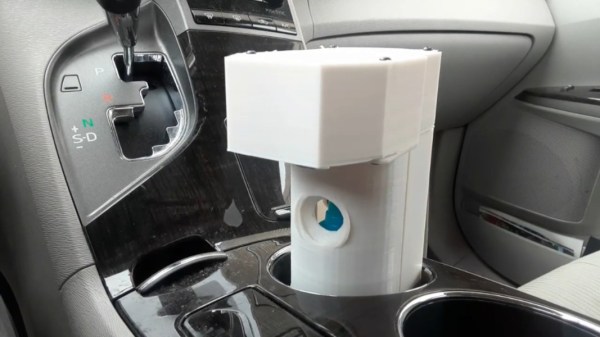
You don’t have to wire this to the ignition or anything — all you have to do is power it with the cigarette lighter (or straight-up outlet, if you’re lucky). Every time you turn the key, this pump powers up and performs a little song to remind you to use it. Electronically speaking, it couldn’t be simpler — an Arduino UNO reads your hand from the distance sensor and activates a servo that dispenses three short pumps of isopropyl alcohol. Check it out in action after the break.
We as humans are limited in the ways we can look at things ourselves, and rely on on the different perspectives and insights of others to help make sense of things. All it takes is one person to look at a data set and find something completely different that changes our fundamental perception of the universe.
Cecilia Payne-Gaposchkin discovered that stars are primarily made of hydrogen and helium, at a time when astronomers thought that the Sun and the Earth had no significant elemental differences. She proposed that hydrogen wasn’t only more common, but that it was a million times more common.
This outlandish conclusion was roundly dismissed at the time, and she aquiesced to tone down some of the conclusions in her thesis, until her findings were widely confirmed a few years later. Truly groundbreaking, the discovery of the prevalence of hydrogen in stars paved the way for our current understanding of their role as the furnaces for the heavier elements that we know and love, and indeed are composed of.
Meteorites, Comets, and Bee Orchids
Cecilia Helena Payne was born May 10th, 1900 in Wendover, Buckinghamshire, England. She was one of three children born to Emma and Edward, a lawyer, historian, and musician. Her father died with she was four years old, leaving her mother to raise the family alone. Continue reading “Cecilia Payne-Gaposchkin Saw Through The Stars”→
Don’t you hate getting up in the middle of the night to use the bathroom? The worst part is not being able to see what you’re doing, but if you turn on a light, you’ll lose your night vision. Nightlights are supposed to be the best solution, but are usually too bright for 3 AM excursions and can end up leaking light into the bedroom. What the bathroom needs is a purpose-built nightlight that uses red light so you don’t lose your night vision.
This simple, wall-mounted night light is just the thing. All it takes is two AA batteries, a resistor, a red LED, and an SPST push button. [Vchaney] even made their own battery contacts. The genius part of this build is in the adjustable LED, which is fitted into a ball that moves around in a socket so you can aim it wherever you need to see. All the files are available if you want to print one for yourself.
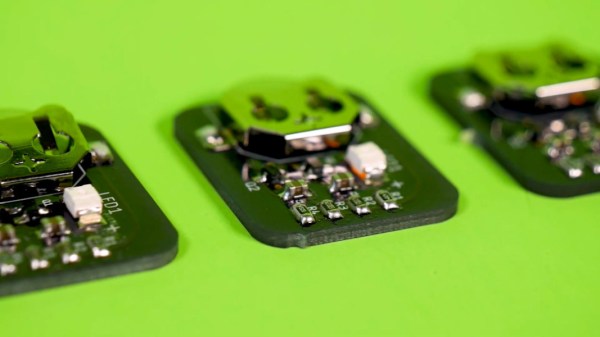
The answer is yes, yes you can. As long as you have one made after about 2011, at least. In the video after the break, [Blitz City DIY] takes us briefly through the history of the venerable Easy-Bake Oven and into the future by reflow soldering a handful of small blinky boards with it.
You’re right, these things once used special light bulbs to cook pint-sized foods, but now they are legit ovens with heating elements that reach 350°F and a little above. The only trouble is that there’s no temperature controller, so you have to use low-temperature solder paste and an oven thermometer to know when to pull the little tray out. Other than that, it looked like smooth sailing.
If you’re only doing a board every once in a while, $40 for a reflow oven isn’t too shabby. And yeah, as with all ovens, once you’ve reflowed a board in it, don’t use it for food.
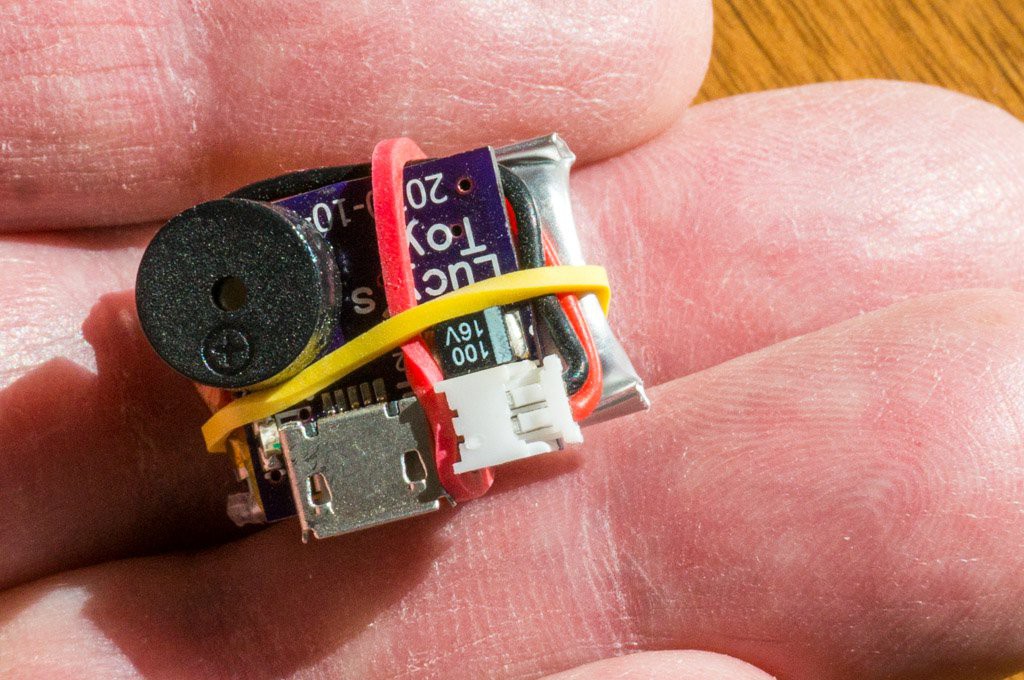
When a beloved pet goes blind, it doesn’t mean they can’t or don’t want to play fetch anymore, only that the game must change a bit. [Bud Bennett]’s dog Lucy has slowly lost her sight to progressive renal atrophy but is still up for playing with toys, so [Bud] decided to make a beeper that can go inside various stuffed toys to help Lucy locate them. Lucy doesn’t care for commercial toys that chime constantly, especially once she’s got it in her mouth.
This tiny package is centered around an LIS3DH accelerometer and programmed with a PIC16F18313. When the toy is thrown up in the air, the accelerometer determines that it’s in free fall and triggers an interrupt on the PIC. The piezo buzzer starts beeping so Lucy can find it, then stops a short while later and waits for the next free fall. The power dissipation is so low that [Bud] expects to charge the 120 mAh LiPo battery about once a year.

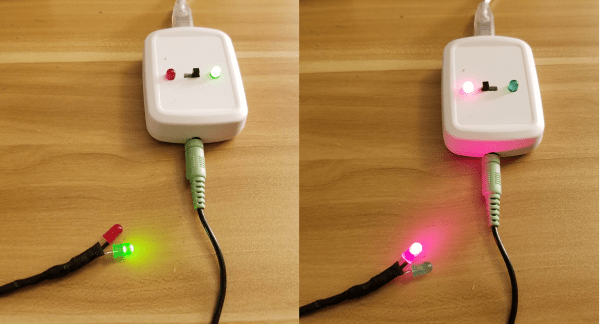
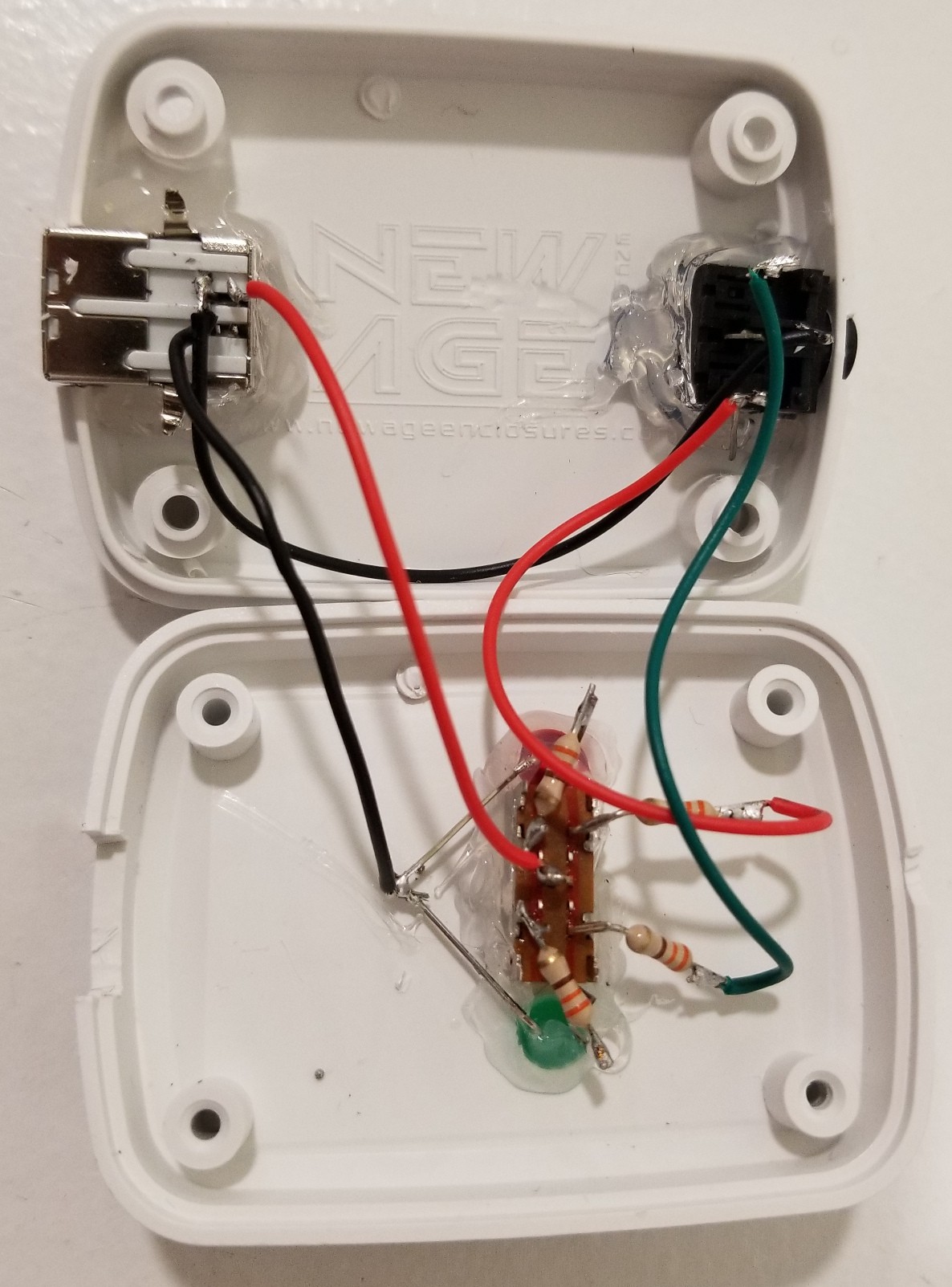 All this ongoing forced togetherness is great, but sometimes you just need to be able to pretend you’re alone so you can get some work done. So, how do you keep family members out of your home office? Our own [Bob Baddeley]’s free/busy indicator is about as simple as it gets.