Solid Tips For Casting Colored Silicone Tires

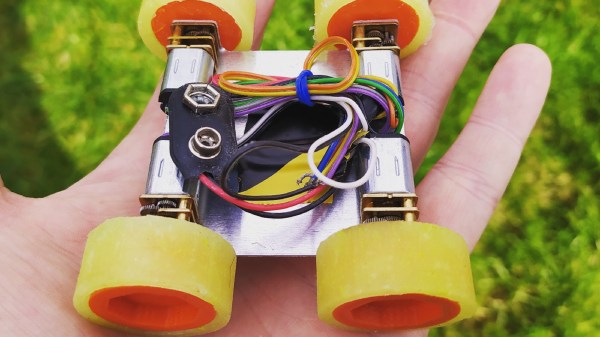
For people who work with wheeled robots or RC vehicles, sooner or later one gets interested in making custom tires instead of dealing with whatever is available off the shelf. [concreted0g]’s preferred method is to design and 3D print wheel hubs, then cast some custom silicone tires to fit over them. Of course, the devil is in the details and this process can be a bit messy, so he’s shared useful tips on how to get reliable results with simple materials.

The casting material is cheap silicone caulking from a hardware store, and color can be added with a small amount of cheap acrylic paint. A few drops of glycerin added to the silicone thins it out slightly and helps it flow into a mold better. Mix well (the paint will also serve as a visual indicator of how well it is mixed), then scoop the mixture into the mold while trying to avoid creating air pockets. If your mold is in two pieces, assemble the mold and remove any overflow, then let it sit undisturbed for at least several hours while it cures.

Mounting the resulting tire to a wheel hub can be done with a thin film of super glue, which seems to work perfectly well for small tires and is easy to apply.

The rules are going to be a bit different for big objects. We know that silicone caulking can have difficulty fully curing when it’s applied thickly, especially when sealed into a mold with little to no airflow. In such cases, adding cornstarch (in about a 5:1 ratio of silicone to cornstarch by volume) is all that it takes to cure even thick wads of goop in less than an hour. Stirring cornstarch in tends to introduce more air bubbles into the mixture, but for larger pieces that can be an acceptable tradeoff. Cheap silicone caulking is versatile stuff, one just needs to know what to expect, and take a few steps to deal with the messiness.

Need something tougher? Maybe check out using slices of automotive silicone hose for robot wheels to get something that works just as well, but is a lot more durable.
This Vintage LED Matrix Lives In A Gold Bathtub

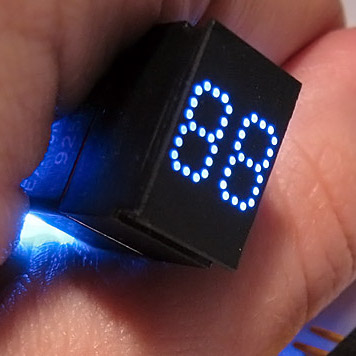
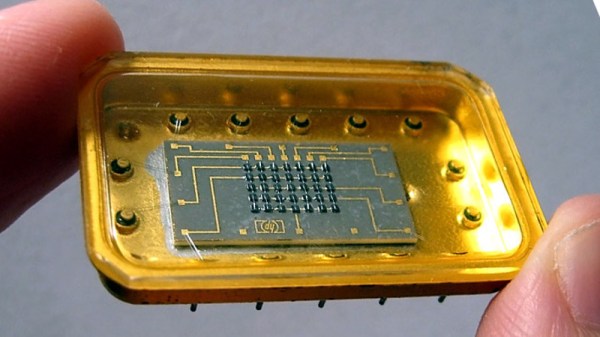
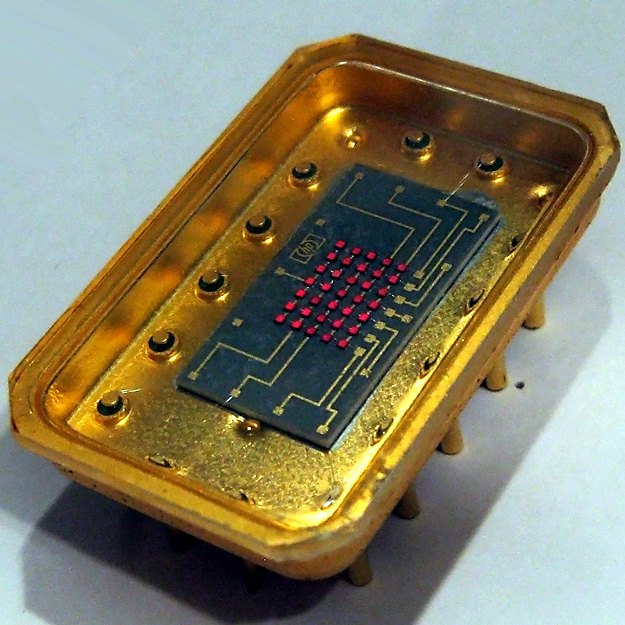
Early LED displays came in all sorts of configurations. Because the LED was fairly new technology, all kinds of ideas were getting tried, and with all that work there was plenty of opportunity for hardware that didn’t make the cut to fall into obscurity. That’s exactly what happened to the Hewlett-Packard 5082-7002, a 5×7 LED matrix display with something many of its brethren didn’t: an oversized gold tub to sit in.

It doesn’t seem that these displays were ever used in any actual products, and its origins are a mystery, but the device itself was nevertheless assigned an HP part number. Beyond that, not much is known about them, but [Industrial Alchemy] reminds us that many early LED devices were poorly documented and never produced in any real quantities. They became forgotten hardware, waiting to be rediscovered.

The 5082-7002 has a oversized gold tub that makes the 5×7 LED matrix mounted inside look puny by comparison, and reading any display made from these units would be difficult because the large size of the device would mean a lot of empty space between each character or digit. But it’s definitely got a striking look to it, no doubt about that.

What’s neat is that the 5802-7002 actually showed up in a video we featured with a look back at cool old LED technology. If you would like to (briefly) see the HP 5802-7002 a bit closer under a microscope, here is a link to the video, cued to 2:19.

FreeCAD Takes Off With A Rocket Design Workbench

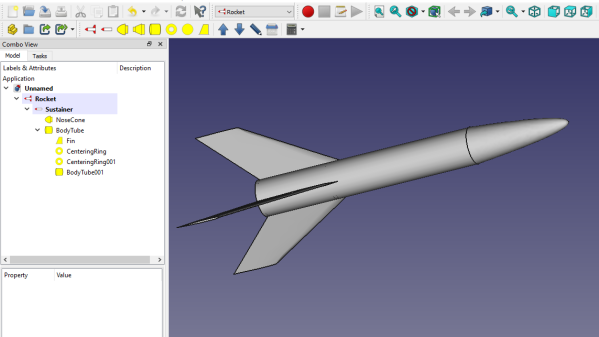
Here’s how FreeCAD works: the program’s design space is separated into different “workbenches”, each of which is intended for a particular set of operations, and a piece of work can be moved between them as needed. There is a sketching workbench, a part design workbench, and now a Rocket workbench has been added to the healthy ecosystem of FreeCAD add-ons. There’s even a series of video tutorials; ain’t open source grand?

It all started when [concretedog] posted on the FreeCAD forums, making a strong case for a Rocket-themed workbench. People got interested, and a short while later [DavesRocketShop] had some useful tools up and running. Here’s a blog post by [concretedog] which goes into detail and background, and while the Rocket workbench is available via FreeCAD’s add-on manager, the very latest experimental builds are available for manual installation on [Dave]’s GitHub repository.

This sort of development and utility is exactly the kind of thing our own Elliot Williams was describing when he made the point that one of open source’s greatest strengths is in the little things, like the FreeCAD ecosystem letting people scratch strange and specific itches, and the ability to share those solutions with others.

Electric Window Motor Becomes Mini Chainsaw

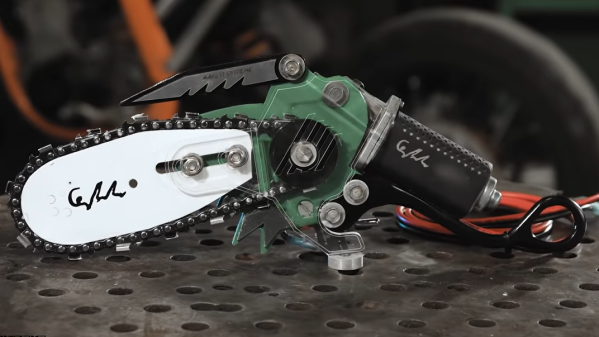
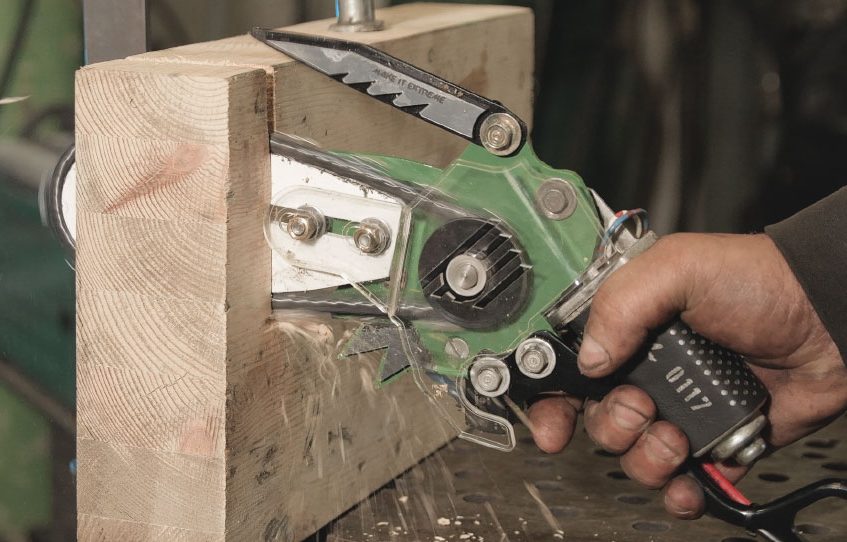
This mini handheld chainsaw by [Make it Extreme] is based around an electric motor from a car door, the same ones used to raise and lower car windows. They are common salvage parts, and with the right modifications and a few spare chainsaw bits attached, it turns out that the motor is more than capable of enough zip to cut through a variety of wood. Add a cordless tool battery pack, and the portable mini handheld chainsaw is born.

What’s really remarkable about the build video (embedded below, after the break) is not simply that it shows the build process and somehow manages to make it all look easy. No, what’s truly remarkable is that in the video it is always clear what is happening, and all without a single word being spoken. There’s no narration, no watching someone talk, just a solid build and demonstration. The principle of “show, don’t tell” is definitely taken to heart, here.

So, how well does it work as a chainsaw? It seems to work quite well! [Make it Extreme] does feel that a chain with smaller teeth and a higher motor speed would probably be an improvement, but the unit as built certainly can cut. You can judge for yourself by watching the build video, embedded below.

Continue reading “Electric Window Motor Becomes Mini Chainsaw”

Over-Engineered Incandescent Numerical Display Shows Great Workmanship

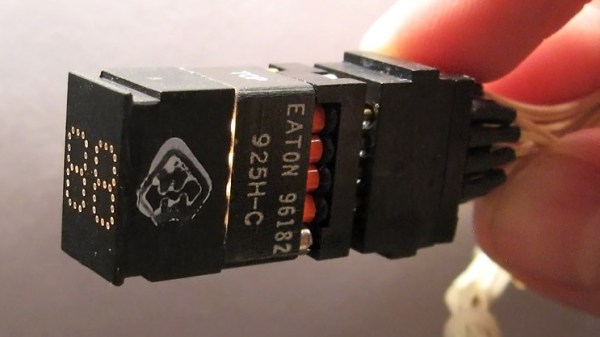
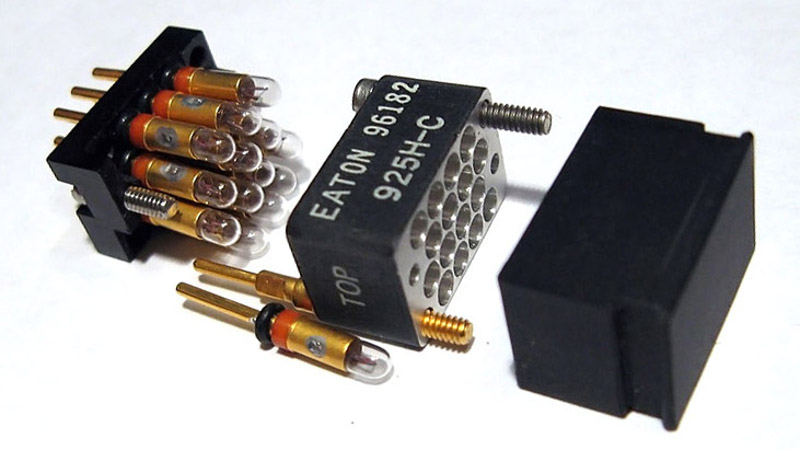
Back before LED technology came into its own, displays used incandescent bulbs. These vintage incandescent displays weren’t necessarily big; the Eaton 925H-C fiber optic display, for example, has numbers barely 7 mm tall and packs two of them into a tiny area. Of course, the depth of the display module itself is huge by today’s standards; those components have got to go somewhere, after all.

This particular device is, in [Industrial Alchemy]’s words, “[d]ripping with the spending excess that only a bottomless military budget can provide… the Eaton 925H-C may not be a practical device, but it is certainly an impressive one.”

The way the display works is this: individual incandescent bulbs light up fiber optic light guides, which terminate on the face of the display in small dots to make up a numerical display. With only fourteen bulbs, the dots we see here clearly aren’t individually addressable; the two digits are most likely broken up into seven segments each, with three dots making up each segment.

No expense seems spared in the design and manufacture of these displays. Even the incandescent lamps have individual shock absorbers.

The sheer amount of workmanship in these displays is remarkable, and their design makes them easy to retrofit with LED technology instead of replacing the tiny incandescent lamps. In a stark contrast to all of the machined aluminum and gold plated contacts seen here in the Eaton 925H-C, take a look at this Soviet-era seven-segment incandescent display whose construction is far less sophisticated, but shows off its own clever engineering. We’ve also seen more modern DIY takes on the concept, using LED light sources and cured UV resin light pipes to get that vintage look to the displays.

To Lovers Of Small Boxes: A 3D Printable Design Just For You

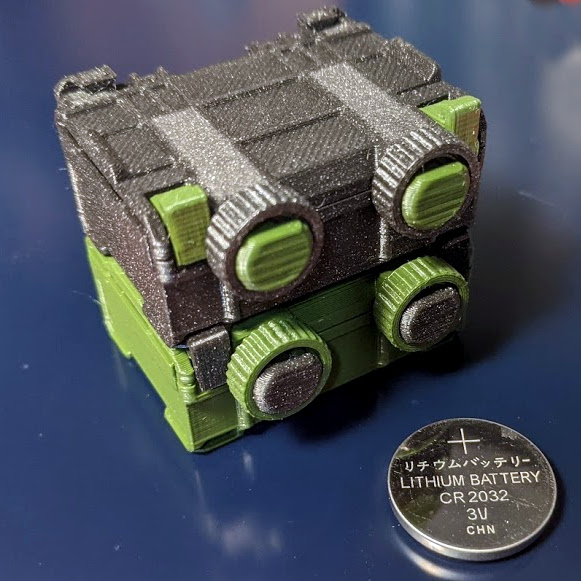
Print them at 50% scale for a far cuter (and much less useful) result.

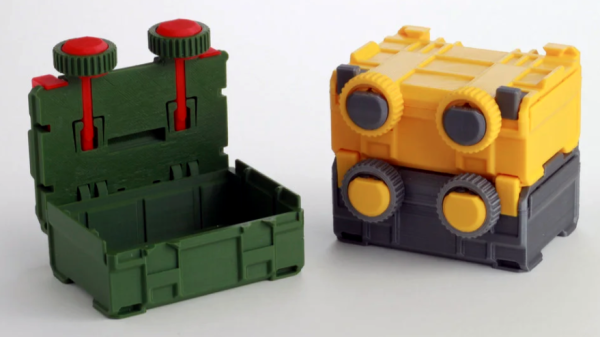
[Jacob Stanton]’s design for 3D-printable, stacking and locking boxes is a great example of design for manufacturability (DFM). MicroStacks show how part of good DFM is taking the manufacturing method’s strengths and weaknesses into account. [Jacob]’s boxes are created specifically with 3D printing in mind, which is great design whether somebody is making one, or dozens.

The boxes have sturdy parts that all print without any need for supports, fasteners, or post-processing. In addition, since no two 3D printers are quite alike and some print better than others, the parts are also designed to be quite forgiving of loose tolerances. Even on a printer that is less well-tuned than it could be, the design should still work. The boxes also have a nice stacking feature: a sturdy dovetail combined with a sliding tab means that once boxes are stacked, they’re not coming apart by accident unless something breaks in the process.

The boxes as designed are about big enough to store AA cells. Not the right size for you? One nice thing about a 3D-printable design that doesn’t need supports is that it’s trivial to uniformly scale the size of the models up or down to match one’s needs without introducing any print complications in the process. You can watch [Jacob] assemble and demonstrate his design in the video, embedded below.

Continue reading “To Lovers Of Small Boxes: A 3D Printable Design Just For You”

Archery Release Becomes Reusable Balloon Cutdown Mechanism

A cutdown in high-altitude balloon (HAB) parlance refers to detaching a payload, and can refer to the act of severing a line or to the mechanism itself. How is this done? The most common way is the “hot wire” method: a segment of wire is heated rapidly with a high current, causing it to melt through something like a nylon line.

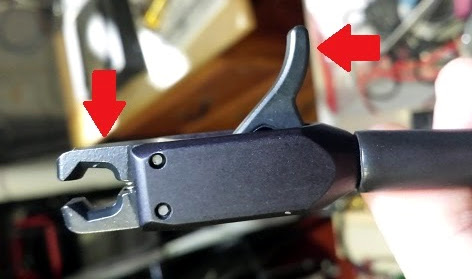
But there’s more than one way to solve a problem, and while documenting different cutdown methods, [KI4MCW] found that a caliper-style archery release plus hobby servo could be used as a high strength cutdown mechanism. An archery release (or bow release) is a tool to assist in holding the string of a bow in the drawn position, and cleanly release it at the touch of a lever or button. It occurred to [KI4MCW] that these features might be made to serve as a payload release as well, and you can see here the crude but successful prototype for a reusable cutdown.

The archery release [KI4MCW] obtained opens its jaws when a trigger-style lever on the side is pulled. The force required to trigger this is remarkably low, and a low-torque economical hobby servo easily does the job. In fact, the force needed to trip the release is so low that [KI4MCW] added a short rubber band to provide some opposing tension on the lever, just to be sure no spontaneous triggers occurred. The device hasn’t flown yet, but the prototype looks promising. Maybe a mechanism like this would be appropriate for a payload like dropping a high-altitude RC glider from a balloon.