Wiimote Head Tracking In Processing


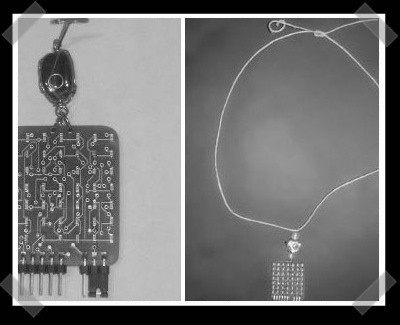
[Manuel] has been playing around with [Johnny Lee]’s Wiimote head tracking code. He’s posted a preliminary port outlining the code in the Processing environment. It relies on darwiinremoteOSC so you won’t see this outside of OSX, but it should help you out if you’re trying to do this is in Processing on another platform.

[via Create Digital Motion]

[photo: nicolasnova]
SparkFun Arduino Pro


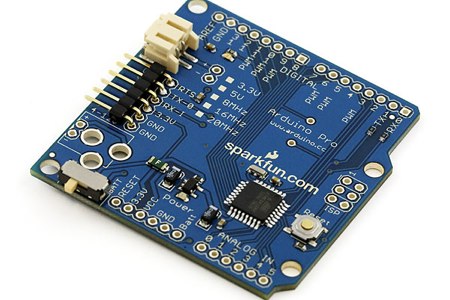
SparkFun’s new Arduino Pro is an updated version of their Skinny. The board comes populated with the running gear of an Arduino, but without all of the connectors in place. It’s targeted at people building integrated systems around the Arduino and not just prototyping. The board is 3.3V with an 8MHz bootloader just like the LilyPads and is fully certified by Arduino. It has a small side mounted power switch, but you have to supply your own DC jack (if you need it). There is no USB hardware on board and you’re expected to program it via an FTDI breakout board or cable. We definitely like the stripped down approach, but it would have been nice if the price had dropped more.

[via Make]

SMD Soldering Practice Kit


Here’s an interesting kit put together just to help you work on your SMD soldering skills. It’s got 49 SMD LEDs on the front with a programming header and switch jumper. The back has an ATtiny26L and a coin cell. At only 3V, power management is essential; all of the example programs are only addressing one LED at a time (imperceptible to the human eye). If you turn on too many LEDs at the same time, the voltage drop could cause the AVR to reset. Included example programs are a scrolling marque, bouncing balls, and Conway’s game of life. SparkFun has tutorials for regular SMD soldering and using a reflow skillet. The video below shows the kit builder attaching just one LED using the heat and slide method.

Continue reading “SMD Soldering Practice Kit”

Improved Jog Wheel


Taking a cue from the jog wheel we posted last week, [42ndOddity] has built an improved version. The design is based around a solid state rotary encoder instead of an optical encoder. The rotary encoder is far easier to attach and position properly. The knob is milled from scrap aluminum-it was a copier foot. To make the motion smooth, it’s sitting in a bearing from the same copier.

Rebooting The Magic SysRq Way


[Cory Wright] shares a tip on how to reboot a system with a failed hard drive remotely. The magic SysRq key is a linux kernel feature that lets you perform a number of interesting operations. If you’re working on a remote system where the disk has failed, you won’t have access to the reboot or shutdown commands. You can issue keystrokes to the magic SysRq device in /proc though, so you can send a hard reboot directly to the kernel with no disk access required.

The Wikipedia entry includes a handy tip on how to properly restart a otherwise frozen machine. It should save you from having to fsck the next time around.

[photo: Joshua Davis]

Subway Hacker Speaks


Popular Mechanics has an interview with [Zach Anderson], one of the MIT hackers that was temporarily gagged by the MBTA. The interview is essentially a timeline of the events that led up to the Defcon talk cancellation. [Zach] pointed out a great article by The Tech that covers the vulnerabilities. The mag stripe cards can be easily cloned. The students we’re also able to increase the value of the card by brute forcing the checksum. There are only 64 possible checksum values, so they made a card for each one. It’s not graceful, but it works. The card values aren’t encrypted and there isn’t an auditing system to check what values should be on the card either. The RFID cards use Mifare classic, which we know is broken. It was NXP, Mifare’s manufacturer, that tipped off the MBTA on the actual presentation.