A Look Back On A Decade Of Kerbal Space Program

Just a few weeks before Atlantis embarked on the final flight of the Space Shuttle program in 2011, a small Mexican company by the name of Squad quietly released Kerbal Space Program (KSP) onto an unsuspecting world. Until that point the company had only developed websites and multi-media installations. Kerbal wasn’t even an official company initiative, it started as a side project by one of their employees, Felipe Falanghe. The sandbox game allowed players to cobble together rockets from an inventory of modular components and attempt to put them into orbit around the planet Kerbin. It was immediately addictive.

There was no story to follow, or enemies to battle. The closest thing to a score counter was the altimeter that showed how far your craft was above the planet’s surface, and the only way to “win” was to put its little green occupant, the titular Kerbal, back on the ground in one piece. The game’s challenge came not from puzzles or scripted events, but from the game’s accurate (if slightly simplified) application of orbital mechanics and Newtonian dynamics. Building a rocket and getting it into orbit in KSP isn’t difficult because the developers baked some arbitrary limitations into their virtual world; the game is hard for the same reasons putting a rocket into orbit around the Earth is hard.

One of my early rockets, circa 2013.

Over the years official updates added new components for players to build with and planets to explore, and an incredible array of community developed add-ons and modifications expanded the scope of the game even further. KSP would go on to be played by millions, and seeing a valuable opportunity to connect with future engineers, both NASA and the ESA helped develop expansions for the game that allowed players to recreate their real-world vehicles and missions.

But now after a decade of continuous development, with ports to multiple operating systems and game consoles, Squad is bringing this chapter of the KSP adventure to a close. To celebrate the game’s 10th anniversary on June 24th, they released “On Final Approach”, the game’s last official update. Attention will now be focused on the game’s ambitious sequel, which will expand the basic formula with the addition of interstellar travel and planetary colonies, currently slated for release in 2022.

Of course, this isn’t the end. Millions of “classic” KSP players will still be slinging their Kerbals into Hohmann transfer orbits for years to come, and the talented community of mod developers will undoubtedly help keep the game fresh with unofficial updates. But the end of official support is a major turning point, and it seems a perfect time to reminisce on the impact this revolutionary game has had on the engineering and space communities.

Continue reading “A Look Back On A Decade Of Kerbal Space Program

Making Custom Curved Mirrors At Home

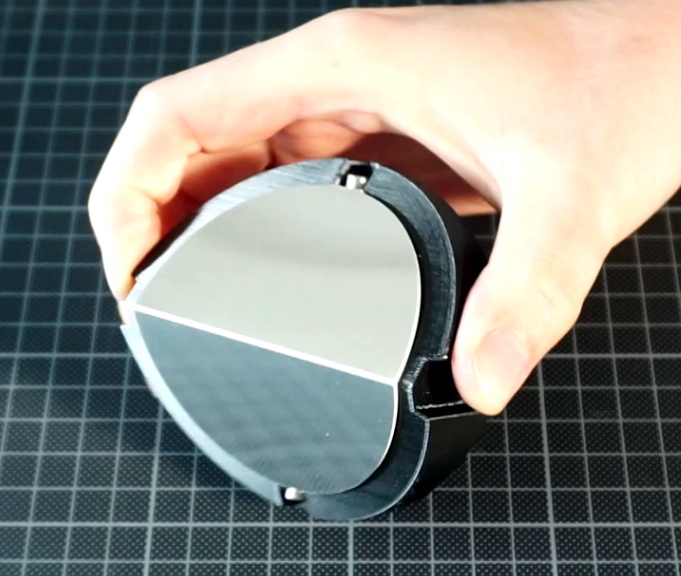
Generally speaking, creating custom mirrors is a complex task that involves a lot of careful grinding, and isn’t something to be taken lightly if you need precision results. Just ask the folks who provided NASA with a wonky mirror for the Hubble. But assuming you’re not working on an orbital space telescope (or even a ground based one, for that matter), [volzo] has recently documented some techniques for producing single and double curved mirrors of reasonable quality using common workshop tools.

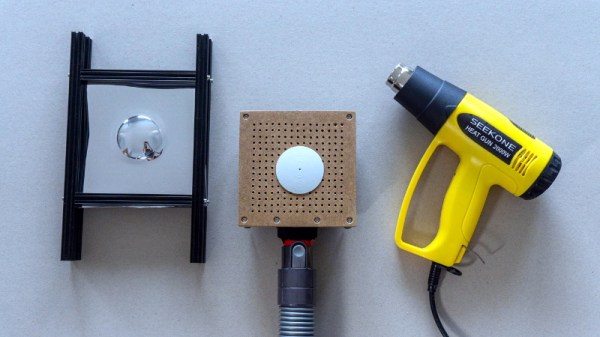
The first step is finding something that’s a bit easier to work with than glass. After testing various reflective materials such as PVC foil and painted PETG sheets by comparing the reflections of projected test patterns, [volzo] found that laminated polystyrene gave the most accurate results. If you just want to make a simple bent mirror, he shows how you can pop one of these sheets on a CNC router, make the appropriate cuts, and fold them into shape.

That part might seem a bit obvious, but what about a more complex shape? Here, [volzo] points to how the thin sheets of polystyrene also lend themselves to vacuum forming. As demonstrated in the video below, all it takes is a 3D printed plug and some basic equipment to rapidly produce mirrors in arbitrary shapes.

Now obviously the optical properties of such mirrors will leave something to be desired, but depending on your application, that might not be such a big deal. As examples [volzo] shows off a few projects using these custom mirrors, such as a tabletop camera that captures both sides of the table simultaneously and a circular projector. Laminated polystyrene could potentially even be used to create low-cost variable mirrors.

Continue reading “Making Custom Curved Mirrors At Home”

Foam F-35 Learns To Hover

With cheap RC hardware, powerful motors, and high-capacity battery packs, getting something to fly has never been easier. It also helps that, whether you’re into fixed-wing craft or multirotors, there’s plenty of information and prior art floating around online that you can use to jumpstart your own build. But when it comes to homebrew vertical take-off and landing (VTOL) planes, things are a bit trickier.

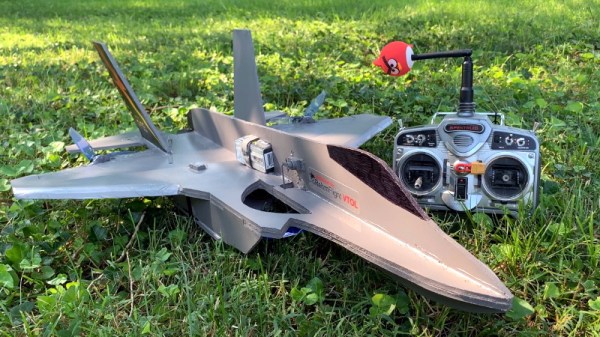
Luckily for us, [Nicholas Rehm] has made all the plans and information necessary to duplicate his incredible RC F-35 available for anyone who wants to experiment with these relatively niche fliers. Even if it was a standard park flier, the build would be worth a close look thanks to the vectored thrust motors that give it phenomenal maneuverability and a top speed in the neighboorhood of 120 KPH (80 MPH). But with the flick of a switch, the plane transitions into a tricopter-like flight mode that allows it to land and takeoff vertically.

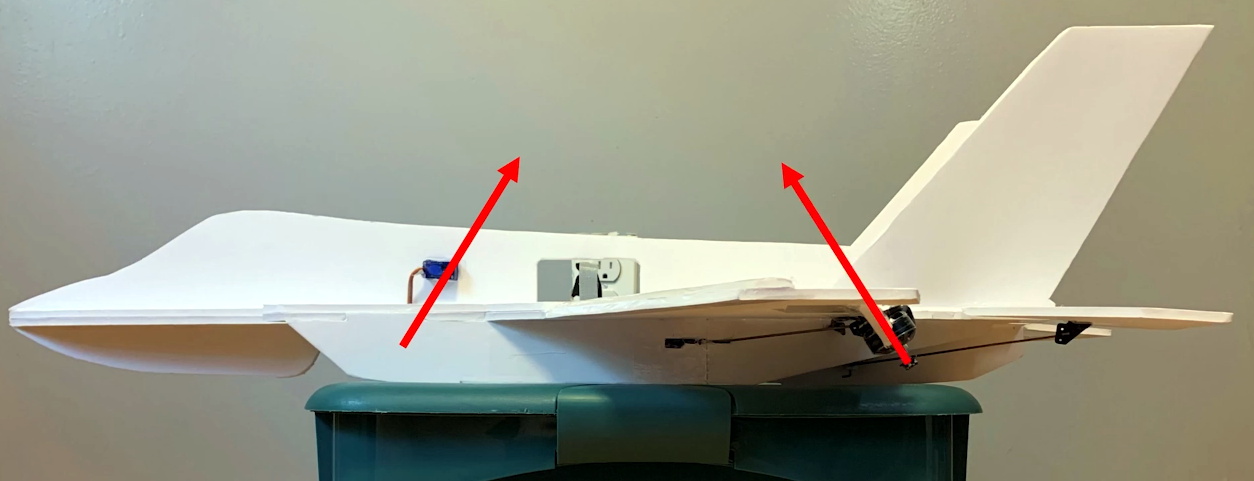
How does it work? The downward facing motor just behind the “cockpit” lifts up the front of the foam flier and tilts left and right to provide yaw control, while the two motors on the back tilt down to lift up the rear of the aircraft. Aviation buffs in the audience may recognize this as being fairly close to how the actual F-35B hovers, although on the real jet fighter, downward thrust under the wings is generated by redirected turbine exhaust rather than dedicated motors, and yaw control is provided by swiveling the engine’s nozzle rather than the front lift fan.

Getting the plane to takeoff vertically was one thing, but being able to transition from a hover into forward flight was quite another. To make this aerial transformation possible [Nicholas] actually had to write his own flight controller software, which he calls dRehmFlight. The GPLv3 code runs on the Teensy 4.0 and uses the common GY-521 MPU6050 gyroscope/accelerometer, so you don’t need to get any custom boards spun up just to give it a test drive flight. In the video below he walks through configuring the software for VTOL operation by defining how each control surface and motor is to respond to control input given the currently selected flight mode.

It probably won’t surprise you to hear that this isn’t the first time [Nicholas] has experimented with unusual flying machines. Last year we covered his RC Starship, which managed to stick the “belly flop” landing even before SpaceX managed to get the real life version down in one piece.

Continue reading “Foam F-35 Learns To Hover”

Analog Style VU Meter With Arduino And OLED Display

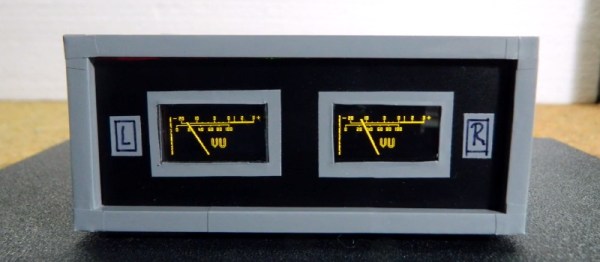
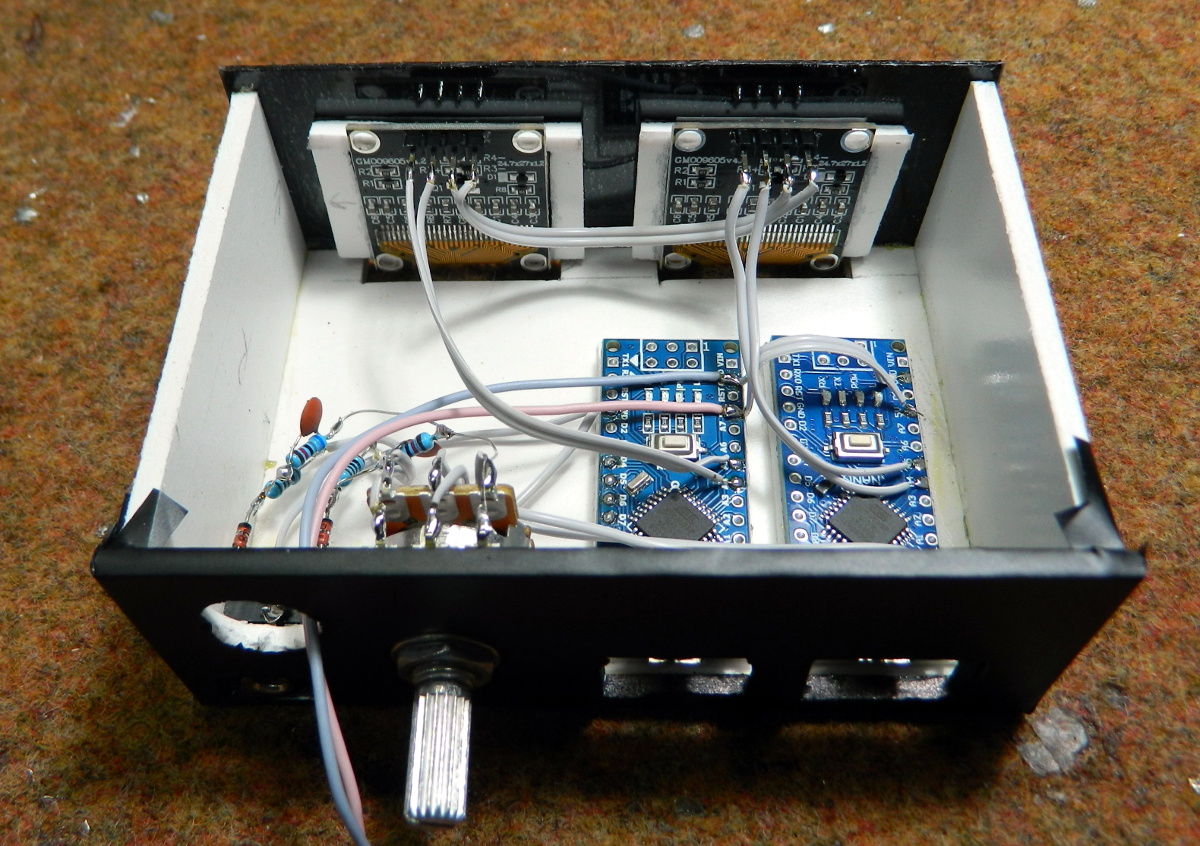
Looking for a digital recreation of the classic analog volume unit (VU) meter? If you’ve got an Arduino, a few passive components, and a SSD1306 OLED, then [mircemk] might have the answer for you. As you can see in the video below, his code turns a handful of cheap parts into an attractive and functional audio display.

The project’s Hackaday.IO page explains that the idea is based on the work of [stevenart], with code adapted for the SSD1306 display and some tweaks made to the circuit. While [mircemk] says the code could be modified for stereo as long as the two displays don’t have conflicting I2C addresses, he decided to simply duplicate the whole setup for each channel to keep things simple. With as cheap as some of these parts are nowadays, it’s hard to blame him.

[mircemk] has provided source code for a couple different styles of VU indicators, the colors of which can easily be inverted depending on your tastes. He also clarifies that the jerky motion of the virtual “needle” seen in the video is due to the camera; in real-life it sweeps smoothly like the genuine article.

Much like the project that aimed to recreate authentic “steam gauges” with e-paper displays, this as an excellent technique to file away for use in the future. Compared to authentic analog gauges, these digital recreations are quicker and faster to implement, plus going this route prevents any antique hardware from going on the chopping block.

Continue reading “Analog Style VU Meter With Arduino And OLED Display”

Tetris Handheld Powered By Tritium Cell, Eventually

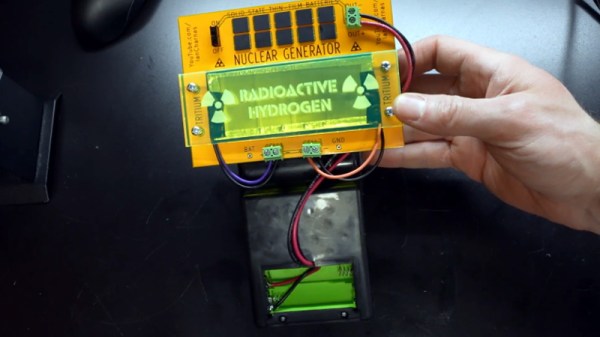
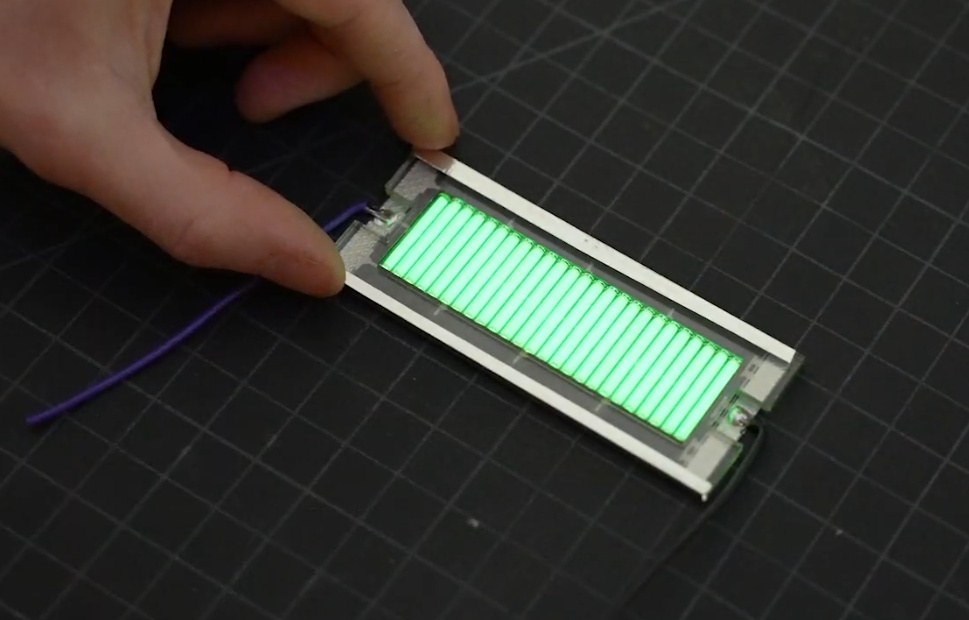
The idea of a tritium power cell is pretty straightforward: stick enough of the tiny glowing tubes to a photovoltaic panel and your DIY “nuclear battery” will generate energy for the next decade or so. Only problem is that the power produced, measured in a few microwatts, isn’t enough to do much with. But as [Ian Charnas] demonstrates in his latest video, you can eke some real-world use out of such a cell by storing up its power over a long enough period.

As with previous projects we’ve seen, [Ian] builds his cell by sandwiching an array of keychain-sized tritium tubes between two solar panels. Isolated from any outside light, power produced by the panels is the result of the weak green glow given off by the tube’s phosphorus coating as it gets bombarded with electrons. The panels are then used to charge a bank of thin-film solid state batteries, which are notable for their exceptionally low self-discharge rate.

Some quick math told [Ian] that a week of charging should build up enough of a charge to power a knock-off handheld Tetris game for about 10 minutes. Unfortunately, after waiting the prescribed amount of time, he got only a few seconds of runtime out of his hacked together power source.

His best guess is that he got a bad batch of thin-film batteries, but since he could no longer find the exact part number he used originally, he had to design a whole new PCB for the second attempt. After waiting two long months to switch the game on this time, he was able to play for nearly an hour before his homebrew nuclear energy source was depleted.

We wouldn’t consider this terribly practical from a gaming standpoint, but like the solar harvesting handheld game we covered last year, it’s an interesting demonstration of how even a minuscule amount of power can be put to work for intermittent applications. Here it’s a short bout of wonky Tetris, but the concept could just as easily be applied to an off-grid sensor.

Continue reading Tetris Handheld Powered By Tritium Cell, Eventually”

PlayStation Games On The GBA, With A Few Extra Steps

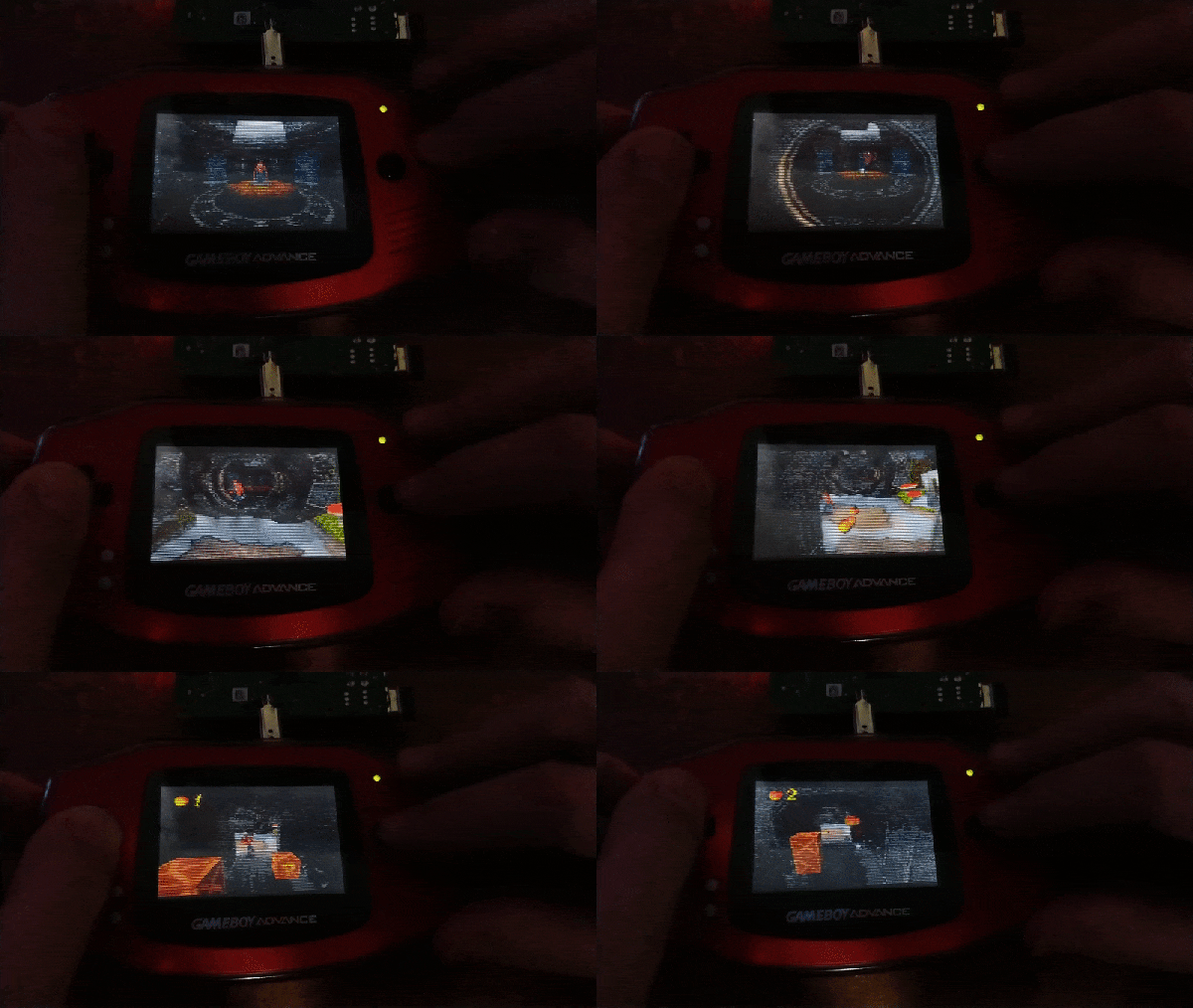
It might seem impossible, but what you’re looking at is a Sony PlayStation game being played on a Nintendo Game Boy Advance. The resolution is miserable and the GBA doesn’t have nearly enough buttons to do most 3D games justice, but it’s working. There’s even audio support, although turning it on will slow things down considerably.

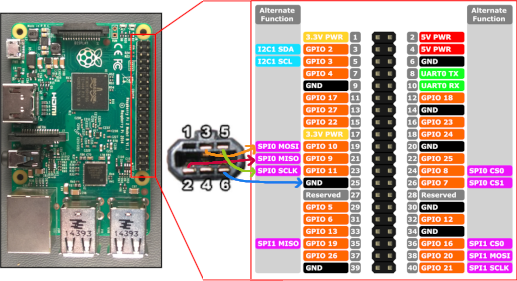
How does it work? The trick is that creator [Rodrigo Alfonso] is actually emulating the PlayStation on a Raspberry Pi and simply using Nintendo’s handheld as an external display and controller. We say “simply”, but of course, it’s anything but. The GitHub page for the project goes into impressive detail on how the whole thing works, but the short version is that the video data is sent from the Linux framebuffer to a small program running on the GBA over the handheld’s serial port using SPI. In testing he was able to push 2.56 Mbps through the link, which is a decent amount of bandwidth when you’ve only got to keep a 240 × 160 screen filled.

Perhaps the best part is that you don’t even need a flash cart to try it at home. [Rodrigo] is using a trick we’ve seen in other GBA projects, where the program is actually transferred to the handheld over the link cable at boot time.

Nintendo introduced this “multiboot” feature so multiplayer games could be played between systems even if they didn’t all have a physical cartridge, but now that hackers have cracked the code, it means you can run arbitrary code on a completely unmodified console; though it does get wiped as soon as you power it off.

[Rodrigo] provides all the information and software you need to try it at home, you just need a Raspberry Pi, a Game Boy Advance, and Link Cable you don’t mind cutting up; far less hardware than is required by the similar project to run DOOM on the NES. Since he’s tied everything into the popular RetroPie frontend, we imagine it would even work when emulating earlier 2D consoles; which would be a much better fit for the GBA’s display and limited inputs.

Muse Group Continues Tone Deaf Handling Of Audacity

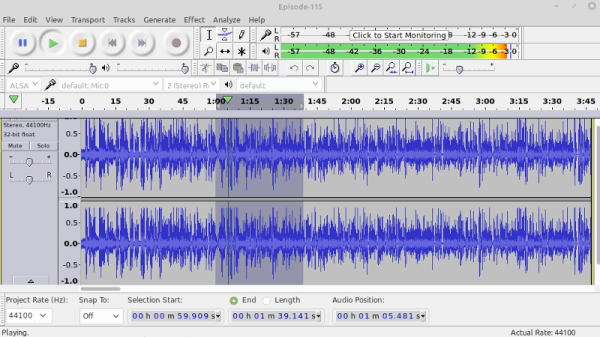
When we last checked in on the Audacity community, privacy-minded users of the free and open source audio editor were concerned over proposed plans to add telemetry reporting to the decades old open source audio editing software. More than 1,000 comments were left on the GitHub pull request that would have implemented this “phone home” capability, with many individuals arguing that the best course of action was to create a new fork of Audacity that removed any current or future tracking code that was implemented upstream.

For their part, the project’s new owners, Muse Group, argued that the ability for Audacity to report on the user’s software environment would allow them to track down some particularly tricky bugs. The tabulation of anonymous usage information, such as which audio filters are most commonly applied, would similarly be used to determine where development time and money would best be spent. New project leader Martin “Tantacrul” Keary personally stepped in to explain that the whole situation was simply a misunderstanding, and that Muse Group had no ill intent for the venerable program. They simply wanted to get a better idea of how the software was being used in the real-world, but after seeing how vocal the community was about the subject, the decision was made to hold off on any changes until a more broadly acceptable approach could be developed.

Our last post on the subject ended on a high note, as it seemed like the situation was on the mend. While there was still a segment of the Audacity userbase that was skeptical about remote analytics being added into a program that never needed it before, representatives from the Muse Group seemed to be listening to the feedback they were receiving. Keary assured users that plans to implement telemetry had been dropped, and that should they be reintroduced in the future, it would be done with the appropriate transparency.

Unfortunately, things have only gotten worse in the intervening months. Not only is telemetry back on the menu for a program that’s never needed an Internet connection since its initial release in 2000, but this time it has brought with it a troubling Privacy Policy that details who can access the collected data. Worse, Muse Group has made it clear they intend to move Audacity away from its current GPLv2 license, even if it means muscling out long-time contributors who won’t agree to the switch. The company argues this will give them more flexibility to list the software with a wider array of package repositories, a claim that’s been met with great skepticism by those well versed in open source licensing.

Continue reading “Muse Group Continues Tone Deaf Handling Of Audacity”