Freenode Debacle Prompts Staff Exodus, New Network

It’s no secret that Internet Relay Chat (IRC) has lost some of its appeal in recent years. These days there’s plenty of free chat platforms boasting slick web interfaces and smartphone push notifications, to say nothing of social networks like Facebook and Twitter. The ability to communicate with like minded individuals from all over the planet in real-time is now something we take for granted, so it’s little surprise that newer and flashier protocols and services have steadily eroded the IRC user base.

But there’s often a hidden cost to using these more modern communication protocols. A lack of operational transparency naturally leads to concerns over monitoring and censorship, which makes such services a poor match for the free and open source community. As such, many open projects have eschewed these newer and more popular services for IRC networks that were developed and maintained by the community itself. Among these, the best-known and most respected is Freenode. Originally started as a Linux support channel in 1995, Freenode grew to become the defacto communication and support tool for free and open source projects of all shapes and sizes, and by 2013 had officially become the largest and most active IRC network in the world.

Unfortunately, the incredible legacy of Freenode is now being jeopardized by what former staff members are describing as nothing short of a hostile takeover. Through a complex series of events which actually started several years ago, control of Freenode has been taken from the community and put into the hands of an enigmatic and wealthy entrepreneur who claims his ultimate goal is to revolutionize IRC and return it to the forefront of online communication. Here’s where it gets weird.

Continue reading “Freenode Debacle Prompts Staff Exodus, New Network”
Transparent Hard Drive Gives Peek At The Platters

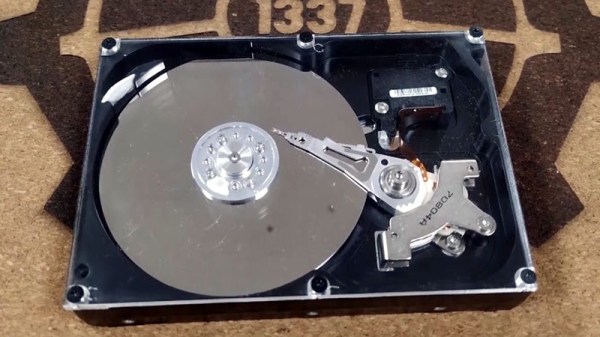
Solid-state drives (SSDs) are all the rage these days, and for good reason. But that doesn’t mean the era of the spinning disk is over, as traditional mechanical hard drives still offer a compelling value for mass storage applications where access times aren’t as critical. But the components inside these “slow” mechanical drives are still moving at incredible speeds, which [The Developer Guy] has nicely illustrated with his transparent hard drive.

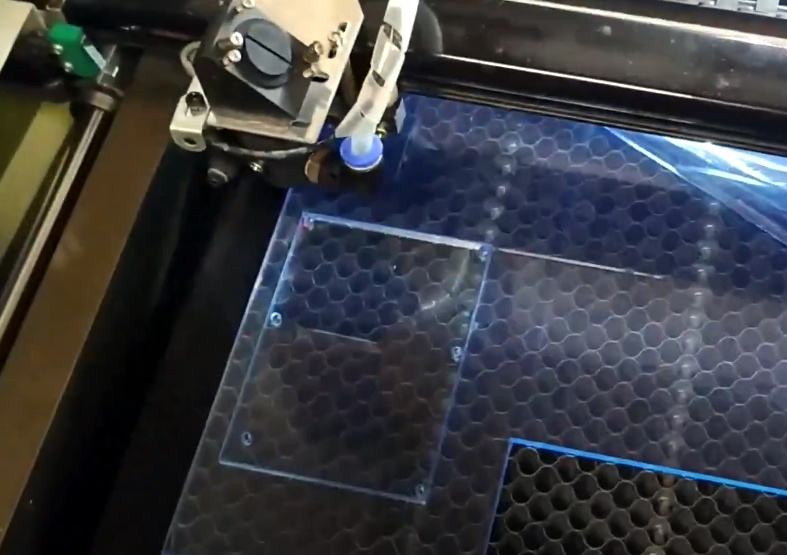
Now unfortunately the technology to produce a fully transparent hard drive doesn’t exist, but laser cutting a new top plate out of acrylic is certainly within the means of the average hacker. The process is pretty straightforward: cut out a piece of clear plastic in the same shape and size as the drive’s original lid, put the appropriate mounting holes in it, and find some longer screws to accommodate the increased thickness.

Because this is just for a demonstration, [The Developer Guy] doesn’t need to worry too much about dust or debris getting on the platters; but we should note that performing this kind of modification on a drive you intend on actually using would be a bad idea unless you’ve got a cleanroom to work in.

In the videos below [The Developer Guy] records the drive while it’s in use, and at one point puts a microscope on top of the plastic to get a close-up view of the read/write head twitching back and forth. We particularly liked the time-lapse of the drive being formatted, as you can see the arm smoothly moving towards the center of the drive. Unfortunately the movement of the platters themselves is very difficult to perceive given their remarkably uniform surface, but make no mistake, they’re spinning at several thousand RPM.

Have an old mechanical drive of your own that you’re not sure what to do with? We’ve seen them turned into POV clocks, impromptu rotary encoders, and even surprisingly powerful blower fans.

Continue reading “Transparent Hard Drive Gives Peek At The Platters”

Gaming Headset Gets Simple Wireless Charging

Despite the technology itself being widely available and relatively cheap, devices that offer wireless charging as a feature still aren’t as common as many would like. Sure it can’t deliver as much power as something like USB-C, but for low-draw devices that don’t necessarily need to be recharged in a hurry, the convenience is undeniable.

Sick of having to plug it in after each session, [Taylor Burley] decided to take matters into his own hands and add wireless charging capability to his Turtle Beach Recon 200 headset. But ultimately, there’s nothing about this project that couldn’t be adapted to your own particular headset of choice. Or any other device that charges via USB, for that matter.

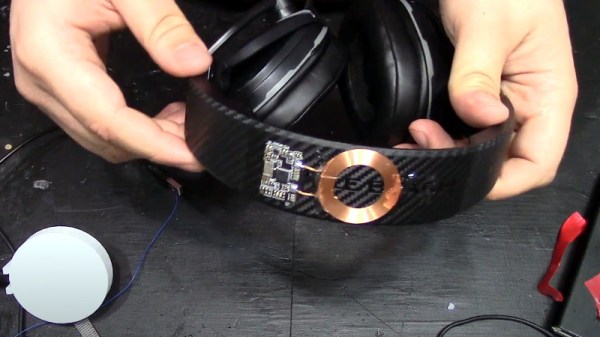
To keep things simple, [Taylor] used an off-the-shelf wireless charging transmitter and receiver pair. The transmitter is housed in a 3D printed mount that the headset hangs from, and the receiver was simply glued to the top of the headset. The receiver is covered with a thin 3D printed plate, but a couple turns of electrical tape would work just as well if you didn’t want to design a whole new part.

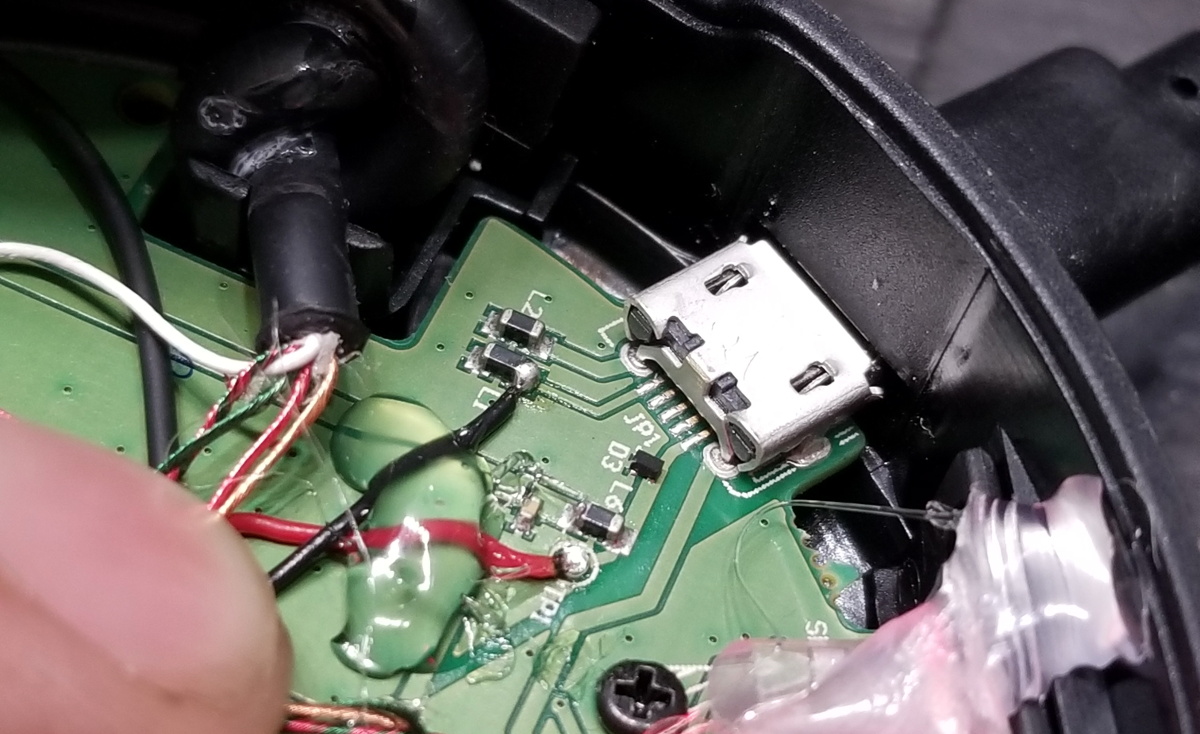
Once everything was in place, he then ran a wire down the side of the headset and tapped into the five volt trace coming from the USB port. So now long as [Taylor] remembers to hang the headset up after he’s done playing, the battery will always be topped off the next time he reaches for it.

Considering how many projects we’ve seen that add wireless charging to consumer devices, it’s honestly kind of surprising that it’s still not a standard feature in 2021. Until manufacturers figure out what they want to do with the technology, it seems like hackers will just have to keep doing it themselves.

Continue reading “Gaming Headset Gets Simple Wireless Charging”

Telemetry Debate Rocks Audacity Community In Open Source Dustup

Starting an open source project is easy: write some code, pick a compatible license, and push it up to GitHub. Extra points awarded if you came up with a clever logo and remembered to actually document what the project is supposed to do. But maintaining a large open source project and keeping its community happy while continuing to evolve and stay on the cutting edge is another story entirely.

Just ask the maintainers of Audacity. The GPLv2 licensed multi-platform audio editor has been providing a powerful and easy to use set of tools for amateurs and professionals alike since 1999, and is used daily by…well, it’s hard to say. Millions, tens of millions? Nobody really knows how many people are using this particular tool and on what platforms, so it’s not hard to see why a pull request was recently proposed which would bake analytics into the software in an effort to start answering some of these core questions.

Now, the sort of folks who believe that software should be free as in speech tend to be a prickly bunch. They hold privacy in high regard, and any talk of monitoring their activity is always going to be met with strong resistance. Sure enough, the comments for this particular pull request went south quickly. The accusations started flying, and it didn’t take long before the F-word started getting bandied around: fork. If Audacity was going to start snooping on its users, they argued, then it was time to take the source and spin it off into a new project free of such monitoring.

The situation may sound dire, but truth be told, it’s a common enough occurrence in the world of free and open source software (FOSS) development. You’d be hard pressed to find any large FOSS project that hasn’t been threatened with a fork or two when a subset of its users didn’t like the direction they felt things were moving in, and arguably, that’s exactly how the system is supposed to work. Under normal circumstances, you could just chalk this one up to Raymond’s Bazaar at work.

But this time, things were a bit more complicated. Proposing such large and sweeping changes with no warning showed a troubling lack of transparency, and some of the decisions on how to implement this new telemetry system were downright concerning. Combined with the fact that the pull request was made just days after it was announced that Audacity was to be brought under new management, there was plenty of reason to sound the alarm.

Continue reading “Telemetry Debate Rocks Audacity Community In Open Source Dustup”

Make Android’s New Power Menu Work On Your Terms

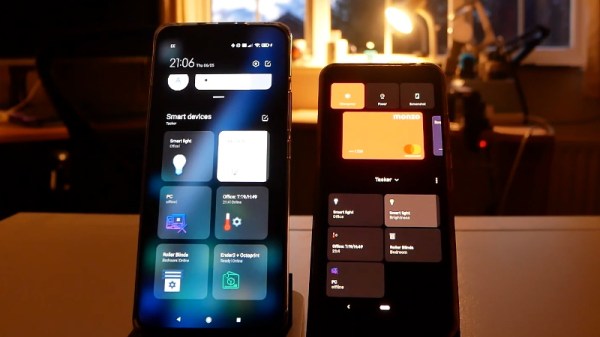
Introduced in Android 11, the power menu is a way to quickly interact with smart home gadgets without having to open their corresponding applications. Just hold the power button for a beat, and you’ll be presented with an array of interactive tiles for all the gadgets you own. Well that’s the idea, anyway.

[Mat] of “NotEnoughTech” wasn’t exactly thrilled with how this system worked out of the box, so he decided to figure out how he could create his own power menu tiles. His method naturally requires quite a bit more manual work than Google’s automatic solution, but it also offers some compelling advantages. For one thing, you can make tiles for your own DIY devices that wouldn’t be supported otherwise. It also allows you to sidestep the cloud infrastructure normally required by commercial home automation products. After all, does some server halfway across the planet really need to be consulted every time you want to turn on the kitchen light?

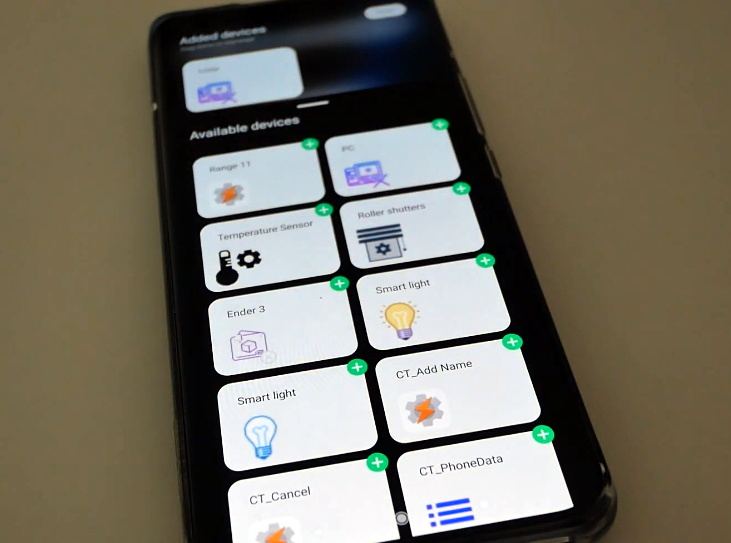
Adding tiles in Tasker.

The first piece of the puzzle is Tasker, a popular automation framework for Android. It allows you to create custom tiles that will show up on Android’s power menu, complete with their own icons and brief descriptions. If you just wanted to perform tasks on the local device itself, this would be the end of the story. But assuming that you want to control devices on your network, Tasker can be configured to fire off a command to a Node-RED instance when you interact with the tiles.

In his post, [Mat] gives a few examples of how this combination can be used to control smart devices and retrieve sensor data, but the exact implementation will depend on what you’re trying to do. If you need a bit of help getting started, our own [Mike Szczys] put together a Node-RED primer last year that can help you put this flow-based visual programming tool to work for you.

Continue reading “Make Android’s New Power Menu Work On Your Terms”

3D Printed Terminal Takes Computing Back In Time

It’s hard to look at today as anything but the golden age of computing. Even entry level machines have quad-core processors and a terabyte or more of storage space, to say nothing of the incredible amount of tech packed into the modern smartphone. But even so, there’s something to be said for the elegant simplicity of early desktop computers.

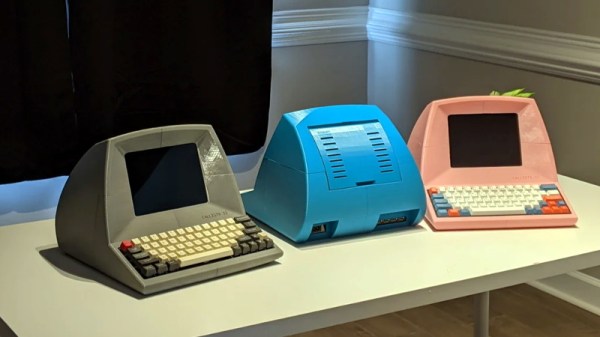
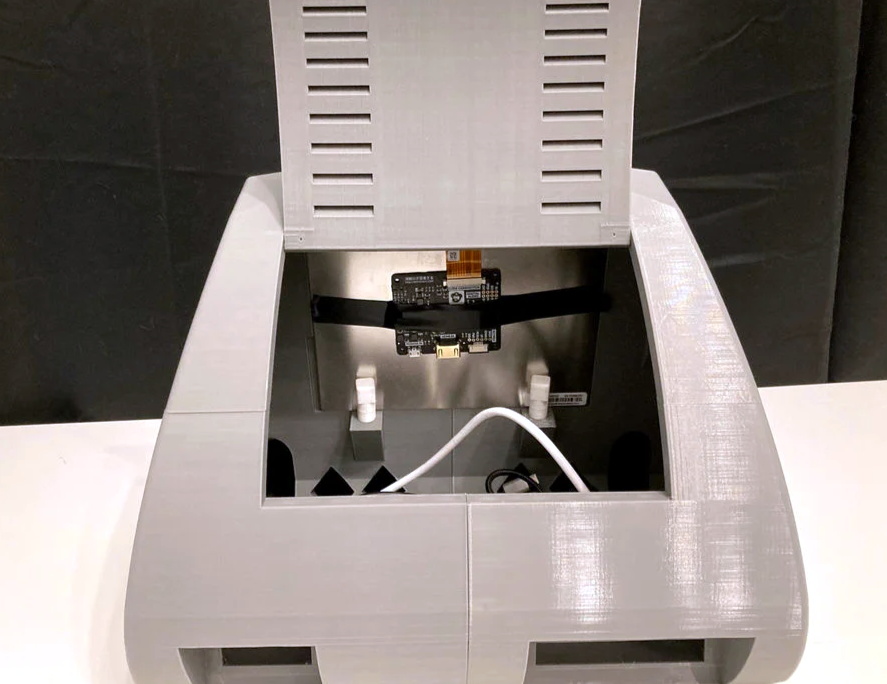
Looking to recreate the feeling of those bygone days, [Pigeonaut] created the Callisto II. Its entirely 3D printed case snaps together without glue or screws, making it easy to assemble, and the parts have been sized so they’ll be printable even on smaller machines like the Prusa Mini. Inside you’ll find a 1024×768 Pimoroni HDMI 8″ IPS LCD, 60% mechanical keyboard, four-port USB 3 hub, Raspberry Pi 4, and a 22 watt USB power supply to run it all.

The internal components can be easily accessed with the hatch on the rear of the case, and there’s plenty of room inside to add new hardware should you want to toss in a hard drive or even swap out the Pi for a different single-board computer.

To really drive home the faux-retro concept of the Callisto II, [Pigeonaut] has created a website for the fictional computer company behind the machine, replete with all the trappings you’d expect from the early web. There’s even a web-based “operating system” you can use to show off your freshly printed Callisto II.

Incidentally the II suffix isn’t just part of the meme, there really was a Callisto before this one. We covered the earlier machine back in 2019, and while we’re a bit sad to see that the functional 3.5 inch floppy drive has been deleted, we can’t deny the overall aesthetics have been greatly improved in the latest version.

Continue reading “3D Printed Terminal Takes Computing Back In Time”

Original Game Boy Powered Up With GBA Motherboard

The Game Boy DMG-01 is about as iconic as a piece of consumer electronics can get, but let’s be honest, it hasn’t exactly aged well. While there’s certainly a number of games for the system that are still as entertaining in 2021 as they were in the 80s and 90s, the hardware itself is another story entirely. Having to squint at the unlit display, with its somewhat nauseating green tint, certainly takes away from the experience of hunting down Pokémon.

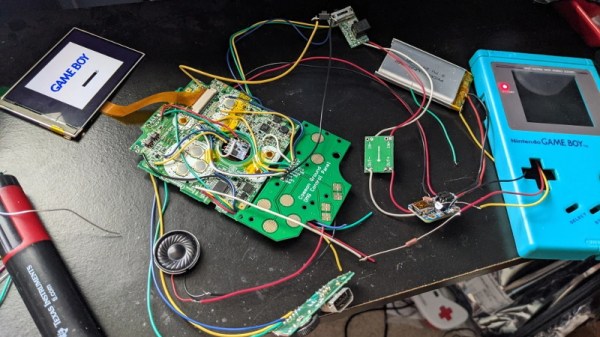
Which is precisely why [The Poor Student Hobbyist] decided to take an original Game Boy and replace its internals with more modern hardware in the form of a Game Boy Advance (GBA) SP motherboard and aftermarket IPS LCD panel. The backwards compatibility mode of the GBA allows him to play those classic Game Boy and Game Boy Color games from their original cartridges, while the IPS display brings them to life in a way never before possible.

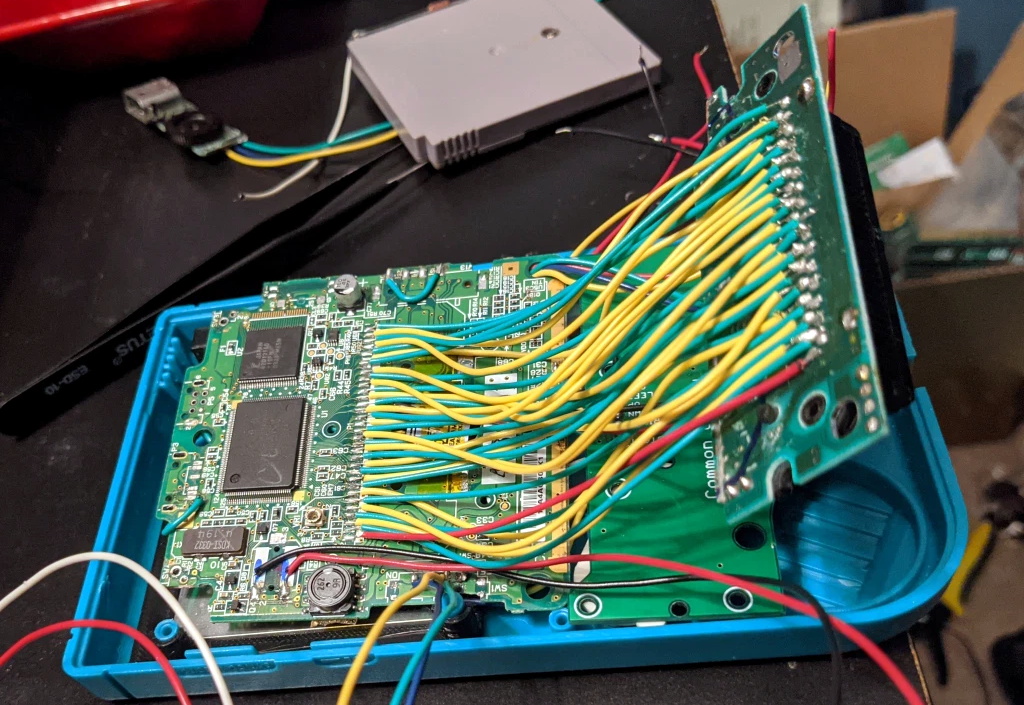
Relocating the cartridge connector took several attempts.

Now on the surface, this might seem like a relatively simple project. After all, the GBA SP was much smaller than its predecessors, so there should be plenty of room inside the relatively cavernous DMG-01 case for the transplanted hardware. But [The Poor Student Hobbyist] made things quite a bit harder on himself by deciding early on that there would be no external signs that the Game Boy had been modified; beyond the wildly improved screen, anyway.

That meant deleting the GBA’s shoulder buttons, though since the goal was always to play older games that predated their addition to the system, that wasn’t really a problem. The GBA’s larger and wider screen is still intact, albeit hidden behind the Game Boy’s original bezel. It turns out the image isn’t exactly centered on the physical display, so [The Poor Student Hobbyist] came up with a 3D printed adapter to mount it with a slight offset. The adapter also allows the small tactile switch that controls the screen brightness to be mounted where the “Contrast” wheel used to go.

An incredible amount of thought and effort went into making the final result look as close to stock as possible, and luckily for us, [The Poor Student Hobbyist] did a phenomenal job of documenting it for others who might want to make similar modifications. Even if you’re not in the market for a rejuvenated Game Boy, it’s worth browsing through the build log to marvel at the passion that went into this project.

Some would argue [The Poor Student Hobbyist] should have just put a Raspberry Pi into a Game Boy case and be done with it, but where’s the fun in that? Sure it might have been a somewhat better Bitcoin miner, but there’s something to be said for playing classic games on real hardware.