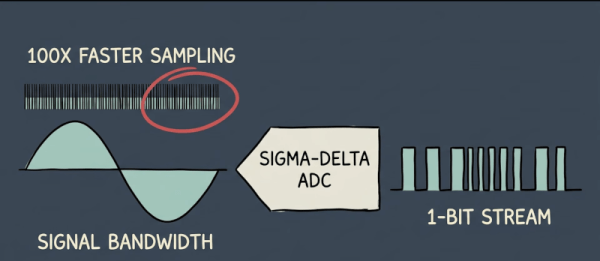
So Many Analog To Digital Converters

An old algebra teacher used to say, “You have to take what you know and use it to get what you don’t know.” You might say the same thing about converting analog signals into digital. Computers know how to count and keep time. [Eric Explains] has a video purporting to explain “every type of analog-to-digital converter.” We aren’t sure he got every possible method, but there’s still a lot of information in the video, which you can see below.

From the flash ADC, using a ton of comparators to the successive approximation converter, which essentially plays a game of hi/lo, guessing the answer and figuring out if the real answer is higher or lower.
Continue reading “So Many Analog To Digital Converters”

Deep Dive Into Sputnik

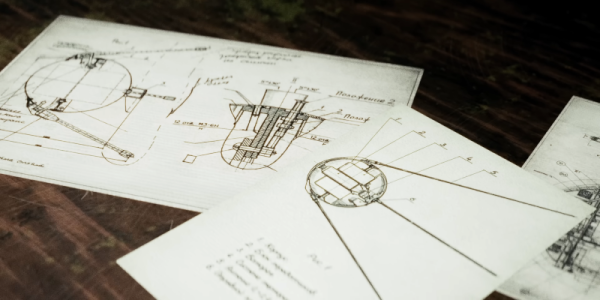
If you are an American of a certain age, you know the Soviet Union launched the first satellite, Sputnik, beating the United States to orbit. You might even remember ham radio operators tuning into the satellites beeping. But you probably haven’t heard much about the team that built the vehicle, the problems they had, or the clever design choices they made. [Hoog] has a video that details the birth of Sputnik. You can see the video below.

The original plan was to launch a massive space lab, but it proved too ambitious. Keep in mind that in the late 1950s, you didn’t have tiny computers, high-density power sources, or advanced materials, and no one really knew what to expect in the Earth orbit environment. Even the viability of radio from the ground to orbit wasn’t a given. But Sputnik’s 1-watt transmitter did the job.

Continue reading “Deep Dive Into Sputnik”

Print Your Own Robby The Robot

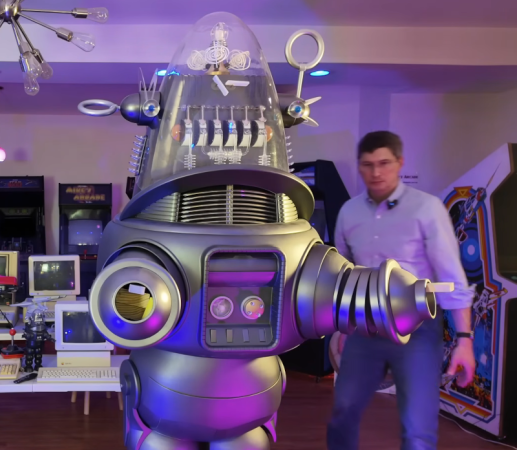
When it comes to robots, few are as iconic as Robby. [Ogrinz Labs] has wanted to build one and even examined a real one up for auction to get high-res photos of it. He also combined his designs with some other open-source designs, and it looks good. He’s released his design as a Creative Commons-licensed set of STL files that you, in theory, could print. There are more details and instructions in the video below.

If you are looking for something quick to print for the weekend, this isn’t it. As you might expect, this is a lot to print. The creator admits, too, that it isn’t totally accurate. It has bigger feet, for example, so his feet can fit inside. There are a few other modifications made for different reasons, but only a hard-core Robby enthusiast would notice any of them.

Continue reading “Print Your Own Robby The Robot”

Custom FM Radio Station Powered By Shell Scripts

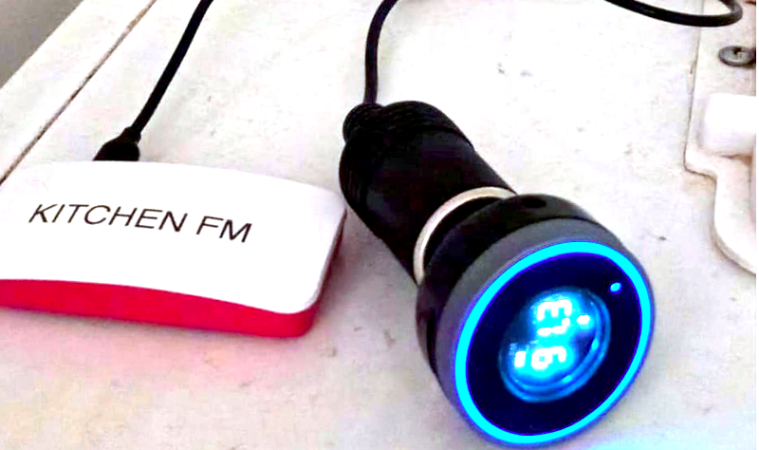
[Trwmato] wanted to spend more time listening to a normal radio to cut back on phone use. But the programming wasn’t quite right so, of course, the solution was to spin up a custom radio station!

The station in question uses a Pi Zero to poll podcasts and news from RSS feeds and automatically mixes them with local content and sends it out via Bluetooth. An FM transmitter allows it to still work on the FM radio, too. Grabbing podcasts isn’t very difficult, thanks to podget. The real logic is in how long to retain things and creating a playlist that both prioritizes fresh content while not repeating things too often. Did we forget to mention the whole thing is a collection of shell scripts?

We could see this as the start of a cool project to have a “radio station” for a school, organization, or company. It is easy to understand and modify.

We often argue that the much-maligned bash script is sometimes the right tool for the job. You can even do things like critical sections in them.

Spy Tech: The GPS Numbers Station

We’ve talked before about number stations — mysterious shortwave transmitters repeating numbers, presumably for clandestine purposes. But, of course, the mere fact that they are unusual makes them stand out. The best place to hide something is in plain sight. In the old days, a broadcaster might slip a fake news story in mentioning a name that has a secret meaning, for example. But according to [Steven Murdoch], the United States has an even more obvious hiding place for a numbers station: inside GPS.

Every L1 C/A navigation message is a 176-bit field known by the affectionate moniker: Subframe 4, Page 17. The GPS specification says it is for “special messages.” No one has disclosed what those messages might be.

[Murdoch] at University College London analyzed over 12 million GPS packets from 2007 to 2026, trying to understand what was in this field. You might think 176 bits isn’t much, and you are right. But the L1 C/A signal carries 50 bits per second, and each frame is 1,500 bits. As [Murdoch] points out: “every bit must earn its place.” Each subframe is 300 bits, so this mysterious signal is 12% of the subframe. It must be important to someone.

Continue reading “Spy Tech: The GPS Numbers Station”

Microsoft Claims 20 Second Qubits

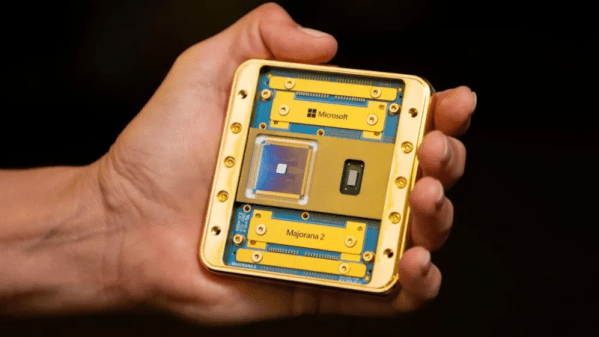
While it might seem that your computer malfunctions every few minutes, the reality is that modern computers are usually quite robust. Not so much for quantum computers, where qubit life is often measured in milliseconds. Now, the company claims to haveĀ qubits that last for about 20 seconds.

For example, Microsoft’s Majorana 1 quantum chip, which, incidentally, was mired in controversy, provided 8 qubits that were stable very briefly. This second-generation chip provides 12 qubits that average 20-second lifespans.

Continue reading “Microsoft Claims 20 Second Qubits”

If You Want To Hack Me, Come In Through The Speaker

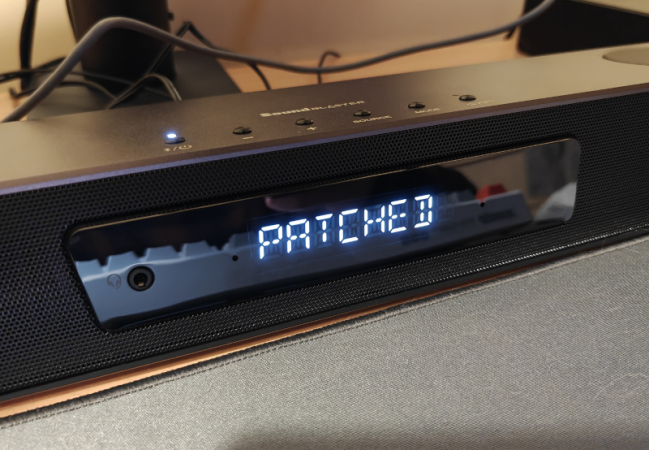
Some security hacks require someone to have physical access to your computer. In many cases, that’s easy to mitigate. Other attack vectors can put you at risk from anywhere via the network. That’s what firewalls are for. But there is an in-between risk where an attacker just has to be “around” your computer. [Rasmus Moorats] found out that a Creative Sound Blaster sound bar could open up just such an attack.

[Rasmus] was poking around the firmware just to write custom software to control it. The possibility of an attack was just an accidental find.

The soundbar connects to USB, but it also has Bluetooth, which, for some reason, is always on. There’s an app that can communicate with the speaker using BLE, and Creative has a special protocol to control it. The same protocol works on USB or Bluetooth, but with an important difference.

Continue reading “If You Want To Hack Me, Come In Through The Speaker”