Apple Falling Division

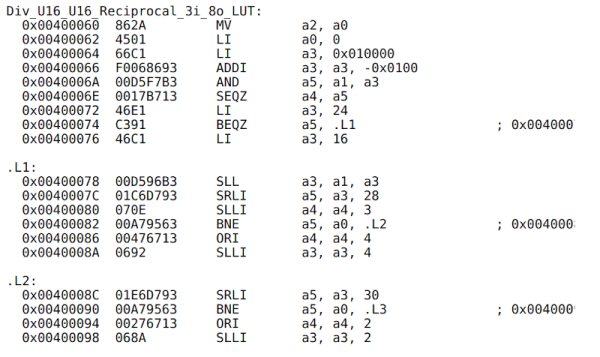
[Paul Curtis] over at Segger has an interesting series of blog posts about calculating division. This used to be a hotter topic, but nowadays many computers or computer languages have support for multiplication and division built-in. But some processors lack the instructions and a library to do it might be less than ideal. Knowing how to roll your own might allow you to optimize for speed or space. The current installment covers using Newton’s algorithm to do division.

Steve Martin had a famous bit about how to be a millionaire and never pay taxes. He started out by saying, “First… get a million dollar. Then…” This method is a bit like that since you first have to know how to multiply before you can divide. The basic premise is twofold: Newton’s method let you refine an estimate of a reciprocal by successive multiplications and then multiplying a number a reciprocal is the same as dividing. In other words, if we need to divide 34 by 6, you could rewrite 34/6 to 34 * 1/6 and the answer is the same.
Continue reading “Apple Falling Division”

Ham Radio SSB Transceiver Fits In Pocket

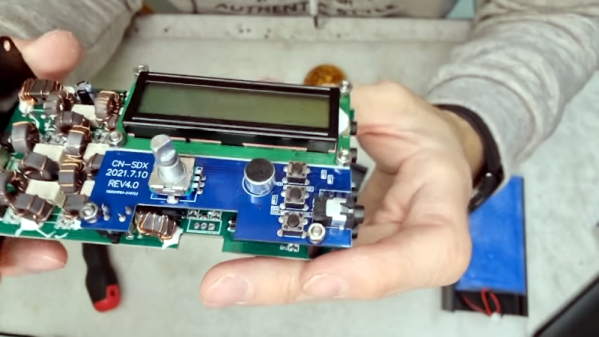
Talking about this Chinese ham radio transceiver requires a veritable flurry of acronyms: HF, SSB, QRP, and SDR to start with. [Paul] does a nice job of unboxing the rig and checking it out. The radio is a clone of a German project and provides a low-power radio with a rechargeable battery. You can see his video about the gear below.

SSB is an odd choice for low power operation, although we wonder if you couldn’t feed digital data in using a mode like PSK31 that has good performance at low power. There are several variations of the radio available and they cost generally less than $200 — sometimes quite a bit less.

There isn’t much on the front of the radio. There are a few buttons, a rotary encoder, and an LCD along with a speaker and microphone built-in. There are ports for power to run the radio if you want to not use the battery and a separate port for battery charging. There are also ports for a key, external microphone and speakers, and audio connections that look like they’d work for digital modes. According to commenters, the radio doesn’t have an internal charging circuit, so you have to be careful what you plug into the charging port.

Looking inside, the radio looks surprisingly well made. Towards the end of the video, you can see the radio make some contacts, too. Looks like fun. This is a bit pricey for [Dan Maloney’s] $50 Ham series, but not by much. You might borrow an antenna idea from him, at least. If you prefer something more analog, grab seven transistors and build this SSB transceiver.

Continue reading “Ham Radio SSB Transceiver Fits In Pocket”

Almost-Modern TeleType Is Silent

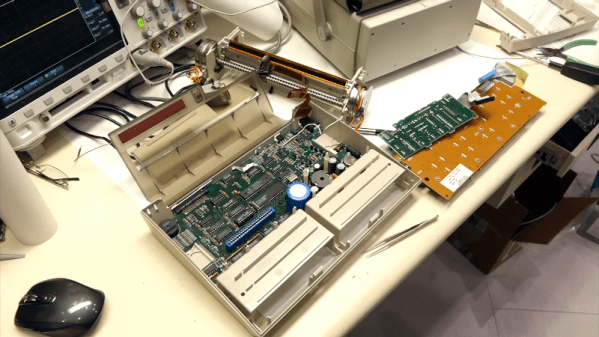
If you’ve ever used a real TeleType machine or seen a movie with a newsroom, you know that one TeleType makes a lot of noise and several make even more.[CuriousMarc] acquired the silent replacement, a real wonder of its day, the TI Silent 703. The $2,600 machine was portable if you think hauling a 25-pound suitcase around is portable. In 1971, it was definitely a step up.

The machine used a thermal printer, could have a built-in acoustic coupler for talking over the phone. You could also get a dual tape drive that acted like a mostly silent paper tape reader and punch.

Continue reading “Almost-Modern TeleType Is Silent”

Multimeters Go Big Screen

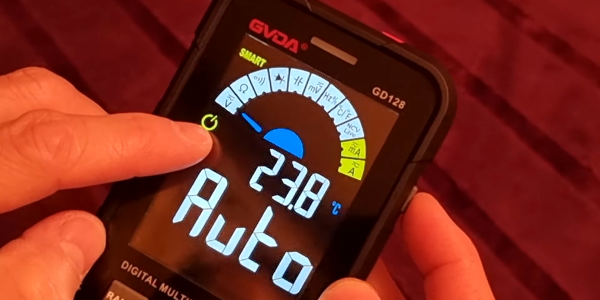
We’ve noticed lately that some cheap meters have gone to having big colorful screens. The screens aren’t dot matrix, but still have lots of graphics that could be useful or could be distracting eye candy, depending. The really cheap ones seem more like a gimmick, but [OM0ET] took a look at one that looked like a fair midrange instrument with some useful display features, the GVDA GD128.

A lot of the display shows the current function of the meter. No need for an expensive multiposition switch or rows of interlocking pushbuttons. Many of these new meters also have non-contact voltage sensors, which is handy. Otherwise, it looks like a pretty conventional cheap meter. Continue reading “Multimeters Go Big Screen”

My Major Is Gaming…

Times have changed. You can now take a university class in writing games. In fact, YOU can now take a university class about writing games because [Dave Churchill] of Memorial University has put all 22 of his lectures up for your enjoyment. [Dr. Churchill] isn’t planning on releasing the assignment files, but you can still get a lot from watching the videos. Apparently, the classes were also live streamed on Twitch.

The games build on SFML so the resulting games can be portable. The library abstracts input, graphics, sound, and networking.

Continue reading “My Major Is Gaming…”

Paper Plate Surround Sound System

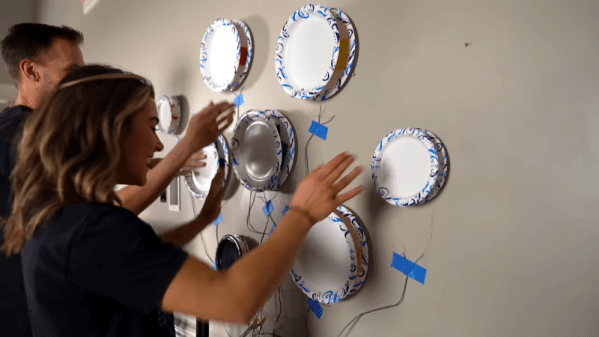
With the holiday season, you might turn to paper plates to cut down on dishwashing after having family or friends over. But what do you do with the extras? If you are [TKOR] you make some speakers. The process is fairly simple and if you know how a speaker works, you won’t find any surprises, but there are some neat techniques you might pick up. You can see the video below.

A drill and a steel rod help with the coil winding duty. You can probably adapt the technique to make other kinds of coils and we’d rig up an encoder to count revolutions, too.

Continue reading “Paper Plate Surround Sound System”

This Ham Radio Is Unsafe At Any Frequency

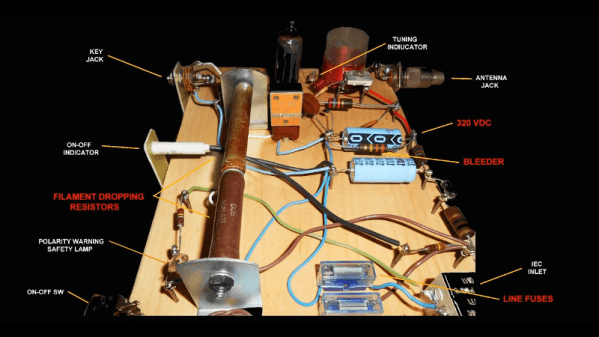
When we were kids we rode bicycles without pads and helmets. We drank sugary drinks. We played with chemistry sets and power tools. We also built things that directly used AC line current. [Mike] remembers and built one, presumably more to discuss the safety precautions around things that can shock you and not entice you to duplicate it. He calls it The Retro QRP Widowmaker, if that’s any kind of a hint. (Video of this unsafe transmitter also embedded below.)

The design showed up from time to time in old electronic magazines. Built on an open board and with no ground wire, the radio didn’t need a complex power supply. This wasn’t limited to transmitters, either. Some TVs and radios had a “hot chassis.” That’s why we were taught to touch an unknown chassis with the back of your hand first. A shock will contract your muscles and that will pull your arm away instead of making you grab the electrically active part.

Continue reading “This Ham Radio Is Unsafe At Any Frequency”