He Comes To Bury Sensors, Not To Praise Them

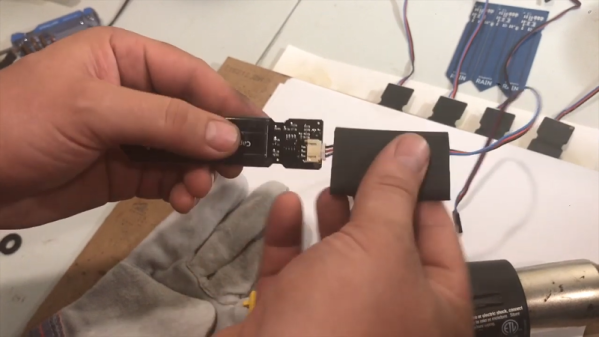
[Adosia] has some interesting videos about their IoT platform controlling self-watering plant pots. However, the video that really caught our eye was the experience in sealing up sensors that are going to be out in the field. Even if you aren’t using the exact sensors, the techniques are useful.

We would have expected to see potting compound, but that’s messy and hard to use so their process is simpler. First, a few coats of clear urethane sealant goes over the electronics. Next, heat shrink goes over the assembly. It isn’t ordinary heat shrink though, instead it’s the kind that has heat-activated adhesive inside.

Continue reading “He Comes To Bury Sensors, Not To Praise Them”

Schrodinger’s Cat Lives

If quantum physics always sounded a little squirrelly to you, take heart. Yale researchers have announced that they can do what quantum physics claimed to be impossible: they can determine the state a quantum system will collapse to before it happens. This contradicts Schrodinger’s famous hypothetical cat that is superimposed as 50% alive and 50% dead at the same time. The research appears in Nature.

Schrodinger argued that until you open the box, the cat is half alive and half dead in the same way that a qubit can be in 50% of one state or another. When you observe it, you force the system to one state. Researchers at Yale, however, have found a way to use microwaves to indirectly monitor qubits to determine their state prior to the system making a jump. Unlike a normal observation which occurs too late, the Yale technique allows researchers to change the future state to their choice.

Continue reading “Schrodinger’s Cat Lives”

Windows 10 Goes To Shell

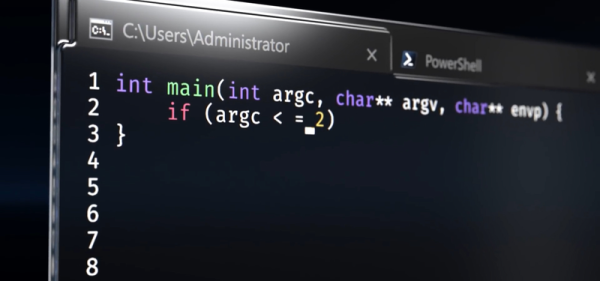
Windows 10 — the operating system people love to hate or hate to love. Even if you’re a Linux die-hard, it is a fair bet that your workplace uses it and that you have friends and family members that need help forcing you to use Windows at least some times. If you prefer a command line — or even just find a place where you have to use the command line, you might find the classic Windows shell a bit anemic. Some of that’s the shell’s fault, but some of it is the Windows console which is — sort of — the terminal program that runs various Windows text-based programs. If you have the creator update channel on Windows 10, though, there have been some recent improvements to the console and the Linux system that will eventually trickle down to the mainstream users.

What’s New?

So what’s new? According to Microsoft, they’ve improved the call interface to make the following things work correctly (along with “many others”):

  • Core tools: apt, sed, grep, awk, top, tmux, ssh, scp, etc.
  • Shells: Bash, zsh, fish, etc.
  • Dev tools: vim, emacs, nano, git, gdb, etc.
  • Languages & platforms: Node.js & npm, Ruby & Gems, Java & Maven, Python & Pip, C/C++, C# &
  • .NET Core & Nuget, Go, Rust, Haskell, Elixir/Erlang, etc.
  • Systems & Services: sshd, Apache, lighttpd, nginx, MySQL, PostgreSQL

The changes to the console are mostly surrounding escape sequences, colors, and mouse support. The API changes included things like allowing certain non-administrative users to create symlinks. We’ve made X Windows work with Windows (using a third-party X server) and Microsoft acknowledges that it has been done. However, they still don’t support it officially.

Continue reading “Windows 10 Goes To Shell”

Lego Goes Underwater, With Model Submarines And Missiles

It is fun to make a toy vehicle with Lego, but it is even more fun to make one that actually works. [PeterSripol] made two Lego submarines, and you can see them in the video below. There isn’t a lot of build information, but watching the subs fire missiles and then getting destroyed by depth charges is worth something.

One of the subs is larger and uses a rudder to steer. It was apparently harder to control than the other smaller sub which used two motors thrusting opposite one another to steer. Looks like fun.

Continue reading “Lego Goes Underwater, With Model Submarines And Missiles”

1980s Plotter Plays Flappy Bird

Should you happen to have an HP7440A or similar plotter hanging around, you could have a quick game of Flappy Bird — or Plotty Bird as [WesleyAC] calls it. Just be sure you have some blank paper. The whole thing fits in about 200 lines of Rust code and — according to the author — gets to about 20 frames per second.

Watching the thing go, it appears that it draws a random set of pipes and then traces your flight path on the same page in real time.

Continue reading “1980s Plotter Plays Flappy Bird”

Circuit VR: Resistance Measurement With Four Wires

If you want to measure resistance and you know Ohm’s law, it seems like you have an easy answer, right? Feed a known current through the thing you want to measure and read the voltage required. A little math, and that’s it. Or is it? If you are measuring reasonably large resistance and you don’t mind small inaccuracies, sure. But for tiny measurements or highly accurate measurements, you’d be better off using the four-wire method. What’s more is, understanding why you want to use the four-wire method is a great example of using an understanding of electronics to find solutions to problems.
Continue reading “Circuit VR: Resistance Measurement With Four Wires”

Biological Hacking In The 19th Century Or How The World Almost Lost Wine

While it isn’t quite universal, a lot of people enjoy a glass of wine now and again. But the world faced a crisis in the 1800s that almost destroyed some of the world’s great wines. Science — or some might say hacking — saved the day, even though it isn’t well known outside of serious oenophiles. You might wonder how biological hacking occurred in the 19th century. It did. It wasn’t as fast or efficient, but fortunately for wine drinkers, it got the job done.

When people tell me about new cybersecurity threats, I usually point out that cybercrime isn’t new. People have been stealing money, tricking people into actions, and impersonating other people for centuries. The computer just makes it easier. Even computing itself isn’t a new idea. Counting on your fingers and counting with electrons is just a matter of degree. Surely, though, mashing up biology is a more recent scientific advancement, right? While it is true that CRISPR can make editing genes a weekend garage project, people have been changing the biology of plants and animals for centuries using techniques like selective breeding and grafting. Not as effective, but sometimes effective enough.

Continue reading “Biological Hacking In The 19th Century Or How The World Almost Lost Wine”