AI Finds More Space Chatter

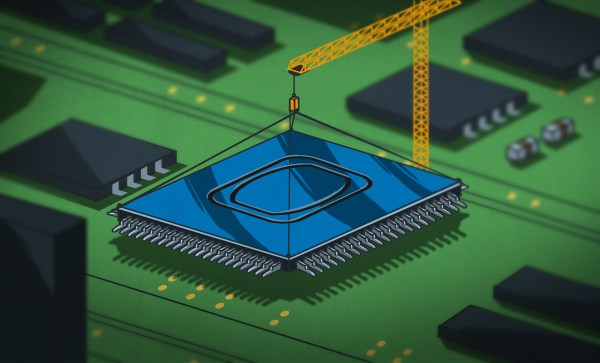
Scientists don’t know exactly what fast radio bursts (FRBs) are. What they do know is that they come from a long way away. In fact, one that occurs regularly comes from a galaxy 3 billion light years away. They could form from neutron stars or they could be extraterrestrials phoning home. The other thing is — thanks to machine learning — we now know about a lot more of them. You can see a video from Berkeley, below. and find more technical information, raw data, and [Danielle Futselaar’s] killer project graphic seen above from at their site.

The first FRB came to the attention of [Duncan Lorimer] and [David Narkevic] in 2007 while sifting through data from 2001. These broadband bursts are hard to identify since they last a matter of milliseconds. Researchers at Berkeley trained software using previously known FRBs. They then gave the software 5 hours of recordings of activity from one part of the sky and found 72 previously unknown FRBs.
Continue reading “AI Finds More Space Chatter”

Easy Portable Serial Ports

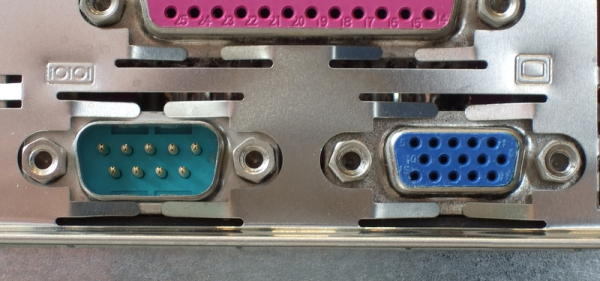
Modern operating systems insulate us — as programmers, especially — from so much work. Depending on how far back you go, programmers had to manage their own fonts, their own allocation space on mass storage, or even their own memory allotments. Every year, though, it seems like things get easier and easier. So why is it so annoying to open a simple serial port? It isn’t hard, of course, but on every operating system it seems to be painful — probably in an attempt to be flexible. And it is even worse if you want portability. I needed to write some C code that read data from an FPGA’s embedded logic analyzer, and I was annoyed at having to write yet more serial port code. I have my own shim library, but it isn’t well tested and isn’t all that flexible — it does what I need, but I wanted something better. What I wound up with the serial library from Sigrok. You know Sigrok? The logic analyzer software.

 You might counter that the serial port is old hat, so no one wants to support it with modern systems. While the physical serial port might be on life support, there’s no shortage of equipment that connects via USB that appears to be a serial port. So while I was talking to an FTDI chip on an FPGA board, you could just as well be talking to an Arduino or a USB voltmeter or anything.

I guess the Sigrok developers had the same problem I did and they took the time to write a nice API and port it to major platforms. Although Sigrok uses it, they maintain it as a separate project and it was just what I needed. Sort of. I say sort of because the version installed with Ubuntu was old and I needed some features on the newest release, but — as usual — the Internet came to the rescue. A quick Git command, and four lines of build instructions and we were ready to go.

Continue reading “Easy Portable Serial Ports”

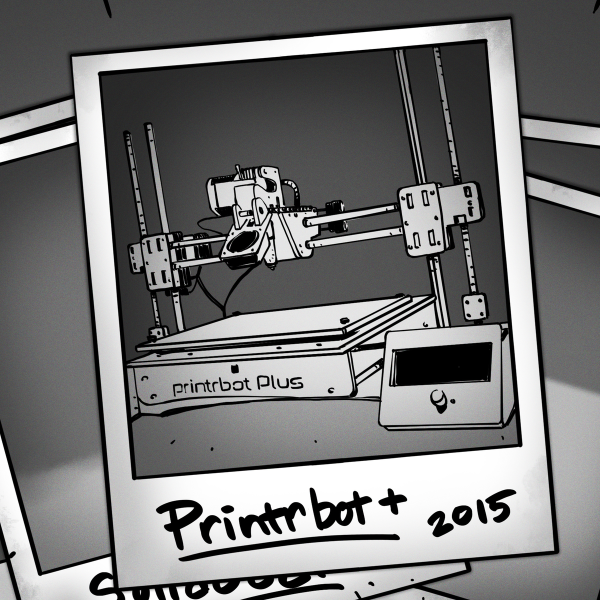
HP Rolls Out Metal 3D Printers

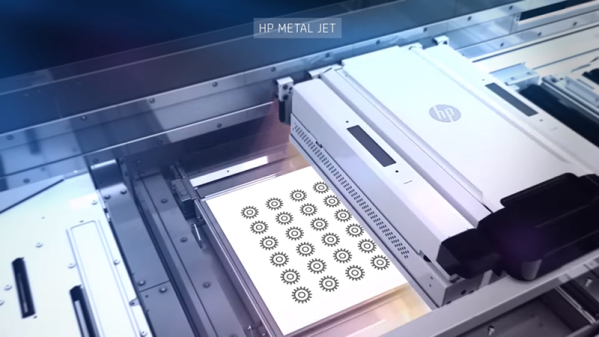
You normally think of HP as producing inkjet and laser printers. But they’ve been quietly building 3D printers aimed at commercial customers. Now they are moving out with metal printers called — predictably — the HP Metal Jet. The video (see below) is a little glitzy, but the basic idea is that print bars lay down powder on a 21-micron grid. A binding agent prints on the powder, presumably in a similar way to a conventional inkjet printer. A heat source then evaporates the liquid from the binder.

The process repeats for each layer until you remove the part and then sinter it using a third-party oven-like device. According to HP, their technique has more uniform material properties than fusing the powder on the bed with a laser. They also claim to be much faster than metal injection molding.

Continue reading “HP Rolls Out Metal 3D Printers”

Packing 10 Into 1: A Square Inch Dekatron Replacement

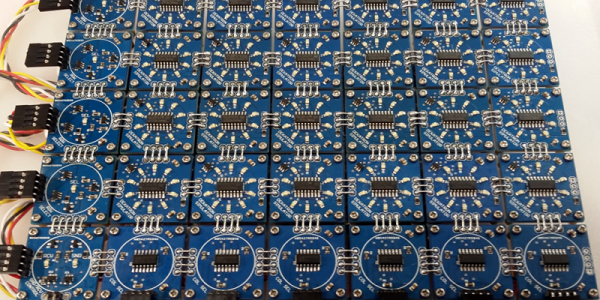
One of the things that always attracts our eye in old movies is how many kinds of displays you see on old gear both real and imaginary. Really old stuff usually had meters or circular recorders. But slightly newer movies often had some kind of exotic digital display with Nixes or Numitron tubes. One of the really exotic display devices was a Dekatron. While these are pretty rare, you can make a stand-in using modern LEDs and [Dave] did just that in an entry into our square inch competition.

These were gas-filled tubes with ten positions. You had to reset the tube and then the tube would visibly count pulses providing a visual indicator from zero to nine. Depending on the tube configuration, you could use them to count or to act as a divider. Those with neon fill looked sort of orange, although there were argon-based ones that had a purple glow. You can see what an older version of the board looks like in the video below or skip to the second video if you want to see the real ones in action.

Continue reading “Packing 10 Into 1: A Square Inch Dekatron Replacement”

What’s A Couplate? The Stepping Stone To Integrated Circuits

We are spoiled these days because you can shop online and get all manner of inexpensive electronic goodies shipped to your door. This is due to the fantastic electronic fabrication workflow that has grown into a global powerhouse, facilitated by complex yet inexpensive integrated circuits! But it took a few intermediate steps to get here, and one of those is known as a couplate.

When I was a kid, the big deal was to find an old radio in the trash. You could spend a few hours stripping all sorts of parts from the thing and add it to your collection for a future project. Of course, old radios from the 1970s and earlier had a lot of the usual parts we use today, even though many of them were bigger — no surface mount parts yet. Since older radios were the usual find in a dumpster, tubes were common but you could find some transistor radios.

Once in a while something older. There would be a little box with some wires poking hiding in an old radio from the 1940s or 1950s (too early for ICs). In a way, though, these were predecessors to the Integrated Circuit and they went by a few names, depending on who sold them. PEC (Printed Electronic Circuit), a couplate, or a BulPlate, are all names for hardware that was a stepping stone between discrete circuitry and ICs.

Continue reading “What’s A Couplate? The Stepping Stone To Integrated Circuits”

Less Is More: A Micromatrix Display In A Square Inch

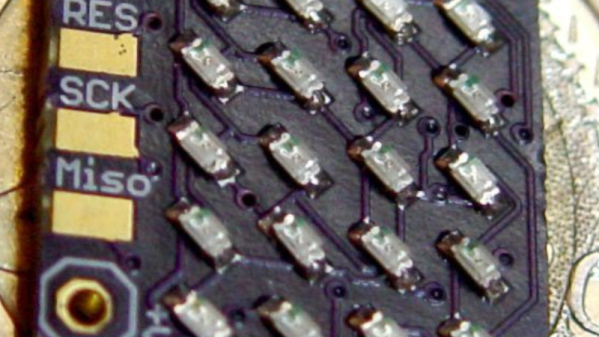
In your living room, the big display is what you want. But in an embedded project, often less is more. We think [bobricius] will agree since he submitted a tiny 4×5 LED display into our square inch challenge. The board features an ATtiny CPU and twenty SMD LEDs in a nice grid. You can see them in action, scrolling to some disco music in the video below.

There is plenty of room left in the CPU for bigger text strings — the flash memory is just over 10% full. A little side-mounted header makes it easy to program the chip if you want to change anything.

Continue reading “Less Is More: A Micromatrix Display In A Square Inch”

Repairing A Desktop Jukebox

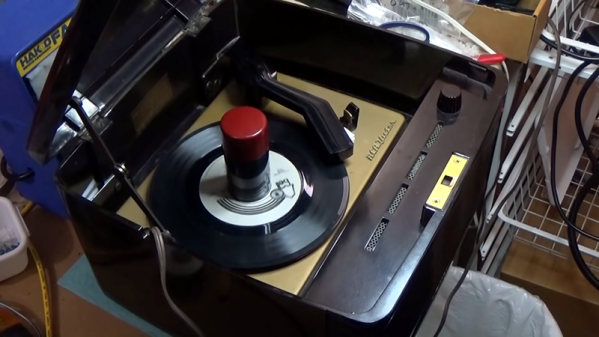
Although vinyl records have had a bit of resurgence, they are far away from their heyday. There was a time when 45 RPM singles were not just how you listened to music at home, but they also populated the jukeboxes you’d find in your local malt shop or anywhere else in public. [Fran] has an old 45 RPM “desktop jukebox” from RCA. It really isn’t a jukebox, but an automatic record changer dating from the 1950s. The problem is, the cartridge was toast. Replacing it wasn’t a big problem, even though replacing it with an exact duplicate wasn’t possible. But, of course, that was just the start.

You can see in the video below, that there were some weight problems with the cartridge, but the changer part would not work. She tears it down and makes some modifications. She even pulled out the schematic which had three tubes — one of which was just a rectifier.

Continue reading “Repairing A Desktop Jukebox”