Learn ARM Assembly With The Raspberry Pi

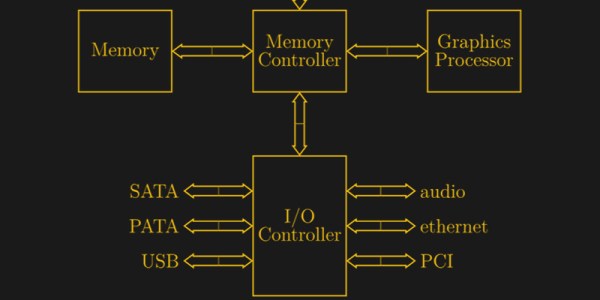
We live in a time when you don’t have to know assembly language to successfully work with embedded computers. The typical processor these days has resources that would shame early PCs and some of the larger ones are getting close to what was a powerful desktop machine only a few years ago. Even so, there are some cases where you really want to use assembly language. Maybe you need more speed. Or maybe you need very precise control over timing. Maybe you just like the challenge. [Robert G. Plantz] from Sonoma State University has an excellent book online titled “Introduction to Computer Organization: ARM Assembly Langauge Using the Raspberry Pi.” If you are interested in serious ARM assembly language, you really need to check out this book.

If you are more interested in x86-64 assembly and Linux [Plantz] has you covered there, too. Both books are free to read on the Internet, and you can pick up a printed version of the Linux book for a small payment if you want.

Continue reading “Learn ARM Assembly With The Raspberry Pi”

Super Magnesium: Lighter Than Aluminum, Cheaper Than Carbon Fiber

We think of high tech materials as the purview of the space program, or of high-performance aircraft. But there are other niche applications that foster super materials, for example the world of cycling. Magnesium is one such material as it is strong and light, but it has the annoying property of burning in its pure state. Alloys of magnesium meanwhile generally don’t combust unless they are ground fine or exposed to high temperatures. Allite is introducing a new line known as “super magnesium” which is in reality three distinct alloys that they claim are 30% lighter than aluminum, as well as stronger and stiffer than the equivalent mass of that metal. They also claim the material will melt at 1200F instead of burning. To lend an air of mystique, this material was once only available for defense applications but now is open to everyone.

It’s a material that comes in three grades. AE81 is optimized for welding, ZE62 is better suited for forging, while WE54 is made for casting processes. Those names might sound like made up stock numbers, but they aren’t, as magnesium allows typically have names that indicate the material used to mix with the magnesium. A stands for aluminum, Z is for zirconium zinc, W is for yttrium, and E stands for rare earths. So AE81 is a mix of magnesium, aluminum, and some rare earth material. The numbers indicate the approximate amount of each addition, so AE81 is 8% aluminum and 1% rare earth.

Continue reading “Super Magnesium: Lighter Than Aluminum, Cheaper Than Carbon Fiber”

Robotic Fruit Fly Won’t Eat Your Fruit

The DelFly project has been busy since the last time we checked in on them. The Dutch team started 13 years ago and produced the smallest camera-carrying drone, and an autonomous tiny ornithopter. However, that ornithopter — now five years old — had to use some traditional control surfaces and a tail like an airplane which was decidedly not fruit fly-like. Now they’ve solved those problems and have announced the DelFly Nimble, a 13 inch and 1-ounce ornithopter. You can see the Nimble in the video below.

The close emulation of a real fly means the thing looks distinctly insect-like in flight. The dual wings use Mylar and form an X configuration. They flap about 17 times per second. A fully charged battery  — remember, the whole thing weighs an ounce — lasts five minutes. With an efficient speed of 3 meters per second, the team claims a flight range of over 1 kilometer with a peak speed that can reach  7 meters per second. It can even take a payload, as long as that payload weighs 4 grams or less.

Continue reading “Robotic Fruit Fly Won’t Eat Your Fruit”

It’s The Web, Basically

If you are of a certain age, you probably learned to program in Basic. Even if you aren’t, a lot of microcontroller hobbyists got started on the Basic Stamp, and there are plenty of other places where to venerable language still hides out. But if you want to write cool browser applications, you have to write JavaScript, right? Google will now let you code your web pages in Basic. Known as WWWBasic, this is — of course — a Javascript hack that you can load remotely into a web page and then have your page use Basic for customization. You can even import the thing into Node.js and use Basic inside your JavaScript, although it is hard to think of why you’d want to.

According to the project’s documentation — which is pretty sparse so far, we’re afraid — the Basic program is compiled into JavaScript on page load. There are a few examples, so you can generally pick up what’s available to use. There are graphics, the ability to read a keyboard key, and a way to handle the mouse.

Continue reading “It’s The Web, Basically”

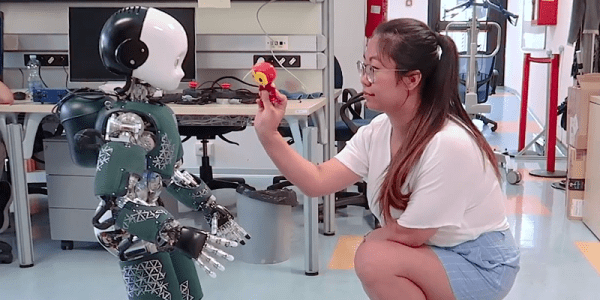
ICub Is The Robot That Is Equally Cute And Creepy

We shouldn’t say iCub — the humanoid robot from Italy — is creepy. After all, human-like robots are in their infancy and an early computer or automobile would hardly be indicative of where those industries would take us. You can see the little guy in the video below.

The effort is open source and was part of an EU project that has been adopted by 20 labs around the world. The video just shows a guy in VR gear operating the robot, but the website has a lot of technical information if you want to know more.

Continue reading “ICub Is The Robot That Is Equally Cute And Creepy”

Camera Uses Algorithms Instead Of Lenses

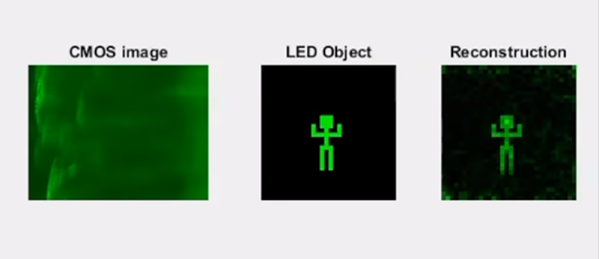
A normal camera uses a lens to bend light so that it hits a sensor. A pinhole camera doesn’t have a lens, but the tiny hole serves the same function. Now two researchers from the University of Utah. have used software to recreate images from scattered unfocused light. The quality isn’t great, but there’s no lens — not even a pinhole — involved. You can see a video, below.

The camera has a sensor on the edge of a piece of a transparent window. The images could resolve .1 line-pairs/mm at a distance of 150 mm and had a depth of field of about 10 mm. This may seem like a solution that needs a problem, but think about the applications where a camera could see through a windshield or a pair of glasses without having a conventional camera in the way.

Continue reading “Camera Uses Algorithms Instead Of Lenses”

A Dozen Tubes Make An Educational Amplifier

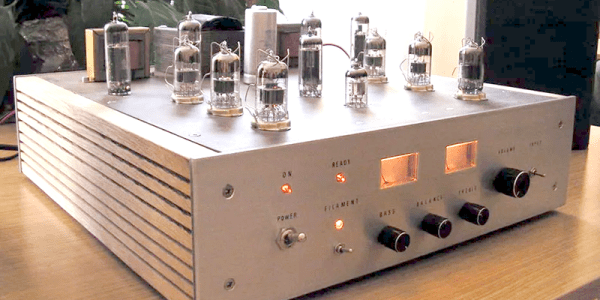
If you asked [Hans_Daniel] what he learned by building a tube audio amplifier with a dozen tubes that he found, the answer might just be, “don’t wind your own transformers.” We were impressed, though, that he went from not knowing much about tubes to a good looking amplifier build. We also like the name — NASS II-12 which apparently stands for “not a single semiconductor.”

Even the chassis looked really good. We didn’t know textolite was still a thing, but apparently, the retro laminate is still around somewhere. It looks like a high-end audio component and with the tubes proudly on display on the top, it should be a lot of fun to use.

Continue reading “A Dozen Tubes Make An Educational Amplifier”