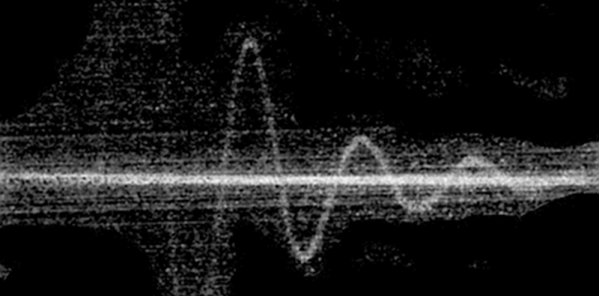
The Pre-CRT Oscilloscope

Oscilloscopes are especially magical because they translate the abstract world of electronics into something you can visualize. These days, a scope is likely to use an LCD or another kind of flat electronic display, but the gold standard for many years was the ubiquitous CRT (cathode ray tube). Historically, though, CRTs were not very common in the early days of electronics and radio. What we think of as a CRT didn’t really show up until 1931, although if you could draw a high vacuum and provide 30 kV, there were tubes as early as 1919. But there was a lot of electronics work done well before that, so how did early scientists visualize electric current? You might think the answer is “they didn’t,” but that’s not true. We are spoiled today with high-resolution electronic displays, but our grandfathers were clever and used what they had to visualize electronics.

Keep in mind, you couldn’t even get an electronic amplifier until the early 1900s (something we’ve talked about before). The earliest way to get a visual idea of what was happening in a circuit was purely a manual process. You would make measurements and draw your readings on a piece of graph paper.
Continue reading “The Pre-CRT Oscilloscope”

How Big Is Your Oscilloscope? One Inch?

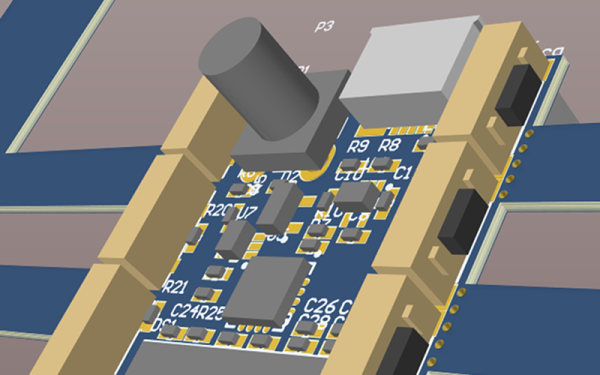
We are anxious to see the finished product of [Mark Omo’s] entry into our one square inch project. It is a 20 megasample per second oscilloscope that fits the form factor and includes a tiny OLED screen. We will confess that we started thinking if you could use these as replacements for panel meters or find some other excuse for it to exist. We finally realized, though, that it might not be very practical but it is undeniably cool.

There are some mockup PCB layouts, but the design appears feasible. A PIC32MZ provides the horsepower. [Mark] plans to use an interleaved mode in the chip’s converters to get 20 megasamples per second and a bandwidth of 10 MHz. It appears he’ll use DMA to drive the OLED. In addition to the OLED and the PIC, there’s a termination network and a variable gain stage and that’s about it.

Continue reading “How Big Is Your Oscilloscope? One Inch?”

CORDIC Brings Math To FPGA Designs

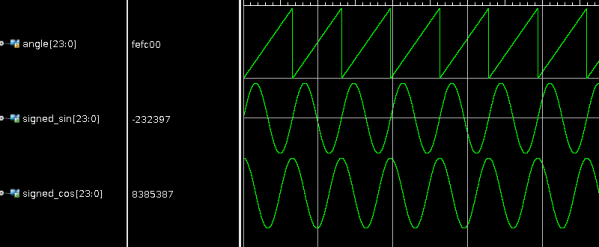
We are always excited when we see [Hamster] post an FPGA project, because it is usually something good. His latest post doesn’t disappoint and shows how he uses the CORDIC algorithm to generate very precise sine and cosine waves in VHDL. CORDIC (Coordinate Rotation Digital Computer; sometimes known as Volder’s algorithm) is a standard way to compute hyperbolic and trigonometric functions. What’s nice is that the algorithm only requires addition, subtraction, bit shifts, and a lookup table with an entry for each bit of precision you want. Of course, if you have addition and negative numbers, you already have subtraction. This is perfect for simple CPUs and FPGAs.

[Hamster] not only has the VHDL code but also provides a C version if you find that easier to read. In either case, the angle is scaled so that 360 degrees is a full 24-bit word to allow the most precision. Although it is common to compute the result in a loop, with the FPGA, you can do all the math in parallel and generate a new sample on each clock cycle.

Continue reading “CORDIC Brings Math To FPGA Designs”

Apollo 12 Was The Lucky Number Among Apollo Disasters

I recently saw Apollo 13 again — this time with the score played live by the Houston Symphony. What a crazy coincidence that thirteen has long been considered an unlucky number and that Apollo 13 would be the one we almost lost. However, Apollo 12 almost became a disaster which — after the ordeal with flight 13 — was largely forgotten.

When all was said and done, Apollo 12 would result in a second manned moon landing in November 1969, just four months after Apollo 11. Commanded by Pete Conrad, Alan Bean accompanied Conrad to the surface while Richard Gordon, Jr. kept the getaway vehicle running. But less than a minute after launch something happened that could have been a disaster. Lightning struck the vehicle.

Continue reading “Apollo 12 Was The Lucky Number Among Apollo Disasters”

How To Add UART To Your FPGA Projects

Being able to communicate between a host computer and a project is often a key requirement, and for FPGA projects that is easily done by adding a submodule like a UART. A Universal Asynchronous Receiver-Transmitter is the hardware that facilitates communications with a serial port, so you can send commands from a computer and get messages in return.

Last week I wrote about an example POV project that’s a good example for learn. It was both non-trivial and used the board’s features nicely. But it has the message hard coded into the Verilog which means you need to rebuild the FPGA every time you want to change it. Adding a UART will allow us to update that message.

The good news is the demo is open source, so I forked it on GitHub so you can follow along with my new demo. To illustrate how you can add a UART to this project I made this simple plan:

Continue reading “How To Add UART To Your FPGA Projects”

Detective Work Recovers Atari ST ASIC Designs

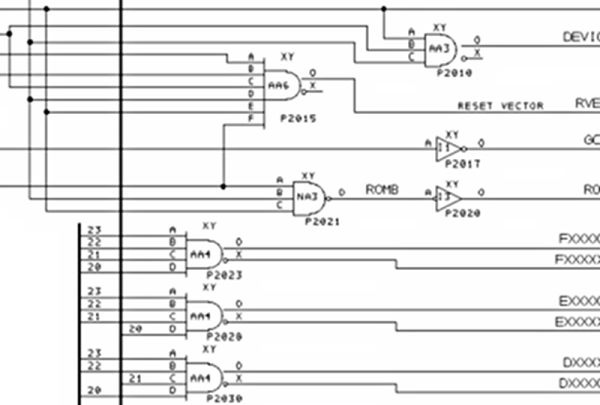
[Christian Zietz] wanted to know more about the Atari ST. He found information online from newer Atari machines like the Falcon030 and the Jaguar, but couldn’t find much else. While looking through some archives of old disk images from the Atari headquarters, he found a folder marked “Drawings\4118.” With some detective work and emulation of an old operating system, he was able to recover the schematics for the ST-4118 video shifter ASIC (Application-Specific Integrated Circuit).

Unfortunately, this appeared to be a chip for the unreleased Atari Panther video game console. However, it did show the way to how these older schematics were readable. [Christian] continued searching and found some floppy disk images that were a bit unusual. They didn’t have a proper file system but had been created by a backup program called FastBack for MS-DOS.

Continue reading “Detective Work Recovers Atari ST ASIC Designs”

Pushing Tin Remotely: The Start Of Flight Control In The Cloud

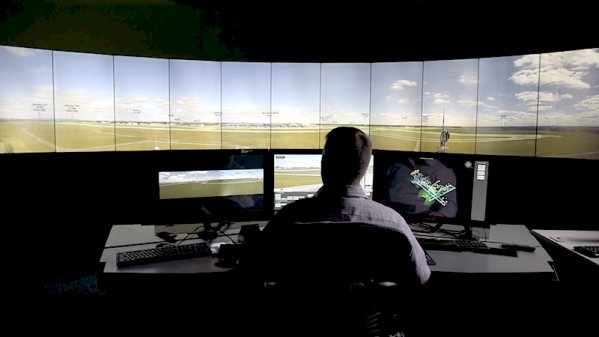
In a 1999 movie (Pushing Tin), a flight controller is a passenger on a plane and tells the flight attendant that he needs to speak to the person controlling the plane. The flight attendant tells him the pilot is very busy to which the controller responds, “…you really think the pilot is controlling this plane? That would really scare me.” We wonder what that fictional character would think flying into Loveland Colorado. Their Colorado Remote Tower Project. While there’s still a human flight controller, they aren’t physically located at the airport and rely on remote cameras and radar so the controller can be located elsewhere.

The subject airport is the Northern Colorado Regional Airport and is the state’s busiest airport that has no tower. While the concept — generically known as Remote and Virtual Tower or RVT — dates back to 2002, its adoption is only now starting to pick up steam. An airport in Sweden was the first to go live for normal use in April of 2015, but the Colorado installation is the first approved in the United States. If the official site is a little too dry for you, there’s a CBS report with a video that gives you a quick overview of what’s happening. Or dive in with the demonstration video you can see below.

Continue reading “Pushing Tin Remotely: The Start Of Flight Control In The Cloud”