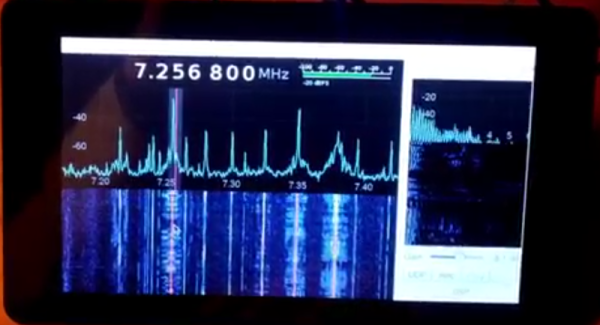
Raspberry Pi SDR

[Chris D] noticed that the excellent software defined radio (SDR) software gqrx will run on the Raspberry Pi now. So he married a Raspberry Pi 3, a touchscreen, an RTL-SDR dongle, and an upconverter to make a very nice receiver setup. You can see the receiver in action below.

The video is a little light on build details, but there is a shot of the setup with the pieces labeled, and you should be able to figure it out from there. Of course, gqrx works with lots of different SDR devices so you might have to make adjustments depending on what you use (for example, many of the supported dongles won’t need the upconverter that [Chris] uses).
Continue reading “Raspberry Pi SDR”

Riddle: What Metal Conducts Electricity, But Not Heat?

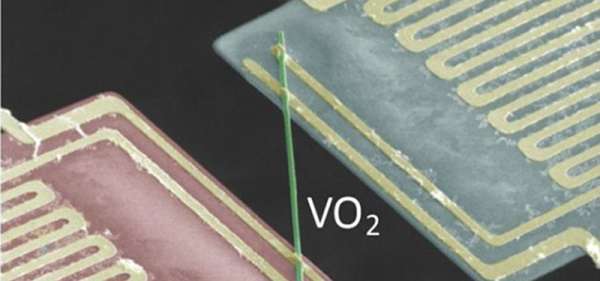
If you can’t answer the riddle, don’t feel bad. Metal conductors usually conduct electricity and heat. Usually, that’s true, but researchers at the Department of Energy’s Lawrence Berkeley National Laboratory and at the University of California, Berkeley, have found that vanadium dioxide can conduct electricity without conducting heat.

The Wiedemann-Franz Law states that good conductors of electricity are also good conductors of heat. Vanadium dioxide not only switches from an insulator to a conductor at 67C (152F), but it appears that it also doesn’t conduct as much heat as that law predicts while it is in its electrically conductive phase.

Continue reading “Riddle: What Metal Conducts Electricity, But Not Heat?”

3D Printing Makes Electronics A Snap

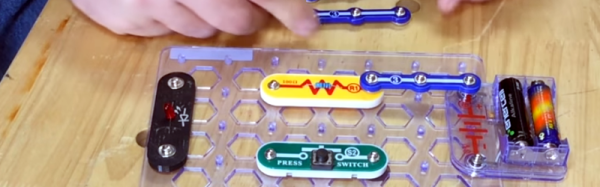
For just about as long as there have been electronics, there’s been a search for a way to let students and hobbyists build projects without a lot of effort. A board with Fahnestock clips was probably the first attempt. Today, it is more often the ubiquitous solderless breadboard. In between, we’ve seen copper pipe pieces and rubber bands, components mounted on magnets that hold them and make connections, and other even less probable schemes. A few years back, a new method appeared: Snap Circuits. The name almost says it all. A baseboard has mounting holes for different components. All the components make their electrical connections and mechanical connections through a common snap like you might find on clothing. Even the wires are little segments with snaps at both ends.

One problem with any system like this is how to integrate custom components. Of course, with the snaps, that’s not very hard, but [Chuck Hellebuyck] got creative with TinkerCad and worked out how to 3D print custom modules for the system. You can see his video, below.

Continue reading “3D Printing Makes Electronics A Snap”

Electronic Prototyping With A 3D Printer

It would be nice if your 3D printer could spit out PC boards. There’s been lots of work done to make that happen, mostly centered on depositing conductive material, although we’ve been surprised no one has worked out how to just 3D print a plastic resist mask.

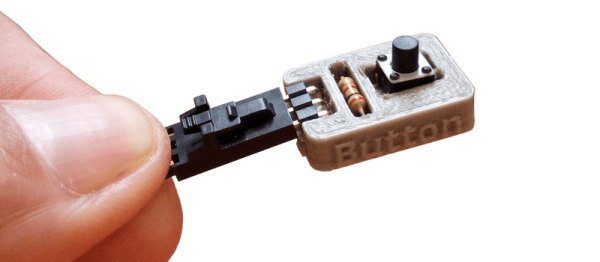
We recently found a GitHub group for [PCBPrints] which has small modules that would be useful in prototyping and breadboarding. They are really just carriers that create plug in modules for switches, LEDs, and the like. It looks like this is a aggregated list of other GitHub projects that realize these designs. The group is in Spanish, but Google Translate is your friend, as usual. You can see a video of one of the button modules in action, below.

Continue reading “Electronic Prototyping With A 3D Printer”

Fifty Shades Of Gray Code

Some years back, a museum asked me to help them with an exhibit a contractor had built for them. It was a wheel like the one on Wheel of Fortune, but smaller and mounted on the wall instead of the floor. You would spin the wheel, it would stop on some item, and a computer would play a short video about the item. Physically and mechanically, it was a beautifully built exhibit. The electronics, though, left something to be desired.

In principle, this is pretty simple computer task. Measure the position of the wheel, and when it stops moving, play a video based on the position. The problem was the folks who created the artistic mechanics didn’t think hard about the electronics behind it. Sometimes–but not often–the wheel would play the wrong video. Sometimes it wouldn’t play at all.

The Prime Suspect

My immediate suspicion turned out to be correct. I took the wheel off its mount to discover copper foil tape on the back of it. Each pie wedge had foil in different areas and there were two brushes in each area. When the wheel stopped, two of the brushes would be shorted together and the rest were open. The way they detected that was bizarre, but that wasn’t the problem. (It involved a cannibalized PS/2 keyboard.)
Continue reading “Fifty Shades Of Gray Code”

That’s No Moon! That’s A Virtual Assistant

[Wisecracker] likes how the Amazon Echo Dot works, but he doesn’t like how they sound or how they resemble hockey pucks. A little 3D printing, though, and he transformed the Dot into a credible Death Star. That doesn’t sound very friendly, we guess, so he calls it Alex-Star.

What makes it work is the Death Star’s “superlaser” — the weapon operated by a console that looks suspiciously like some studio video equipment — happens to be about the size and shape of a two-inch speaker. [Wisecracker] added a slot to let the sound out of the second speaker. You can see the thing in action in the video below.

Continue reading “That’s No Moon! That’s A Virtual Assistant”

Slow Motion Frame Will Be The New Magic Mirror

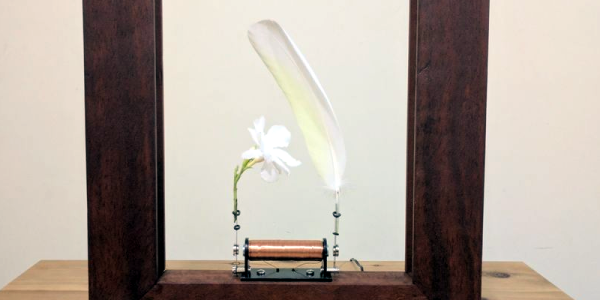
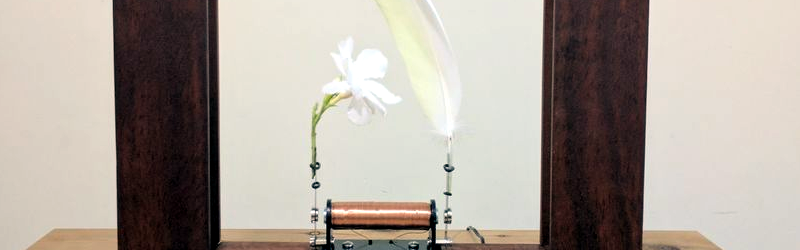
[Paul] created a frame that uses an Arduino and LEDs to create a slow motion illusion of a delicate item (like a flower or a feather). The effect is striking as you can see in the video below.

[Paul] had seen similar projects (both one-offs and sold as a product), but wanted to do his own take on it. The principle is simple: The device vibrates the objects at one frequency and strobes LEDs at a slightly different frequency (80 and 79.5 Hz, in this case). The difference between the frequencies (the beat frequency) is what your eye perceives as a very slow (0.5 Hz, here) motion.

Continue reading “Slow Motion Frame Will Be The New Magic Mirror”