A Stackable Planetary Gearbox You Can Print At Home

In one little corner of YouTube is a small but vibrant community sharing videos about gearboxes of their own design, particularly those with very high ratios or other quirky features. Adherents of the subculture are known as gearheads, and [Let’s Print] is among them. His latest creation is a 3D printed planetary gearbox design with a focus on easy assembly and versatile ratio choice. (Video, embedded below.)

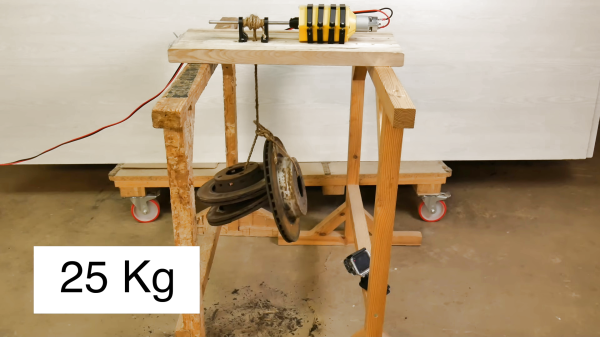
The gearbox came about as [Let’s Print] grew weary of designing bespoke geartrains for each of their individual projects.  The planetary design they landed on has the benefit of being stackable, with each reduction block fitted adding a 1:3 stepdown to the train.

For testing purposes, four stages were ganged up for a total reduction ratio of 1:81. The resulting gearbox was able to lift 40 kg before its output coupler failed, no mean feat for some plastic squirted out of a hot nozzle. It’s a common problem with huge ratio gearboxes made out of plastic – often, the very components of the gearbox can’t hold up to the huge loads generated.

Regardless of the limitations of the material, we’re sure the gearbox will prove useful in future projects from [Let’s Print]. We’ve seen other tough 3D printed gearbox builds before too, such as this anvil-lifter from the aptly-named [Gear Down For What]. Dive into the online gearbox subculture yourself.

Continue reading “A Stackable Planetary Gearbox You Can Print At Home” →
Keep An Eye On Your Bike With This DIY GPS Tracker

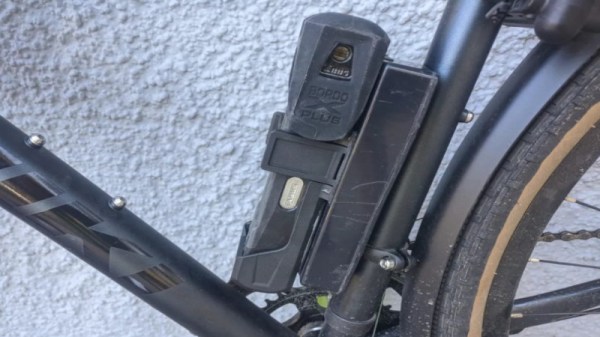
Owning a bike and commuting on it regularly is a great way to end up with your bike getting stolen, unfortunately. It can be a frustrating experience, and it can be particularly difficult to track a bike down once it’s vanished. [Johan] didn’t want to be caught out, however, and thus built a compact GPS tracker to give himself a fighting chance to hang on to his ride.

It’s built around the Arduino MKR GSM, a special Arduino built specifically for Internet of Things project. Sporting a cellular modem onboard, it can communicate with GSM and 3G networks out of the box. It’s paired with the MKR GPS shield to determine the bike’s location, and a ADXL345 3-axis accelerometer to detect movement. When unauthorised movement is detected, the tracker can send out text messages via cellular connection in order to help the owner track down the missing bike.

The tracker goes for a stealth installation, giving up the deterrent factor in order to lessen the chance of a thief damaging or disabling the hardware. It’s a project that should give [Johan] some peace of mind, though of course knowing where the bike is, and getting it back, are two different things entirely. We’ve seen creative techniques to build trackers for cats, too. It used to be the case that such “tracking devices” were the preserve of movies alone, but no longer. If you’ve got your own build, be sure to let us know on the tipline!


Toyota’s Hydrogen-Burning Racecar Soon To Hit The Track

With the rise of usable electric cars in the marketplace, and markets around the world slowly phasing out the sale of fossil fuel cars, you could be forgiven for thinking that the age of the internal combustion engine is coming to an end. History is rarely so cut and dry, however, and new technologies aim to keep the combustion engine alive for some time yet.

Toyota’s upcoming Corolla Sport-based hydrogen-burning racer. Credit: Toyota media

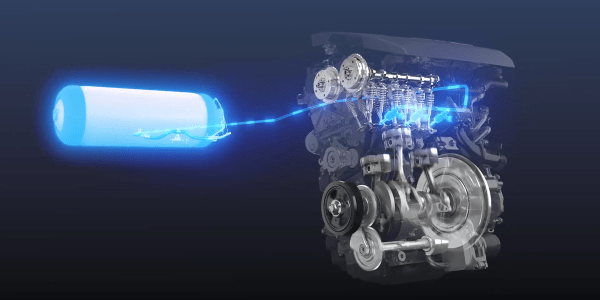
One of the most interesting technologies in this area are hydrogen-burning combustion engines. In contrast to fuel cell technologies, which combine hydrogen with oxygen through special membranes in order to create electricity, these engines do it the old fashioned way – in flames. Toyota has recently been exploring the technology, and has announced a racecar sporting a three-cylinder hydrogen-burning engine will compete in this year’s Fuji Super TEC 24 Hour race.

Hydrogen Engines?

The benefit of a hydrogen-burning engine is that unlike burning fossil fuels, the emissions from burning hydrogen are remarkably clean. Burning hydrogen in pure oxygen produces only water as a byproduct. When burned in atmospheric air, the result is much the same, albeit with small amounts of nitrogen oxides produced. Thus, there’s great incentive to explore the substitution of existing transportation fuels with hydrogen. It’s a potential way to reduce pollution output while avoiding the hassles of long recharge times with battery electric technologies. Continue reading “Toyota’s Hydrogen-Burning Racecar Soon To Hit The Track” →

Hybrid Rocket Engine Combines Ceramic Aerospike With 3D Printed Fuel

[Integza] has worked hard over the last year, crafting a variety of types of rocket and jet engine, primarily using 3D printed parts. Due to the weaknesses of plastic, all of which conflict with the general material requirements for an engine that gets hot, he has had less thrust and more meltdowns than he would have liked. Undeterred, he presses on, now with a hybrid rocket aerospike design. The goal? Actually generating some thrust for once!

The latest project makes the most of what [Integza] has learned. The aerospike nozzle is 3D printed, but out of a special thick ceramic-loaded resin, using a Bison 1000 DLP printer. This allowed [Integza] to print thicker ceramic parts which shrunk less when placed in a kiln, thus negating the cracking experienced with his earlier work. The new nozzle is paired with a steel rocket casing to help contain combustion gases, and the rocket fuel is 3D printed ASA plastic. 3D printing the fuel is particularly cool, as it allows for easy experimentation with grain shape to tune thrust profiles.

With the oxygen pumping, the new design produces some thrust, though [Integza] is yet to instrument the test platform to actually measure results. While the nozzles are still failing over a short period of time, the test burns were far less explosive – and far more propulsive – than his previous efforts. We look forward to further development, and hope [Integza’s] designs one day soar high into the sky. Video after the break.

Continue reading “Hybrid Rocket Engine Combines Ceramic Aerospike With 3D Printed Fuel” →

Testing 3D Printed Worm Gears

Worm gears are great if you have a low-speed, high-torque application in which you don’t need to backdrive. [Let’s Print] decided to see if they could print their own worm gear drives that would actually be usable in practice. The testing is enlightening for anyone looking to use 3D printed gearsets. (Video, embedded below.)

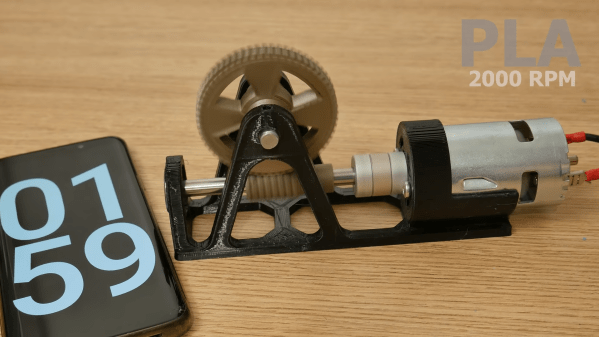
The testing involved printing worm gears on an FDM machine, in a variety of positions on the print bed in order to determine the impact of layer orientations on performance. Materials used were ABS, PLA and PETG. Testing conditions involved running a paired worm gear and worm wheel at various rotational speeds to determine if the plastic parts would heat up or otherwise fail when running.

The major upshot of the testing was that, unlubricated, gears in each material failed in under two minutes at 8,000 RPM. However, with adequate lubrication from a plastic-safe grease, each gearset was able to run for over ten minutes at 12,000 RPM. This makes sense, given the high friction typical in worm gear designs. However, it does bear noting that there was little to no load placed on the gear train. We’d love to see the testing done again with the drive doing some real work.

It also bears noting that worm drives typically don’t run at 12,000 RPM, but hey – it’s actually quite fun to watch. We’ve featured some 3D printed gearboxes before too, pulling off some impressive feats. Video after the break.

Continue reading “Testing 3D Printed Worm Gears” →

Play Your Favorite Nokia Game On The Raspberry Pi Pico

In many people’s memories, Snake lived and breathed on Nokia handsets from the late 90s and early 2000s. However, the game has been around for much longer than that, and will continue to live on in the future. That’s at least in part thanks to people like [Hari Wiguna] keeping it alive by implementing it on new platforms.

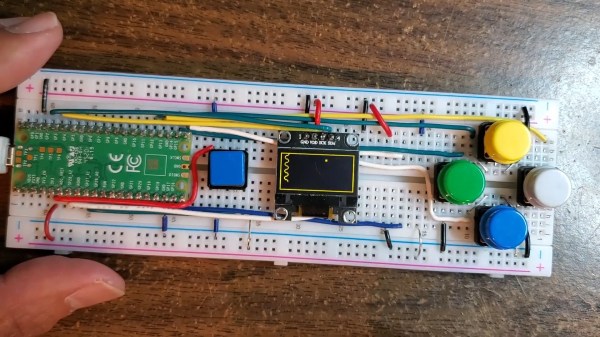
[Hari] set about writing Snake in MicroPython for the Raspberry Pi Pico. The hardware side of things is simple enough – five buttons hooked up to the Pico, along with an 128×64 I2C OLED screen to display the game on. On the software side of things, [Hari] pushed the boat out, deciding that his version of Snake had to have the player character slither like the real thing. This took a little effort to get right, particularly when navigating corners in different directions. However, perseverance paid off and [Hari] got the job done.

Code is on GitHub for those that want to tinker at home. It’s a tidy piece of work, though not the weirdest place we’ve seen the game appear – we’ve actually seen it run within PCB routing software before thanks to some nifty scripting. Video after the break. Continue reading “Play Your Favorite Nokia Game On The Raspberry Pi Pico” →

TrueTape64 Is A PC Interface For Your C64 Datasette

Back in the distant past of the 1980s, software was distributed on audio tape. Ones and zeroes were encoded as tones of different frequencies, and tapes were decoded by specialised hardware which could then spit out raw digital data to an attached computer. While software methods now exist to simply record audio from old tapes and turn them into data, [Francesco] wanted to do it the hardware way, and built a PC interface for his Commodore 64 Datasette.

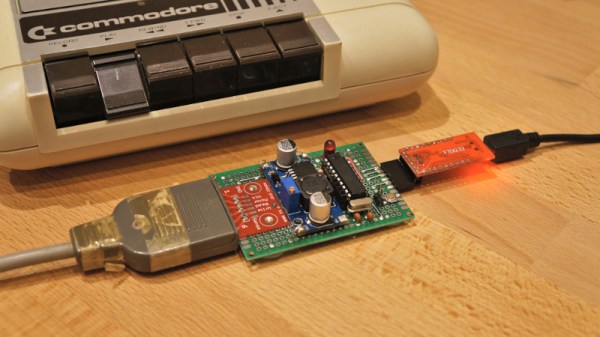
The TrueTape64, as it has been named, is built around an Atmel ATTiny2313 microcontroller. This interfaces with the original Datasette hardware which takes care of reading the analog tape output and turning it into digital data. From there, the microcontroller communicates with an FTDI232 serial-to-USB adapter to get the data into a modern PC, where it’s compiled into a TAP image file via some Python magic.

It’s a barebones build, which goes so far as to run the Datasette’s motor off the USB power supply via a boost converter; those facing issues with the tape mechanism might do well to look there first. However, it does work, and a done job is a good job at the end of the day. We’ve seen similar hacks before, too – it’s great to see the community keeping cassette software alive!