LEDSpicer Is An Open Source Light Controller For Your Arcade Machine

In this day and age of cheap and easy emulation, it’s more tempting than ever to undertake a home arcade cabinet build. If you want to show off, it’s got to have a light show to really pull the crowds in. To make that easier, [Patricio] put together a software package by the name of LEDSpicer.

The project came about when [Patricio] was working on his Linux-based MAME cabinet, and realised there were limited software options to control his Ultimarc LED board. As the existing solutions lacked features, it was time to get coding.

LEDSpicer runs on Linux only, and requires compilation, but that’s not a huge hurdle for the average MAME fanatic. It comes with a wide variety of animations, as well as tools for creating attract modes and managing LEDs during gameplay. There are even audio-reactive modes available for your gaming pleasure. It’s open source too, so it’s easy to tinker with if there’s something you’d like to add yourself.

It’s a great package that should help many arcade builders out there. LEDs can be used to great effect on a cabinet build; this marquee is a particularly good example. Video after the break.

[Thanks to Guillermo for the tip!]

Continue reading “LEDSpicer Is An Open Source Light Controller For Your Arcade Machine”

Well-Built Sentry Gun Addresses The Menace Of Indoor Micro-UAVs

What is this world coming to when you can’t even enjoy sitting in your living room without some jamoke flying a drone in through the window? Is nothing sacred? Won’t someone think of the children?

Apparently [Drew Pilcher] did, and the result is this anti-drone sentry gun.  It’s a sturdily built machine – one might even say it’s overbuilt. The gimbal is made from machined steel pieces, and the swivels are a pair of Sherline stepper-controlled rotary tables with 1/40 of a degree accuracy selling for $400 each. Riding atop that is a Nerf rifle, which is cocked by a stepper-actuated linear slide, as well as a Kinect for object tracking. The tracking app is a little rough – just OpenCV hacked onto the Kinect SDK – but good enough for testing. The gun tracks as smoothly as one would expect given the expensive hardware, and the auto-cocking feature works well if a bit slowly. Based as it is on Nerf technology, this sentry is only indicated for the control of the micro-drones seen in the snuff video below, but really, anyone afflicted by indoor infestations of Phantoms or Mavics has bigger problems to worry about.

Over-engineered? Perhaps, but it’s better than letting the menace of indoor drones go unanswered. And it’s far from the first sentry gun we’ve seen, targeting everything from cats to squirrels using lasers, paintballs, and even plain water.

Continue reading “Well-Built Sentry Gun Addresses The Menace Of Indoor Micro-UAVs”

Hackaday Superconference: Rob Ryan Silva On Designing For Developing Environments

Throughout the six years of the Hackaday Prize we have seen a stream of projects tackling all manner of applications and challenges. Many of them have a goal of addressing issues faced by people in developing countries, and this was the topic upon which Rob Ryan Silva spoke at the Hackaday Superconference.

Rob’s perspective is an interesting one: he runs the maker lab at Development Alternatives Incorporated, or DAI, who are best described as a specialist contractor in the international development sector. Thus while many of the Prize entrants are hardware hackers who have become involved in development related projects, he is a development specialist who has made the opposite journey to becoming a hardware hacker.

Join me below for the video of Rob’s talk and a deep dive into it. Also of note, tickets for the 2019 Hackaday Superconference are now available, the Call for Proposals is now open, and of course, the 2019 Hackaday Prize is ready for your entry! Okay, now onto Rob’s talk.

Continue reading “Hackaday Superconference: Rob Ryan Silva On Designing For Developing Environments”

Up Your Game With A Battle Tested Input Device

If you’re looking to add some realism to your flight setup without converting the guest bedroom into a full-scale cockpit simulator, you might be interested in the compromise [MelkorsGreatestHits] came up with. He bolted a genuine military keypad to his PC joystick and instantly added 100% more Top Gun to his desktop.

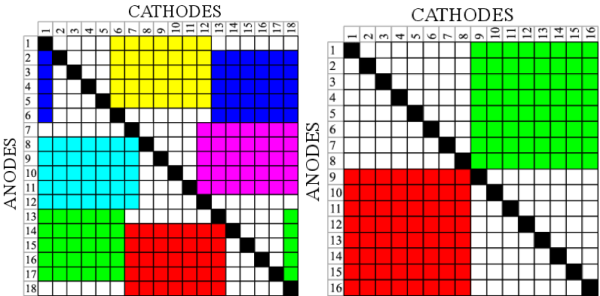
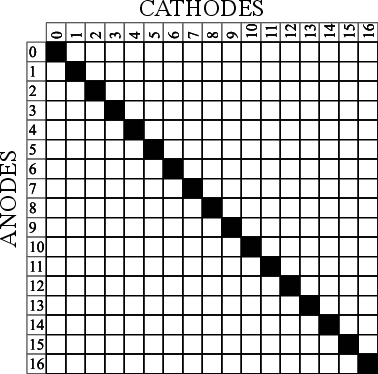
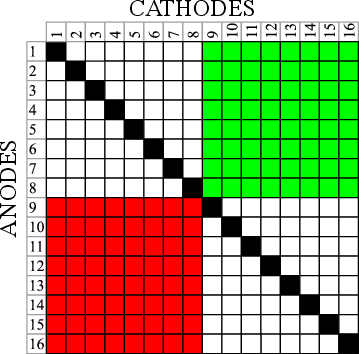
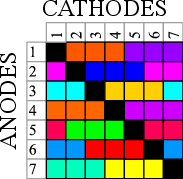
The Rockwell Collins manufactured keypad came from eBay, and appears to have been used in aircraft such as the EA-6B Prowler and Lockheed C-130 Hercules for data input. Each key on the pad is wired to the 37 pin connector on the rear, which [MelkorsGreatestHits] eventually mapped out after some painstaking work with a breakout board.

Once the matrix was figured out, he made up a cable that would go from the connector to a Teensy 2.0 microcontroller. The Teensy reads the keypad status and converts button presses over to standard USB HID that can be picked up in any game.

The joystick side of the build is a VKB Gunfighter, which is already a pretty nice piece of kit on its own. No modifications were necessary to the joystick itself, other than the fact that it’s now mounted to the top of a black project enclosure. It still connects directly to the computer via its original USB cable, as the keypad has its own separate connection. As luck would have it, the joystick is almost a perfect fit in the opening on the keypad, which presumably would have been for a small screen when installed in the aircraft.

Finding cockpit components from military aircraft on eBay is not as hard as you may think; something to keep in mind if you ever decide to tackle that custom flight simulator build.

Perovskites: Not Just For Solar Cells Anymore

If you’ve been around long enough, you’ll know there’s a long history of advances in materials science that get blown far out of proportion by both the technical and the popular media. Most of the recent ones seem to center on the chemistry of carbon, particularly graphene and nanotubes. Head back a little in time and superconductors were all the rage, and before that it was advanced ceramics, semiconductors, and synthetic diamonds. There’s always some new miracle material to be breathlessly and endlessly reported on by the media, with hopeful tales of how one or the other will be our salvation from <insert catastrophe du jour here>.

While there’s no denying that each of these materials has led to huge advancements in science, industry, and the quality of life for billions, the development cycle from lab to commercialization is generally a tad slower than the press would have one believe. And so when a new material starts to gain traction in the headlines, as perovskites have recently, we feel like it’s a good opportunity to take a close look, to try to smooth out the ups and downs of the hype curve and manage expectations.

Continue reading “Perovskites: Not Just For Solar Cells Anymore”

Self-Cleaning Camera Lens Makes For Speckle-Free Video

People making videos about machining have a problem: the coolant gets everywhere. When you take a video to show the process of creating a device, the milky gunk that keeps everything cool gets all over your camera lens. AvE is experimenting with an interesting fix for this problem, with a self-cleaning camera lens. (Video embedded below, some salty language.) His prototype uses a spinning piece of clear PVC mounted on BB gun pellets, driven by compressed air. The camera can see through this spinning piece, but when the coolant hits the spinning piece, it is thrown off.

Continue reading “Self-Cleaning Camera Lens Makes For Speckle-Free Video”

SOICbite: A Program/Debug Connector For An SOIC Test Clip

The problem is well-known: programming and debug headers consume valuable board space and the connectors cost money. Especially troublesome are the ubiquitous 100-mil pin headers, not because they’re expensive, but because they’re huge, especially along the z-axis. If you’re building miniature devices, these things can take up a ridiculous amount of space. With some clever thinking, [Simon Merrett] has found a way to re-use something many of us already have — an SOIC-8 test clip — to connect to a special footprint on the PCB without requiring another connector. He calls the system SOICbite.

The SOIC clip attaches to a footprint consisting of eight pads, four on each side of the PCB, plus five non-plated-through holes, which serve to anchor the clip in place. The idea of mating a PCB footprint directly with a removable connector isn’t entirely new — Tag Connect has been doing this for a while, but the connectors are expensive and single-sourced. On the other hand, SOIC test clips of varying quality are available from a number of vendors, including dirt-cheap deals on your favorite websites. The one disadvantage we can see is that the SOICbite footprint must be at the edge of the PCB to properly mate with the clip. The savings in space and cost may well make up for this, however.

[Simon] has made his KiCAD footprint available in a GitHub repo, and has offered to host footprints for any other CAD package there as well. So, fire up your preferred tool and draw one up for him to get these things widely adopted, because we think this is a great idea.

For the commercial alternative, check out our coverage of Tag Connect back in 2014.