Fixing A Tractor Dashboard From Over 10,000 Miles Away

[BuyItFixIt] is well known as a dab hand at, well, fixing things… and presumably buying them, too. Recently, they received an email calling for help of the former kind. One of their Australian viewers owned the same model of tractor, but with a dead digital dash. Thankfully, help was at hand!

The problem turned out to be due to a dead EEPROM on the Australian tractor. In contrast, [BuyItFixIt] had a perfectly working dashboard on their tractor. Thus, they set about disassembling the dash and dumping the EEPROM to try and sort the stricken farm implement. This posed some risk of ending up with two dead dashboards, necessitating a careful hand. In any case, the Case tractor had a fairly simple dash with a majority of through-hole components, making it fairly easy to work with. The Microchip 93LC46B chip was in a DIP package, and was removed with the aid of some low-melting point solder in short order. The contents of the EEPROM were then dumped to a file using a XGecu T48 programmer.

With the file sent off via email, the Australian tractor owner flashed a fresh EEPROM and reinstalled it in their cluster. They were greeted with success, with the only complication being that the hours reading on the cluster had to be corrected to match the previous reading on their machine.

It’s a fairly simple story of fixing an embedded system, but it’s an educational one. It also comes with a deeper dive into how the CASE dashboard works. Just about anyone with basic electronic skills could pull this off and save an entire tractor in the process. It’s great to see these jobs documented so that we can all learn useful basic skills like these. Video after the break.

Continue reading “Fixing A Tractor Dashboard From Over 10,000 Miles Away”
Resistor Color Code Clock Is A Bit Of Fun

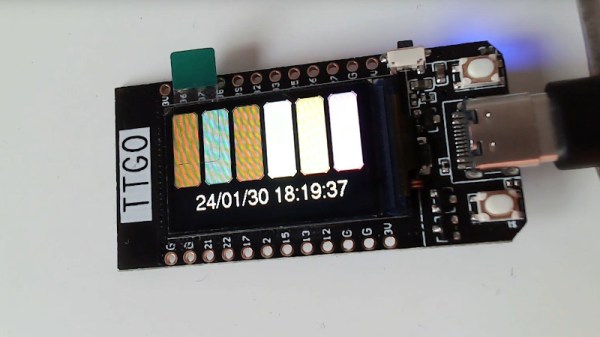
Younger electronic engineers may see resistors with old-style color codes to display their values a little less than those from previous years, but if there’s a shibboleth among those who wield a soldering iron it’s probably something similar to instinctively saying “1K” when asked “Brown-black-red?”. Colors as numbers can be used outside resistors, for example in a clock, as [Det Builds Stuff] shows us with an ESP32 TFT dev board.

It’s fair to say that this is more of a software project than a hardware one, but that’s not necessarily a bad thing as he takes us though the process of creating a Network Time Protocol (NTP) capable clock with the dev board. He claims it may be the world’s first resistor clock, something we’d have to disagree with, but beside that we can see this could make a neat little desk ornament with a 3D printed case.

Oddly though, we’d expect older engineers to face the same steep learning curve as younger ones when reading it, because it’s easier to recognize visual sequences of numbers as preferred resistor values than it is to visually decode each one every time.

Continue reading “Resistor Color Code Clock Is A Bit Of Fun”

Electric Boomerang Does Laps

Boomerangs are known for their unique ability to circle back to the thrower, but what if you could harness this characteristic for powered for free flight? In a project that spins the traditional in a new direction, [RCLifeOn] electrifies a boomerang to make it fly laps.

The project started with several of the 3D printed boomerang designs floating around on the internet, and adding motor mounts to the tips. [RCLifeOn] is no stranger to RC adventures, and his stockpile of spare parts from previous flying and floating projects proved invaluable. He added motor mounts and mounted all the electronics, including a RC receiver for controlling the throttle,  but first iteration didn’t have enough lift, so the boomerang and motors were scaled up.

[RCLifeOn] launched the contraptions by letting them spin on the end of a stick until they achieve lift-off. The second iteration still couldn’t quite get into the air, but after increasing the blade angles using a heat gun it was flying laps around the field.

Although we’ve seen spinning drones that are controllable, it would be no small control systems challenge to make it completely RC controlled. In the meantime this project is a fun, if somewhat risky way to mix the traditional with modern tech.

Continue reading “Electric Boomerang Does Laps”

Satellite Provides Detailed Data On Antarctic Ice

Ever since the first satellites started imaging the Earth, scientists have been using the data gathered to learn more about our planet and improve the lives of its inhabitants. From weather forecasting to improving crop yields, satellites have been put to work in a wide array of tasks. The data they gather can go beyond imaging as well. A new Chinese satellite known as Fengyun-3E is using some novel approaches to monitor Antarctic sea ice in order to help scientists better understand the changing climate at the poles.

While it is equipped with a number of other sensors, one of the more intriguing is a piece of equipment called WindRad which uses radar to measure wind at various locations and altitudes based on how the radar waves bounce off of the atmosphere at various places.  Scientists have also been able to use this sensor to monitor sea ice, and can use the data gathered to distinguish new sea ice from ice which is many years old, allowing them to better understand ice formation and loss at the poles. It’s also the first weather satellite to be placed in an early morning orbit, allowing it to use the long shadows cast by the sun on objects on Earth’s surface to gather more information than a satellite in other orbits might be able to.

With plenty of other imaging sensors on board and a polar orbit, it has other missions beyond monitoring sea ice. But the data that it gathers around Antarctica should give scientists more information to improve climate models and understand the behavior of sea ice at a deeper level. Weather data from satellites like these isn’t always confined to academia, though. Plenty of weather satellites broadcast their maps and data unencrypted on radio bands that anyone can access.

This Week In Security: Glibc, Ivanti, Jenkins, And Runc

There’s a fun buffer overflow problem in the Glibc __vsyslog_internal() function. This one’s a real rollercoaster, because logging vulnerabilities are always scary, but at a first look, it seems nearly impossible to exploit. The vulnerability relies on a very long program name, which can overflow an internal buffer. No binaries are going to have a name longer than 1024 bytes, so there’s no problem, right?

Let’s talk about argv. That’s the list of arguments that gets passed into the main() function of every Linux binary when it launches. The first string in that list is the binary name — except that’s a convention, and not particularly enforced anywhere. What really happens is that the execve() system call sets that list of strings. The first argument can be anything, making this an attacker-controlled value. And it doesn’t matter what the program is trying to write to the log, because the vulnerability triggers simply by writing the process name to a buffer.

There is a one-liner to test for a vulnerable Glibc:

exec -a "`printf '%0128000x' 1`" /usr/bin/su < /dev/null

and the Qualys write-up indicates that it can be used for an escalation of privilege attack. The good news is this seems to be a local-only attack. And on top of that, a pair of other lesser severity issues were found and fixed in glibc while fixing this one.
Continue reading “This Week In Security: Glibc, Ivanti, Jenkins, And Runc”

Fixing A Malfunctioning Keithley Model 179 Digital Multimeter

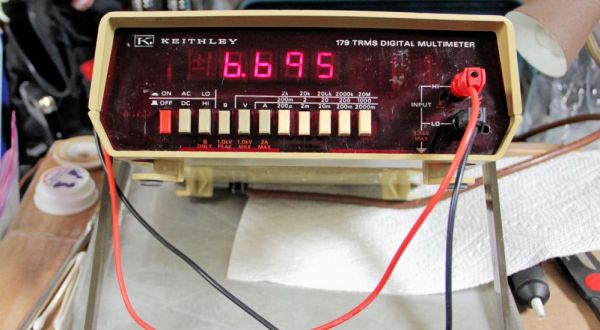
Inspired by electronics repair videos on YouTube, [Steven Leibson] recently found himself hunting down something to fix on eBay. This ‘something’ ended up being a  certified classic: a Keithley Model 179 digital multimeter from 1978. Listed as non-functional, the unit arrived at his door for less than $50. There weren’t any exciting pops or smoke when he powered it on, but the display seemed to be showing nothing but random nonsense.

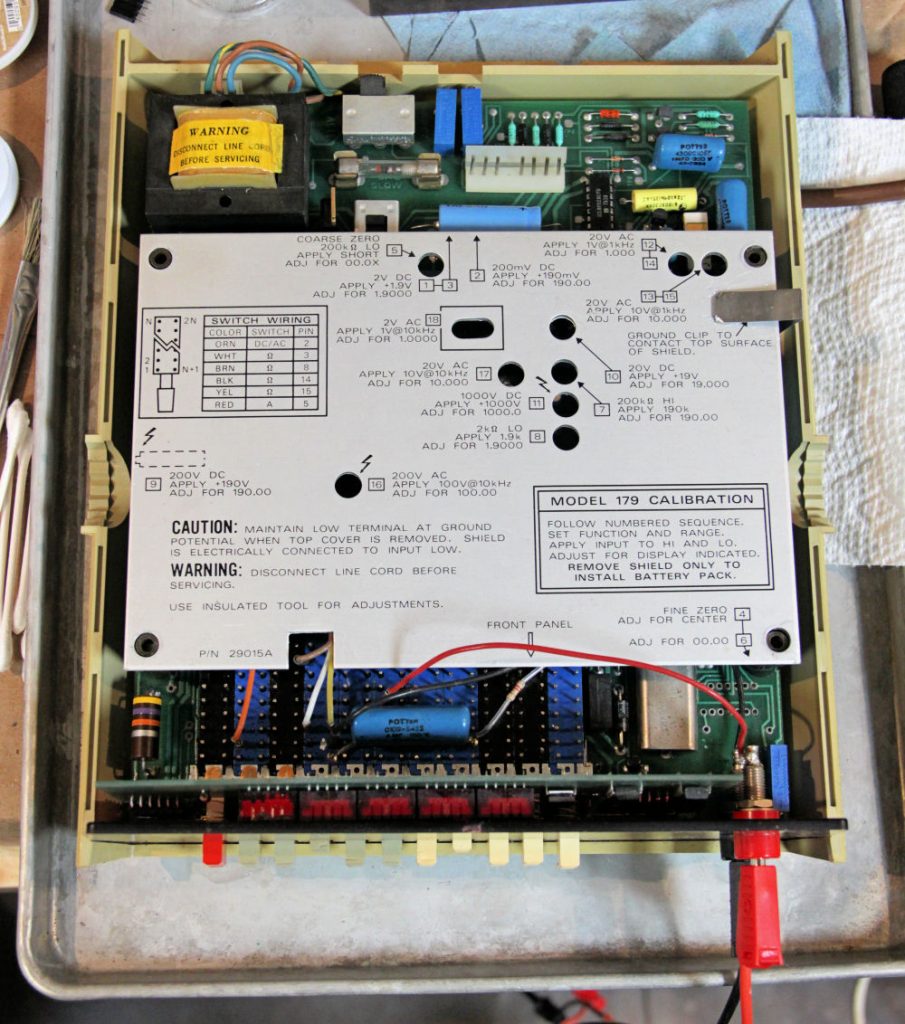
The Keithley Model 179 multimeter has a convenient calibration sequence printed on its electrostatic shield cover and a deadly exposed ac line fuse in the upper left part of the photo. (Image credit: Steven Leibson)
The meter has a convenient calibration sequence printed on its electrostatic shield cover and a deadly exposed AC line fuse in the upper left part of the photo.

Ultimately reviving this little piece of history was quite simple, with the main issue turning out to be a dodgy inter-board connector between the main and display boards. After admiring an old repair attempt made on the component, he removed both the male and female connectors, replacing them with new ones.

This uncovered issues with the PCB, as the FR4 material and the traces on it had begun to delaminate, probably due to the old adhesive giving up due to age. With pretty low trace density this wasn’t anything that a bit of care couldn’t work around, fortunately.

Before finding this dodgy connector, [Steven] first tried to clean the front mechanical connectors, which took multiple sessions. This was followed up by oiling the mechanism. With the connector fixed and some cleaning, the meter’s display now read correctly. It still has some issues with starting up though, which [Steven] reckons are due to the old capacitors in the device.

Presumably some recapping will round off this fun device revival experience, but for the time being a Keithley Model 179 has been saved from e-waste, to inspire generations to come.

Multi-way Capacitor Replacement Without The Pain

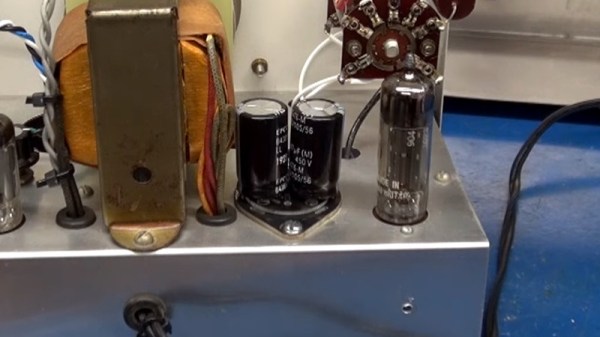
Anyone who’s worked with older tube-based equipment will be familiar with the type of vintage electrolytic capacitor which integrated several capacitors into one can. Long obsolete, they can be bought as reproduction, but unfortunately at an eye-watering price. [D-Lab Electronics] introduces us to a solution using a very useful kit, that it’s worth sharing.

The piece of equipment in the video below the break is a rather lovely Heathkit oscillator, following the familiar phase shift model with a light bulb in its feedback loop. It’s a piece of test equipment that produces a low-distortion sine wave output, and would still be of use to an audio engineer today. He replaces the capacitor with two modern ones on a multi-cap board from [W8AOR], who sells a variety of these kits for different configurations.

We’ve done this very repair more than once, and it has usually involved wiring, heatshrink sleeving, hot glue, and cable ties, looking very messy indeed. It’s not that often that a kit catches our eye as this one has, but we know we’ll be finding it useful here some time in the future. Meanwhile if you’d like to know why this oscillator has a light bulb, take a look at our piece on distortion.

Continue reading “Multi-way Capacitor Replacement Without The Pain”