Smart Watch Hack Lets You Use Your 3.5mm Headphones With An IPhone 7

As you may have heard, the iPhone 7 is ditching the 3.5 mm headphone jack in the name of progress and courage. Whatever your take on that, it leaves the end user out in the cold if — for instance — their preferred headphones still use the old format. Here to save you from an untimely upgrade is YouTuber [Kedar Nimbalkar], who has modified a Bluetooth Smartwatch to incorporate a 3.5 mm jack to allow continued use your current headphones.

After opening up the smartwatch [Nimbalkar] removes the speaker, solders in a 3.5 mm headphone jack and clips out an opening in the watch’s case that maintains the watch’s sleek exterior.

Continue reading “Smart Watch Hack Lets You Use Your 3.5mm Headphones With An IPhone 7”
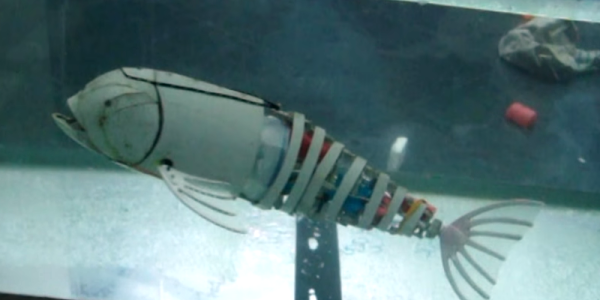
The Arduino Sleeps With The Fishes

[Eric Dirgahayu] wanted to explore underwater with some sensors and cameras. First, he needed a platform to carry them. That led to his Arduino-controlled swimming fish. The fish is made from PVC and some waterproof servos. From the video (see below) it isn’t clear how much control the fish has, but it does swim with an undulating motion like a real fish.

Continue reading “The Arduino Sleeps With The Fishes”

Creating A PCB In Everything: Eagle, Part 2

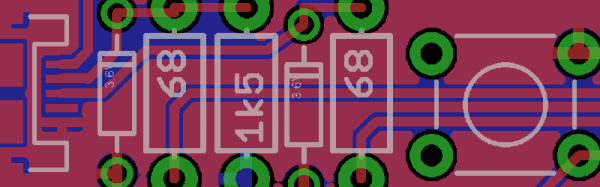
In the last (and first) post in this series, we took a look at Eagle. Specifically, we learned how to create a custom part in Eagle. Our goal isn’t just to make our own parts in Eagle, we want to make schematics, boards, and eventually solder a few PCBs.

The board we’ll be making, like all of the boards made in this Creating A PCB In Everything series, is the Nanite Wesley, a small USB development platform based on the ATtiny85. This board has less than a dozen parts, most of which are through-hole. This is the simplest PCB I can imagine that has sufficient complexity to demonstrate how to make a board.

With that said, let’s get onto the second part of our Eagle tutorial and lay out our circuit board.

Continue reading “Creating A PCB In Everything: Eagle, Part 2”

Join Hackaday For An NYC Meetup

On the eve of the New York Maker Faire, Hackaday is throwing a meetup in the heart of Manhattan. Join us next Thursday for a low-key get-together, a few talks on assistive technologies, and a demo of the coolest new tool in recent memory.

Although these meetups are highly informal (and bringing some of the cool stuff you’ve built is encouraged), we do have a few speakers lined up. Holly Cohen and John Schimmel of DIYAbility are speaking about using homebrew devices for making everyone’s life easier. Johnny Falla of the Enable Community Foundation will give a talk about using 3D printing technology to make hyper-affordable prosthetic devices for underserved populations. Chad Leaman will be representing the Neil Squire Society and will speak about using technology to empower people with disabilities.

As always, snacks and drinks will be provided, and like all Hackaday meetups, bring some cool gear or whatever project you’re working on along with you. This bring-a-hack isn’t a competition, but if it was, we know who would win. Nisan Larea will be attending the meetup, demoing the Wazer desktop waterjet cutter. We caught a glimpse of this machine in San Francisco, and it’s amazing. If you want to see the Wazer waterjet before Maker Faire, this is your chance.

This month’s Hackaday NYC meetup will be at Pivotal Labs, 625 Avenue of the Americas, on Thursday, September 29. It would be really, really cool if you could RSVP beforehand.

This is Hackaday’s pre-game for the World Maker Faire. We’ll be attending, scoping out all the coolest projects and products from this year’s NYC Maker Faire. Find one of the Hackaday crew at the faire, and we’ll hook you up with some swag.

Finding ESP8266 Inside Big-Box Store IoT Plugs

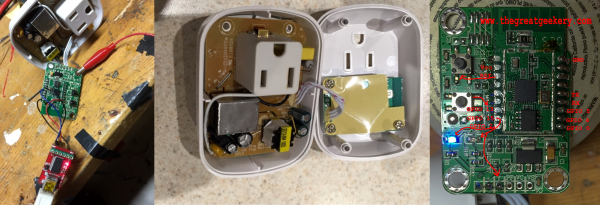
When we buy new shiny toys, we usually open them up to at least have a look. [Scott Gibson] does the same, apparently. He found an ESP8266 module inside the EcoPlug brand WiFi-controlled wall switches.

The original device was intended to be controlled by a (crappy) app. He sniffed the UDP packets enough to send the on-off signals to an unmodified device, but where’s the fun in that? [Scott] gave it an upgrade by replacing the ESP8266’s firmware with his own and now he’s got a much more capable remote switch, one that speaks MQTT like the rest of his home automation system.

Continue reading “Finding ESP8266 Inside Big-Box Store IoT Plugs”

Web Bluetooth: The New Hotness And Its Dangers

Google’s most recent Chrome browser, version 53, includes trial support for Web Bluetooth, and it’s like the Wild West! JavaScript code, served to your browser, can now connect directly to your Bluetooth LE (BTLE) devices, with a whole bunch of caveats that we’ll make clear below.

On the one hand, this is awesome functionality. The browser is the most ubiquitous cross-platform operating system that the world has ever seen. You can serve a website to users running Windows, Linux, Android, iOS, or MacOS and run code on their machines without having to know if it’s a cellphone, a desktop, or a virtual machine in the Matrix. Combining this ubiquity with the ability to control Bluetooth devices is going to be fun. It’s a missing piece of the IoT puzzle.

On the other hand, it’s a security nightmare. It’s bad enough when malicious websites can extract information from files that reside on your computer, but when they connect directly to your lightbulbs, your FitBits, or your BTLE-enhanced pacemaker, it opens up new possibilities for mischief. The good news is that the developers of Web Bluetooth seem to be aware of the risks and are intent on minimizing them, but there are still real concerns. How does security come out in the balance? Read on.

Continue reading “Web Bluetooth: The New Hotness And Its Dangers”

Building Pneumatic Actuators With 3D Printed Molds

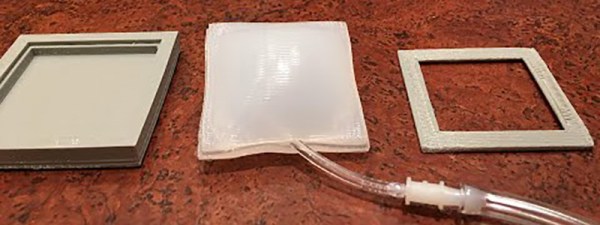
Pneumatic actuators offer interesting perspectives in applications like soft robotics and interaction design. [Aidan Leitch] makes his own pneumatic actuators from silicone rubber. His actuators contain embedded air channels that can be filled with pressurized air and completely collapse to a flat sheet when no pressure is applied. Continue reading “Building Pneumatic Actuators With 3D Printed Molds”