Decentralized Chaos In Germany

When you’re planning an event with 15,000 hackers in a tight space these days, the COVID logistics can take the wind right out of your sails. And so the Chaos Computer Club decided, for one more year, to put aside plans for the traditional year-end Chaos Communications Congress. In it’s place this year? Everyone is doing their own thing, together but apart, for the “Dezentrale Jahresendveranstaltungen”.

Some local clubs are putting on local events, some of them have talk streams, and it’s all happening everywhere and at once. If you’re not near one of the roughly 30 locations in Europe that are doing something live – check out the streams. But be warned, there’s a lot to process!

Maybe it’s best to start with the schedule, where you can see what’s coming up next. Live streams are going on throughout, until Dec 30. If you missed a talk, you can check out the pre-release versions on Relive, but note that start times and end times are approximate, so you might need to seek around. And once they’re edited and polished up, they’ll show up on the permanent event playlist, which is still just getting started as we write this.

Right now, we’re watching a talk in German about how to program laser shows, but yesterday there were some great talks on subjects as varied as the history of the C language, how perimeter cybersecurity is dead, how to find the Norwegian prime minister in an “anonymous” dataset, and how Hackaday friend [Dave Darko] made his LED dodecahedron that he was showing off at Supercon.

In short, there’s a lot going on. Check it out.
Supercon 2022: Mooneer Salem Goes Ham With An ESP32

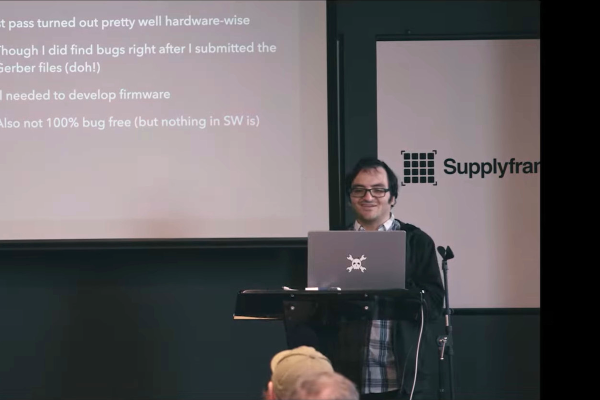
After being licensed as a ham radio operator since the early 2000s, you tend to start thinking about combining your love for the radio with other talents. In a 20-minute talk at Hackaday Supercon 2022, [Mooneer Salem] tells the story of one such passion project that combined software and radio to miniaturize a digital ham radio modulator.

[Mooneer] works as a software developer and contributes to a project called FreeDV (free digital voice), a digital voice mode for HF radio. FreeDV first compresses the digital audio stream, then converts it into a modulation scheme sent out over a radio. The appeal is that this can be understandable down to very low signal-to-noise ratios and includes metadata and all the other niceties that digital signals bring.

Traditionally, this has required a computer to compress the audio and modulate the signal in addition to two sound cards. One card processes the audio in and out of your headset, and another for the audio coming in and out of the radio. [David Rowe] and [Rick Barnich] developed the SM1000, a portable FreeDV adapter based around the STM32F4 microcontroller. However, flash space was running low, and the cost was more than they wanted. Continue reading “Supercon 2022: Mooneer Salem Goes Ham With An ESP32”

Linux Fu: Miller The Killer Makes CSV No Pest

Historically, one of the nice things about Unix and Linux is that everything is a file, and files are just sequences of characters. Of course, modern practice is that everything is not a file, and there is a proliferation of files with some imposed structure. However, if you’ve ever worked on old systems where your file access was by the block, you’ll appreciate the Unix-like files. Classic tools like awk, sed, and grep work with this idea. Files are just characters. But this sometimes has its problems. That’s the motivation behind a tool called Miller, and I think it deserves more attention because, for certain tasks, it is a lifesaver.

The Problem

Consider trying to process a comma-delimited file, known as a CSV file. There are a lot of variations to this type of file. Here’s one that defines two “columns.” I’ve deliberately used different line formats as a test, but most often, you get one format for the entire file:

Slot,String 
A,"Hello" 
"B",Howdy 
"C","Hello Hackaday" 
"D","""Madam, I'm Adam,"" he said." 
E 100,With some spaces!
X,"With a comma, or two, even"

Continue reading “Linux Fu: Miller The Killer Makes CSV No Pest”

Giant Spinning POV Christmas Tree

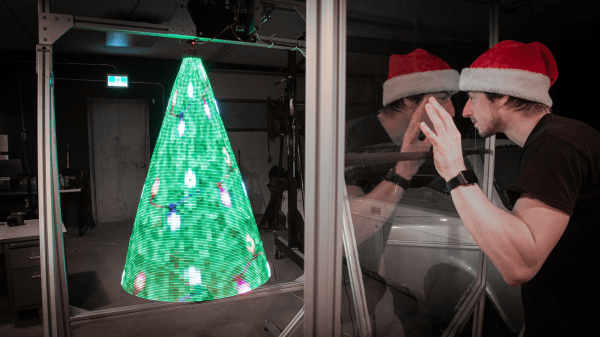
Spinning Holographic POV Christmas Tree Of Death

[Sean Hodgins] really harnessed the holiday spirit to create his very own Giant Spinning Holographic Christmas Tree (of Death). It’s a three-dimensional persistence-of-vision (POV) masterpiece, but as a collection of rapidly spinning metal elements, it’s potentially quite dangerous as well. As [Sean] demonstrates, the system can display other images and animations well beyond the realm of mere holiday trees.

Initial experiments focused on refining the mechanical structure, bearings, and motor. A 1/2 horsepower A.C. motor was selected and then the dimensions of the tree were “trimmed” to optimize a triangular frame that could be rotated at the necessary POV speed by the beefy motor.  A six-wire electrical slip ring allows power and control signaling to be coupled to the tree through its spinning central shaft.

The RGB elements are SK9888 LEDs also know as DotStar LEDs. DotStar LEDs are series-chainable, individually-addressable RGB LEDs similar to NeoPixels. However, with around 50 times the pulse width modulation (PWM) rate, DotStars are more suitable for POV applications than NeoPixels.  The LED chain is driven by a Raspberry Pi 4 single board computer using a clever system for storing image frames.

If deadly rotational velocity is not your cup of tea, consider this slower spinning RGB Christmas tree featuring a DIY slip ring. Or for more POV, may we suggest this minimalist persistence-of-vision display requiring only a few LEDs and an ATtiny CPU.

Continue reading “Spinning Holographic POV Christmas Tree Of Death”

DietPi Releases 8.12 With Support For The Rockchip RK3588 SoC

This month DietPi released version 8.12 of this SBC-oriented Linux distribution. Most notable is the addition of support for the NanoPi R6S and the Radxa ROCK 5B SBCs. The ROCK 5B features the new flagship Rockchip RK3588 SoC with quad Cortex-A76 and quad Cortex-A55. What makes DietPi interesting as an operating system for not just higher end SBCs but also lower-end SBCs compared to options like Debian, Raspberry Pi OS and Armbian is that it has a strong focus on being the most optimized. This translates in a smaller binary size, lower RAM usage and more optimized performance.

The DietPi setup experience is as straightforward as with the aforementioned options, except that right from the bat you get provided with many more options to tweak. While the out of the box experience and hitting okay on the provided defaults is likely to be already more than satisfactory for most users – with something like the optional graphical interface easy to add – enterprising users can tweak details about the hardware, the filesystem and more.

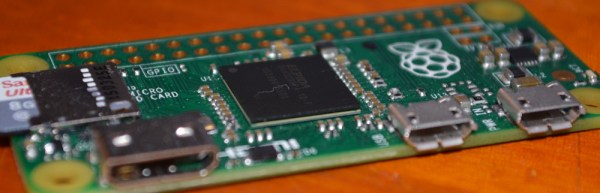
When we set up DietPi on a Raspberry Pi Zero, it definitely feels like a much more light-weight experience than the current Debian Bullseye-based Raspberry Pi OS. Even though DietPi is also based on Debian, it leaves a lot more RAM and storage space free, which is a definite boon when running on a limited platform like a Raspberry Pi Zero. Whether it’s polite to state in public or not, DietPi definitely rubs in that many standard SBC images are rather pudgy these days.

Lo-Fi Fun: Beer Can Microphones

Sometimes, you just need an easy win, right? This is one of those projects. A couple months back, I was looking at my guitars and guitar accessories and thought, it is finally time to do something with the neck I’ve had lying around for years. In trying to decide a suitable body for the slapdash guitar I was about to build, I found myself at a tractor supply store for LEGO-related reasons. (Where else are you going to get a bunch of egg cartons without eating a bunch of eggs?) I  noticed that they happened to also stock ammo boxes. Bam! It’s sturdy, it opens easily, and it’s (very) roughly guitar body shaped. I happily picked one up and started scheming on the way home.

Having never built a cigar box guitar before and being of a certain vintage, I’m inclined to turn to books instead of the Internet, so I stocked up from the library. Among my early choices was Making Poor Man’s Guitars by Shane Speal, who is widely considered to be the guru on the subject. In flipping through the book, I noticed the beer can microphone project and was immediately taken by the aesthetic of some cool old 70s beer can with a 1/4″ instrument jack on the bottom, just asking for some dirty blues to be belted into it. I had to build one. Or twelve.

Continue reading “Lo-Fi Fun: Beer Can Microphones”

All About USB-C: Illegal Adapters

Let’s be clear – it’s not enough to have USB-C to USB-C cables. There’s a lot of cables that we might want to acquire for our day-to-day use, perhaps, for a transition period while we still own some amount of devices not adorned with a USB-C connector. However, the USB-C specification only accounts for a limited amount of kinds of cables, explicitly or implicitly excluding a range of cables that you might want to buy or make.

It’s my firm belief that, as a hacker, you should be able to buy any USB-C contraption that you could ever need. Hackers don’t need restrictions driven by marketing – they need understanding of how a piece of tech can or cannot be used, based on how it operates internally. I would like you to provide with such understanding, so that you can make informed decisions.

On the other hand, USB-C is designed to be used by less-than-skilled people, even if it often fails at that. (Cable labelling, anyone?) Clear definitions of what complies to a standard can help enforce it. Here’s the notorious story of a USB-C cable that killed a Chromebook, and launched a career of explaining USB-C specifics online for [Benson Leung]. There’s many such failure stories, in fact. Today, we’ll go through USB-C contraptions which might or might not fail you, depending on how you use them. Continue reading “All About USB-C: Illegal Adapters”