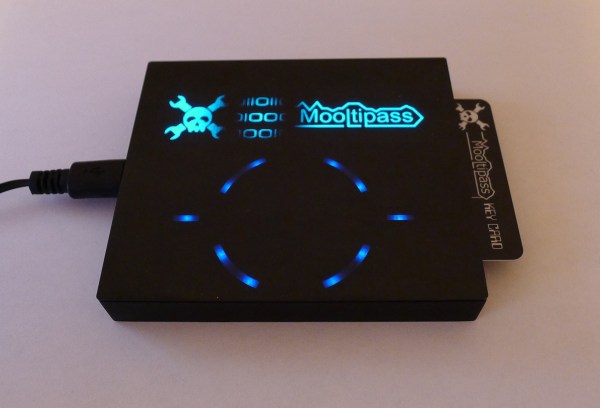

We’re pretty sure that most of our readers already know it by now, but we’ll tell you anyway: the Hackaday community (writers and readers) is currently developing an offline password keeper, the Mooltipass. A month ago we published our first demonstration video and since then the development team has been fairly busy at work.
First things first: we heard (well, read) the comments you left in our previous articles and decided to make a small animation video that will hopefully explain why having an offline password keeper is a good thing. We welcome you to have a look at our script draft and let us know what you think. We updated our GitHub readme and more importantly our FAQs, so feel free to tell us if there are still some questions you have that we didn’t answer. We finally found a short but yet interesting paper about software based password keepers possible security flaws.
Secondly, a little more than 20 prototypes have successfully been assembled and some beta testers actually already received them. As they financially contributed to their units we offered them the possibility to pick a blue, green, yellow or white OLED screen (see picture above). We therefore expect things to gain speed as we’ll have users (or rather bosses) pushing us to improve our current platform and implement much needed features.
Finally, as I figured some of our readers may be interested, I made a quick video of the prototype assembly process (embedded below). It is still a little sketchy and a few changes will be made to make it simpler for production. We expect these next weeks to be full of interesting events as our beta testers / Hackaday readers will be able to judge the work we’ve been doing for so long. We highly recommend you to subscribe to our official Google group to stay updated with our adventures.
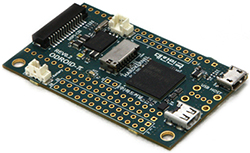 A few years ago, Broadcom had a pretty nice chip – the BCM2835 – that could do 1080 video, had fairly powerful graphics performance, run a *nix at a good click, and was fairly cheap. A Broadcom employee thought, “why don’t we build an educational computer with this” and the Raspberry Pi was born. Since then, Broadcom has kept that chip to themselves, funneling all of them into what has become a very vibrant platform for education, tinkering, and any other project that could use a small Linux board. Recently, Broadcom has started to sell the BCM2835 to anyone who has the cash and from the looks of it,
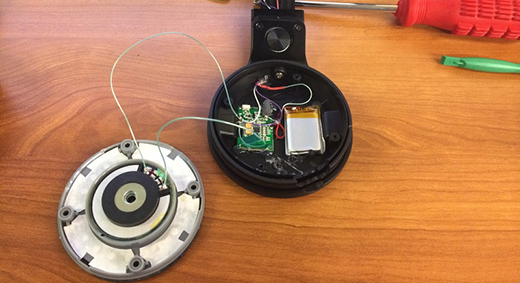
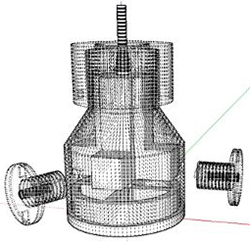 Building electronics with 3D printers is something we see hitting the tip line from time to time, but usually these are printed circuits, not electromechanical parts like motors, solenoids, and relays. [pitrack] thought he could do better than printing out a few blinking LED circuits and
  Late last year at a craft show, [hahabird] and a friend came across a laser-cut Spirograph and they both had a go at it. After mocking his friend’s lack of fine motor skills, [hahabird] was struck with the idea of making
 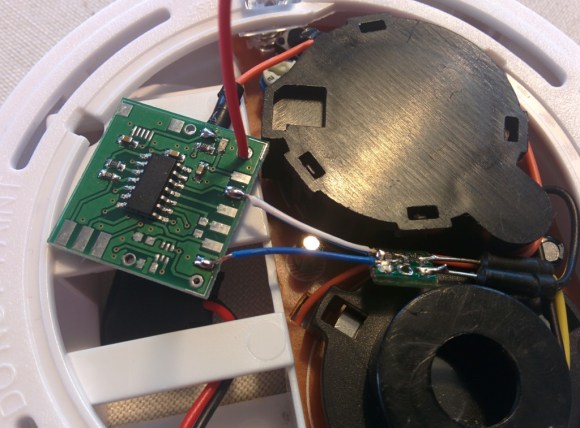 A faulty wire, a discarded burning cigarette, or a left-on curling iron can trigger sparks of fire to engulf everything nearby until all that’s left is brittle mounds of smoldering ash. Which is why smoke detectors are so important. They are life saving devices that can wake people up sleeping inside, well before the silent, but deadly carbon monoxide starts to kick in. But what happens if no one is home, and the alarm begins to blare? The place burns down into the ground without the owners knowing.