A Closer Looks Helps You Build Your Own DiWire Bender

Whether or not you’re actually going to build this CNC wire bender, we think you’ll love getting a closer look at how it’s put together. The team over at PENSA got such a strong response from a look at the original machine that they decided to film a video (embedded after the break) showing how the thing was put together. They’ve also posted a repository with code, bom, etc.

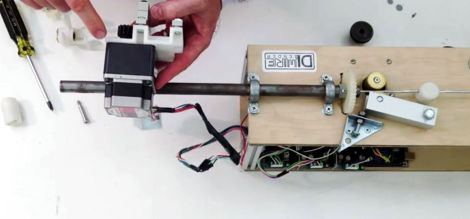
In the image above [Marco] shows off the portion that actually does the bending. It’s designed to mount on the pipe through which the straightened wire is fed. The 3d printed mounting bracket really makes this a lot easier. The assembly provides a place to attach the solenoid which moves a bearing in and out of position. That bearing presses against the wire to do the bending, but must be moved from one side of the wire to the other depending on the direction of the next bend. This is a lot easier to understand after watching the demo video which is also embedded after the break.

Continue reading “A Closer Looks Helps You Build Your Own DiWire Bender”
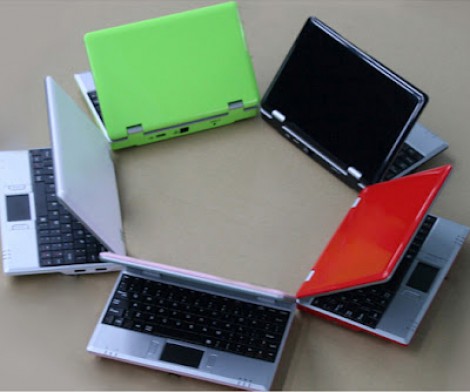
Cheap ARM Netbooks Have Linux Forced Upon Them

[Doragasu] got his hands on one of these WM8650 Netbooks for around 50 euros (~$63.50) delivered. They come with a version of Android preinstalled, but he wanted to use them more like a computer and less like an Android device. So he set out to load Arch Linux on the ARM-based Netbook.

This is possible because the hardware inside is actually pretty good. The 800 MHz SoC is accompanied by 256 megs of RAM. There’s 2 gigs of internal storage, a 7″ display, USB, Ethernet, WiFi, and an audio system. This is comparable to what you’d get with a Raspberry Pi (without video acceleration) but also includes all of those peripherals, a case, a touchpad and keyboard… you get the point. There are several patches that need to be applied to the kernel to get it working with the hardware. [Doragasu] covers each of them in the post linked above. You can also hear his presentation in the video after the break.

Continue reading “Cheap ARM Netbooks Have Linux Forced Upon Them”

Revolight Clone

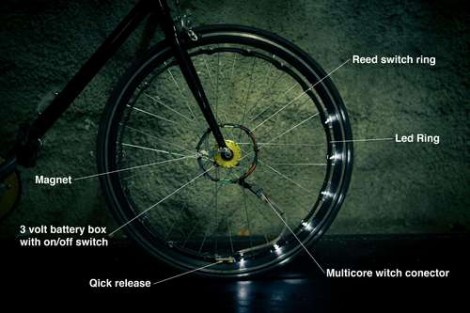
[Fabian.E] wanted to light up the rims on his bike, but didn’t want to shell out a bunch of clams to get it done. He came up with this system which uses magnets and reed switches to light up one arc or each bicycle wheel.

He calls it the lightrider and it’s based on the revolights concept. That design uses a microcontroller which is capable of animating patterns when the wheels aren’t spinning. [Fabian’s] version can’t do that, but the effect while moving is basically the same. The ring of LEDs around the rim is connected to a battery via a set of reed switches. When these switches move past a magnet on the fork it completes the circuit and switches on that segment of LEDs. The clip after the break gives a demonstration of the finished product, and includes a fast-motion video of the fabrication process.

Continue reading “Revolight Clone”

More DIY Solder Flux

[GuShH] wrote a guide for making your own rosin-based solder flux. According to [Stephen] — who sent in the tip and tried this method himself — is works well, it’s cheap, but you will need to clean up a bit after using it on a PCB.

Only two ingredients are necessary to make your own liquid or paste flux: rosin and a solvent. The rosin being weighed in the image above, can be found from several sources. We looked in on the same method quite recently where flux was sourced from a music store. But [GuShH] suggests that if you can find some from a hardware store it is better because the music store variety tends to be ‘molten’ and doesn’t work quite as well.

Proportions are listed on his guide for light, medium, and heavy concoctions. He recommends isopropyl alcohol as the solvent, and has stored the flux in a clear dropper bottle. We’re fans of needle bottles and asked about sourcing them in a previous post (linked in the paragraph above) so check that comments section if you don’t know where to get one.

Communicating From Inside Your Dreams

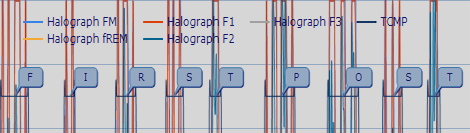
Over the last few years, [Michael] has been working on the Lucid Scribe project, an online sleep research database to document lucid dreams. This project uses a combination of hardware and software to record rapid eye movements while sleeping. Not only is [Michael] able to get his computer to play music when he starts dreaming (thus allowing him to recognize he’s in a dream), he can also communicate from within a dream by blinking his eyes in Morse code.

According to the Lucid Scribe blog, [Michael] and other researchers in the Lucid Scribe project have developed motion-sensing hardware capable of detecting heartbeats. This equipment is also sensitive enough to detect the Rapid Eye Movements associated with dreaming. This hardware feeds data into the Lucid Scribe app and detects when [Michael] is dreaming. Apparently, [Michael] has been practicing his lucid dreaming; he’s actually been able to move his eyes while dreaming to blink our Morse code. The first message from the dreamworld was, of course, “first post”. [Michael] used ‘first post’ to debug his system, but he has managed to blink ‘S’ from a dream. That should improve after he works on his Morse and lucid dreaming skills.

You may now begin referencing Inception in the comments.

Machining Cartridge Connectors From PCI Sockets

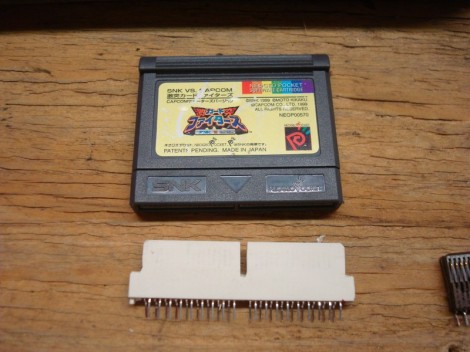
[Ed] needed a bunch of edge connectors for video game cartridges. He was unable to source parts for Neo Geo Pocket games and ended up building his own from PCI sockets. But it sounds like this technique would work with other console cartridges as well.

From the picture you can see that this is a bit more involved than just slapping a cartridge into a socket. Because there are multiple steps, and many connectors were needed, [Ed’s] dad lent a hand and built a few jigs to help with the cutting. The first step was to cut off the key and the narrow end of the socket. These NGP cartridges are one-sided, so the socket was cut in half using a board with a dado cut in it as a jig. From there the plastic bits can be cleaned up before pulling out two center pins and cutting a groove to receive the cartridge key. There are also two shoulder cuts that need to be made after trimming the piece to length. The video after the break will walk you through this whole process.

These PCI sockets are versatile. One of our other favorite hacks used them to make SOIC programming clips.

Continue reading “Machining Cartridge Connectors From PCI Sockets”

Parallax Shows Love For Open Source: GCC + Propeller

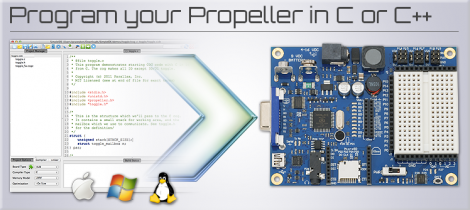
Parallax has done something that is unthinkable for most microcontroller manufacturing companies. They’ve decided to throw their support behind an open source toolchain based on GCC. That’s right, instead of fighting to get your code compiling on a platform whose example code uses crippleware, you can actually download, compile, and start using this toolchain without code size restrictions or other unfavorable limitations.

Why does this matter? One example that comes to mind is ChibiOS and the STM32F0-Discovery board. We’ve been playing around with that board recently and found out that the Atollic 8k code-size limitation prevents you from debugging ChibiOS. So you either pony up the registration fee, or go though at least a little pain (a lot depending on your skill level) to move to an open source solution. Here that’s not going to happen because you start with a GCC option from the word ‘Go’.

So join us in a round of applause for good decisions. Bravo Parallax! This Beta test targets the P8X32A Propeller chip but we hope it’s so popular that the rest of the line gets its own support.

[Thanks Devlin via Adafruit]