Monome Keyboard


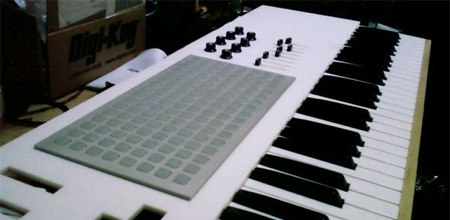
If you asked [David Phipps] whether he prefers Monomes or traditional keyboards, he might ask you “why not have both?” We don’t presume to speak for him, but that’s what we think he’d say based on his Monome-keyboard combination, which puts a Monome right in the keyboard’s console, giving the user the best of both worlds.

[Phipps] calls his device The Peaceblaster (also the name of his album), and it is constructed from a 5-octave Fatar keybed, MKE electronic components, and a Doepfer PKE for the faders and knobs. Everything is available via USB and MIDI out. The project is as yet unfinished, and he hopes to fit a mac mini into the works. If he succeeds, this will be one of the most elegant, powerful and fun keyboards we’ve seen in quite some time.

Reusing PCB Components


If you’re anything like us, you have a closet full of old electronics, some broken, some obsolete. You can stop using those as paperweights with the help of this guide that shows you how to recycle and reuse PCB components.

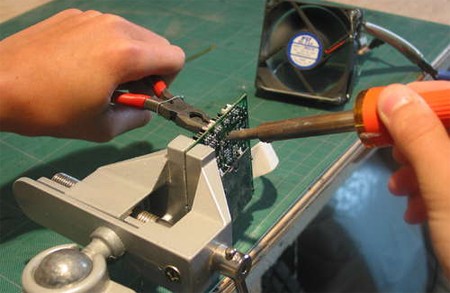
The first step of the process is finding electronics you don’t mind taking apart. Next place the PCB you’ll be stripping in a vice, with the components facing away from you and the solder side facing towards you. Grip the component you want with a pair of pliers, and apply a hot soldering iron to the solder that is holding the component. The solder will melt and allow you to safely and cleanly remove the component.

This process can be applied to virtually any component on an PCB, and the author of the guide, [Patented], got a lot of components this way, including resistors, capacitors, switches, audio jacks, and much more. Don’t forget to toss any free-floating metal or plastic parts in the recycle bin when you’re done. You can feel good about the fact that nothing was wasted, you found parts for your next project, and you cleared out some space.

Portable NES In An NES Cartridge


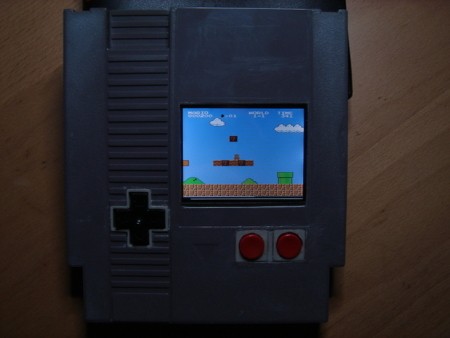
Fresh off the tips line, [Jake] sent in his portable NES project. We’ve seen quite a few portables, but we love that the entire thing is built into an old NES cartridge. It’s got 99 games and some clever control placement. Three N cells nestled in the former connector slot power the system. You can see more pic over at [Ben Heck]’s forum.

ThingamaKIT: Make Your Own Thingamagoop


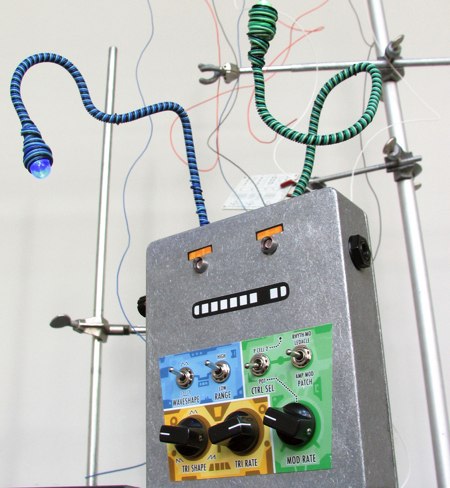
Bleep Labs’ Thingamagoop is a small synthesizer packed with wacky controls for generating unique sounds; you can now build an expanded version yourself with the ThingamaKit. Made “because there are not nearly enough beeping, zapping, bixxerfouping, anthropomorphic synthesizer monsters in the world,” it generates sounds of different pitches depending on the type and intensity of light hitting a photocell on the front panel. It’s most unique feature, is its LEDacle, which is something like a tentacle with an LED on the end. This can be pointed towards the photocell to modulate the sound. Output is through a 1/4″ audio jack.

Bleep Labs sells fully assembled Thingamagoops for $100, but the new DIY kit is available for half price. The kit version of the Thingamagoop has more controls, two photosensors, and two LEDacles. You can buy it with or without the case, and it doesn’t require any complex wiring. Look after the break for video of some Thingamagoops in action.

Continue reading “ThingamaKIT: Make Your Own Thingamagoop”

Ardupilot: Arduino Based UAV Autopilot


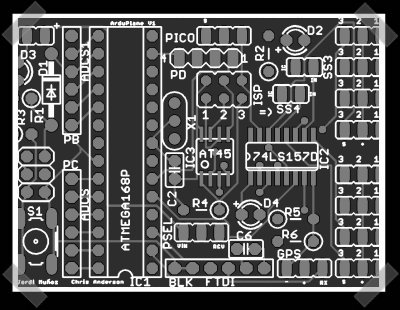
A short while back, [Chris Anderson] released an Arduino based autopilot. It rings in fairly cheap and being open source, you can tweak away. To add more functionality, he’s releasing a dual core version. Thanks to the second processor, it no longer requires an external hardware co-pilot. It uses an on-board GPS and features an ATtiny based fail safe. It’s still under development, but he’s made the design files available.

Netflix Player Source Code Released


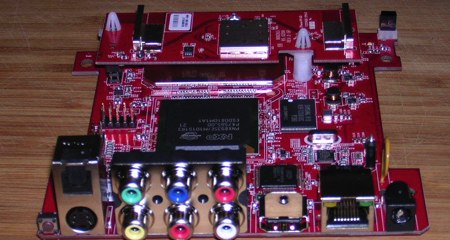
The Netflix Player continues to gain in popularity. Roku has finally released the GPL code for their Netflix Player. Just today Forbes published that Roku would roll out a software update allowing it to stream from other online services. The diminutive device has no internal storage and just enough RAM to buffer the stream. Many have wondered how a Linux box is handling the DRM; this is purely a feature of the NXP PNX8935 processor being used. While waiting for the code, hackers have already popped the box open to see what’s inside. We found [hokiokie7]’s photos of the internals on Roku’s forum. The only really interesting thing we’ve seen so far is that the WiFi is on a daughter card that plugs into the USB. That should make it much easier to support other devices, if users ever manage to get into the system.

UPDATE: [mbailey] points out in the comments that he was able to telnet to the device.