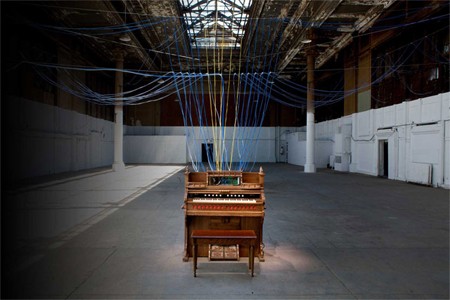
Playing The Building With David Byrne


Do you remember the solenoid concert that used a sequencer to control several solenoids striking different surfaces? Musician David Byrne has taken the concept and executed it on a much larger scale with his “Playing the Building” installation in an old municipal ferry terminal in New York. Devices that bang the girders, rattle the rafters, and blow through the pipes of the building are attached to the only object inside, a weathered pipeorgan. Every key is wired to different device in the building, each producing a unique sound. Attendees are invited to fiddle with keys of the organ to produce sounds from the building’s various materials, thus playing the building like an instrument. Here’s a video from the installation.

[via Today and Tomorrow]
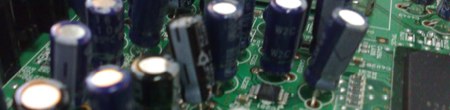
Creeping Wave Antenna


Monitoring medical patients remotely 24 hours a day has always proven to be a difficult proposition due the size of the wireless sensors attached to the patient’s body to relay vital signs. A team from Queen’s University Belfast has come up with a solution that utilizes the creeping wave effect. The effect applies to electromagnetic waves as they come into contact with solid objects. While the majority of the waves are absorbed by the object, a small amount move along the surface of the object before they continue their path.

Since most of the signal sent by conventional biosensors is absorbed by the patient’s body, the signal must be strong enough to compensate. The antennas designed by the Queen’s University team, though, focus their broadcast laterally instead of inward and outward, maximizing the amount of waves that will travel along patients’ bodies via the creeping wave effect and minimizing the amount that are absorbed. These antennas are up to 50 times as efficient as conventional antennas of the same size, broadcasting a stronger signal with less power.

The applications to the wireless body area networking, attaching multiple biosensors to patients’ bodies, field are obvious, but this technology could be used in other ways. Since the creeping wave antenna is small and wearable, it could conceivably be used to boost low power communication to PDAs, cellphones, or any other portable wireless product.

[via Medgadget]

Flying Manta Ray Blimp

German engineering firm Festo has created this flying manta ray. Dubbed the Air_ray, it’s a balloon made of an aluminum-vaporised “PET foil”. Inflated with helium, the Air_ray’s propulsion system is a flapping wing drive. Each wing has alternating pressure and tension flanks that are attached to an internal set of ribs. The flanks are connected to a remotely controlled servo motor. When pressure is applied to either of the flanks, the wing bends in the opposite direction. By alternating pressure on the flanks, the wings beat. The servos are powered by two 8V LiPo accumulator cells.

The total weight of the Air_ray including the balloon, propulsion system, power supply, and helium is 1.6Kg. Festo has more specs in this PDF.

[via Neatorama]

CNC Milling Gun Parts


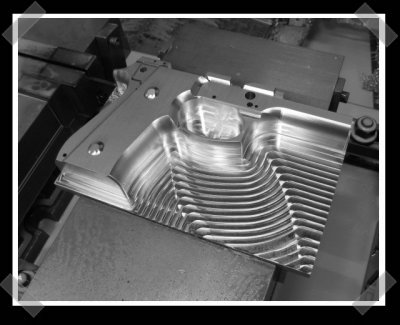
Gun issues aside, [Justin]’s been CNC milling his own gun parts for quite a while. We’ve been a fan of his work simply because of the technical challenge that this sort of milling presents. Even if you’re anti-gun, you should check out the work he’s been turning out. Pictured is one of his early projects: a 92fs Beretta frame in the process of being milled from a solid block of aluminum. Our friend the gun nut is insanely jealous of his AR45 lower project.

DIY Ballistic Gel


Earlier today, we looked at DIY ballistic glass, so we decided to look into DIY ballistic gel as well. Anyone who watches Mythbusters is probably already well familiar with their extensive use of this wonderful gel. Turns out the stuff is beyond easy to create at home. With some gelatin molds (and firepower) you could have a lot of fun with it.

To get started, pick up a box of gelatin powder from your local supermarket. Using 8 oz. of the powder and 2 quarts of cold water, stir together until the consistency is thick and all powder moist. Then, place the mixture in the fridge to chill for two hours. You will then need to heat the mixture until melted; be sure the liquid does not exceed 130 degrees. Finally, apply a layer of nonstick spray to your favorite mold or tupperware, and pour the mixture in. Allow to set in the fridge for 36 hours before use.

If you want even more DIY ballistics, check out this nice guide to creating your own chronograph, for measuring bullet velocity. After the break are videos on making and, of course, shooting the final product.

Continue reading “DIY Ballistic Gel”

Recent News Followup


Last week we talked about a single rumored arrest over the OiNK torrent tracker. Since then, there’s been a confirmed report of 6 arrests. The arrests appear to be the result of users uploading pre-release music to the now defunct site. For some time, police have had access to the OiNK user records minus the passwords which are thought to be stored as a salted MD5 hash. It seems British authorities can force these individuals to reveal passwords under something called the Regulation of Investigatory Powers Act.

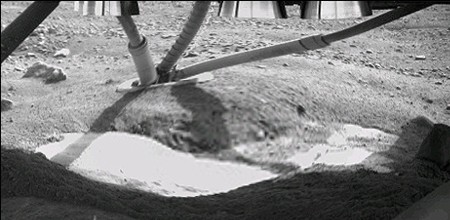
The Phoenix Mars Lander (pictured above) has found what might be a large piece of ice directly underneath it. This week the lander will scoop up a sample, melt its contents and test the various gases it releases. Twitter users can watch the mission’s progress in semi real time by following the MarsPhonix account. Lastly it looks like the official website for this mission was defaced through a SQL injection attack.

We already reported the world’s largest GPS drawing as a hoax. It has however inspired a few to look closer at the concept of position based art and others have already created authentic works. Our friends over at BoingBoing even made a little flash application to create your own “Unimpressive GPS Art“. Upon hearing of the hoax we were quick to draw up a brand new proposal for DHL using Google maps.

DefCon CTF Qualifier Results


Kenshoto held qualifiers for the DefCon‘s Capture the Flag competition last weekend. The top seven finishers: Routards, Pandas with Gambas, Guard@MyLan0, Shellphish, Taekwon-V, WOWHACKER, PLUS, and last year’s winners, 1@stPlace, will be invited to participate in the final this August in Las Vegas.

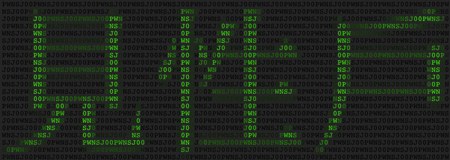
The qualification started Friday night at 10PM EDT with an email (Subject: M0rt4g3 y0ur /14gr4 up 2 3 1nch3$) being sent to all 451 registered teams. Connecting to the game server displayed a Jeopardy style score board. The five available categories were Binary Leetness, Forensics, Real World, Potent Pwnables, and Trivia, with point values from 100 to 500. Only one question was opened to start. The first team to answer that was allowed to select the next question to open and then any team could try to answer it. Participants were warned about the difficulty of the 500 level questions and the entire Real World category. At the end of everything, four questions still remained locked at the end.

If you’re interested in what type of questions the contest had, check out the write up on NOPSR.US, which has all the files and solutions. Non-qualifiers can still participate in DC949’s OpenCTF.