How The Xbox Was Hacked

The millennium: a term that few had any use for before 1999, yet seemingly overnight it was everywhere. The turning of the millenium permeated every facet of pop culture. Unconventional popstars like Moby supplied electronica to the mainstream airwaves while audiences contemplated whether computers were the true enemy after seeing The Matrix. We were torn between anxiety — the impending Y2K bug bringing the end of civilization that Prince prophesied — and anticipation: the forthcoming release of the PlayStation 2.

Sony was poised to take control of the videogame console market once again. They had already sold more units of the original PlayStation than all of their competition combined. Their heavy cloud of influence over gamers meant that the next generation of games wasn’t going to start in until the PS2 was on store shelves. On the tail of Sony announcing the technical specs on their machine, rumors of a new competitor entering the “console wars” began to spread. That new competitor was Microsoft, an American company playing in a Japanese company’s game.
Continue reading “How The Xbox Was Hacked”

Digital Picture Frame Turned Vectrex Overlay

For Hackaday readers which might not be so well versed in the world of home video gaming before the 1983 crash, the Vectrex was an interesting attempt at bringing vector graphics into player’s living rooms. Priced around $500 in today’s dollars, the machine was unique in that it included its own black and white CRT display rather than requiring the owner to plug it into their television. To spice things up a little bit, games would include a thin plastic overlay you could put over the screen to give the game faux colors. What can we say? It was the 1980’s.

Like many vintage gaming systems, the Vectrex still commands a devoted following of fans, some of which continue to find ways to hack and mod the system nearly 40 years after its release. One such fan is [Arcade Jason], who’s recently been fiddling with the idea of creating a modern take on the overlay concept using a hacked LCD display. While it’s still a bit rough around the edges, it does hold promise. He hopes somebody might even run with the idea and turn it into a marketable product for the Vectrex community.

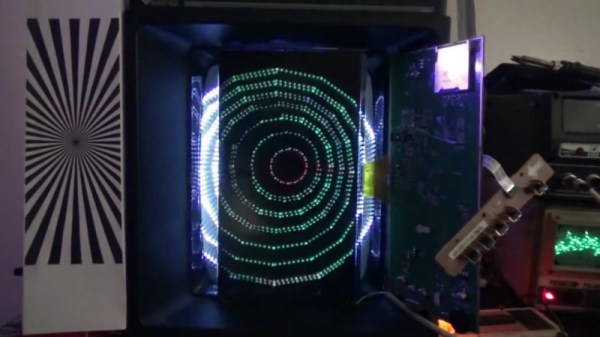
[Jason] started by getting an old digital picture frame and tearing it down until he liberated the LCD panel. By carefully disassembling it, he was able to remove the backlight and was left with a transparent display. He then installed the panel over the display of the Vectrex, leaving the picture frame’s PCB and controls dangling off to the side. Extending the display’s ribbon cable should be easy enough for a more robust installation.

He then loaded the frame with random psychedelic pictures he found online, as well as some custom overlays which he quickly whipped up using colored blocks in an art program. In the video after the break, [Jason] shuffles through images on the frame using the buttons on the PCB while loading different demos to show the kind of visual effects that are possible.

While a neat concept, there are a couple of issues that need to be resolved before this could really be put into practice. For one, the LCD panel isn’t the proper size or aspect ratio to match the Vectrex display, so it doesn’t cover the whole CRT. It’s also rather difficult to select images to show on the LCD panel; an improved version might use something like the Raspberry Pi to load images on the panel while exposing a control interface on a secondary screen of some type.

This isn’t the first time [Jason] has experimented with the Vectrex, or even the first time he’s tried to add color to the classic system. We’re interested to see what he comes up with next.

Continue reading “Digital Picture Frame Turned Vectrex Overlay”

Put An ItsyBitsy Zork In Your Pocket

Before computer games had all these fancy graphics, text based games were a very popular genre. Rather than move a character on the screen, you’d type out commands for your player in sentence form which the game would interpret; decades before the “cloud” language processing technology that the likes of Amazon and Google currently use to power their virtual assistants. In some ways the genre was ahead of its time, but it didn’t survive the graphical revolution for home computers. Of course, these games still have some diehard fans out there.
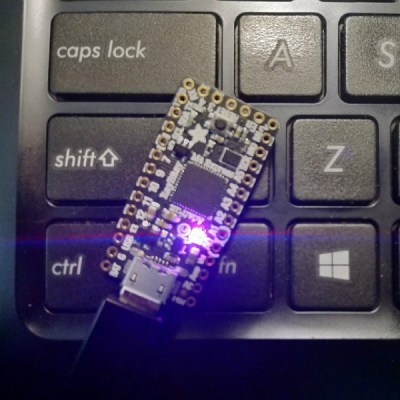
[Dan The Geek] is one such fan. He loves text based adventure games like Zork so much that he wanted to create his own implementation of the core technology that made these games possible all those years ago. But he didn’t want to just do it on this desktop computer, there’s already projects that let you run these classic games on modern hardware. He wanted to see if he could run these classic games on a modern microcontroller, and create a authentic retro experience on a handy portable device.

[Dan] starts by explaining the technology used to make titles like these possible in the days when the wide array of home computer types required a nuanced approach. By separating the story files from the actual interpreter, developers could more easily port the games to various computers. In theory these interpreters, known as “Z-machines”, could be written for any computer that could compile C code, had enough RAM to hold the story, and had a terminal and keyboard. Not exactly the kind of system requirements we’re used to seeing for modern PC games, but it was the 1980’s.

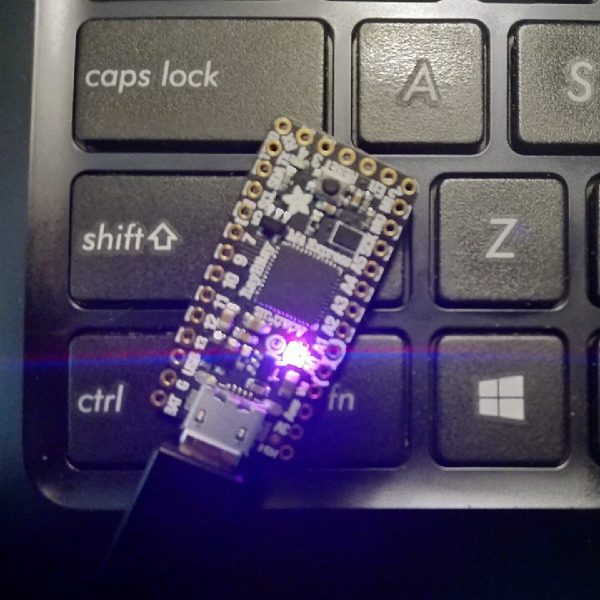
In theory a modern microcontroller will meet these requirements, so [Dan] wanted to create his own Z-machine for one. But rather than “cheat” by using an SD card like previous Arduino Z-machines have, he wanted to see if there was a development board out there that could do it all internally. The answer came in the form of the  Adafruit ItsyBitsy M4 Express, with its 192 kB of RAM and 2 MB of SPI flash.

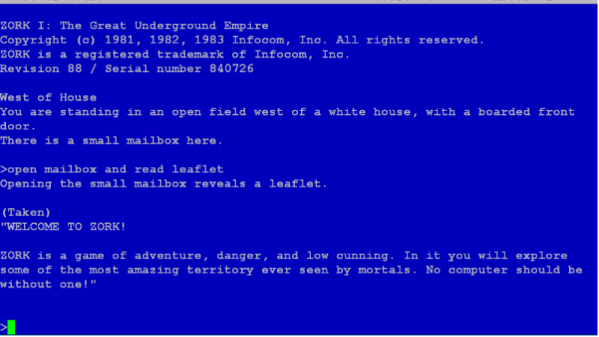
The Z-machine created by [Dan], which he’s calling A2Z, allows users to run Zork and other compatible interactive text games on the ItsyBitsy without any additional hardware. Just plug the board into your computer and you’ll be able to play the games over the the serial connection. He’s even implemented some retro color schemes to make the experience more authentic, like the blue of the Amiga or Compaq green.

We’ve covered previous projects that brought Zork and friends to the Arduino, your web browser via a virtual Altair 8800, and even some more exotic targets like custom FPGAs. You can play cave adventure, the game that inspired Zork, on the Supercon Badge.


Eight Player GameCube Adapter Is Ready For Smash

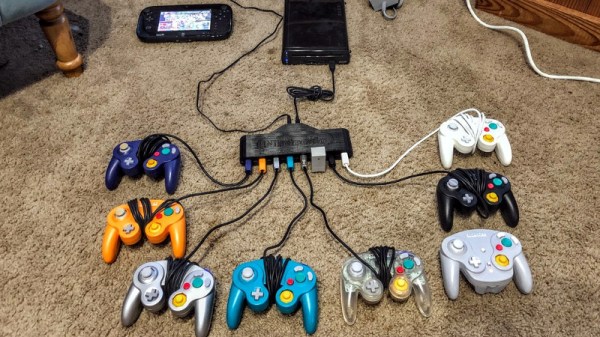
With the release of Smash Ultimate fast approaching for the Nintendo Switch, [Patrick Hess] wanted to get ahead of the game and make sure his squad had the equipment they’d need. Namely, support for the GameCube controllers that serious Smash Bros players demand. But it wasn’t enough to have one or two of them hooked up, or even four. Not even six GameCube controllers could satiate his desire. No, he needed to have support for eight simultaneous GameCube controllers, and he wanted to look good doing it too.

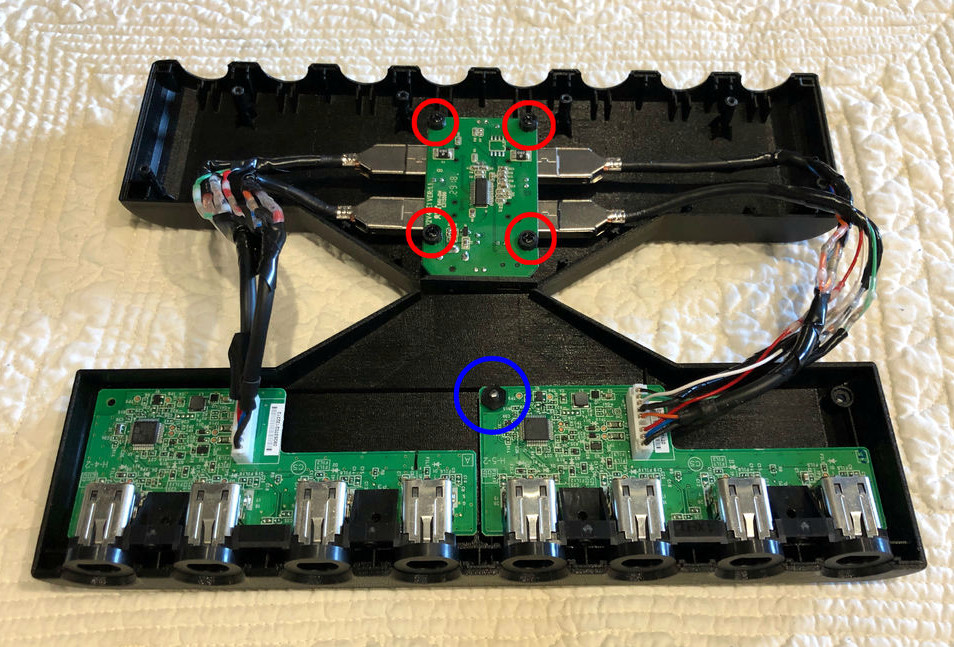
Enter his meticulously designed eight player GameCube to USB adapter. Made out of dual official Nintendo GameCube to USB adapters (intended for the Wii U) merged together in a 3D printed case, the final result looks like something that could earn the coveted Nintendo Seal of Approval. Or at least, something that might pop up on the import sites in the next month or two for a few bucks.

[Patrick] started the project by recreating the official adapter PCBs and their housings in 3D using a pair of calipers. After a couple of test prints to make sure he had all the dimensions right, he could then move on to designing his final enclosure knowing he had accurate data to model around.

In addition to the two adapter boards, there’s also a four port USB hub inside the device’s case. Each adapter has two USB leads, here shortened to fit inside the case, which connect up to the hub. The integrated hub allows connecting all eight GameCube controllers through only a single USB connection. All controllers worked as expected during intense testing on the Wii U’s version of Smash Bros, though at this point [Patrick] can only assume it will work when the Switch version is released.

If there’s a downside to this project, it’s that the design for the 3D printed case is so intricate that [Patrick] was only able to print it on a machine that supported water-soluble PVA supports. A somewhat tall order for the average hacker; it would be interesting to see if somebody could make a second pass on the enclosure that is geared more towards printability than aesthetics.

While the design of the GameCube controller remains somewhat controversial after all these years, there’s no denying it retains an impressive following. Whether turning them into USB devices, shrinking them to preposterously small dimensions, or just finding increasingly creative ways to use them on Nintendo’s latest console, hackers are definitely in love with the gonzo little controller that’s now pushing 20 years old.

Prototype Proves Wii Was Two Gamecubes Taped Together All Along

Say what you will about Nintendo’s little purple lunchbox, the GameCube, but it was home to many delightful experiences from Super Smash Bros. Melee to The Legend of Zelda: Twilight Princess. We now know it was also home to one of the very first Nintendo Wii remotes as well thanks to the recent listing from [Kuriaisu1122] on Yahoo Auctions.

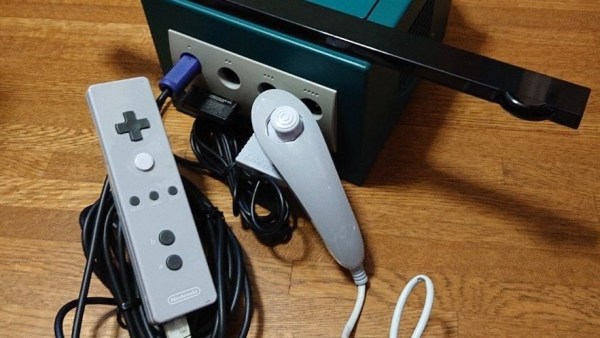
The prototype Wii remote is a wired design and features a proprietary GameCube controller cable. Notable differences include the two buttons toward the bottom are labeled ‘B’ and ‘A’ respectively. This shows that Nintendo always intended to have players hold the remote sideways in order to play Virtual console games. The large white button next to the directional pad is unlabeled, and along the middle are the traditional ‘Start’ and ‘Select’ labels on either side of ‘Home’. However, these all would go through multiple revisions on the way to the final design. Interestingly there is an Ethernet jack at the base used to connect accessories. That connector would eventually become the often maligned “Nunchuk interface”, but what modder wouldn’t have loved it if that Ethernet port had carried on to the final design?

Continue reading “Prototype Proves Wii Was Two Gamecubes Taped Together All Along”

This RC Fortnite Rocket Is A Victory Royale

Minecraft is over and Red Dead Redemption II has barely even started yet. The biggest thing on the planet right now is Fortnite, and oh man, is it awesome. It’s the best game ever, and we wish every day was a Battle Royale. But what if Fortnite was real life? That’s exactly what [Giaco] and [David] did when they made an RC Fortnite Foam Rocket. It’s Fortnite, in the real world! If you don’t mind, we’re going to go T-pose in the corner.

The core of this build was done with the Maker Knife, first introduced as a Kickstarter by [Giaco] as an everyday carry utility knife that features ceramic blades. It’s impressive for a box cutter, but what’s even more impressive is that this fantastic tool can be used to make a real-life Fortnite rocket.

This rocket, like so many other RC planes we see these days, was constructed out of foam board, a technique that was popularized by the folks at Flite Test, and uses all the construction techniques you would usually see in a foam board model airplane. The hinges for the control surfaces are chamfered and reinforced with packing tape, servos are just hot glued to the body, and the control horns are just bits of cardboard.

What makes this really impressive is that this Fortnite rocket actually flies. [Giaco] took this plane out with [David] of rcexplorer fame, and even though this ‘plane’ didn’t really have any lifting surfaces, despite indiscernible center of gravity, and the fact that the paint weighed more than the plane itself, this thing can fly. Fairly well, too, until it gets stuck in a tree. There are prices to pay for producing content that’s this attractive to 12-year-olds, I guess.

Continue reading “This RC Fortnite Rocket Is A Victory Royale”

Slack On The SNES Via Satellite

We love seeing hardware and software from bygone eras getting a new lease on life through modern hacks, as longtime readers can surely attest to. Why leave this stuff to rot in a closet somewhere when it can be pushed into service today? Granted it might not always be the most efficient way to accomplish a task in the 21st century, but at least you’ll net some precious Internet Points for originality.

As a perfect example, take a look at this project which lets you read Slack messages through a Super Nintendo game. If your first thought was that such a thing would involve an unreasonable amount of effort and hoop jumping…then you would be correct. [Bertrand Fan] really had to think outside the box to make this one happen, and even admits a bit of imagination is required on the part of the end-user to use it. But it’s undeniably an original approach, so we hereby bestow the customary Internet Points unto him.

So how does this work, and where do the satellites come in? The key is in a fairly obscure Japanese SNES peripheral called the Satellaview, one of Nintendo’s early attempts at creating an online content delivery system for their consoles. Games designed with Satellaview support would be able to pull down new content from regular satellite broadcasts, not too bad for 1995. This means that if you have the hardware, and happen to own a satellite, you can push your own content into an unmodified SNES. No problem, right?

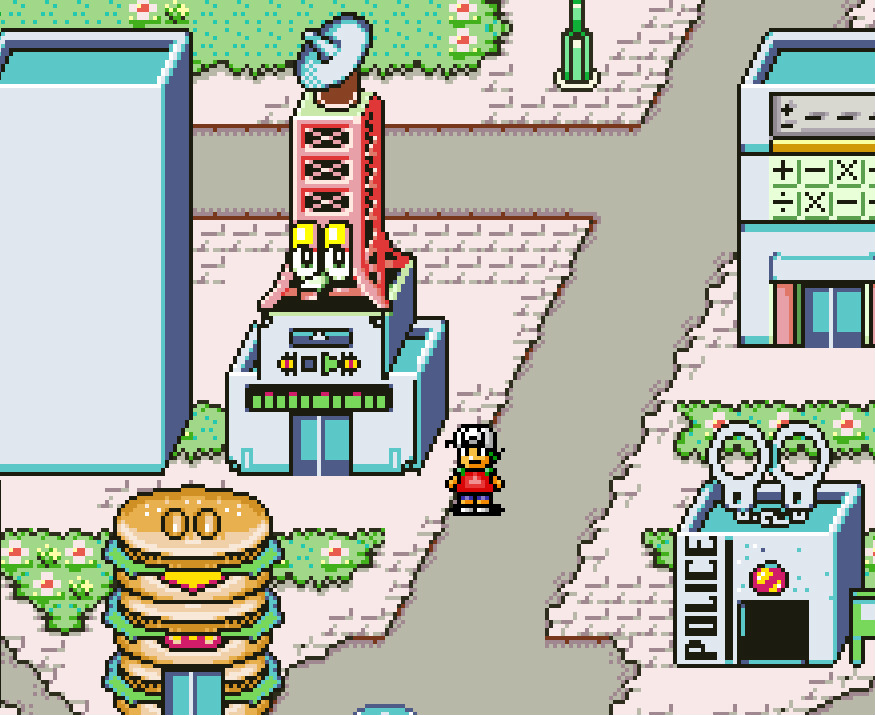
Alright, [Bertrand] didn’t really use a Satellaview modem plugged into an actual SNES. Plus we’re fairly sure he doesn’t have his own satellite network to broadcast Slack messages with anyway. But it turns out some SNES emulators have support for a virtual Satellaview modem, and there’s even software out there that will let you create new content “downloads” for the system’s included game: BS-X: The Story of The Town Whose Name Was Stolen. All he had to do was connect the dots.

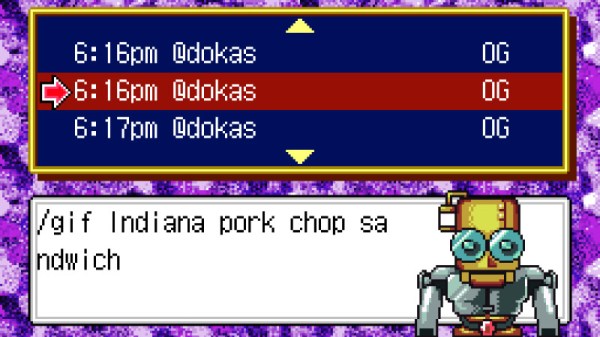
[Bertrand] started by stripping the user interface out of SatellaWave, an open source tool for creating Satellaview content, so that it only need to be provided with an XML file of the content to be “downloaded” by the virtual satellite modem. Using the Slack API, he then came up with way to pull the last 10 messages from a server and push them into his modified version of SatellaWave. Each time somebody posts a new message his software kicks in to produce a new satellite download which automatically gets picked up by the SNES emulator and pops up in the game.

If this is still too practical for you, you can always go all in and run Slack on your Commodore 64.

Continue reading “Slack On The SNES Via Satellite”