That Time Atari Cracked The Nintendo Entertainment System

It was darkest hour for the video game industry following the holiday shopping season of 1982. The torrent of third party developed titles had flooded the home video game console market to the point of saturation. It incited a price war amongst retailers where new releases were dropped to 85% off MSRP after less than a month on the shelves. Mountains of warehouse inventory went unsold leaving a company like Atari choosing to dump the merchandise into the Chihuahuan desert rather than face the looming tax bill. As a result, the whole home video game industry receded seemingly overnight.

One company single-handedly revived video games to mainstream prominence. That company was Nintendo. They’re ostensibly seen as the “savior” of the video games industry, despite the fact that microcomputer games were still thriving (history tends to be written by the victors). Nevertheless their Nintendo Entertainment System (NES) was an innovative console featuring games with scrolling screens, arcade-like sprites. But the tactic they used to avoid repeating the 1983 collapse was to tightly control their market using the Nintendo Seal of Quality.

From the third party developer perspective, Nintendo’s Seal of Quality represented more than just another logo to throw on the box art. It represented what you could and couldn’t do with your business. Those third party licensing agreements dictated the types of games that could be made, the way the games were manufactured, the schedule on which the games shipped to retail, and even the number of games your company could make. From the customer side of things that seal stood for confidence in the product, and Nintendo would go to great lengths to ensure it did just that.

This is the story of how an Atari subsidiary company cracked the hardware security of the original Nintendo and started putting it into their unofficial cartridges.

Continue reading “That Time Atari Cracked The Nintendo Entertainment System”
Stock Looking PSP Hides A Raspberry Pi Zero

We don’t see that many PSP hacks around these parts, perhaps because the system never attained the same sort of generational following that Nintendo’s Game Boy line obtained during its heyday. Which is a shame, as it’s really a rather nice system with plenty of hacking potential. Its big size makes it a bit easier to graft new hardware into, the controls are great, and there’s no shortage of them on the second-hand market.

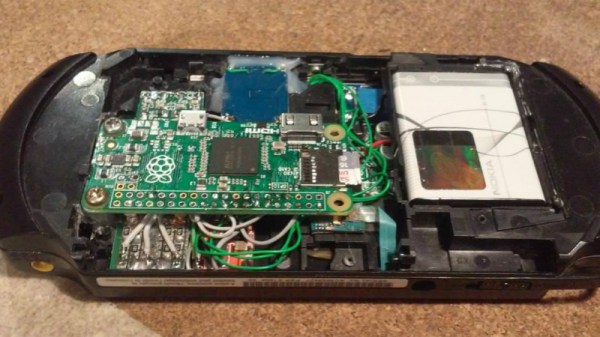
Hopefully, projects like this incredible “PiSP” from [Drygol] will inspire more hackers to take a second look at Sony’s valiant attempt at dethroning Nintendo as the portable king. With his usual attention to detail, he managed to replace the PSP’s original internals with a Pi Zero running RetroPie, while keeping the outside of the system looking almost perfectly stock. It wasn’t exactly a walk in the park, but we’d say the end definitely justifies the means.

The first half of the project was relatively painless. [Drygol] stripped out all the original internals and installed a new LCD which fit so well it looks like the thing was made for the PSP. He then added a USB Li-ion charger board (complete with “light pipe” made out of 3D printer filament), and an audio board to get sound out of the usually mute Pi Zero. He had some problems getting everything to fit inside of the case. The solution was using flat lithium batteries from an old Nokia cell phone to slim things down just enough to close up the PSP’s case with some magnets.

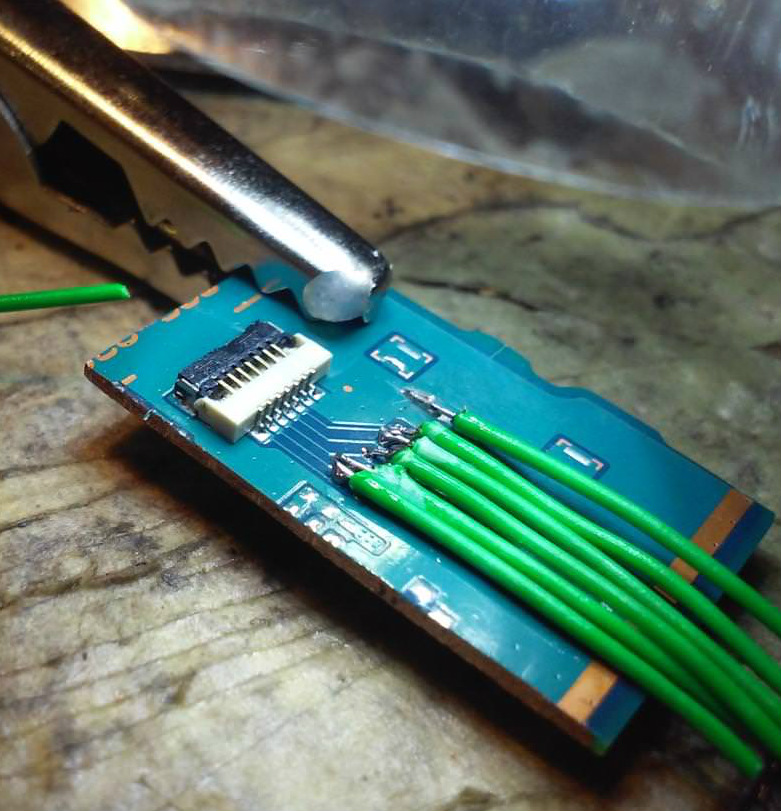
What ended up being the hardest part of the build was getting the original controls working. [Dyrgol] wanted to use the original ZIF connector on the PSP’s motherboard so he wouldn’t have to modify the stock ribbon cable. But it was one of those things that was easier said than done. Cutting out the section of PCB with the connector on it was no problem, but it took a steady hand and a USB microscope to solder all the wires to its traces. But the end result is definitely a nice touch and makes for a cleaner installation.

We’ve covered the exciting world of PSP homebrew, and even DIY batteries built to address the lack of original hardware, but it’s been fairly quiet for the last few years. Here’s hoping this isn’t the last we’ve seen of Sony’s slick handheld on these pages.

Continue reading “Stock Looking PSP Hides A Raspberry Pi Zero”

Playing Doom On Keysight Oscilloscope Via Windows CE

We all know the drill when buying a digital oscilloscope: buy the most hackable model. Some choose to void the warranty right away and access features for which the manufacturer has kindly provided all the hardware and software but has disabled through licensing. Few of us choose to tap into the underlying embedded OS, though, which seems a shame.

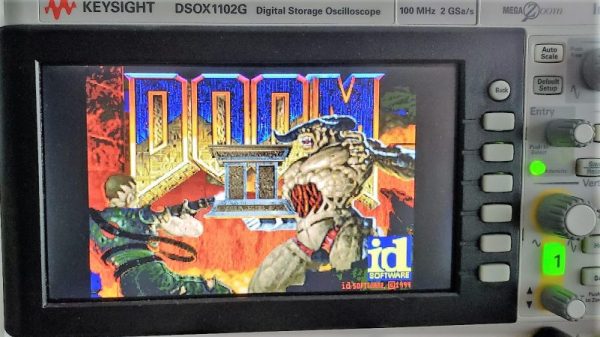
When [Jason Gin]’s scope started giving him hints about its true nature, he decided to find a way in. The result? An oscilloscope with a Windows desktop that plays Doom. The instrument is a Keysight DSOX1102G which [Jason] won during the company’s “Scope Month” giveaway. Relatively rare system crashes showed the familiar UI trappings of Windows CE.

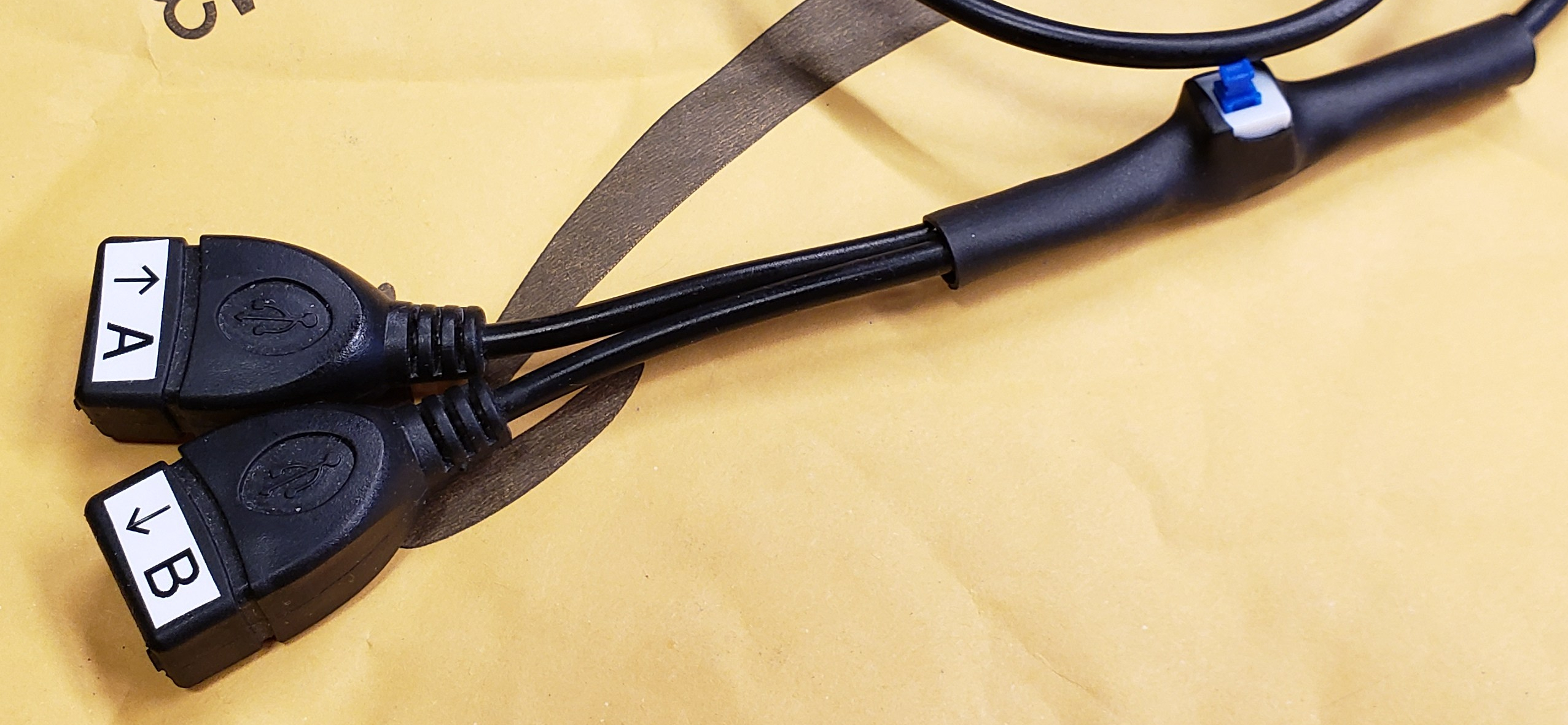
Try as he might, [Jason] couldn’t get the scope to crash on cue — at least not until he tried leaving an external floppy drive plugged into the USB port on startup. But in order to use the desktop thus revealed, a keyboard and mouse were needed too. So he whipped up a custom USB switch cable, to rapidly toggle in the keyboard and mouse after the crash. This gave him the keys to the kingdom, but he still had a long way to go. We won’t spoil the story, but suffice it to say that it took [Jason] a year and a half, and he learned a lot along the way.

It was nice to hear that our review of the 1000X series scopes helped [Jason] accomplish this exploit. This hack’s great for bragging rights, as one way to prove you’ve owned a system is telling people it runs Doom!

New Controller For Retro Console

In the world of retro gaming, when using emulators and non-native hardware it’s pretty common to use whatever USB controller happens to be available. This allows us to get a nostalgic look while using a  configurable controller. One thing that isn’t as common is using the original hardware while still finding a way to adapt a modern controller to an old console. This is exactly what you need though, when you’re retro gaming on a platform with notoriously terrible controllers.

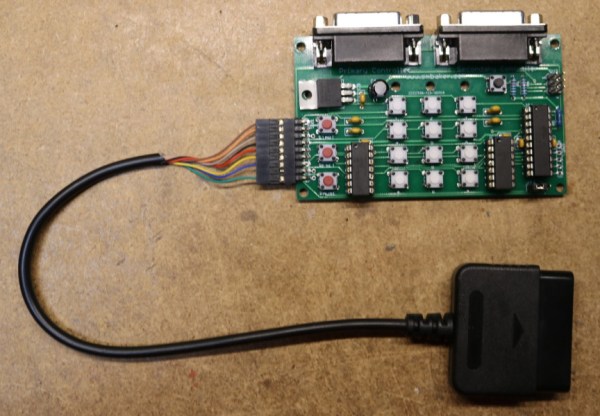
[Scott] enjoys his Atari 5200 but the non-centering and generically terrible joystick wasn’t well received even in the early 80s when the console was in its prime. He decided that using a Dual Shock controller from a Playstation 2 would provide a much better gaming experience, and set about building an adapter. He found that in a way the Dual Shock controller was an almost perfect pairing for the Atari because it has two analog control sticks built-in already. There’s also an array of information on pairing the Dual Shock controller with AVR microcontrollers, so he wouldn’t have to reinvent the wheel. From there, it was just a matter of pairing communications protocols between the two pieces of hardware.

The project page goes into quite a bit of detail on SPI communication protocols and the needs of both the Atari and the Playstation controller. If you’re a retro gaming fan, really into communication protocols, or have always had a love-hate relationship with your Atari because the controllers were just that bad, it’s worth checking out. If this is too much, though, there are other ways to get that Atari nostalgia.

Thanks to [Baldpower] for the tip!

Continue reading “New Controller For Retro Console”

Atari Lynx 2600 Console Mod

Atari Lynx Becomes Modern 2600 Console Homage

With its introduction in 1989, the Atari Lynx was the first handheld videogame system to include a color LCD. The gigantic size and equally gigantic price tag did not win-over a massive audience, but that doesn’t mean the Lynx was without its fans. Over the past few months a modder named [Jared] has been toiling away with his project to transform an Atari Lynx into a home console.

Atari Lynx 2600 Console Mod Motherboard

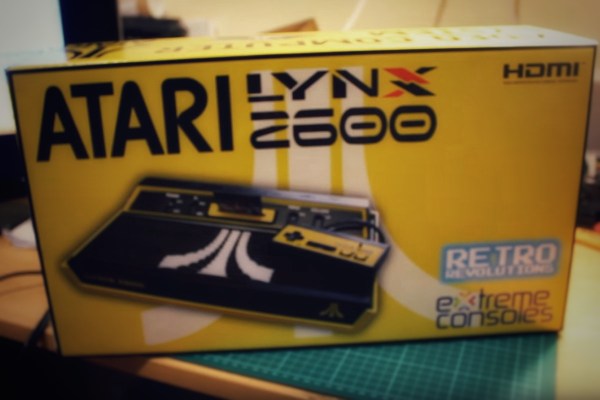
The inspiration behind the mod was the original Atari console, the Atari 2600. [Jared’s] console mod, called the Atari Lynx 2600, utilizes a four-switch 2600 case as an enclosure. However, since the Atari 2600 joystick did not offer enough button real estate an NES controller was used instead. A male-male serial cable serves as the new controller cord, while all the buttons on the face of the Lynx are hardwired to a female DB9 port. As an added touch a custom 3D printed cartridge adapter was incorporated into the original 2600 cartridge slot.

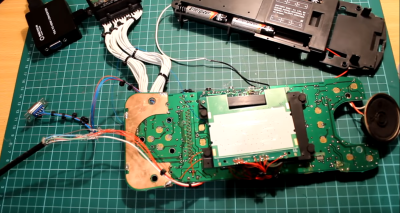
Since the Lynx did not natively support video out, and intermediary device known as the McWill LCD mod kit was used. The McWill LCD mod is typically done in order to modernize the Atari Lynx’s screen with hardware from this decade, but [Jared] used the kit in order to get VGA video output from the Lynx. Not satisfied with just VGA [Jared] also included a VGA to HDMI scaler inside to ensure a wider compatibility with current displays. Fittingly the HDMI port was placed on the back of the 2600 enclosure where the RF video used to come from.

Bonus points should go to [Jared] for going the extra mile and creating a custom console box to accompany the console mod. The entirety of the project was detailed in a three-part video series, but you can watch the console in action in part 2 below:

Continue reading “Atari Lynx Becomes Modern 2600 Console Homage”

Adding Bluetooth To Original SNES Controllers

There’s a bunch of companies selling wireless Super Nintendo style controllers out there. You can go on Amazon and get any number of modern pads that at least kinda-sorta look like what came with Nintendo’s legendary 1990’s game console. They’ve got all kinds of bells and whistles, Bluetooth, USB-C, analog sticks, etc. But none of them are legitimate SNES controllers, and for some people that’s just not good enough.

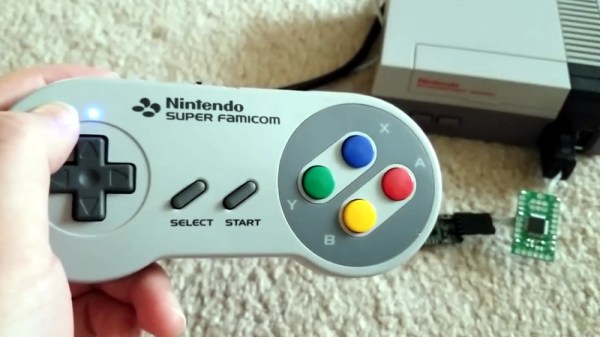
[sjm4306] is one of those people. He wanted to add Bluetooth and some other modern niceties to a legitimate first-party SNES controller, so he picked up a broken one off of eBay and got to work grafting in his custom hardware. The final result works with Nintendo’s “Classic Edition” consoles, but the concept could also work with the original consoles as well as the computer if you prefer your classic games emulated.

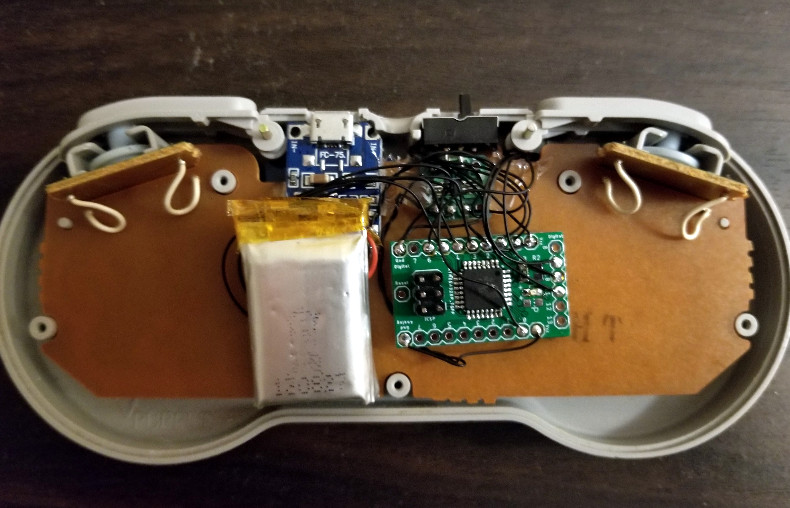
A custom ATMEGA328P-powered board polls the controller’s SPI serial shift register in much the same way the original SNES would have. It then takes those button states and sends them out over UART with a HC-05 Bluetooth module. The controller is powered by a 330 mAh 3.7V battery, and a charging circuit allows for easily topping the controller off with a standard USB cable.

A particularly nice touch on the controller is the use of custom light pipes for the status LEDs. [sjm4306] made them by taking pieces of transparent PLA 3D printer filament, heating and flattening the end, and then sanding it smooth. This provides a diffusing effect on the light, and we’ve got to say it looks very good. Definitely a tip to file away for the future.

On the receiving side, this project was inspired by a custom NES Classic Edition Advantage controller we featured last year, and borrows the work creator [bbtinkerer] did to get his receiver hardware talking to the Classic console over I2C.

We’ve seen a number of projects which have added wireless functionality to the classic Super Nintendo controller, but most tend to be more invasive than this one. We like the idea of reading the controller’s original hardware rather than completely gutting it.

Continue reading “Adding Bluetooth To Original SNES Controllers”

Sega Teradrive Computer Isozone

Putting The Sega Teradrive Into Overdrive

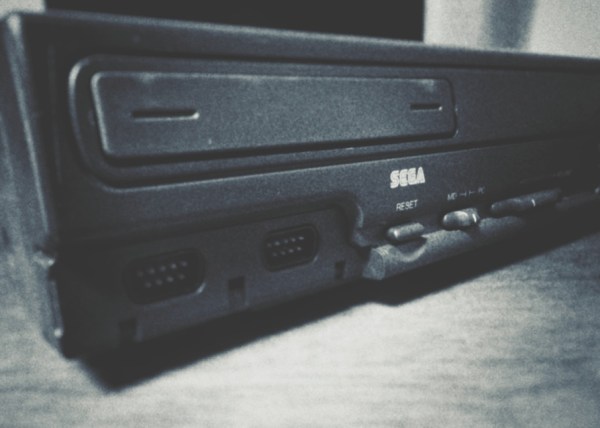
During the 80s and 90s it seemed like Japan got all the good stuff when it came to videogames. In the US there were consoles called the NES, the TurboGrafx-16, and the Genesis. While in Japan they had cooler names like: the Famicom, the PC Engine, and the Mega Drive. The latter was incorporated into a plethora of different form factors, including the little known IBM PC/Mega Drive combo known as the Sega Teradrive. Finding a rare Japanese 1990s PC stateside is a feat in and of itself, and thanks to an electronics hobbyist named [Ronnie] there is at least one Teradrive out there still running strong thanks to an upgraded CPU mod.

Sega Teradrive Motherboard CPU

In theory, the Sega Teradrive was a dream-machine; combining the utility of an IBM PC with the fun of a Sega Mega Drive. The dual functionality extended to the video modes where both VGA and composite video were supported. However, the reality was that the final design was less than desirable. The Teradrive shipped in 1991 with an Intel 80286, 16-bit processor which was already two processor generations behind at the time. The meager 10Mhz clock speed was on the lower end of the performance spectrum which meant that many DOS titles ran poorly…or not at all.

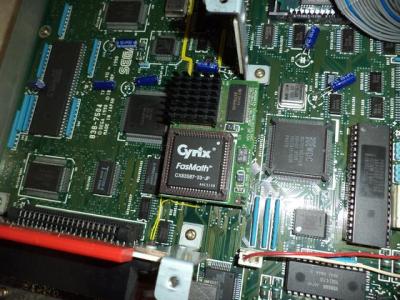
Not satisfied with those specs, [Ronnie] modded his Teradrive with an adapter board containing an Intel 80486 processor clocked at 66Mhz. The upgrade, accompanied with a complete re-cap of the motherboard, brings the IBM PC to 486DX status. This opened up a few new possibilities including the Thundercats Demo in the video below:

Continue reading “Putting The Sega Teradrive Into Overdrive”