IuT ! IoT

Let’s build the Internet of USEFUL Things, not just the Internet of Things. IuT ! IoT

That’s what we’ll be doing over the next five weeks. The second challenge of the 2017 Hackaday Prize begins today. We’re looking for the best ideas we can find for useful connected devices. Twenty entries will recieve $1,000 and move on to the final round to vie for the top prizes ranging from $5,000 to $50,000.

There is no doubt that the future is connected. It has been our future since the advent of the telegraph, and we’re unarguably becoming more connected at a faster rate. The phone in your hand, pocket, or bag connects you to the bulk of human knowledge. But it doesn’t yet connect you to very many “things”. It won’t be that way for long.

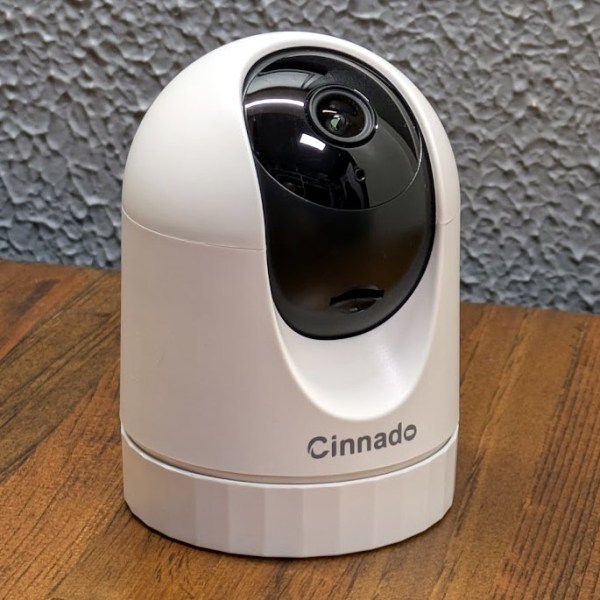
Already we’ve seen cameras (security, baby monitor, and everything in between) appear as some of the earliest connected devices, and they’ve brought with them all of the unintended consequences of poorly secured computer gear connected to the wider Internet. At least remote cameras have a purpose; there have been more than enough product launches for things that don’t. Our go-to counter-example is the Internet-connected toaster which is the topic of our wonderful art from Joe Kim this morning. Who needs to toast remotely? Nobody.

Let’s Invent the IoT

Here is our chance to do it right. How can Internet of Things make life better? What things become more meaningful when added to a network and what does that look like? How do we continue to connect our world while safeguarding privacy and being mindful of security. Finding answers to these questions will lead you to Build Something that Matters.


New Part Day: The $239 Pi Clone

Linaro has announced a new ARM-based single board computer.

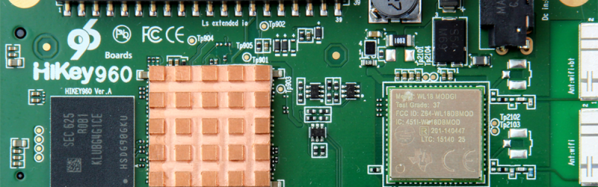
The HiKey 960, built in collaboration with 96Boards, gives the user 4 ARM Cortex-A73 cores clocked at 2.4GHz, 4 ARM Cortex-A53 cores clocked at 1.8 GHz, a Mali GPU (ugh), 32GB of Flash storage, 3GB of LPDDR4, HDMI 1.2, WiFi, Bluetooth, USB 3.0 type A, PCIe on an M.2 connector, and a familiar 40-pin GPIO connector whose configuration is not published yet but is one we can make a very educated guess about. This is a powerful ARM-based single-board computer that’s the same size as a credit card.

This single board computer draws more power than a Raspberry Pi (but less than 24 W with a 12V supply), but that’s what you get when you need a powerful ARM chip. Interestingly, the HiKey 960 places all the connectors on one side of the board. This is a feature very often overlooked in ARM-based single board computers; all the ports on your desktop are on the back, and it only makes sense to constrain the cables and dongles to one side of a Nintendo-shaped 3D printed enclosure.

This is not the first ARM-based single board computer that markets itself as a more powerful Pi. The Pine64 was supposed to be significantly more powerful, handle 4K HDMI, and bring Android to the desktop. The first versions of the Pine64 really, really sucked. However, most of the kinks have been worked out and the folks behind the Pine64 are now shipping a somewhat reasonable low-end Chromebookesque laptop for $89. This is a laptop for under a Benjamin, whereas the HiKey 960 will sell for $239. That’s the same price as an Intel NUC or other mini PC running an x86 CPU. Of course, the HiKey 960 will have higher performance compared to the latest Pi, or other Pi Killer such as the Asus Tinker board, but there must be a point of diminishing returns. Either way, we look forward to getting our hands on one of these powerful single board computers.

Hackaday Links: April 30, 2017

This last week was SEFF, a week of electric-powered remote-controlled aircraft above 1700 feet of Bermuda grass in the middle of Georgia. [Damon Atwood] has been bringing his 16-foot-wingspan Emmaselle to SEFF for a few years now, and this year we’re getting a great video of the flight. This is, or was at one time, the 3rd largest electric RC on the planet. It’s flying on 11S, and is absolutely beautiful in the air.

Speaking of electric RC meetups, Flite Fest West is going on right now. Flite Fest East will be July 13th through the 16th. Here’s the link to the relevant YouTube channel.

One of the very inexpensive 3D printers announced at CES by Monoprice is now on sale. It’s the improved $200 Cartesian, not the $150 delta. As I saw at CES last January, this is a slight improvement over the already fantastic V1 version of this printer. Improvements include an all metal hot end (an E3D clone) and working WiFi on the main board. Still waiting on the $150 delta printer? The only thing I can tell you is that it’s coming out soon.

StippleGen is an application from Evil Mad Scientists Labs to create stippled drawings. Stippling is dots, but not halftone. [HEXceramic] is using StippleGen to create laser cut molds for making ceramic tiles. The results look awesome, and I can’t wait to see one of these fired.

Hackaday has been voted, ‘The Hacker News of Hardware‘ by the Hacker News community. I would have included this in the links post last week, but feared that would be seen as manipulating the upvote system on Hacker News. This is great, but of course you already know Hackaday is seen as a reputable source of hardware and embedded news!

As a rule, Hackaday is nonpartisan and not political at all. In fact, two of my headlines have been shot down so far this year for using the word ‘trump’ as a verb. You’re welcome. This project is too cool, so we’re going to bend a few rules. This is a Trump gummi. It’s the rarest gummi of them all. It was carved by gummi artisans who work exclusively in the medium of gummi.

[Michael Welling] designed the PocketBone Mini in KiCad. It’s built around the Octavo Systems OSD3358, and is really, really tiny while designed to be as capable as a full size BeagleBone. He’s doing an interest check to gauge the community’s interest in this tiny, tiny single board computer.

Retrotechtacular: Farming Implements In 1932

Few people would deny that farming is hard work. It always has been, and it probably always will be no matter how fancy the equipment gets. In 1932, farming was especially grueling. There was widespread drought throughout the United States, which gave rise to dust bowl conditions. As if those two things weren’t bad enough, the average income of the American farmer fell to its lowest point during the Depression, thanks to the Smoot-Hawley Tariff Act.

Even so, crop farming was still a viable and somewhat popular career path in 1932. After all, knowing how to grow food is always going to get you elected into your local post-apocalyptic council pretty quickly. As such, the John Deere Equipment Company released the 19th edition of their classic book, The Operation, Care, and Repair of Farm Machinery. This book covers all of the various equipment a crop farmer needed to get from plough to bounty. The text gives equal consideration to horse-driven and tractor-driven farming implements, and there’s an entire chapter dedicated to tractor engine maintenance.

According to its preface, this book was used as an agricultural text in schools and work-study programs. It offers a full course in maintaining the all the (John Deere) equipment needed to work the soil, plant crops, cultivate, harvest, and manure in all parts of the country. The Operation, Care, and Repair of Farm Machinery was so well-received that John Deere kept the book in publication for over thirty years. The 28th edition and final edition came out in 1957. We wonder why they would have stopped putting it out after all that time. Maybe it wasn’t profitable enough, or the company decided to phase out the shade tree tractor mechanic.

So why should you delve into a sorely outdated textbook about farm equipment? Well, it’s straightforwardly written and easy to learn from, whether you’re trying or not. You should check it out if you’re even remotely curious about the basics of farming. If for no other reason, you should go for the beautiful hand-drawn illustrations and stay for the interesting tables and charts in the back. Did you know that a gallon of milk weighs 8.6 pounds?

Continue reading “Retrotechtacular: Farming Implements In 1932”

Fundamentals Of Fingerprint Scanning

Like most (if not all) Hackaday readers, I like to know how the technology I use works. I’m always amazed, for example, how many otherwise smart people have no idea how the cellphone network works other than “it’s a radio.” So now that I have two phones with fingerprint scanners on them, I decided I needed to know more about what’s going on in there.

Sure, I assumed the sensor was capacitive (but maybe not, I found out). Plus we all know some super glue, scotch tape, and gummy bears are all you need to fake one out. However, that’s been known for about 15 years and we are still seeing phones and other devices rolling out with the same scanners. So for now, put aside the debate about whether we should be using fingerprint scanners. Let’s talk about how those sensors work.

Continue reading “Fundamentals Of Fingerprint Scanning”

Friday Hack Chat: The Hackaday Prize

Did you know Hackaday is hosting a fantastic contest to build hardware and software? It’s true! The Hackaday Prize will award hundreds of thousands of dollars to Hackaday community members for building the coolest hardware designed to make a difference in the world.

The Hackaday Prize has many ways to enter, focusing on several themes throughout this year. We’ll be discussing that and opening the floor to questions. Tomorrow, Friday, April 28, at noon, Pacific time, we’re hosting a Hack Chat for the Hackaday Prize over on Hackaday.io.

Our guest host for this chat is [Alberto], creator of the project that won last year’s Hackaday Prize. He’ll be in the Hack Chat telling everyone what he learned from last year’s Hackaday Prize. If we’re lucky, he might even tell us something about what building his project out in the Supply Frame Design Lab is like. It’s all very cool, and it’s going down tomorrow at noon, PDT.

Here’s How To Take Part:

join-hack-chatOur Hack Chats are live community events on the Hackaday.io Hack Chat group messaging.

Log into Hackaday.io, visit that page, and look for the ‘Join this Project’ Button. Once you’re part of the project, the button will change to ‘Team Messaging’, which takes you directly to the Hack Chat.

You don’t have to wait until tomorrow; join whenever you want and you can see what the community is talking about.

And Tindie, Too!

Next Tuesday, we’re going to have another chat geared toward sellers on Tindie, the online marketplace where anyone can buy or sell DIY hardware.

This time around, we’re talking about Kickstarter. We roped [Zach Dunham] into this one. He’s the Design & Technology Outreach Lead at Kickstarter, and by every measure a really cool guy.

[Zach] will discuss the ins and outs of turning a hardware project into a Kickstarter campaign. Surprisingly, there’s a significant overlap between Tindie sellers and Kickstarter — some sellers test their ideas on Tindie and build up to doing a crowd funding campaign. Others complete a campaign and then come over to Tindie to sell excess inventory or second runs. Either way, there’s a great opportunity for market verification or simply getting your gear into the hands of those who want to use it.

If you want to get in on the Kickstarter chat action, head on over to the Tindie Dog Park. Request to join the project and show up in the chat sometime before 1pm Pacific on Tuesday, May 2.

Ask Hackaday: What About The Diffusers?

Blinky LED projects: we just can’t get enough of them. But anyone who’s stared a WS2812 straight in the face knows that the secret sauce that takes a good LED project and makes it great is the diffuser. Without a diffuser, colors don’t blend and LEDs are just tiny, blinding points of light. The ideal diffuser scrambles the photons around and spreads them out between LED and your eye, so that you can’t tell exactly where they originated.

We’re going to try to pay the diffuser its due, and hopefully you’ll get some inspiration for your next project from scrolling through what we found. But this is an “Ask Hacakday”, so here’s the question up front: what awesome LED diffusion tricks are we missing, what’s your favorite, and why?

Continue reading “Ask Hackaday: What About The Diffusers?”