Microsoft Updates MS-DOS GitHub Repo To 4.0

We’re not 100% sure which phase of Microsoft’s “Embrace, Extend, and Extinguish” gameplan this represents, but just yesterday the Redmond software giant decided to grace us with the source code for MS-DOS v4.0.

To be clear, the GitHub repository itself has been around for several years, and previously contained the source and binaries for MS-DOS v1.25 and v2.0 under the MIT license. This latest update adds the source code for v4.0 (no binaries this time), which originally hit the market back in 1988. We can’t help but notice that DOS v3.0 didn’t get invited to the party — perhaps it was decided that it wasn’t historically significant enough to include.

That said, readers with sufficiently gray beards may recall that DOS 4.0 wasn’t particularly well received back in the day. It was the sort of thing where you either stuck with something in the 3.x line if you had older hardware, or waited it out and jumped to the greatly improved v5 when it was released. Modern equivalents would probably be the response to Windows Vista, Windows 8, and maybe even Windows 11. Hey, at least Microsoft keeps some things consistent.

It’s interesting that they would preserve what’s arguably the least popular version of MS-DOS in this way, but then again there’s something to be said for having a historical record on what not to do for future generations. If you’re waiting to take a look at what was under the hood in the final MS-DOS 6.22 release, sit tight. At this rate we should be seeing it sometime in the 2030s.
The First European Pocket Calculator Came From Yugoslavia

At the start of the 1970s the pocket calculator was the last word in personal electronics, and consumers in Europe looked eagerly towards Japan or the USA for a glimpse of new products. Meanwhile the European manufacturers, perhaps Philips in the Netherlands, or Olivetti in Italy, would no doubt have been putting their best engineers on to the task of delivering the first domestic European models.

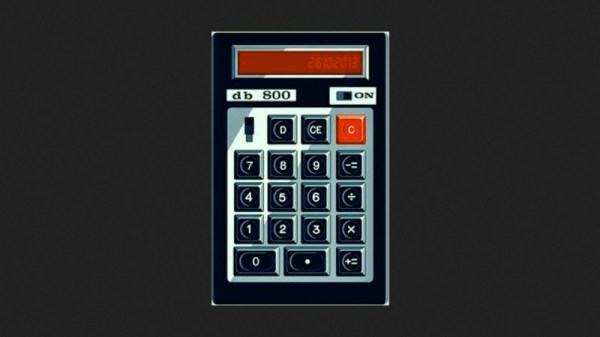
So who was first with a European-made calculator? Not the Dutch, the Italians, the Germans, or even the Brits, instead that honour went to the Yugoslavians. Digitron is a company located in Buje, in modern-day Croatia, and they pipped everyone else in Europe to the post back in 1971 with their DB800 model.

We read about the achievement through the above-linked exhibition, but perhaps the greatest surprise comes in finding relatively little technical information online about these machines. Other early calculators have been subjected to extensive teardowns, so we can see all manner of interesting period tech. This one however, other than references to using Japanese parts, has very little. Whose chip did it use, and were there any quirky design choices made? We hope that someone out there has one and is prepared to give the world a peek.

Meanwhile, we’ve looked at a few older calculators ourselves.

Ancient Cable Modem Reveals Its RF Secrets

Most reverse engineering projects we see around here have some sort of practical endpoint in mind. Usually, but not always. Reverse-engineering a 40-year-old cable modem probably serves no practical end, except for the simple pleasure of understanding how 1980s tech worked.

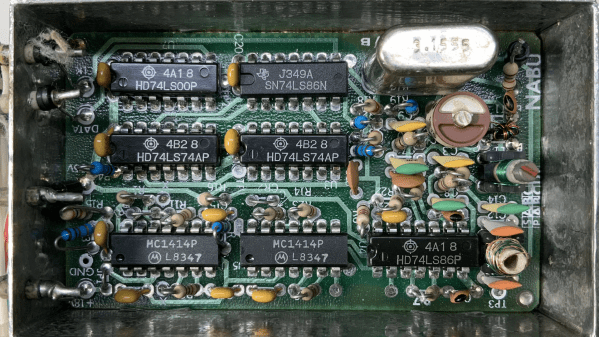
You’ll be forgiven if the NABU Network, the source of the modem [Jared Boone] tears into, sounds unfamiliar; it only existed from 1982 to 1985 and primarily operated in Ottawa, Canada. It’s pretty interesting though, especially the Z80-based computer that was part of the package. The modem itself is a boxy affair bearing all the hallmarks of 1980s tech. [Jared]’s inspection revealed a power supply with a big transformer, a main logic board, and a mysterious shielded section with all the RF circuits, which is the focus of the video below.

Using a signal generator, a spectrum analyzer, and an oscilloscope, not to mention the PCB silkscreen and component markings, [Jared] built a block diagram of the circuit and determined the important frequencies for things like the local oscillator. He worked through the RF section, discovering what each compartment does, with the most interesting one probably being the quadrature demodulator. But things took a decidedly digital twist in the last compartment, where the modulated RF is turned into digital data with a couple of 7400-series chips, some comparators, and a crystal oscillator.

This tour of 80s tech and the methods [Jared] used to figure out what’s going on in this box were pretty impressive. There’s more to come on this project, including recreating the original signal with SDRs. In the mean time, if this put you in the mood for other videotext systems of the 80s, you might enjoy this Minitel terminal teardown.

Continue reading “Ancient Cable Modem Reveals Its RF Secrets”

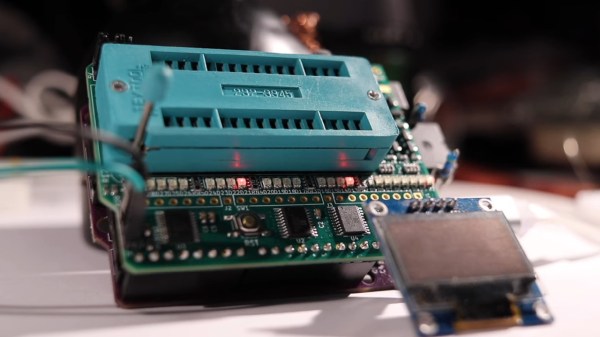
The ROM programmer on display, with an OLED screen attached

Relatively Universal ROM Programmer Makes Retro Tech Hacking Accessible

There’s treasures hidden in old technology, and you deserve to be able to revive it. Whether it’s old personal computer platforms, vending machines, robot arms, or educational kits based on retro platforms, you will need to work with parallel EEPROM chips at some point. [Anders Nielsen] was about to do just that, when he found out that a TL866, a commonly used programmer kit for such ROMs, would cost entire $70 – significantly raising the budget of any parallel ROM-involving hacking. After months of work, he is happy to bring us a project – the Relatively Universal ROM Programmer, an open-source parallel ROM programmer board that you can easily assemble or buy.

Designed in the Arduino shield format, there’s a lot of care and love put into making this board as universal as reasonably possible, so that it fits any of the old flash chips you might want to flash – whether it’s an old UV-erasable ROM that wants a voltage up to 30 V to be written, or the newer 5 V-friendly chips. You can use ICs with pin count from 24 to 32 pins, it’s straightforward to use a ZIF socket with this board, there’s LED indication and silkscreen markings so that you can see and tweak the programming process, and it’s masterfully optimized for automated assembly.

You can breadboard this programmer platform as we’ve previously covered, you can assemble our own boards using the open-source files, and if you don’t want to do either, you can buy the assembled boards from [Anders Nielsen] too! The software is currently work in progress, since that’s part of the secret sauce that makes the $70 programmers tick. You do need to adjust the programming voltage manually, but that can be later improved with a small hardware fix. In total, if you just want to program a few ROM chips, this board saves you a fair bit of money.

Continue reading “Relatively Universal ROM Programmer Makes Retro Tech Hacking Accessible”

End-Of-Life For Z80 CPU And Peripherals Announced

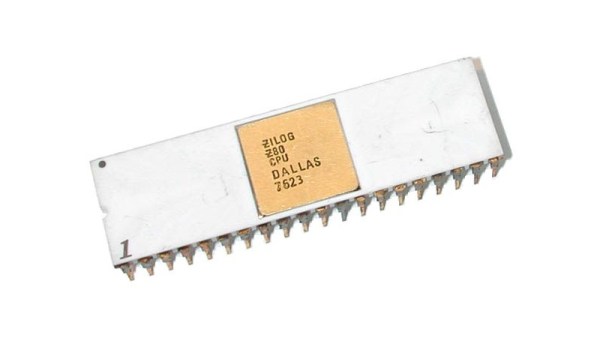
In a Product Change Notification (PCN) published on April 15, Zilog (now owned by Littelfuse) announced the End of Life for a range of Z80 products, specifically virtually all of the Z84C00 range. This also includes the peripherals, such as the Z84C10 range of MPUs. These are currently already marked as EoL on stores like Mouser, with Littelfuse noting that the last orders with them can be placed until June 14th of 2024. After that you’ll have to try your luck with shady EBay sellers and a lucky box of old-new-stock found in the back of a warehouse.

What this effectively means is that after just under 48 years since its launch in 1976, the Zilog Z80 will no longer be available for sale as discrete components, which is likely to primarily impact hobbyists and people who are trying to keep retro systems going. This does not mean that it’s the end of the road for Z80, however, as the eZ80 will be produced for the foreseeable future.

These new chips will of course not come in easy to drop in DIPs, making the challenge of breadboarding your own Z80-based microcomputer that much tougher. Yet one thing that definitely won’t happen is any of us witnessing the end of the era of the Z80, 6502 and 8051 architectures.

Thanks to [Techokami] for the tip.

VCF East 2024 Was Bigger And Better Than Ever

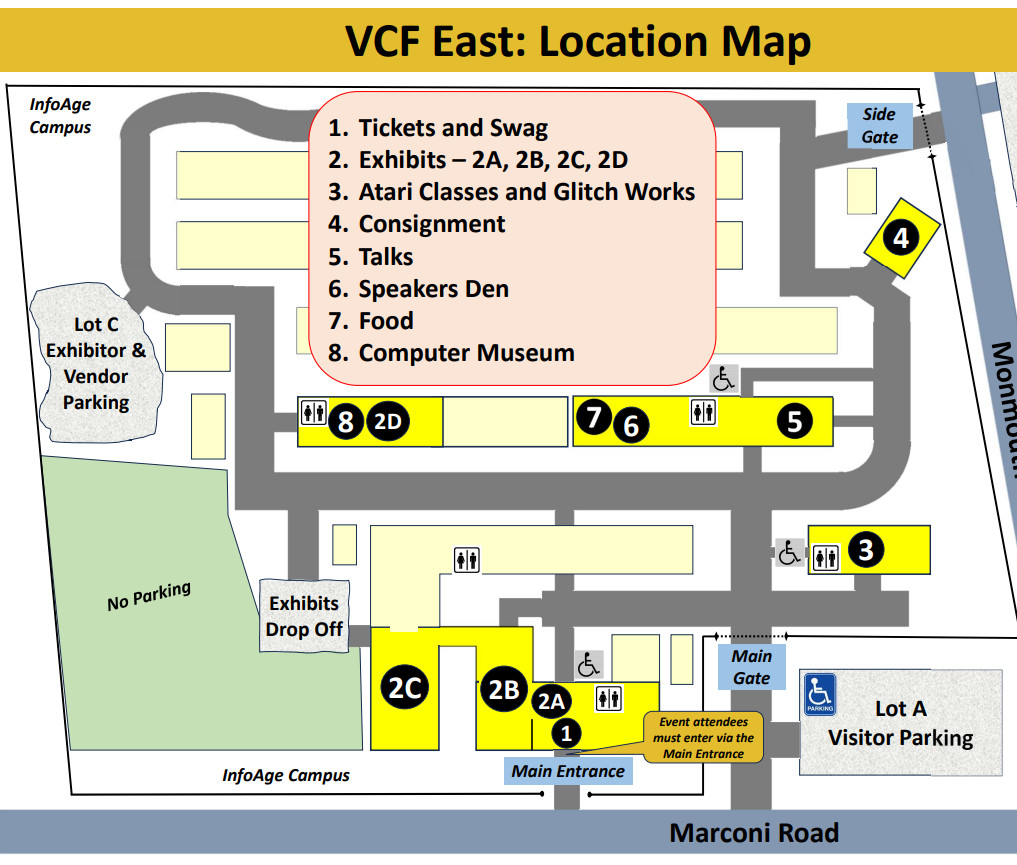
I knew something had changed before I even paid for my ticket to this year’s Vintage Computer Festival East at the InfoAge Science and History Museum in Wall, New Jersey.

Over the last couple of years, attendance has been growing to the point that parking in the lot directly next to the main entrance has been reserved for only the earliest of risers. That hasn’t described yours truly since the days when I still had what my wife refers to as a “real job”, so that’s meant parking in the overflow lot down the road and walking the half a mile or so back to the main gate. Penance for working on the Internet, let’s call it.

But this time, while walking along the fence that surrounds the sprawling InfoAge campus, I came across an open gate and a volunteer selling tickets. When commenting to her that this was a pleasant surprise compared to the march I’d anticipated, she responded that there had been so many people trying to get into the main entrance that morning that they decided to station her out here to handle the overflow.

I was a few steps past her table and into InfoAge before the implications of this interaction really hit me. Two entrances. How many attendees does there need to be before you setup a secondary ticket booth out by the reserve parking lot just to keep things moving smoothly? Well, I can’t tell you what the exact number is. But after spending the rest of the day walking between all the buildings it took to contain all of the exhibits, talks, and activities this year, I can tell you it’s however many people came to VCF East 2024.

Compared to its relatively humble beginnings, it’s incredible to see what this event has grown into. InfoAge was packed to the rafters, and despite what you might think about a festival celebrating decades old computing hardware, there were plenty of young faces in the crowd. I’m not sure exactly what’s changed, but the whole place was positively jumping. Perhaps it’s partially the generational nostalgia that’s kept Netflix cranking out new seasons of the 1980’s set Stranger Things. I’m sure attention (and attendance) from several well known YouTube personalities have played a big part as well.

Whatever the magic formula that’s turned what was once a somewhat somber retrospective on early desktop computers into a major destination for tech lovers, I’m all for it. Love Live the Vintage Computer Festival!

Continue reading “VCF East 2024 Was Bigger And Better Than Ever”

Compaq Portable III Is More Than Meets The Eye

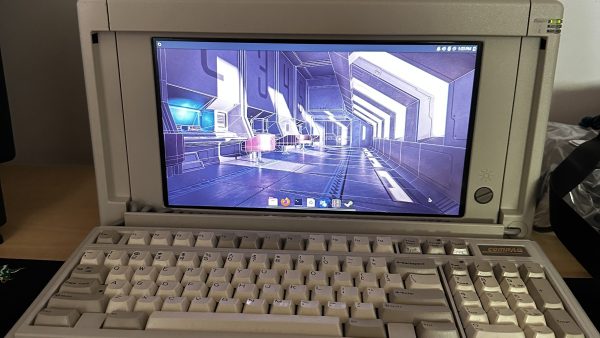
The Compaq Portable III hails from the 386 era — in the days before the laptop form factor was what we know today. It’s got a bit of an odd design, but a compelling one, and the keyboard is pretty nifty, too. [r0r0] found one of these old-school machines and decided it was well worth refitting it to give it some modern grunt.

The Portable III ended up scoring a mini-ITX build, with an AMD Ryzen 7 3700X and an AMD RX580 GPU. Cramming all this into the original shell took some work, like using a vertical riser to fit in the GPU. Hilariously, the RGB RAM sticks are a little bit wasted when the enclosure is closed.

For the purists out there, you’ll be relieved to know the machine’s original plasma display was dead. Thus, a larger modern LCD was fitted instead. However, [r0r0] did play around with software to emulate the plasma look just for fun.

It’s funny to think you could once score one of these proud machines for free at a swap meet.

Continue reading “Compaq Portable III Is More Than Meets The Eye”