Exploiting Weak Crypto On Car Key Fobs

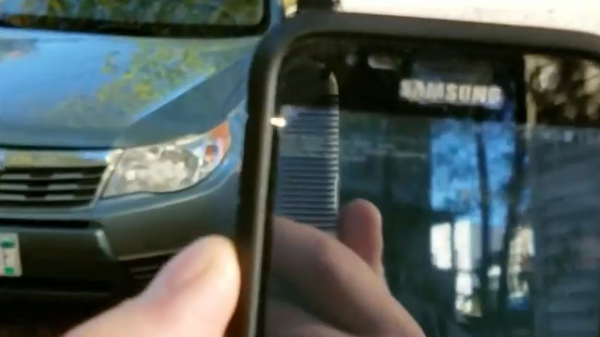
[tomwimmenhove] has found a vulnerability in the cryptographic algorithm that is used by certain Subaru key fobs and he has open-sourced the software that drives this exploit. All you need to open your Subaru is a RasPi and a DVB-T dongle, so you could complain that sharing this software equates to giving out master keys to potential car thieves. On the other hand, this only works for a limited number of older models from a single manufacturer — it’s lacking in compatibility and affordability when compared to the proverbial brick.

This hack is much more useful as a case study than a brick is, however, and [tomwimmenhove]’s work points out some bad design on the manufacturer’s side and as such can help you to avoid these kind of mistakes. The problem of predictable keys got great treatment in the comments of our post about an encryption scheme for devices low in power and memory, for instance.

Those of you interested in digital signal processing may also want to take a look at his code, where he implements filtering, demodulation and decoding of the key fob’s signal. The transmission side is handled by rpitx and attacks against unencrypted communications with this kind of setup have been shown here before. There’s a lot going on here that’s much more interesting than stealing cars.

[Via Bleeping Computer]

Continue reading “Exploiting Weak Crypto On Car Key Fobs”

Recreating The Mythbusters Rocket Chevy – At Scale

If you tuned into the first ever episode of Mythbusters way back when, you’ll remember a certain rocket-powered Chevy Impala. [David Windestal] decided to recreate this – at 1:10 scale.

The car in question is a Hobbyking Desert Fox RC car – normally a four-wheel drive truck which ships ready-to-run, making it a great way to get a project started quickly. Rocket power is provided by the same type of motor used in the Swedish Rocket Knives we’ve covered previously.

Initial testing proves unsuccessful – the car simply tumbles out of control when the rocket is fired. It takes a beating, losing a wheel in the process. Following on from this, a decision is made to cook up a slower burning rocket motor and switch to an asphalt surface for testing. This is much more succesful and the car begins to see some properly high speeds, nearly peeling the tyres off the rim in the process!

It’s a fun concept that could likely be replicated with off-the-shelf rocket motors, too. Throw us your ideas for better rocket powered transports in the comments below.

[Thanks to Heinrich for the tip!]
Continue reading “Recreating The Mythbusters Rocket Chevy – At Scale”

The Bane Of Aftermarket Car Alarms

The humble car alarm has been around almost as long as the car itself, first being developed by an unknown prisoner in Denver, circa 1913. To the security-conscious motorist, they make a lot of sense. The noise of a car alarm draws attention which is the last thing a would-be thief wants, and the in-built immobilizers generally stop the car being moved at all without a time-consuming workaround. Both are a great deterrent to theft.

It may then surprise you to know that I, dear readers, consider the aftermarket car alarm to be one of the most heinous devices ever fitted to the modern automobile. Combining the unholy trifecta of being poorly designed, cheaply made, and fitted by only the most untalented or uncaring people to wield a soldering iron, they are a blight that I myself refuse to accept.

It was my very own Mazda that suffered at the hands of a car alarm system. Two days after purchasing the car, the keyfob died, and thus the car would no longer start. My other car was already out of action due to bent valves, and I needed to get to work, so I figured as a competent hacker, I’d be able to quickly disable it.

Continue reading “The Bane Of Aftermarket Car Alarms”

Make Cars Safer By Making Them Softer

Would making autonomous vehicles softer make them safer?

Alphabet’s self-driving car offshoot, Waymo, feels that may be the case as they were recently granted a patent for vehicles that soften on impact. Sensors would identify an impending collision and adjust ‘tension members’ on the vehicle’s exterior to cushion the blow. These ‘members’ would be corrugated sections or moving panels that absorb the impact alongside the crumpling effect of the vehicle, making adjustments based on the type of obstacle the vehicle is about to strike.

Continue reading “Make Cars Safer By Making Them Softer”

Spoiler Alert! Repairing A Race Car Can Get Complicated, Fast.

[Big Fish Motorsports] has a vehicle with an adjustable rear spoiler system that broke in the lead up to a big race. The original builder had since gone AWOL so the considerable talents of [Quinn Dunki] were brought to bear in getting it working again.

Cracking open the black control box of mystery revealed an Arduino, a ProtoShield and the first major road block: the Arduino remained stubbornly incommunicado despite several different methods of trying to read the source code. Turns out the Arduino’s ATMega324 was configured to be unreadable or simply fried, but an ATMega128 [Quinn] had proved to be a capable replacement. However, without knowing how the ten relays for this spoiler system were configured — and the race day deadline looming ever larger — [Quinn] opted to scrap the original and hack together something of her own design with what she had on hand.

Continue reading “Spoiler Alert! Repairing A Race Car Can Get Complicated, Fast.”

Driverless Lorries To Be Tested On UK Roads By End Of 2018

The [BBC] is reporting that driverless semi-trailer trucks or as we call them in the UK driverless Lorries are to be tested on UK roads. A contract has been awarded to the Transport Research Laboratory (TRL) for the trials. Initially the technology will be tested on closed tracks, but these trials are expected to move to major roads by the end of 2018.

All  of these Lorries will be manned and driven in formation of up to three lorries in single file. The lead vehicle will connect to the others wirelessly and control their braking and acceleration. Human drivers will still be present to steer the following lorries in the convoy.

This automation will allow the trucks to drive very close together, reducing drag for the following vehicles to improve fuel efficiency.”Platooning” as they call these convoys has been tested in a number of countries around the world, including the US, Germany, and Japan.

Are these actually autonomous vehicles? This question is folly when looking toward the future of “self-driving”. The transition to robot vehicles will not happen in the blink of an eye, even if the technological barriers were all suddenly solved. That’s because it’s untenable for human drivers to suddenly be on the road with vehicles that don’t have a human brain behind the wheel. These changes will happen incrementally. The lorry tests are akin to networked cruise control. But we can see a path that will add in lane drift warnings, steering correction, and more incremental automation until only the lead vehicle has a person behind the wheel.

There is a lot of interest in the self driving industry right now from the self driving potato to autonomous delivery. We’d love to hear your vision of how automated delivery will sneak its way into our everyday lives. Tell us what you think in the comments below.

The Last Interesting Chrysler Had A Gas Turbine Engine

The piston engine has been the king of the transportation industry for well over a century now. It has been manufactured so much that it has become a sort of general-purpose machine that can be used to do quite a bit more than merely move people and cargo from one point to another. Running generators, hydraulic systems, pumps, and heavy machinery are but a few examples of that.

Scale production of this technology also had the effect of driving prices for these engines down, and now virtually everyone in the developed world has cheap and easy access to them. In the transportation world, at least, it looks like its reign might finally be coming to a slow, drawn-out conclusion as electric cars capture more and more market share.

Electric motors aren’t the first technology to try to topple the piston engine from its apex position on top of our modern transportation industry, though. In the 1960s another technology, the gas turbine engine, tried to replace it — and failed.

Continue reading “The Last Interesting Chrysler Had A Gas Turbine Engine”